


 Invest ideas
News
20 May 2026, 14:40
MoneyGram Steps Into Blockchain as Key Validator for Tempo’s Remittance Network

BitcoinWorld MoneyGram Steps Into Blockchain as Key Validator for Tempo’s Remittance Network MoneyGram, one of the world’s largest money transfer companies, has taken a significant step into blockchain infrastructure by becoming a key validator node for Tempo’s blockchain-based overseas remittance service. The partnership, reported by BlockBeats, signals a growing convergence between traditional financial rails and decentralized payment networks. Strategic Role in Transaction Validation Under the agreement, MoneyGram will leverage its extensive global payment network and deep compliance expertise to participate directly in transaction validation, network operations, and security maintenance on the Tempo blockchain. This is not merely a marketing collaboration — MoneyGram is assuming active infrastructure responsibilities that typically belong to core blockchain participants. For Tempo, which operates a stablecoin-based remittance corridor, gaining a partner with MoneyGram’s regulatory footprint and real-world payout capabilities is a major credibility boost. MoneyGram operates in over 200 countries and territories, with a network of more than 350,000 agent locations. Bridging Traditional Finance and Crypto This move places MoneyGram among a small but growing group of traditional financial institutions that are not just using blockchain but helping to secure it. Validator nodes are responsible for confirming transactions and maintaining the integrity of the ledger — a role that demands reliability, uptime, and trust. MoneyGram’s compliance infrastructure, built over decades of navigating global anti-money laundering (AML) and know-your-customer (KYC) regulations, could become a template for how legacy financial firms integrate with decentralized networks. Implications for the Remittance Market The global remittance market, valued at over $800 billion annually, has long been a target for blockchain disruptors promising faster and cheaper cross-border transfers. However, adoption has been slowed by regulatory uncertainty and the difficulty of connecting digital currencies to local bank accounts and cash payout points. MoneyGram’s involvement addresses both bottlenecks directly. By operating a validator node, MoneyGram gains direct visibility into transaction flows and can ensure compliance standards are met at the protocol level — not just at the payout endpoint. This could accelerate regulatory acceptance of blockchain-based remittance corridors in jurisdictions that have been hesitant. Conclusion The MoneyGram-Tempo partnership represents a maturing of the blockchain remittance sector, where established financial players are moving from passive observers to active network participants. For the broader crypto industry, it validates the thesis that traditional finance and decentralized networks can coexist — and that remittance remains one of the most practical use cases for blockchain technology. FAQs Q1: What is a validator node in blockchain? A validator node is a participant in a blockchain network that verifies new transactions and adds them to the ledger. Validators are essential for network security and consensus. Q2: Why is MoneyGram becoming a validator node significant? It marks one of the first instances of a major traditional financial services company taking an active infrastructure role in a blockchain network, rather than just using the technology for settlements. Q3: How does this affect regular remittance users? If successful, the partnership could lead to faster, cheaper, and more transparent cross-border transfers, with stronger regulatory oversight — potentially making blockchain remittances more accessible to mainstream users. This post MoneyGram Steps Into Blockchain as Key Validator for Tempo’s Remittance Network first appeared on BitcoinWorld .
20 May 2026, 14:26
Vitalik Buterin Reveals Short-Term Plan to Boost Ethereum Privacy

Vitalik Buterin shared three short-term technical initiatives for Ethereum native privacy. The work covers account abstraction with FOCIL, keyed nonces, and access-layer projects. EIP-8250 formalizes the keyed nonces design with support for 500 billion privacy records. Vitalik Buterin shared three short-term technical initiatives aimed at pushing Ethereum toward stronger native privacy in a post on X. The Ethereum co-founder called the work a set of live engineering tracks already underway across the protocol, rather than a fresh roadmap or future research agenda. The post followed a comment from analyst Millie, who argued that native privacy is the missing component that could give the asset true moneyness qualities and drive higher Layer 1 transaction fees. The three areas Buterin pointed to are account abstraction paired with FOCIL, the keyed nonces proposal under EIP-8250, and a set of access layer projects, including Kohaku and private read capabilities. The post sits alongside the privacy roadmap Buterin published in April 2025 and the four-track quantum resistance plan announced by the Ethereum Foundation earlier this year. AA Plus FOCIL Targets Censorship of Private Transactions on Ethereum The first item in Buterin’s short list pairs account abstraction with FOCIL, the Fork-Choice Enforced Inclusion Lists framework. The combination targets the censorship and relay problems that have weighed on Ethereum privacy tools for the past several years. Account abstraction allows wallets and protocols to verify signatures natively at the protocol level. The change removes a long-standing dependency on external relayers for privacy protocols such as Privacy Pools and Railgun. Both have so far required third-party relayers to broadcast user transactions on-chain, with the relay model adding cost, a single point of failure, and a separate trust assumption that users have to accept on top of the underlying cryptography. FOCIL works on the censorship side of the problem. The mechanism gives validators a way to force the inclusion of transactions that block builders might otherwise leave out. The Buterin post framed the pair as a way to make privacy-focused transactions first-class on Ethereum, with strong inclusion guarantees that protect users against block-level filtering by builders or by infrastructure providers. Together, the two changes target the cost side and the censorship side of the privacy stack at the same time. Privacy tools become cheaper to operate without external relayers, and the transactions they produce become harder to block once submitted to the network. Keyed Nonces and EIP-8250 Tackle Replay and Linkability The second item on Buterin’s list is the keyed nonces proposal, now formalized under EIP-8250. The change replaces Ethereum’s single sender nonce with a two-part system that gives frame transactions independent replay domains. The single-nonce model has been a long-standing source of transaction linkability. Observers can connect transactions that originate from the same account but belong to different application contexts, since the nonce is a sequential counter tied to the sender address. The EIP-8250 specification targets support for up to 500 billion privacy-related records across an eight-year horizon. The records are stored as nullifiers, with the design taking advantage of the simple structure of the data to use sharding and bloom filters to keep storage costs bounded. Buterin argued in his post that storing 500 billion nullifiers is actually easier on the network than storing the equivalent volume of regular state data, with the simple structure of nullifier records the main reason for the difference. The proposal addresses one of the practical bottlenecks for scaling privacy on Ethereum. Existing privacy protocols have run into limits on the number of records the network can maintain without compromising decentralization. The keyed nonces design extends the headroom for these records by several orders of magnitude. Access-Layer Work Tackles Metadata Leakage on Ethereum The third area in Buterin’s short list covers access-layer work, with Kohaku named as the main project alongside private read capabilities. The access layer covers everything that happens when a wallet, decentralized application, or RPC provider queries the chain for data. The metadata problem at this layer has been a long-running concern for Ethereum privacy researchers. Even when on-chain transactions are private, the queries a wallet sends to its RPC provider can reveal a large amount of information about the user. A provider can see which addresses a wallet checks, which token balances a user looks up, and which decentralized application a user is interacting with. The leakage runs alongside the on-chain layer and undermines the privacy gains from protocol-level changes. Kohaku targets this category of leakage directly. The project sits alongside private read efforts that aim to let users query the chain without revealing the specifics of what they are reading. The Ethereum Foundation has flagged this layer of work as one of the four tracks within the broader privacy roadmap, alongside changes at the wallet, protocol, and cryptographic layers. The April 2025 nine-step roadmap from Buterin includes related changes. These include migrating wallets to a one-address-per-application model and replacing trusted execution environments with cryptographic private information retrieval for RPC calls. The access-layer track sits within this wider plan and provides the near-term entry points for users. Privacy and Quantum Resistance Tracks Run in Parallel The privacy work runs alongside the quantum resistance efforts the Ethereum Foundation announced earlier this year. The Foundation has split the quantum resistance work across four tracks: consensus signatures, data availability commitments, account signatures, and application-layer zero-knowledge proofs. The two roadmaps overlap at several points. Account abstraction is a central building block for both, with the same protocol-level changes that allow privacy protocols to verify signatures natively also allowing individual accounts to adopt quantum-safe signature schemes. EIP-8141 is one of the proposals in the queue for the Hegotá hard fork in the second half of 2026. The EIP would let individual accounts adopt quantum-safe signature schemes without requiring a network-wide change. The split between privacy and quantum resistance has been a feature of Ethereum protocol planning for several years. The Foundation has argued that the two tracks need to advance at the same pace to keep the network ahead of both surveillance threats and the longer-term risk of quantum computers breaking current cryptographic assumptions. Millie’s response to Buterin’s post added another framing for the privacy work. The analyst argued that adding native privacy at the Layer 1 level would lift Ethereum’s utility value and drive higher mainnet transaction fees, with privacy treated as a core moneyness property for the asset. The case rests on the idea that payments and decentralized finance applications become more usable for regular users when the underlying network supports private transactions by default. The Buterin post does not commit to specific timelines for each of the three short-term items. AA plus FOCIL, keyed nonces, and access-layer work are all live engineering tracks across the Ethereum protocol developer community, with the Hegotá hard fork providing the next major coordination point for protocol-level changes.
20 May 2026, 14:20
Tether Brings USDT Payments to Over 200,000 Merchants in New Partnership
BitcoinWorld Tether Brings USDT Payments to Over 200,000 Merchants in New Partnership Stablecoin issuer Tether has announced a significant expansion of its USDT payment capabilities, enabling transactions at more than 200,000 merchant locations worldwide. The initiative is the result of a collaboration with decentralized treasury management protocol Lydian and U.S.-based payments company Shift4, marking one of the largest integrations of a stablecoin into traditional retail and online commerce. How the Partnership Works Tether, the company behind the USDT stablecoin, stated via a post on X that the partnership is designed to bridge the gap between the growing stablecoin user base and everyday commerce. Lydian, a protocol focused on treasury management and payment infrastructure, will handle the technical integration, while Shift4—a payments processor serving hundreds of thousands of businesses across the United States—will provide the merchant network. This means that holders of USDT can now use the stablecoin to pay for goods and services at a wide range of merchants, from small retail outlets to larger online platforms, without needing to convert their digital assets into fiat currency first. The integration is expected to streamline transactions for users who prefer stablecoins due to their lower volatility compared to other cryptocurrencies. Why This Matters for Stablecoin Adoption Stablecoins like USDT have become a cornerstone of the cryptocurrency ecosystem, primarily used for trading, remittances, and as a store of value. However, their use in everyday payments has remained limited due to a lack of merchant acceptance and technical infrastructure. This partnership directly addresses that gap by connecting USDT holders with an existing, established payment network. For merchants, accepting USDT could reduce transaction fees compared to traditional credit card processing, which often charges between 1.5% and 3.5% per transaction. Stablecoin transactions typically incur lower costs, especially for cross-border payments. Additionally, settlements can occur almost instantly, improving cash flow for businesses. Implications for the Payments Industry The move by Tether, Lydian, and Shift4 signals a growing trend of traditional payment processors embracing digital assets. Shift4, which processes over $200 billion in payments annually, is not new to cryptocurrency—it has previously integrated Bitcoin and Ethereum payments. However, the addition of USDT at this scale could accelerate the adoption of stablecoins in mainstream commerce. Industry analysts note that the partnership could also put pressure on other stablecoin issuers, such as Circle with its USDC, to expand their merchant networks. The competition may lead to lower fees and better services for both consumers and businesses. Challenges and Considerations While the expansion is a positive step for stablecoin adoption, it is not without challenges. Regulatory scrutiny of stablecoins has increased globally, with governments and central banks examining their impact on monetary policy and financial stability. Tether, in particular, has faced legal and regulatory challenges in the past, including a settlement with the New York Attorney General’s office in 2021 over allegations of misrepresenting its reserves. Furthermore, the volatility of the broader cryptocurrency market, while less of an issue for stablecoins, could still affect consumer confidence. Users must also consider transaction fees on the blockchain network used to transfer USDT, which can vary depending on network congestion. Conclusion Tether’s partnership with Lydian and Shift4 to enable USDT payments at over 200,000 merchants represents a significant milestone in the integration of stablecoins into everyday commerce. By leveraging existing payment infrastructure, the initiative reduces barriers for both consumers and businesses, potentially accelerating the adoption of digital currencies for real-world transactions. However, ongoing regulatory developments and network costs will be important factors to watch as this payment method gains traction. FAQs Q1: What is USDT and how does it differ from other cryptocurrencies? USDT is a stablecoin issued by Tether, designed to maintain a 1:1 peg with the US dollar. Unlike volatile cryptocurrencies like Bitcoin, its value remains stable, making it suitable for payments and as a store of value. Q2: How can I use USDT to pay at these merchants? You will need a digital wallet that supports USDT and is compatible with the Lydian protocol. At checkout, you can select USDT as a payment option, scan a QR code, or use a payment link provided by the merchant. Q3: Are there any fees for using USDT for payments? Transaction fees may apply, depending on the blockchain network used (e.g., Ethereum, Tron, or Solana). Some merchants may also pass on processing fees, though these are typically lower than traditional credit card fees. This post Tether Brings USDT Payments to Over 200,000 Merchants in New Partnership first appeared on BitcoinWorld .
20 May 2026, 14:08
Vitalik Buterin outlines Ethereum's privacy measures. Here is what it means for the network and ETH

Privacy is widely seen as a necessary feature for the widespread adoption of blockchain technology. Ethereum is taking steps in that direction.
20 May 2026, 13:16
Iran’s Crypto Routes Passed Through Networks Linked To Trump Allies

Iranian crypto exchange Nobitex reportedly processed billions of dollars through the Tron and BNB Chain networks while Tehran faced growing pressure from Western sanctions. According to blockchain analytics cited by Reuters , more than $2.3 billion moved through the two networks since early 2023. The findings drew attention because the same blockchain ecosystems later became closely connected to World Liberty Financial, the crypto project backed by Donald Trump and members of his family. Tron founder Justin Sun and Binance co-founder Changpeng Zhao both emerged as major supporters of the project. Reuters said there is no evidence that Trump or his family knew how Nobitex users were utilizing the networks. Billions Reportedly Moved Through Tron And BNB Chain Data from blockchain analytics firms Arkham and Elliptic showed that Nobitex relied heavily on Tron and BNB Chain to move funds outside traditional banking systems restricted by sanctions. Researchers also alleged that the Central Bank of Iran transferred more than $500 million in the stablecoin Tether through the Tron network between late 2024 and mid-2025. Part of those funds reportedly flowed through Nobitex before being converted into other digital assets. Analysts said some transactions connected to users linked with Iran’s Islamic Revolutionary Guard Corps were also identified on the exchange. Nobitex denied having direct ties to the Iranian government and said any illicit transfers happened without management knowledge. Stablecoins Became Both A Compliance Tool And A Loophole The report highlighted the unusual role of Tether’s USDT stablecoin in global sanctions enforcement. Unlike Bitcoin, USDT is centrally managed, meaning Tether can freeze wallets tied to sanctioned entities when requested by authorities. That power was demonstrated in April 2026, when more than $344 million connected to Iranian-linked addresses on Tron was frozen. At the same time, blockchain infrastructure itself remains decentralized. As long as a wallet is not blacklisted, transactions can continue moving across networks like Tron without direct approval from issuers or governments. Analysts say this has turned stablecoins into both an enforcement mechanism and one of the most widely used tools for bypassing financial restrictions. Trump-Linked Crypto Ties Drew New Attention The Reuters investigation also examined growing connections between Binance, Tron and World Liberty Financial. In early 2025, Abu Dhabi-based investment fund MGX reportedly used World Liberty’s USD1 stablecoin in a major Binance-related investment deal, helping legitimize the token within the broader crypto market. Meanwhile, relations between World Liberty and Justin Sun later deteriorated. Sun filed a lawsuit against the company in 2026, accusing it of extortion, while World Liberty responded with a defamation claim. Despite the legal dispute, Sun reportedly still controls billions of WLFI tokens connected to the project. Representatives for both Tron and BNB Chain defended the decentralized nature of their networks, arguing that public blockchains cannot realistically monitor every transaction made by users worldwide. The White House rejected suggestions that Trump’s business interests created any conflict involving Iranian financial activity, calling attempts to connect the president to Iran’s banking system “absurd.”
20 May 2026, 12:59
How WalletConnect Works With IronWallet for dApps, DeFi, and Payments
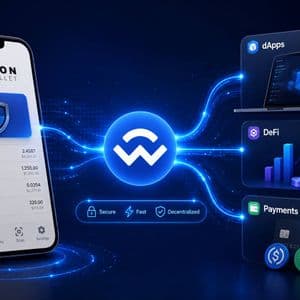
WalletConnect runs as the encrypted bridge between IronWallet and the wider Web3 ecosystem, supporting connections to 70,000+ applications across multiple blockchains. The protocol now spans 700+ wallets and 55.5 million active users, processing over $400 billion in network volume during 2025. For IronWallet users, WalletConnect opens access to DeFi platforms, NFT marketplaces, and decentralized exchanges without exposing private keys. Using WalletConnect with IronWallet preserves self-custody at every step, and the IronWallet WalletConnect integration extends across dApps, DeFi protocols, and the new WalletConnect Pay retail layer. The sections ahead cover what WalletConnect is, how to connect IronWallet to a dApp, how WalletConnect Pay extends the protocol to retail purchases, and the security practices that keep both flows safe. What WalletConnect Is WalletConnect launched in 2018 as an open-source protocol designed to link mobile crypto wallets to decentralized applications. The protocol creates an encrypted session between the wallet and the dApp, with all communication end-to-end encrypted and chain-agnostic. Private keys never leave the wallet. The dApp can request signatures for specific transactions, but every action requires explicit user approval inside the wallet app. No automatic transfers, no background permissions, no key exposure. Scale matters for understanding why the protocol became the Web3 standard. WalletConnect supports more than 700 wallets globally, including IronWallet, MetaMask, Trust Wallet, Safe, Phantom, and Coinbase Wallet. The protocol routes traffic to over 70,000 applications across major blockchains: Ethereum, BNB Chain, Polygon, Base, Arbitrum, Optimism, Solana, and others. Why WalletConnect Matters for IronWallet Users Self-custody is the first reason. IronWallet keeps private keys on the device with double key encryption, and WalletConnect preserves that custody model. A WalletConnect dApp connection doesn't grant the dApp any access to keys or stored funds. The user approves every action. Mobile-first design pairs naturally with WalletConnect's QR-code session flow. IronWallet runs on iOS and Android as a WalletConnect mobile wallet built around exactly that form factor. Multi-chain coverage matches the ecosystem WalletConnect spans. IronWallet supports Tron, Ethereum, Solana, BNB Chain, Polygon, Base, and several other networks. The user can connect to a dApp on any of these chains through the same WalletConnect session, without switching wallets or downloading separate apps. How to Connect IronWallet to a dApp Knowing how to use WalletConnect with IronWallet comes down to a five-step WalletConnect setup flow. The connection takes about thirty seconds for users familiar with the steps. IronWallet routes WalletConnect through the Settings menu instead of placing a scan button on the home screen. Open the dApp on a browser. Most dApps have a "Connect Wallet" button. Tap or click it. Select WalletConnect from the connection options. A QR code appears on screen. If using IronWallet on the same device as the browser, a direct deep link is sometimes offered instead. Open IronWallet, go to Settings, tap WalletConnect, then tap Scan QR code. This is where IronWallet's flow differs from wallets that put the scanner on the home screen. The Settings → WalletConnect path keeps dApp connections organized and visible alongside other connection management. Scan the dApp's QR code. IronWallet's camera reads the code and prepares a connection request. Review the connection request, then approve. The screen shows which dApp is requesting connection, what networks it wants access to, and what permissions it's asking for. Approve only if the request matches the dApp the user opened. Return to the dApp. The connection is live, and the user can now interact with the dApp directly from IronWallet. Paying With WalletConnect Pay From IronWallet WalletConnect Pay sits on top of the WalletConnect protocol as a dedicated payments layer. The product launched into general availability in January 2026 through a partnership with Ingenico , the global leader in payment acceptance, whose terminals now support stablecoin payments at retail checkouts across 32 countries. IronWallet supports WalletConnect Pay natively. Users with stablecoin balances can pay at merchants accepting the standard through a two-step flow: Scan the merchant's QR code at the point of sale or in the online checkout Confirm the payment in IronWallet, with the token and network selected by the user The payment completes on-chain in seconds, with the merchant's payment provider receiving the transaction result and the customer receiving confirmation. Supported stablecoins include USDC, USDT, EURC, and BNB on BNB Smart Chain. Networks live on the rail include Polygon, Base, Arbitrum, Ethereum Mainnet, BNB Smart Chain, and additional EVM-compatible chains, with more planned. Compliance handling runs on the rail side, not the wallet side. Travel Rule data transmission, OFAC and EU sanctions screening, and IP geo checks execute pre-payment on every transaction, with returning users skipping data capture entirely. The user-side experience stays the same shape regardless of what compliance work happens behind the scenes. WalletConnect Pay partners include Coinbase, Stripe, Shopify, BitPay, MoonPay, and Mesh, alongside Ingenico's POS terminal network. Merchant categories covered include retail, hospitality, transportation, fuel, parking, vending, and self-service. Security Practices for WalletConnect Sessions WalletConnect security rests on two layers: protocol-level encryption protects the connection itself, and user vigilance protects against everything else. Five practices keep both WalletConnect and WalletConnect Pay sessions safe: Verify dApp URLs before connecting. Phishing sites mimic legitimate dApps with slight URL differences such as extra letters, swapped characters, or similar-looking domains. The connection itself is encrypted, but a malicious dApp can still request harmful transaction approvals. Review every transaction inside IronWallet before approving. Check the recipient address, the amount, the token, the network, and the fee. A connected dApp can request signatures; only the user can grant them. Disconnect sessions when finished using a dApp. Active WalletConnect sessions persist until explicitly closed, leaving permission for future signature requests. Closing unused sessions reduces the attack surface. Monitor unexpected permission requests. A dApp that connected for one purpose should not later ask for access to networks or tokens it has no reason to touch. Sudden permission expansions warrant disconnection and review. Keep IronWallet updated. Wallet updates include WalletConnect SDK upgrades, security patches, and compatibility fixes for evolving dApp standards. Confirm payment details on WalletConnect Pay flows. At the point of sale or online checkout, verify the merchant name, the amount, the token, and the network before approving. The same vigilance that protects dApp signatures protects payments. Managing Active WalletConnect Sessions in IronWallet Active sessions live in the Settings → WalletConnect menu. The screen lists every dApp currently connected, when the session started, and what permissions each session holds. Disconnect individual sessions by selecting the dApp and tapping disconnect. Clear all sessions at once through the same menu when doing a clean reset. Regular audits help. Reviewing the active session list weekly, or after each major Web3 interaction, prevents stale connections from accumulating. Unrecognized sessions should be disconnected immediately, and the recent transaction history should be reviewed for any unauthorized signatures. Conclusion WalletConnect with IronWallet delivers two distinct capabilities through the same underlying protocol. The dApp connection flow opens access to DeFi, NFTs, and decentralized governance across 70,000+ applications, with private keys staying on the device. WalletConnect Pay extends the protocol into retail commerce, letting IronWallet users spend stablecoins at physical merchants and online checkouts through a scan-and-confirm flow. One protocol, two use cases, both built on the same self-custody model that defines IronWallet itself. Disclaimer: This article is provided for informational purposes only. It is not offered or intended to be used as legal, tax, investment, financial, or other advice.


