


 Invest ideas
News
21 May 2026, 21:45
With aluminum prices up 20%, recycling startups bet on AI to cash in

BitcoinWorld With aluminum prices up 20%, recycling startups bet on AI to cash in Rising gas prices have dominated headlines since the Trump administration escalated its conflict with Iran in late February, but aluminum has quietly become another major casualty of the geopolitical turmoil. With roughly 10% of the world’s aluminum produced in the Gulf region, prices have surged to levels not seen in decades—climbing more than 20% in recent weeks. Even before the Iran conflict, the U.S. government had designated aluminum as a critical mineral. The country relies heavily on imports to meet demand, and much of the domestic supply comes from recycled material. For startups focused on recovering aluminum from waste streams, the current market conditions are creating a powerful incentive to scale up. Why aluminum recycling is suddenly big business Aluminum may account for only about 1% of municipal garbage by weight, but its value per ton makes it a highly sought-after commodity. Matanya Horowitz, chief technology officer at Amp, a waste-sorting startup, told Bitcoin World: “Aluminum might be 1% of the garbage stream, but it often trades for over $1,000 per ton. It actually ends up being one of the most significant individual commodities.” Despite being one of the most recycled materials in the U.S., only about 20% of aluminum is recovered, according to the Environmental Protection Agency. That gap represents both an environmental challenge and a significant economic opportunity. AI-powered sorting: A new frontier for scrap recovery Several startups are now deploying artificial intelligence to improve recovery rates. Sortera, a metals recycling company based in Indiana, recently opened its second facility in Tennessee, the company exclusively told Bitcoin World. The new site doubles its processing capacity to 240 million pounds, with 90% to 100% of that volume being aluminum—a sizable fraction of the 4.3 million metric tons the U.S. consumed last year. Sortera focuses on sorting aluminum scrap by grade. The facility uses a combination of sensors—including lasers, cameras, and X-ray fluorescence—to feed AI algorithms that classify each piece of scrap, roughly the size of a potato chip, by specific alloy composition. By separating grades with higher accuracy, the company can command better prices per pound. A different approach from Amp Amp has taken a broader approach, using AI-powered sorting systems to process both recycling and general waste streams. The system relies on visible light and infrared cameras to identify materials—from wrappers to foil—and differentiate plastics from aluminum. As waste flows along conveyor belts, robotic arms and puffs of air direct materials into separate bins. Amp says its system achieves over 90% accuracy in recovering specific materials, including aluminum. “Half of the aluminum in a metro area—in places with successful recycling programs—are just in the garbage, not even touching the recycling system,” Horowitz said. For the metals industry, facilities like those being built by Sortera and Amp could help bolster domestic supplies of a critical mineral used across the economy. “These types of projects are some of the biggest sources of domestically produced aluminum that are coming online in a given year,” he added. What this means for supply chains and prices The combination of higher aluminum prices and improved recovery technology could reshape the domestic supply chain for this critical material. With geopolitical risks continuing to disrupt global markets, the ability to recover more aluminum from domestic waste streams reduces reliance on imports and provides a buffer against price volatility. For consumers, the impact may eventually be felt in everything from beverage cans to automotive parts and building materials. For the recycling industry, the message is clear: AI is no longer an experimental tool—it is becoming a core part of the business model. Conclusion As aluminum prices remain elevated due to geopolitical tensions, recycling startups are leveraging artificial intelligence to recover more of the metal from waste streams. With only 20% of aluminum currently recovered in the U.S., the potential for growth is substantial. Companies like Sortera and Amp are demonstrating that AI-powered sorting can improve accuracy and profitability, while also contributing to domestic supply chain resilience. The trend reflects a broader shift in the recycling industry toward technology-driven solutions that deliver both environmental and economic returns. FAQs Q1: Why have aluminum prices increased so sharply? A1: Prices have risen roughly 20% due to geopolitical tensions in the Gulf region, which produces about 10% of the world’s aluminum. The U.S. also designated aluminum as a critical mineral, further highlighting supply chain vulnerabilities. Q2: How does AI improve aluminum recycling? A2: AI systems use sensors—including lasers, cameras, and X-ray fluorescence—to identify and classify scrap aluminum by grade. This allows robotic arms or air jets to sort materials with over 90% accuracy, increasing the value of recovered metal. Q3: How much aluminum is currently recycled in the U.S.? A3: According to the EPA, only about 20% of aluminum is recovered from waste streams. Startups like Sortera and Amp aim to significantly improve that rate by capturing aluminum that currently ends up in landfills. This post With aluminum prices up 20%, recycling startups bet on AI to cash in first appeared on BitcoinWorld .
21 May 2026, 21:40
SpaceX Files $1T IPO, Binance Lists SPCX Perps, Coinbase Adds AI/China/Defense Futures
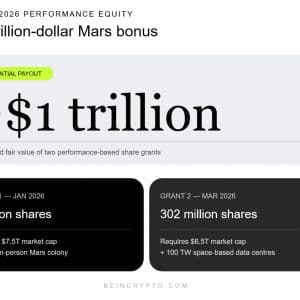
Crypto News SpaceX formally filed for a public listing this week, unveiling a structure that bundles the aerospace business with X, xAI and the Grok chatbot under a single ticker, SPCX, set to trad...
21 May 2026, 21:39
Bitcoin Weekly RSI Reclaims 50 as Long-Term Holders Hit 71.6%, Cuban Dumps Most BTC
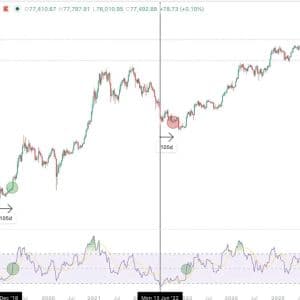
Bitcoin News Bitcoin 's weekly relative strength index has retested the 50 level for the first time since February, a technical move that analysts say sharply reduces the probability of fresh lows....
21 May 2026, 21:35
Whale ‘1011’ Pours Another $9M USDC Into Hyperliquid After $230M Liquidation
BitcoinWorld Whale ‘1011’ Pours Another $9M USDC Into Hyperliquid After $230M Liquidation A prominent cryptocurrency whale, identified on-chain as ‘1011,’ has deposited an additional $9 million USDC into the Hyperliquid (HYPE) platform, according to data shared by on-chain analyst ai_9684 xtpa. This latest move brings the whale’s total deposits to $19.01 million USDC since yesterday, following a massive liquidation event that wiped out approximately $230 million in positions. Whale Activity and Current Positions On-chain data reveals that the whale has placed buy orders for HYPE worth roughly $1.15 million, with target prices ranging from $49.725 to $52.36. The whale’s current spot holdings of HYPE are valued at around $2.48 million. In addition to the Hyperliquid activity, the whale is maintaining a 5x leveraged long position of 504.4 Bitcoin (BTC), worth approximately $38.95 million. That position is currently showing an unrealized loss of about $85,000. Context of the $230 Million Liquidation The whale’s recent activity comes just days after a catastrophic liquidation event on Hyperliquid, where the same entity lost an estimated $230 million. Such large-scale liquidations often trigger cascading market effects, impacting liquidity and price stability. The decision to inject additional capital so quickly suggests either a high-risk recovery strategy or confidence in the platform’s ability to execute trades under volatile conditions. Implications for Hyperliquid and the Market Hyperliquid, a decentralized exchange known for its perpetual futures trading, has seen increased attention from large traders, or ‘whales,’ due to its high leverage options and low fees. However, repeated large liquidations raise questions about risk management and the platform’s resilience during market stress. For retail traders, this activity serves as a reminder of the dangers of excessive leverage, even for sophisticated players. The whale’s continued involvement may signal a belief in a near-term price recovery for HYPE and BTC, but the unrealized losses highlight the precarious nature of leveraged positions. Conclusion The whale ‘1011’ saga underscores the high-stakes environment of leveraged crypto trading. With $19 million in fresh deposits and a $38.95 million leveraged BTC position still in the red, the coming days will be critical in determining whether this aggressive strategy pays off or leads to further losses. For the broader market, such movements serve as a barometer of sentiment among large holders and the health of platforms like Hyperliquid. FAQs Q1: Who is whale ‘1011’? Whale ‘1011’ is an anonymous on-chain entity known for large-scale trading on Hyperliquid. Their identity is not publicly known, but their wallet activity is tracked by analysts. Q2: What is Hyperliquid? Hyperliquid is a decentralized exchange (DEX) that offers perpetual futures trading with high leverage, low fees, and a focus on speed and user experience. Q3: What does a $230 million liquidation mean? A liquidation occurs when a trader’s position is forcibly closed due to insufficient margin. A $230 million liquidation is exceptionally large and can cause significant price swings and liquidity issues on the platform. This post Whale ‘1011’ Pours Another $9M USDC Into Hyperliquid After $230M Liquidation first appeared on BitcoinWorld .
21 May 2026, 21:31
Bitcoin Breaks Below $77,000: What the Latest Drop Means for Crypto Markets
BitcoinWorld Bitcoin Breaks Below $77,000: What the Latest Drop Means for Crypto Markets Bitcoin’s price has fallen below the $77,000 mark, a notable decline that has captured the attention of traders and investors. According to Bitcoin World market monitoring, BTC is currently trading at $76,954.25 on the Binance USDT market. This move represents a significant psychological breach, as $77,000 had been viewed as a near-term support level. Context of the Decline The drop below $77,000 comes amid a period of heightened volatility in the broader cryptocurrency market. While the exact catalyst for this specific move is still developing, such declines are often influenced by a combination of macroeconomic factors, regulatory news, or large-scale liquidations. In recent weeks, market sentiment has been fragile, with traders closely watching interest rate decisions and regulatory developments in major economies. Implications for Traders and Investors For short-term traders, a break below a key support level like $77,000 can trigger stop-loss orders, potentially accelerating the downward momentum. For long-term holders, this may present a buying opportunity if they believe the fundamental value of Bitcoin remains intact. However, it is essential to note that short-term price movements do not necessarily reflect the long-term health of the asset. The current price action suggests a cautious approach is warranted, as further downside could test the next support zone around $75,000. Market Sentiment and Broader Impact The decline has also impacted altcoins, many of which are correlated with Bitcoin’s price movements. Trading volumes have spiked, indicating active participation from both retail and institutional players. Analysts are divided on the near-term outlook, with some pointing to potential buying pressure from institutional investors at these levels, while others warn of a possible deeper correction. Conclusion Bitcoin’s fall below $77,000 is a significant market event that underscores the ongoing volatility in the cryptocurrency space. While the immediate reaction may be one of concern, it is important for readers to assess the situation with a clear, factual perspective. The market remains dynamic, and further developments are expected. Investors are advised to conduct their own research and consider their risk tolerance before making any decisions. FAQs Q1: Why did Bitcoin fall below $77,000? The exact reason is still developing, but such moves are often driven by a mix of macroeconomic news, regulatory announcements, or large sell orders. Market sentiment and technical breakdowns also play a role. Q2: Should I sell my Bitcoin now? This depends on your investment strategy and risk tolerance. Short-term traders may react to price levels, while long-term holders often view dips as potential accumulation points. Always consult a financial advisor for personalized advice. Q3: What is the next support level for Bitcoin? If the decline continues, the next major support level is generally considered to be around $75,000. However, market conditions can change rapidly, and support levels are not guaranteed. This post Bitcoin Breaks Below $77,000: What the Latest Drop Means for Crypto Markets first appeared on BitcoinWorld .
21 May 2026, 21:30
US Lawmakers Propose the ‘ARMA’ Bill to Build a 1-Million-Bitcoin Strategic Reserve

Rep. Nick Begich and Rep. Jared Golden introduced the American Reserve Modernization Act of 2026 (ARMA), a bipartisan effort that, if approved, will establish a Strategic Bitcoin Reserve in the U.S. that will have to be maintained for at least 20 years. Bipartisan Strategic Bitcoin Reserve Bill Introduced To Congress Alaska Rep. Nick Begich and

