


 Invest ideas
News
20 May 2026, 21:22
Bitcoin rallies through $77K despite spot BTC ETF outflows topping $2B

Bitcoin finds footing above $77,000 despite investors’ worry over BigTech earnings results and billion-dollar outflows from the BTC ETFs.
20 May 2026, 21:21
GitHub Internal Repos Breached; Binance’s CZ Urges Urgent Key Rotation

Earlier today, hackers gained access to GitHub’s internal repositories by exploiting an employee’s computer with the use of a tainted VS Code extension. Following the incident, reports emerged that a threat actor using the alias TeamPCP was now allegedly selling what they claim is roughly 4,000 of GitHub’s private repositories on a cybercriminal forum, with a minimum asking price of $50,000. What GitHub Says Happened GitHub confirmed the breach through several tweets posted on its X account, where it detailed what it knew thus far. As per the hosting platform, the attacker gained access to its internal repository via a malicious extension of VS Code loaded onto one of the devices of its employees. GitHub claims that once it realized there was an attack, it promptly deleted the malicious software from the infected machine. Critically, it pointed out that there is currently no evidence that customer data held outside its internal systems, meaning individual users’ enterprises, organizations, or repositories, was accessed. The hosting service also confirmed it moved quickly to rotate credentials, moving the highest-impact secrets first. It will also be examining logs to see whether there has been any additional activity, and it will be providing more details on the matter after the investigation concludes. Meanwhile, French researcher Sébastien Latombe flagged a listing on a criminal message board by a threat actor calling themselves “TeamPCP,” claiming to be the one behind the hack, containing mentions of repositories related to GitHub Actions, GitHub Enterprise, GitHub Copilot, Azure, CodeQL, billing, and authentication services. Allegedly, they are not looking to ransom GitHub but want a single buyer for the stolen data, with the minimum asking price being $50,000. However, it must be noted that there has been no official confirmation of the content in the forum listing from GitHub or Microsoft, and any claims made in such cybercriminal sites may be taken with a pinch of salt, as any data they provide in such cases may be out of date or overblown to inflate its perceived value. Security Concerns Spread Through Crypto The reaction online to the breach was swift, with Binance co-founder Changpeng Zhao (CZ) posting a direct message to crypto developers: “If you have API keys in your code, even private repos, now is the time to double check and change them.” The replies painted a familiar picture of an industry-wide problem. Topaz DEX founder Aaron Shames called it “bad practice to have API keys in any repo, private or not,” though he acknowledged the heads-up. Others pointed out that for builders managing hundreds of keys across projects, this is not a simple fix. “This entire practice of key storage needs an update,” wrote digital artist Tuteth_. Security commentator Dhanush Nehru went further: “No one knows what all permissions each VS Code extension owns. The cybersecurity threat landscape is scary.” The timing of this incident also contributed to pre-existing worries about crypto security following multiple high-profile hacks this month, which included an attack on Echo Protocol, where hackers managed to mint $76.7 million worth of eBTC. That particular incident came just days after two other multimillion-dollar attacks were carried out on THORChain and the Verus-Ethereum Bridge. This spate of events has led to renewed debates on the issues of code verification and software supply chain vulnerabilities, where Vitalik Buterin asserts that with the help of AI, formal verification can make software safer by mathematically proving its behavior. The post GitHub Internal Repos Breached; Binance’s CZ Urges Urgent Key Rotation appeared first on CryptoPotato .
20 May 2026, 21:17
Elon Musk’s SpaceX goes public on Nasdaq as SPCX, discloses $1.4 billion in Bitcoin
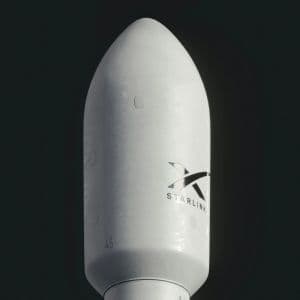
SpaceX has taken its IPO plan into the open with a new SEC filing, and the company wants to trade on the Nasdaq under ticker SPCX. Elon already runs Tesla (NASDAQ: TSLA), so a strong debut could leave him in charge of two public companies valued around the trillion-dollar level. The company first sent its IPO papers to regulators privately in April. The public filing now gives investors the numbers. SpaceX is targeting a June 8 roadshow to sell the deal to big funds. Elon holds 85% of the voting power, with 849.5 million Class A shares and 5.57 billion Class B shares. The filing also says nobody else, either a person or an entity, owns more than 5% of the company. SpaceX gives investors its sales, losses, Bitcoin, and control structure According to SpaceX, it earned revenue of $4.69 billion for the quarter while its quarterly revenue increased by 15%, totaling $4.07 billion. As for the preceding year, the company’s revenue for 2025 stood at $18.67 billion while being higher by 33%. The profit situation is a little more complicated because SpaceX has suffered losses of $4.28 billion in the latest quarter while losing $4.94 billion in 2025. Thus, the company is experiencing rapid growth but has to invest heavily in its rockets, satellites, computing, and artificial intelligence developments. Moreover, SpaceX revealed that it has 18,712 bitcoins that exceed the amount of $1.4 billion. The filing emphasizes an essential artificial intelligence computing agreement between SpaceX and Anthropic. In accordance with the terms, SpaceX will receive payments of $1.25 billion per month until May 2029 from Anthropic. All capacity offered by SpaceX’s Colossus 1 facility located in Memphis, Tennessee, will be used by Anthropic, which amounts to over 300 megawatts of computing power. Additionally, there is indication that Anthropic expressed an interest in collaborating with SpaceX for computing capacity in space, which could amount to several gigawatts. The filing indicates that capacity will be increased starting in May and June at reduced rates. Terminating this agreement can happen by either party after giving 90 days’ notice. SpaceX adds Starlink, Starship, safety risks, and AI plans to the IPO story SpaceX is also preparing to launch a newer version of Starship this week. That part of the business still carries heavy risk. A worker died last week at a SpaceX site in Texas after falling from scaffolding, The Texas Tribune reported. Reuters has also reported hundreds of worker injuries at SpaceX that were not publicly recorded. The filing includes Starlink, the satellite internet unit owned by SpaceX. Starlink now has 10.3 million subscribers. The service has been popular in rural areas and has expanded through deals with governments and foreign telecom companies. Some of those overseas deals came while Elon was serving in government last year. Starlink also competes with major broadband providers in some places, including Comcast (NASDAQ: CMCSA), the parent company of NBCUniversal. AI is now part of the same company story. SpaceX bought Elon’s AI startup xAI in February. Elon said earlier this month that he plans to dissolve xAI as a separate company and put SpaceX in charge of all his AI products. Don’t just read crypto news. Understand it. Subscribe to our newsletter. It's free .
20 May 2026, 21:04
Sui Launches Gasless Stablecoin Transfers With Support From Fireblocks

Grand Cayman, Cayman Islands, May 20th, 2026, Chainwire A new protocol-level feature enables peer-to-peer stablecoin transfers on Sui without requiring users to hold SUI, dropping current stablecoin transfer fees to $0.00. Sui , where money moves as freely as messages, today announced the launch of gasless stablecoin transfers, a new protocol-level feature that enables users and businesses to send supported stablecoins on Sui without paying gas fees or managing a separate SUI token balance. With the feature now rolling out to validators, stablecoin transfer fees are $0.00 on the Sui network. With support live from major stablecoins, including USDsui, suiUSDe, AUSD, FDUSD, USDB, USDC, and USDY, the feature is designed to simplify payment workflows and remove one of the largest friction points in stablecoin mass adoption: the requirement to hold a separate token to complete transactions. Fireblocks , the enterprise platform securing more than $14 trillion in digital asset transactions, has integrated the new solution prior to the rollout as part of Sui’s broader payments ecosystem expansion. In addition, many institutional custodians and retail-facing wallets will support gasless transactions at launch, enabling users to send select stablecoins without holding or spending SUI on transaction fees. “Stablecoins are becoming a core part of global finance, but the infrastructure around them still creates unnecessary complexity,” said Adeniyi Abiodun, Co-Founder and CPO of Mysten Labs, the original contributor to Sui. “From the start, we’ve said it should not cost individuals fees to move their own money. With gasless stablecoin transfers, we are one step closer in making Sui the global rail for payments, whether they are for businesses, AI agents, and consumers.” Fireblocks’ support further strengthens the institutional accessibility of Sui’s payments infrastructure by enabling enterprises and financial service providers to securely access and manage stablecoin activity on the network through trusted digital asset infrastructure. “The future of payments will run on stablecoin rails, but the experience for institutions still needs to catch up,” said Ran Goldi, SVP Payments & Network at Fireblocks. “Sui is making all the right moves, with gasless stablecoin transfers that removes a major point of friction for enterprises building onchain payment flows and customer experiences.” Gasless stablecoin transfers represent a structural change to how single and batched peer-to-peer transfers of supported stablecoins operate on Sui Mainnet and are not a subsidy, sponsorship program, or temporary promotional initiative. In a competitive market where margins are everything, the launch positions Sui as the default stablecoin infrastructure for businesses looking to cut complexity and overhead costs, traders who are tired of failed transactions or the friction of fees, and AI agents, who will objectively choose the cheapest path of least resistance to execute autonomous payments. Since August 2025, Sui has surpassed $1 trillion in stablecoin transfer volume, while its stablecoin ecosystem has continued to expand rapidly across institutional, retail, and developer use cases. Sui’s horizontally scalable architecture and object-centric design allow the network to support high-frequency payment activity with predictable performance and low operational overhead, making it well-suited for emerging payment applications, agentic commerce, and enterprise-grade financial systems. These new protocol mechanisms work by dramatically cutting processing costs, and gasless stablecoin transfers build on that foundation to eliminate gas pre-funding and volatile treasury management entirely. The result is simpler infrastructure for institutions, and an operational and cost model that makes agentic commerce and autonomous systems work. Free transfers mean gas fees never rival or exceed the value of the payment itself, making micropayments viable at any scale. Recent momentum across the Sui ecosystem underscores rising demand for scalable financial infrastructure and stablecoin-based payments. In 2026 alone, four SUI exchange-traded products from 21Shares, Grayscale, and Canary Capital launched globally, expanding institutional access to the Sui ecosystem. At the same time, marquee stablecoin initiatives, including Bridge-issued Sui Dollar (USDSui) and Ethena-issued eSui Dollar (SuiUSDe), have continued to expand Sui’s growing digital dollar ecosystem and strengthen its position as infrastructure for internet-scale finance. Gasless stablecoin transfers are now rolling out on Sui Mainnet. To learn more about payments on Sui, visit https://www.sui.io/payments. Contact: [email protected] About Sui Sui, where money moves as freely as messages, is a next-generation Layer 1 blockchain built for scalable finance and global payments. Founded by the core team behind Meta’s stablecoin initiative and powered by an object-centric model, Sui makes assets, permissions, and user data programmable and ownable. Sui’s primitives offer builders everything they need to create high-performance payments and financial applications, including instant agentic payments. Users can learn more at sui.io . About Fireblocks Fireblocks is the world’s most trusted digital asset infrastructure company, empowering organizations of all sizes to build, manage and grow their business on the blockchain. With the industry’s most scalable and secure platform, we streamline stablecoin payments, settlement, custody, tokenization, trading, accounting operations, and compliance reporting — enabling everything from institutional finance to consumer-facing digital experiences across the largest ecosystem of banks, payment providers, stablecoin issuers, exchanges and custodians. Thousands of organizations — including Worldpay, BNY, Galaxy, and Revolut — trust Fireblocks to secure more than $14 trillion in digital asset transactions across 150+ blockchains. Users can learn more at fireblocks.com . Contact Sui Foundation [email protected]
20 May 2026, 21:00
Bitcoin miner Canaan Inc. loses $88.7 mln in Q1 as crypto market remains fearful
Why did losses still soar to $88.7 million in Q1 2026, even though Canaan Inc. increased its Bitcoin holdings and mining capacity?
20 May 2026, 21:00
Algorand (ALGO) Price Analysis 2026-2030: Can It Reach $1?

BitcoinWorld Algorand (ALGO) Price Analysis 2026-2030: Can It Reach $1? Algorand (ALGO) has long been a notable project in the cryptocurrency space, recognized for its pure proof-of-stake consensus mechanism and focus on scalability, security, and decentralization. As the market cycles through periods of volatility and recovery, investors are increasingly asking whether ALGO can reach the psychologically significant $1 mark in the coming years. This analysis examines the factors that could influence ALGO’s price trajectory from 2026 through 2030, grounded in technological developments, market trends, and realistic adoption scenarios. Understanding Algorand’s Core Value Proposition Algorand’s blockchain was designed to solve the blockchain trilemma by providing a platform that is simultaneously scalable, secure, and decentralized. Its pure proof-of-stake mechanism ensures that transaction finality is achieved within seconds, making it suitable for enterprise-grade applications. The network has seen partnerships in various sectors, including real-world asset tokenization, central bank digital currencies, and decentralized finance. These fundamentals form the backbone of any long-term price prediction, as adoption directly impacts network usage and token demand. Price Predictions for 2026 For 2026, market analysts are cautiously optimistic. If the broader cryptocurrency market enters a sustained bullish phase, ALGO could benefit from increased capital inflows. Key catalysts include the continued growth of the Algorand ecosystem, particularly in the area of real-world asset tokenization, which is gaining traction among financial institutions. However, ALGO faces significant competition from other layer-1 blockchains like Ethereum, Solana, and Avalanche. A realistic price range for ALGO in 2026, assuming a moderate market recovery and no major technical setbacks, could be between $0.30 and $0.60. Reaching $1 in 2026 would require an extraordinary bull run and a dramatic increase in network activity. Outlook for 2027 Looking ahead to 2027, the outlook for ALGO becomes more dependent on its ability to secure large-scale adoption. If Algorand becomes a preferred platform for tokenized securities or government-issued digital currencies, the demand for ALGO as a native asset could increase substantially. Additionally, the maturation of the broader crypto regulatory environment could provide a clearer path for institutional investment. Under these favorable conditions, ALGO could trade in the range of $0.50 to $0.90. The $1 target remains a possibility but is contingent on strong macroeconomic tailwinds and ecosystem growth that outpaces competitors. Long-Term Projections: 2028 to 2030 Predictions for 2028 through 2030 are inherently speculative, but they can be framed around potential network milestones. If Algorand successfully captures a significant share of the asset tokenization market, its valuation could see substantial appreciation. Some analysts project that ALGO could reach or exceed $1 by 2028 if adoption trends continue. By 2030, a more mature market and established use cases could see ALGO trading between $1 and $3, assuming it remains a top-tier layer-1 blockchain. However, investors must account for market cycles, technological disruption, and regulatory changes that could derail these projections. Key Factors That Could Drive ALGO to $1 Real-World Asset Tokenization: Algorand’s focus on tokenizing assets like real estate, commodities, and securities could create massive demand for ALGO. Institutional Partnerships: Continued collaboration with governments and financial institutions for CBDC projects could provide long-term utility. Network Upgrades: Future protocol improvements that enhance scalability or reduce transaction costs could attract more developers. Market Sentiment: A broader cryptocurrency bull market, driven by Bitcoin halving cycles and increased mainstream adoption, would lift all boats. Risks and Challenges It is equally important to consider the risks. ALGO faces intense competition from established and emerging blockchains. Its tokenomics, which include a large circulating supply, can dilute price appreciation. Furthermore, if the broader market enters a prolonged bear phase, ALGO could struggle to maintain its value. Regulatory crackdowns on cryptocurrencies or specific technologies could also negatively impact the project. Any price prediction must be viewed through the lens of these uncertainties. Conclusion Algorand’s path to $1 is possible but not guaranteed. The project’s strong technological foundation and strategic focus on real-world asset tokenization provide a credible use case. However, reaching the $1 mark will require sustained ecosystem growth, favorable market conditions, and successful execution of its roadmap. Investors should approach price predictions with caution, focusing on the underlying fundamentals rather than short-term price targets. As with all cryptocurrency investments, diversification and thorough research are essential. FAQs Q1: Is Algorand a good long-term investment? Algorand has strong fundamentals, including a scalable and secure blockchain, but its long-term success depends on adoption and competition. It may be suitable for investors who believe in the tokenization of real-world assets. Q2: What is the maximum supply of ALGO? Algorand has a maximum supply of 10 billion ALGO tokens. The circulating supply increases over time as tokens are released from vesting schedules and ecosystem rewards. Q3: Could ALGO ever reach $10? Reaching $10 would require a market capitalization of over $100 billion, which is possible only in an extremely bullish scenario with massive global adoption. It is considered a very high-risk, high-reward target. This post Algorand (ALGO) Price Analysis 2026-2030: Can It Reach $1? first appeared on BitcoinWorld .


