


 Invest ideas
News
20 May 2026, 13:23
Coins.ph expands Bitcoin and Ethereum payments in the Philippines

Coins.ph , the leading crypto platform in the Philippines, has expanded its QR-code crypto payment network in the country, adding support for Bitcoin ( BTC ) and Ethereum ( ETH ). The update continues the trend set by the platform’s earlier integration of Tether ( USDT ) and brings further payment variety to around 700,000 merchants. At the core of the update is, of course, QRPH, the country’s standardized QR payment system developed under the Bangko Sentral ng Pilipinas (BSP), which automatically converts crypto into Philippine pesos at the point of sale. “The addition of new tokens to our QRPH crypto payments feature is a great achievement following the landmark introduction of USDT payments for the Philippine financial landscape,” Wei Zhou, CEO of Coins.ph, told Finbold. Stablecoin payments in the Philippines As mentioned, the latest expansion is another step in the company’s plan to make stablecoin payments more viable in the Philippines. The initial launch of the system introduced USDT into the national QR infrastructure and recorded strong early transaction activity, as it helped make licensed Philippine wallets viable for direct crypto spending through unified national channels. “We aren’t just adding new tokens; we are redefining what a digital wallet can do. This is the future of finance in action, and we’re making the world’s most popular cryptocurrencies a functional part of the Filipino daily life,” Zhou added. For now, stablecoins remain central to the model, which is hardly surprising considering the market is shaped by large remittance inflows. More precisely, the Philippines receives roughly $38 billion annually in remittances. As a result, digital assets, such as USDT, are an increasingly popular option when moving value across borders before being spent locally without additional conversion steps. What’s more, the Philippines remains one of the most active crypto markets in the world, with more than 15 million people, or roughly 13.4% of the population, making use of digital currencies. Featured image via Shutterstock The post Coins.ph expands Bitcoin and Ethereum payments in the Philippines appeared first on Finbold .
20 May 2026, 13:18
Bitcoin Price Analysis: On-Chain Metric Says BTC Is Coiling for a Big Move
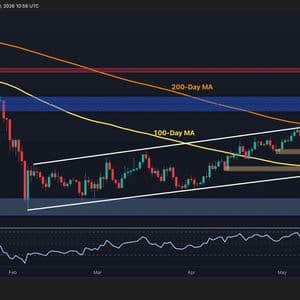
Bitcoin is trading at $77.5k as the third week of May draws to a close. The market is recovering quietly from the $75k–$76k support zone after last week’s failed breakout attempt above $80k. The structure has absorbed the pullback without breaking, the ascending channel floor continues to rise, and the on-chain picture tells a story that the price chart alone undersells. Sentiment is rebuilding from levels last seen at the very beginning of the previous bull market. Bitcoin Price Analysis: The Daily Chart On the daily timeframe, the ascending white channel from the February low has held, with the asset bouncing from the upper edge of the $75k–$76k support zone today, rising toward $77.5k. The 100-day moving average is now sloping upward to approximately $72k and is now converging with that same support zone. This will likely create a strengthening combined support floor that rises a little further every week. The RSI is also hovering around 50, showing little signs of directional momentum. A recovery back above $80k and a breakout above the 200-day moving average nearby are the immediate requirements to restore bullish momentum. If this scenario materializes, the $88k–$90k band is the structural target above. On the other hand, a daily candle close below $75k and the 100-day MA near $72k would be the first serious structural damage of the recovery. BTC/USDT 4-Hour Chart The bounce from the $75k–$76k support zone has lifted the 4-hour RSI from the low-to-mid 30s back to approximately 50. The asset is now tracking toward the bearish Fair Value Gap marked on the chart near $80k. This is a price imbalance left by the sharp sell-off from the $82k highs, which the underlying asset typically returns to fill before resolving direction. The FVG is the immediate short-term target on the upside. A clean move through it would signal that the pullback is fully absorbed and the next push toward the $82k supply zone and the upper boundary of the daily channel is building. However, failure to trade through the FVG and a rollover back below $75k would suggest the selling pressure from the failed breakout is not yet exhausted, opening the path toward the lower demand zone at $70k–$72k as the next test. On-Chain Analysis The Net Unrealized Profit/Loss has recovered from its February low of approximately 0.12, which was the deepest reading since October 2023 and briefly demonstrated a capitulation period. The metric has now risen back to the current reading of 0.29. That number puts the market above the green zone, and the average BTC holder is sitting on moderate unrealized gains, but the kind of euphoria that precedes major tops is nowhere in sight. The historical parallel is precise. NUPL crossed 0.29 in late 2023 near $40k on its way to the bull market peak. The journey from that level to the 0.50 threshold, where momentum historically accelerates, corresponded to a price move from roughly $40k to $80k. At $77.5k with NUPL at 0.29, the on-chain sentiment structure suggests the market is in a similar position. It’s likely past capitulation, rebuilding confidence, but with the majority of the cycle’s unrealized gains still ahead rather than behind. The post Bitcoin Price Analysis: On-Chain Metric Says BTC Is Coiling for a Big Move appeared first on CryptoPotato .
20 May 2026, 13:16
Iran’s Crypto Routes Passed Through Networks Linked To Trump Allies

Iranian crypto exchange Nobitex reportedly processed billions of dollars through the Tron and BNB Chain networks while Tehran faced growing pressure from Western sanctions. According to blockchain analytics cited by Reuters , more than $2.3 billion moved through the two networks since early 2023. The findings drew attention because the same blockchain ecosystems later became closely connected to World Liberty Financial, the crypto project backed by Donald Trump and members of his family. Tron founder Justin Sun and Binance co-founder Changpeng Zhao both emerged as major supporters of the project. Reuters said there is no evidence that Trump or his family knew how Nobitex users were utilizing the networks. Billions Reportedly Moved Through Tron And BNB Chain Data from blockchain analytics firms Arkham and Elliptic showed that Nobitex relied heavily on Tron and BNB Chain to move funds outside traditional banking systems restricted by sanctions. Researchers also alleged that the Central Bank of Iran transferred more than $500 million in the stablecoin Tether through the Tron network between late 2024 and mid-2025. Part of those funds reportedly flowed through Nobitex before being converted into other digital assets. Analysts said some transactions connected to users linked with Iran’s Islamic Revolutionary Guard Corps were also identified on the exchange. Nobitex denied having direct ties to the Iranian government and said any illicit transfers happened without management knowledge. Stablecoins Became Both A Compliance Tool And A Loophole The report highlighted the unusual role of Tether’s USDT stablecoin in global sanctions enforcement. Unlike Bitcoin, USDT is centrally managed, meaning Tether can freeze wallets tied to sanctioned entities when requested by authorities. That power was demonstrated in April 2026, when more than $344 million connected to Iranian-linked addresses on Tron was frozen. At the same time, blockchain infrastructure itself remains decentralized. As long as a wallet is not blacklisted, transactions can continue moving across networks like Tron without direct approval from issuers or governments. Analysts say this has turned stablecoins into both an enforcement mechanism and one of the most widely used tools for bypassing financial restrictions. Trump-Linked Crypto Ties Drew New Attention The Reuters investigation also examined growing connections between Binance, Tron and World Liberty Financial. In early 2025, Abu Dhabi-based investment fund MGX reportedly used World Liberty’s USD1 stablecoin in a major Binance-related investment deal, helping legitimize the token within the broader crypto market. Meanwhile, relations between World Liberty and Justin Sun later deteriorated. Sun filed a lawsuit against the company in 2026, accusing it of extortion, while World Liberty responded with a defamation claim. Despite the legal dispute, Sun reportedly still controls billions of WLFI tokens connected to the project. Representatives for both Tron and BNB Chain defended the decentralized nature of their networks, arguing that public blockchains cannot realistically monitor every transaction made by users worldwide. The White House rejected suggestions that Trump’s business interests created any conflict involving Iranian financial activity, calling attempts to connect the president to Iran’s banking system “absurd.”
20 May 2026, 13:15
CoinDesk 20 performance update: Uniswap (UNI), up 3.7%, leads index higher
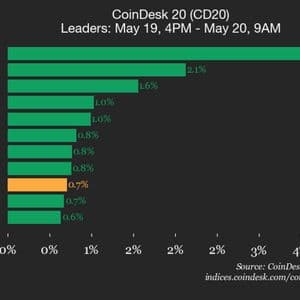
Bittensor (TAO) gained 2.1%, joining Uniswap (UNI) as a top performer.
20 May 2026, 13:15
Sorted Wallet raises $4.4 million for USDT phone transfers

🚀 Sorted Wallet secured $4.4 million led by Tether and Gnosis. The 10 MB app brings $USDT and BTC transfers to basic phones. 🌍 Key point: Sorted Wallet targets 500,000+ users in Africa and Asia. Continue Reading: Sorted Wallet raises $4.4 million for USDT phone transfers The post Sorted Wallet raises $4.4 million for USDT phone transfers appeared first on COINTURK NEWS .
20 May 2026, 13:09
How U.S. Credit Downgrade Fears Are Affecting Bitcoin

U.S. credit downgrade fears are no longer just a bond-market headline. For crypto investors, they have become part of the macro backdrop that can influence Bitcoin demand, altcoin liquidity, stablecoin flows, and overall risk appetite. The issue matters because crypto markets are now more connected to traditional finance. Bitcoin is still a decentralized asset with its own supply schedule and adoption cycle, but it also trades alongside spot ETF flows, institutional positioning, dollar liquidity, Treasury yields, and global risk sentiment. The U.S. has already lost its top rating from all three major rating agencies: S&P downgraded the U.S. long-term sovereign rating in 2011, Fitch followed in 2023, and Moody’s lowered its rating from Aaa to Aa1 in 2025. For crypto markets, the question is not simply whether a downgrade is bullish or bearish. The real issue is how investors interpret fiscal risk: as a reason to seek non-sovereign assets such as Bitcoin, or as a reason to reduce exposure to volatile assets. ( S&P Global Ratings ) Key Takeaways PointDetailsU.S. credit fears affect crypto through macro channelsTreasury yields, dollar liquidity, risk appetite, ETF flows, and leverage conditions can all influence Bitcoin and altcoins.Bitcoin has a mixed identityIt can trade as a macro hedge narrative during fiscal concerns, but it can also sell off like a risk asset when liquidity tightens.Altcoins are usually more vulnerableSmaller tokens often depend more on liquidity, speculative capital, and leverage than Bitcoin does.Higher yields can pressure cryptoWhen Treasury yields rise, investors may demand more compensation for holding volatile assets.Downgrade fears do not guarantee a crypto rallyMarket reaction depends on whether investors focus on fiat-debasement concerns or short-term risk reduction. Why U.S. Credit Downgrade Fears Are Back in the Crypto Conversation A sovereign credit downgrade does not mean the U.S. is suddenly unable to pay its debts. It means a rating agency believes the country’s credit profile has weakened compared with its previous rating. In the U.S. case, the core concerns usually involve rising public debt, persistent budget deficits, higher interest costs, and political difficulty in reaching durable fiscal agreements. The fiscal numbers explain why crypto markets are paying attention. The Congressional Budget Office has projected large federal deficits and rising debt held by the public over the coming decade, with interest costs becoming a more important part of the fiscal burden. That creates a macro environment where investors may question how long the U.S. can keep borrowing at favorable rates without consequences for yields, the dollar, or liquidity. ( Congressional Budget Office ) For crypto investors, this creates two competing interpretations. The bullish interpretation is that rising sovereign debt strengthens the long-term case for scarce, non-sovereign assets such as Bitcoin. The bearish interpretation is that fiscal stress can push Treasury yields higher, tighten financial conditions, and reduce demand for volatile assets. Both views can be true at different time horizons. Bitcoin may benefit from long-term concern about fiat credibility while still falling during short-term liquidity shocks. The Main Transmission Channels: Yields, Dollar Liquidity, and Risk Appetite U.S. credit downgrade fears usually affect crypto indirectly. The downgrade headline matters, but the market impact comes from what happens next in bonds, currencies, liquidity, and investor positioning. Treasury Yields If investors demand higher yields to hold long-term U.S. debt, the discount rate across financial markets can rise. That can pressure growth stocks, venture-style assets, and speculative crypto tokens. For Bitcoin, higher yields create a more difficult short-term comparison because Bitcoin does not pay interest. When cash and Treasuries offer higher returns, some investors become less willing to hold volatile assets unless they expect strong upside or want long-term diversification. This does not destroy the Bitcoin thesis, but it can delay or weaken risk appetite. Dollar Liquidity Crypto markets often perform better when global liquidity is expanding and worse when liquidity tightens. Research from Glassnode has described Bitcoin as increasingly linked to macro variables, including global liquidity and risk-asset behavior. ( Glassnode ) That matters because U.S. downgrade fears can either weaken or strengthen liquidity depending on the market response. If fiscal anxiety leads to higher yields and tighter credit, crypto may struggle. If policymakers eventually respond with easier liquidity conditions, Bitcoin and higher-beta crypto assets may recover. Institutional Flows The approval of U.S. spot Bitcoin exchange-traded products in January 2024 created a regulated route for broader investor access to Bitcoin. That does not remove volatility, but it changes market structure. Macro investors can now adjust Bitcoin exposure through familiar brokerage and ETF channels, which may make Bitcoin more sensitive to institutional risk-on and risk-off flows. ( U.S. Securities and Exchange Commission ) Why Bitcoin Can React in Two Different Ways Bitcoin’s reaction to U.S. credit downgrade fears can look contradictory. Sometimes it strengthens during fiscal anxiety. Sometimes it falls with equities and other volatile assets. This is because Bitcoin sits between two narratives. The Non-Sovereign Asset Narrative Bitcoin has a fixed issuance schedule, no central bank, and a global settlement network. Those characteristics make it attractive to some investors when confidence in government debt, fiat money, or political stability weakens. Under this view, downgrade fears may support Bitcoin’s long-term investment case. Investors who worry about fiscal dominance, deficit monetization, or currency debasement may treat Bitcoin as one possible hedge within a diversified portfolio. BlackRock has also discussed Bitcoin’s potential role as a unique diversifier while emphasizing that it remains highly volatile. ( BlackRock ) The Risk-Asset Reality In the short term, Bitcoin often behaves like a high-volatility macro asset. If investors sell equities, reduce leverage, raise cash, or move into Treasuries, Bitcoin can be sold alongside other risk assets. This is especially true when futures leverage is high, ETF flows weaken, or market makers reduce liquidity. That is why the phrase “Bitcoin is digital gold” needs context. Bitcoin may share some long-term hedge characteristics with gold, but it does not always behave like gold during acute market stress. Its volatility, 24/7 trading, derivatives markets, and retail participation can amplify short-term moves. What This Means for Ethereum, Altcoins, and DeFi Bitcoin usually absorbs the first wave of macro attention, but U.S. credit downgrade fears can affect the rest of crypto more aggressively. Ethereum may be influenced by both macro liquidity and network fundamentals. If risk appetite weakens, ETH can face pressure from the same forces that affect Bitcoin. However, Ethereum also has its own drivers: staking demand, layer-2 activity, stablecoin settlement, tokenization, DeFi usage, and developer activity. Altcoins are typically more fragile in downgrade-driven market stress. Many smaller tokens depend on abundant liquidity, speculative rotation, exchange listings, social momentum, and favorable funding conditions. When investors become cautious, capital often consolidates into Bitcoin, stablecoins, or cash before returning to higher-risk tokens. DeFi can also feel the impact through collateral values and borrowing conditions. If crypto prices fall quickly, lending markets may see liquidations. If stablecoin demand rises, yields may shift. If risk appetite drops, users may pull funds from higher-risk pools and bridges. The biggest mistake is assuming all crypto assets respond equally. Bitcoin may attract macro-hedge demand while small-cap tokens lose liquidity. Ethereum may hold up better than speculative altcoins if network activity remains strong. DeFi blue chips may behave differently from high-yield farms with weak risk controls. How Traders Should Read the Market Signals Traders should avoid reacting only to the rating headline. A downgrade or downgrade warning matters, but the more useful signals usually appear in market plumbing. Watch Treasury yields first. If long-term yields rise sharply, crypto traders should expect pressure on leveraged and speculative positions. Rising real yields are especially important because they increase the opportunity cost of holding non-yielding assets. Watch the dollar next. A stronger dollar can tighten global financial conditions and weigh on crypto liquidity. A weaker dollar may support Bitcoin and other crypto assets, especially if investors interpret fiscal concerns as negative for dollar credibility. ETF flows are also important. Spot Bitcoin ETFs can act as a visible channel for institutional demand. Strong inflows may help absorb selling pressure, while sustained outflows can make Bitcoin more vulnerable during macro stress. Derivatives positioning matters as well. If funding rates are elevated and open interest is crowded, even a modest macro shock can trigger liquidations. In that environment, price can move faster than the underlying news seems to justify. Trader Checklist Check 10-year and 30-year Treasury yield direction. Watch the U.S. Dollar Index and real yields. Monitor Bitcoin ETF flows and exchange liquidity. Review funding rates and open interest before adding leverage. Avoid entering positions immediately after a headline spike. Define invalidation levels before trading. Reduce position size when volatility expands. The goal is not to predict every move. The goal is to avoid being overexposed when macro volatility, thin liquidity, and leverage line up in the wrong direction. Practical Risk Checks for Long-Term Crypto Investors Long-term investors do not need to trade every downgrade headline, but they should use these periods to review portfolio risk. First, check concentration. If most of a portfolio is in small-cap altcoins, downgrade-driven volatility can be more damaging than a simple Bitcoin pullback. A more resilient crypto portfolio usually distinguishes between core exposure, speculative exposure, stablecoin reserves, and long-term conviction positions. Second, review custody. Macro stress often brings more phishing, fake exchange alerts, scam airdrops, and panic-driven mistakes. Investors should use strong two-factor authentication, hardware wallets where appropriate, withdrawal allowlists, and careful seed phrase storage. Third, evaluate liquidity. A token may look attractive during a selloff, but low liquidity can make exits difficult. Check exchange depth, trading volume quality, token unlock schedules, and whether liquidity is concentrated on one venue. Fourth, avoid using leverage to express long-term views. If the thesis is that Bitcoin could benefit from long-term fiscal instability, a leveraged position can still be liquidated during short-term volatility before the thesis plays out. Fifth, separate narrative from evidence. A token claiming to be a “macro hedge” should still be evaluated by adoption, liquidity, security, tokenomics, developer activity, and real usage. Fiscal fear can attract attention, but it does not automatically create sustainable value for every crypto asset. What Could Change the Outlook The impact of U.S. credit downgrade fears on crypto markets depends on what happens next. A more constructive outlook could emerge if Treasury yields stabilize, the dollar weakens in an orderly way, ETF demand improves, inflation cools, and policymakers provide a credible fiscal path. In that environment, Bitcoin’s scarce-asset narrative could regain strength while broader crypto liquidity improves. A more negative outlook could develop if yields continue rising, the dollar tightens global liquidity, equities sell off, ETF flows weaken, or leverage builds too quickly. In that case, Bitcoin may remain volatile and altcoins may underperform. Regulation is another variable. Coinbase Institutional has highlighted regulation, institutional integration, tokenization, stablecoins, and macro conditions as important crypto-market themes. Clearer rules can support institutional adoption, but they do not eliminate market risk. ( Coinbase Institutional ) The most balanced view is that U.S. credit downgrade fears strengthen the long-term conversation around Bitcoin, but they can still create short-term headwinds for crypto prices. Investors should treat the theme as a macro framework, not a guaranteed trading signal. Crypto Daily Perspective For Crypto Daily readers, the key is to connect macro headlines with practical crypto decisions. U.S. credit downgrade fears can influence Bitcoin, Ethereum, DeFi, stablecoins, and altcoins, but the effect depends on yields, liquidity, investor positioning, and market structure. Crypto Daily helps readers follow these themes without relying on hype. Whether the market is focused on Bitcoin as a non-sovereign asset, altcoin liquidity, ETF flows, or regulatory change, the most useful approach is careful analysis, risk awareness, and disciplined decision-making. Frequently Asked Questions Do U.S. credit downgrade fears help Bitcoin? They can support Bitcoin’s long-term narrative as a scarce, non-sovereign asset, especially when investors worry about fiscal sustainability. However, downgrade fears can also hurt Bitcoin in the short term if they push yields higher and reduce risk appetite. Why do Treasury yields matter for crypto? Higher Treasury yields can make lower-risk assets more attractive and reduce demand for volatile assets. They can also tighten financial conditions, which often pressures Bitcoin, Ethereum, and altcoins. Is Bitcoin a safe haven during U.S. fiscal stress? Bitcoin may act as a hedge narrative for some investors, but it is not consistently a safe haven in short-term market stress. It remains highly volatile and can sell off with other risk assets. Are altcoins more exposed to downgrade fears than Bitcoin? Usually, yes. Altcoins often depend more on liquidity, speculative capital, exchange depth, and leverage. During macro stress, capital may rotate away from smaller tokens and toward Bitcoin, stablecoins, or cash. Could U.S. debt concerns increase stablecoin demand? They could, especially if traders move into dollar-denominated crypto liquidity instead of exiting exchanges completely. However, stablecoins also carry issuer, regulatory, reserve, and platform risks that users should understand. Should investors buy crypto because of U.S. downgrade fears? Downgrade fears alone are not a complete investment thesis. Investors should evaluate time horizon, risk tolerance, liquidity, custody, asset fundamentals, and portfolio concentration before making decisions. What should crypto traders watch during downgrade headlines? The most useful indicators are Treasury yields, the dollar, real yields, ETF flows, funding rates, open interest, liquidity depth, and equity-market sentiment. These signals usually matter more than the headline itself. Disclaimer: This article is provided for informational purposes only. It is not offered or intended to be used as legal, tax, investment, financial, or other advice.


