


 Invest ideas
News
20 May 2026, 12:59
How WalletConnect Works With IronWallet for dApps, DeFi, and Payments
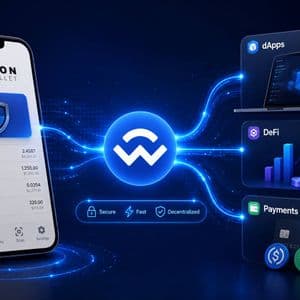
WalletConnect runs as the encrypted bridge between IronWallet and the wider Web3 ecosystem, supporting connections to 70,000+ applications across multiple blockchains. The protocol now spans 700+ wallets and 55.5 million active users, processing over $400 billion in network volume during 2025. For IronWallet users, WalletConnect opens access to DeFi platforms, NFT marketplaces, and decentralized exchanges without exposing private keys. Using WalletConnect with IronWallet preserves self-custody at every step, and the IronWallet WalletConnect integration extends across dApps, DeFi protocols, and the new WalletConnect Pay retail layer. The sections ahead cover what WalletConnect is, how to connect IronWallet to a dApp, how WalletConnect Pay extends the protocol to retail purchases, and the security practices that keep both flows safe. What WalletConnect Is WalletConnect launched in 2018 as an open-source protocol designed to link mobile crypto wallets to decentralized applications. The protocol creates an encrypted session between the wallet and the dApp, with all communication end-to-end encrypted and chain-agnostic. Private keys never leave the wallet. The dApp can request signatures for specific transactions, but every action requires explicit user approval inside the wallet app. No automatic transfers, no background permissions, no key exposure. Scale matters for understanding why the protocol became the Web3 standard. WalletConnect supports more than 700 wallets globally, including IronWallet, MetaMask, Trust Wallet, Safe, Phantom, and Coinbase Wallet. The protocol routes traffic to over 70,000 applications across major blockchains: Ethereum, BNB Chain, Polygon, Base, Arbitrum, Optimism, Solana, and others. Why WalletConnect Matters for IronWallet Users Self-custody is the first reason. IronWallet keeps private keys on the device with double key encryption, and WalletConnect preserves that custody model. A WalletConnect dApp connection doesn't grant the dApp any access to keys or stored funds. The user approves every action. Mobile-first design pairs naturally with WalletConnect's QR-code session flow. IronWallet runs on iOS and Android as a WalletConnect mobile wallet built around exactly that form factor. Multi-chain coverage matches the ecosystem WalletConnect spans. IronWallet supports Tron, Ethereum, Solana, BNB Chain, Polygon, Base, and several other networks. The user can connect to a dApp on any of these chains through the same WalletConnect session, without switching wallets or downloading separate apps. How to Connect IronWallet to a dApp Knowing how to use WalletConnect with IronWallet comes down to a five-step WalletConnect setup flow. The connection takes about thirty seconds for users familiar with the steps. IronWallet routes WalletConnect through the Settings menu instead of placing a scan button on the home screen. Open the dApp on a browser. Most dApps have a "Connect Wallet" button. Tap or click it. Select WalletConnect from the connection options. A QR code appears on screen. If using IronWallet on the same device as the browser, a direct deep link is sometimes offered instead. Open IronWallet, go to Settings, tap WalletConnect, then tap Scan QR code. This is where IronWallet's flow differs from wallets that put the scanner on the home screen. The Settings → WalletConnect path keeps dApp connections organized and visible alongside other connection management. Scan the dApp's QR code. IronWallet's camera reads the code and prepares a connection request. Review the connection request, then approve. The screen shows which dApp is requesting connection, what networks it wants access to, and what permissions it's asking for. Approve only if the request matches the dApp the user opened. Return to the dApp. The connection is live, and the user can now interact with the dApp directly from IronWallet. Paying With WalletConnect Pay From IronWallet WalletConnect Pay sits on top of the WalletConnect protocol as a dedicated payments layer. The product launched into general availability in January 2026 through a partnership with Ingenico , the global leader in payment acceptance, whose terminals now support stablecoin payments at retail checkouts across 32 countries. IronWallet supports WalletConnect Pay natively. Users with stablecoin balances can pay at merchants accepting the standard through a two-step flow: Scan the merchant's QR code at the point of sale or in the online checkout Confirm the payment in IronWallet, with the token and network selected by the user The payment completes on-chain in seconds, with the merchant's payment provider receiving the transaction result and the customer receiving confirmation. Supported stablecoins include USDC, USDT, EURC, and BNB on BNB Smart Chain. Networks live on the rail include Polygon, Base, Arbitrum, Ethereum Mainnet, BNB Smart Chain, and additional EVM-compatible chains, with more planned. Compliance handling runs on the rail side, not the wallet side. Travel Rule data transmission, OFAC and EU sanctions screening, and IP geo checks execute pre-payment on every transaction, with returning users skipping data capture entirely. The user-side experience stays the same shape regardless of what compliance work happens behind the scenes. WalletConnect Pay partners include Coinbase, Stripe, Shopify, BitPay, MoonPay, and Mesh, alongside Ingenico's POS terminal network. Merchant categories covered include retail, hospitality, transportation, fuel, parking, vending, and self-service. Security Practices for WalletConnect Sessions WalletConnect security rests on two layers: protocol-level encryption protects the connection itself, and user vigilance protects against everything else. Five practices keep both WalletConnect and WalletConnect Pay sessions safe: Verify dApp URLs before connecting. Phishing sites mimic legitimate dApps with slight URL differences such as extra letters, swapped characters, or similar-looking domains. The connection itself is encrypted, but a malicious dApp can still request harmful transaction approvals. Review every transaction inside IronWallet before approving. Check the recipient address, the amount, the token, the network, and the fee. A connected dApp can request signatures; only the user can grant them. Disconnect sessions when finished using a dApp. Active WalletConnect sessions persist until explicitly closed, leaving permission for future signature requests. Closing unused sessions reduces the attack surface. Monitor unexpected permission requests. A dApp that connected for one purpose should not later ask for access to networks or tokens it has no reason to touch. Sudden permission expansions warrant disconnection and review. Keep IronWallet updated. Wallet updates include WalletConnect SDK upgrades, security patches, and compatibility fixes for evolving dApp standards. Confirm payment details on WalletConnect Pay flows. At the point of sale or online checkout, verify the merchant name, the amount, the token, and the network before approving. The same vigilance that protects dApp signatures protects payments. Managing Active WalletConnect Sessions in IronWallet Active sessions live in the Settings → WalletConnect menu. The screen lists every dApp currently connected, when the session started, and what permissions each session holds. Disconnect individual sessions by selecting the dApp and tapping disconnect. Clear all sessions at once through the same menu when doing a clean reset. Regular audits help. Reviewing the active session list weekly, or after each major Web3 interaction, prevents stale connections from accumulating. Unrecognized sessions should be disconnected immediately, and the recent transaction history should be reviewed for any unauthorized signatures. Conclusion WalletConnect with IronWallet delivers two distinct capabilities through the same underlying protocol. The dApp connection flow opens access to DeFi, NFTs, and decentralized governance across 70,000+ applications, with private keys staying on the device. WalletConnect Pay extends the protocol into retail commerce, letting IronWallet users spend stablecoins at physical merchants and online checkouts through a scan-and-confirm flow. One protocol, two use cases, both built on the same self-custody model that defines IronWallet itself. Disclaimer: This article is provided for informational purposes only. It is not offered or intended to be used as legal, tax, investment, financial, or other advice.
20 May 2026, 12:57
Lighter's LIT token rallies 20% after Vitalik Buterin mention and SpaceX futures launch

Lighter’s native token, LIT, surged by more than 20% in the past 24 hours after hitting a high of $1.23 on May 20. It is the token’s highest price since mid-March. As to how it happened, analysts are pointing out possible catalysts that came together to give the decentralized perpetual futures exchange the latest boost. LIT’s trading volume is now over $75.8 million, a 100% jump in the past 24 hours. Why is LIT’s price rallying? Lighter’s rally coincided with a fireside chat featuring Ethereum co-founder Vitalik Buterin, a new trading terminal integration, and the launch of synthetic pre-IPO futures tied to SpaceX. Lighter founder Vlad Novakovski joined Buterin and Ethereum Foundation member Joseph Schweitzer on May 18 for a conversation about high-performance applications on Ethereum and the scaling roadmap for ZK rollups. Buterin praised Lighter, stating that it was one of the more notable projects building on Ethereum during the discussion. LIT price has reached its highest level since March. Source: CoinMarketCap An integration with Tealstreet is touted as the second catalyst for the rise in LIT’s fortunes. Tealstreet is a trading terminal popular among active derivatives traders, and the partnership gives its users direct access to Lighter’s order books from within the terminal. Lighter’s rollout of a synthetic SpaceX pre-IPO perpetual futures market , which taps into speculative demand around the privately held rocket company, is being seen as the third reason for its current rally. That product has also drawn attention from traders looking for exposure to assets that are currently not available on traditional venues. ZK verification milestone adds to sentiment On May 19, a day before the price move, blockchain risk assessor L2BEAT announced it had independently regenerated all ZK circuits used by Lighter’s layer-2 chain from source code. The verification was a form of vote of confidence for Lighter, as users no longer need to trust the project’s team to perform a permissionless emergency exit from the network. The numbers behind Lighter’s rally Lighter runs on its own ZK rollup, zkLighter, offering both spot and perpetual futures trading. The protocol holds over $488 million in total value locked (TVL) across Ethereum and Arbitrum, according to DeFiLlama . Its annualized revenue stands at $26.3 million, with cumulative perpetual futures volume exceeding $1.6 trillion since launch. Lighter also has an automated buyback mechanism that runs every hour without human intervention. The fees are collected and converted into 100 buy-side limit orders for LIT, then spread from the current price down to 10% below, according to the project’s May 11 post on X. As of that date, the protocol had repurchased 12.5 million LIT tokens since its token generation event , representing 5% of the circulating supply. Lighter raised $68 million in a November 2025 round backed by Founders Fund, Ribbit Capital, Haun Ventures, and Robin Hood Ventures. Has LIT set a new price record? The rally brought LIT’s market capitalization to around $297 million at a circulating supply of 250 million tokens, with a fully diluted valuation (FDV) near $1.2 billion, according to CoinMarketCap. The token will still need a stronger rally to beat its all-time high of $4.04 set in late December. Its all-time low of $0.78 was recorded on March 31, 2026. The strength of the momentum will be put to the test once attention wanes and shows how much of the move was driven by fundamentals versus short-term speculation. Don’t just read crypto news. Understand it. Subscribe to our newsletter. It's free .
20 May 2026, 12:51
Bitcoin Slips to $77K on Momentum Fade as South Carolina Shields Miners, Bans CBDC
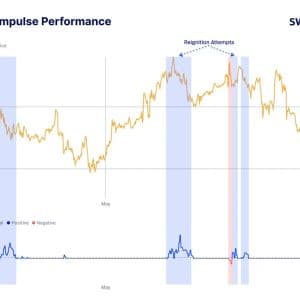
Bitcoin News Bitcoin (BTC) is flashing classic signs of momentum exhaustion after its rejection above the $82,000 level, with the leading cryptocurrency now trading near $77,200 after sliding rough...
20 May 2026, 12:50
Quantum risk puts 6.04 million BTC on the line

🚨 6.04 million BTC now face exposure to quantum risks. This makes up 30% of Bitcoin’s total supply. 📎 Key point: In $BTC, address reuse on exchanges is the biggest vulnerability. Continue Reading: Quantum risk puts 6.04 million BTC on the line The post Quantum risk puts 6.04 million BTC on the line appeared first on COINTURK NEWS .
20 May 2026, 12:49
Dash price prediction: Can privacy coin climb to $60 next?

Dash (DASH) rallied sharply on Wednesday as renewed buying interest in privacy-focused cryptocurrencies pushed the token into double-digit intraday gains, rekindling optimism that $55 may be within reach. Improving on-chain momentum as privacy coins resurface and a favorable technical setup could help sustain the breakout seen over the past week. DASH price jumps 12% as breakout extends As noted, Dash extended a breakout move on strong volume, rising roughly 12% over the past 24 hours as markets rotated back into privacy coins. The intraday performance of the coin shows a short-term breach of a key resistance zone, with buyers across derivatives and spot markets contributing to a 28% spike in daily volume. According to CoinMarketCap, the metric stood at just over $126 million, suggesting bullish conviction is behind the move above $40. DASH price had reached a high of $48 as of writing. The rally in Dash occurred alongside broader gains among privacy assets. Zcash (ZEC) posted nearly 6% in daily gains, while Monero (XMR) was looking to retest $400 amid a risk-on shift toward anonymity-focused tokens. The privacy coins sector’s strength is down to broader resilience to macroeconomic and geopolitical conditions. Dash is also witnessing renewed speculative flows into small market-cap tokens as Bitcoin struggles near $76,000. Polymarket odds show about 56% of traders see BTC ending May around $75k. Dash’s intraday strength was accompanied by increased on-chain activity, with new addresses interacting with the network and heightened exchange inflows that appeared to feed momentum. Short-term futures open interest had also risen slightly, suggesting speculative participants are positioning for further upside rather than a quick reversal. Dash price outlook: Is the $60 resistance level next? Technically, the picture for Dash currently favors a continuation of the rally, though key levels merit attention for traders managing risk. Momentum indicators point to upward strength: the Relative Strength Index (RSI) sits in bullish territory, indicating sustained buying pressure without yet hitting extreme overbought readings. The Stochastic RSI similarly registers elevated values and recent crossovers that historically accompany impulse moves, reinforcing the near-term bullish bias. Immediate resistance is visible around $47.50-$49, where previous consolidation and short-term moving averages converge. Dash price 4-hour chart by TradingView A decisive breach above this band would open the path toward the next psychological and technical target near $60. The token recently touched highs of $58, and buyers may target a similar move, with the year-to-date highs around $96. On the downside, support is likely to form near the breakout zone around $40-$42. If bulls fail to hold this area, it could signal a loss of momentum and invite a pullback toward $35. Longer-term moving averages provide deeper support beneath this level. The post Dash price prediction: Can privacy coin climb to $60 next? appeared first on Invezz
20 May 2026, 12:45
Bitcoin Eyes $78K Breakout as Momentum Indicators Remain Neutral
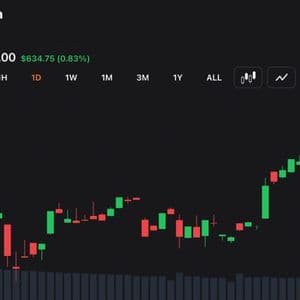
Bitcoin trades modestly higher early May 20 at 8 a.m. ET, holding near the mid-$77,000 range as traders evaluate mixed technical indicators and tightening resistance levels. Market participants continue watching whether BTC can reclaim higher resistance zones after stabilizing above a key support cluster near $76,000. Bitcoin Chart Outlook Bitcoin is priced at $77,440 during


