


 Invest ideas
News
18 May 2026, 18:53
Btc slumps to $76,000 as whales scoop up 24,869 coins

🚨 $BTC dropped to $76,000 as big investors bought 24,869 coins. Market saw $1 billion in outflows from spot Bitcoin ETFs in one week. 😮 Key point: Rising geopolitical tension and technical breakdowns push investors into a cautious mode. Continue Reading: Btc slumps to $76,000 as whales scoop up 24,869 coins The post Btc slumps to $76,000 as whales scoop up 24,869 coins appeared first on COINTURK NEWS .
18 May 2026, 18:45
Bitcoin drops $4,100 in weekend crash as $80 billion wiped

🚨 Bitcoin plunged $4,100 and $80 billion vanished from crypto markets. Most of the weekend drop in $BTC followed intense ETF outflows and heavy liquidations. 🧭 Critical: Market imbalances, not just US regulation worries, fueled the fall. Continue Reading: Bitcoin drops $4,100 in weekend crash as $80 billion wiped The post Bitcoin drops $4,100 in weekend crash as $80 billion wiped appeared first on COINTURK NEWS .
18 May 2026, 18:37
Bitcoin Drops to $76K as Middle East War Fears Spark $722M in Liquidations
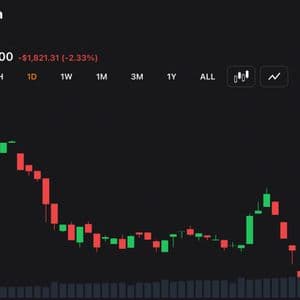
Bitcoin fell to $76,000 on the morning of May 18, reversing a brief relief rally and causing its total market cap to drop to $1.53 trillion. The nearly 2% decline triggered $722 million in total long liquidations across the crypto economy. Bitcoin Slams into Geopolitical Headwinds Bitcoin slid to $76,000 Monday morning, continuing a trend
18 May 2026, 18:36
Japan plans major cut to crypto tax, drops from 55% to 20%

🚀 Japan to slash crypto tax from 55% down to 20%. Top brokerages are racing to launch investment funds in $BTC and ETH. Continue Reading: Japan plans major cut to crypto tax, drops from 55% to 20% The post Japan plans major cut to crypto tax, drops from 55% to 20% appeared first on COINTURK NEWS .
18 May 2026, 18:35
Iran launches a Bitcoin-backed insurance service for ships crossing the Strait of Hormuz

Iran has launched Hormuz Safe, a new Bitcoin-backed insurance service for ships crossing the Strait of Hormuz, as Tehran turns one of the world’s busiest energy routes into a crypto-linked shipping product. The service is meant for Iranian shipping companies and cargo owners, and the government says it could bring in more than $10 billion a year. The offer is simple on paper. A cargo owner accompanies a shipment, the insurance cover starts, and the owner gets a signed receipt. Tehran says the full website for Hormuz Safe is still “coming soon,” but Iranian media says the platform has already started offering cover for maritime cargo moving through the strait. The program is expected to include different marine insurance products and encrypted vessel checks. The big question is whether this insurance bill comes on top of transit charges. That matters because some ships have already faced payments of up to $2 million per trip through the same route. Iran puts Hormuz insurance under a new Strait authority On Monday, the Supreme National Security Council of Iran announced that a new organization, known as the Persian Gulf Strait Authority (PGSA), will be responsible for providing information regarding the strait. The authority must give live information about operations and new developments at the strait. Iranian state-affiliated media reported that the Hormuz Safe will begin offering insurance services for the maritime transport of goods in the region. The service will also offer encrypted certification for vessels sailing through the strait. According to the report, “cargo is insured starting from the moment of confirmation, with a signed receipt provided to the owner.” The Iranian government also added that the service is “for Iranian shipping companies and cargo owners.” Iran said that it intends to use the proceeds from the tolling system to cover its cost of repairing damages resulting from nearly six weeks of US-Israeli bombing inside Iran. Before the conflict, ships could pass through the strait without paying a fee. Both the US and China have opposed the tolling of the strait. Following his meeting with Chinese President Xi Jinping, the White House stated that “Xi made clear China’s opposition to the militarization of the strait and any efforts to toll its use.” No official denial has come out of China since then. UN Secretary-General António Guterres has also called for the opening of the strait. He called for “no tolls” and “no discrimination.” Shipping companies face higher Gulf insurance costs and sanctions risk In addition, the insurance rates for vessels heading to the Persian Gulf are rising significantly. Indeed, the insurance war-risks for ships have become significantly more expensive since the beginning of the military operations nearly two and a half months ago. For example, in March, the insurance rates increased by 5 times within several days following the US and Israeli air raids on Iran. This situation might make any simple voyage very troublesome. Several leading insurance companies ceased their activities in this regard quickly enough. Gard, Skuld, NorthStandard, and the American Club refused to provide war-risk insurance for ships sailing in the Persian Gulf area as soon as the military conflict started. Later on, a number of insurers returned to the market with state guarantees. For example, Chubb Limited has entered a $20 billion program in the USA providing insurance against war risks for hull, cargo, and liability coverage of commercial ships sailing in the Strait of Hormuz. However, shipping companies are cautious with regard to this issue. Some of them continue avoiding navigation in this area due to possible attacks and kidnappings, the threat of vessel seizures, and crew safety issues. According to a March Cryptopolitan report , Iran had already begun to take transit fees from some commercial ships at the start of the war. Some payments were estimated to reach $2 million per voyage. In addition, the UN Convention on the Law of the Sea prohibits levying any payments on vessels passing through the international strait or territorial sea. As of press time, no country or shipping company has expressed its interest in using the Iranian Hormuz Safe Service. Don’t just read crypto news. Understand it. Subscribe to our newsletter. It's free .
18 May 2026, 18:35
Monero (XMR) Price Outlook 2026-2030: Can Privacy Coins Navigate Regulation and Lead a Market Shift?

BitcoinWorld Monero (XMR) Price Outlook 2026-2030: Can Privacy Coins Navigate Regulation and Lead a Market Shift? Monero (XMR), the leading privacy-focused cryptocurrency, has maintained a distinct position in the digital asset market by prioritizing transaction anonymity. As the broader crypto market anticipates a potential bull run, the question of whether privacy coins like Monero can lead the next cycle remains a subject of intense debate among analysts and investors. This editorial analysis examines the fundamental factors, regulatory headwinds, and market dynamics that could shape Monero’s price trajectory from 2026 through 2030. Understanding Monero’s Core Value Proposition Unlike Bitcoin or Ethereum, Monero uses ring signatures, stealth addresses, and RingCT (Ring Confidential Transactions) to obfuscate sender, receiver, and transaction amounts. This technical architecture provides a level of fungibility that is unique among major cryptocurrencies. For users in jurisdictions with unstable financial systems or those requiring transactional privacy for legitimate business reasons, Monero offers a practical solution that few other digital assets can match. This fundamental utility has sustained a dedicated user base and developer community, even during prolonged bear markets. Regulatory Landscape and Its Impact on XMR The primary challenge facing Monero and other privacy coins is increasing regulatory scrutiny. In 2024 and 2025, several exchanges delisted XMR in response to guidance from financial regulators in jurisdictions like the European Union and Japan, which view privacy-enhancing features as potential tools for money laundering and illicit finance. The Financial Action Task Force (FATF) has consistently recommended that virtual asset service providers apply enhanced due diligence to privacy coins. This regulatory pressure has reduced liquidity and accessibility for Monero on centralized platforms, potentially capping its price appreciation in the short to medium term. Market Dynamics and Adoption Trends Despite regulatory challenges, Monero’s on-chain metrics indicate steady network usage. Transaction volumes and the number of active wallets have remained resilient, suggesting a committed user base that values privacy over convenience. Furthermore, the rise of decentralized exchanges (DEXs) and atomic swaps provides alternative avenues for trading XMR without relying on centralized gatekeepers. If the broader crypto market enters a new bull phase, driven by factors such as Bitcoin’s halving cycle and potential institutional adoption, Monero could benefit from a rising tide, though its performance may lag behind assets with clearer regulatory pathways. Price Prediction Analysis for 2026-2030 Any price prediction for Monero must be viewed through a lens of high uncertainty, given the volatile nature of cryptocurrency markets and the evolving regulatory environment. For 2026, a reasonable range, based on technical analysis and market cycle patterns, could see XMR trading between $120 and $250, assuming no major regulatory crackdowns. Looking toward 2030, the outlook depends heavily on two key variables: the resolution of privacy coin regulation and the overall adoption of cryptocurrency as an asset class. If a balanced regulatory framework emerges that allows privacy coins to operate under clear compliance standards, Monero could see significant price appreciation, potentially reaching $400 to $600. Conversely, if major economies move to ban or severely restrict privacy coins, the price could remain suppressed or decline further. The most likely scenario is a middle path, where Monero maintains a niche but valuable role in the crypto ecosystem, with its price reflecting its utility rather than speculative hype. Conclusion Monero’s future price performance is inextricably linked to its ability to navigate a complex regulatory landscape while retaining its core technical advantages. While it is unlikely to lead a broad market rally in the same manner as Bitcoin or a major smart contract platform, its unique value proposition ensures it remains a relevant and important asset for a specific segment of the market. Investors should weigh the potential for outsized returns against the significant regulatory risks and the reduced liquidity on mainstream exchanges. The story of Monero in the coming years will be a test of whether privacy can be preserved within the evolving framework of digital finance. FAQs Q1: Why is Monero often delisted from major exchanges? Major exchanges delist Monero primarily due to regulatory pressure from bodies like the FATF, which classifies privacy coins as high-risk for money laundering and terrorist financing. Exchanges must comply with Know Your Customer (KYC) and Anti-Money Laundering (AML) regulations, and assets that obscure transaction history make compliance more difficult. Q2: Can Monero still be bought and sold if it is delisted? Yes. While delisting from centralized exchanges reduces liquidity, Monero can still be traded on decentralized exchanges (DEXs), peer-to-peer platforms, and through atomic swaps. These methods require more technical knowledge but preserve the ability to buy and sell XMR. Q3: Is Monero only used for illegal activities? No. While its privacy features can be exploited for illicit purposes, Monero is also used by individuals and businesses for legitimate reasons, including protecting financial privacy from surveillance, operating in jurisdictions with unstable currencies, and conducting confidential business transactions. The majority of Monero transactions are believed to be for lawful purposes, similar to cash. This post Monero (XMR) Price Outlook 2026-2030: Can Privacy Coins Navigate Regulation and Lead a Market Shift? first appeared on BitcoinWorld .

