


 Invest ideas
News
8 Jun 2026, 04:25
Analyst Warns Against Buying the Bitcoin Dip as Stablecoin Outflows Signal Liquidity Squeeze

BitcoinWorld Analyst Warns Against Buying the Bitcoin Dip as Stablecoin Outflows Signal Liquidity Squeeze Bitcoin (BTC) is facing increasing liquidity pressure as stablecoin funds enter a net outflow phase, according to a new analysis by Markus Thielen, an analyst at BIT (formerly Matrixport). The development has prompted a cautionary warning against prematurely buying the dip, as market conditions may worsen before stabilizing. Stablecoin Outflows Reach $5-6 Billion Thielen noted that while the monthly change in stablecoin supply had remained positive throughout the current market cycle, that trend has now reversed. Data indicates a net outflow of approximately $5 billion to $6 billion over the past 30 days, signaling a meaningful shift in capital flows. Stablecoins, which are typically used as on-ramp liquidity for trading and investment, are now exiting the ecosystem rather than accumulating. This reversal is significant because stablecoin supply has historically served as a leading indicator of market direction. When stablecoin reserves grow, it often precedes buying pressure. When they shrink, it suggests reduced demand or a flight to fiat currencies. Why Buying the Dip Is Riskier Now Thielen explained that as fund inflows slow and market volatility rises, the ability of liquidity to support asset prices has weakened considerably. This creates a burden not only for the broader cryptocurrency market but also for stablecoin issuers, who must manage redemption pressure and reserve stability. “A reversal in liquidity often triggers a shift in the market phase,” Thielen said. He warned that attempting to buy the dip during such a phase carries heightened risk, as further downside remains possible until capital outflows stabilize. The analyst projects that the current sideways trading pattern could persist for an extended period, with no clear catalyst for a recovery in the near term. What This Means for Traders and Investors For retail and institutional participants alike, the analysis underscores the importance of monitoring liquidity metrics rather than price alone. Stablecoin flows provide a real-time view of market sentiment and available purchasing power. When outflows dominate, it often signals that participants are de-risking or moving to the sidelines. The warning is particularly relevant given Bitcoin’s recent price action, which has seen the asset trade in a narrow range after failing to sustain momentum above key resistance levels. Without fresh capital inflows, the market may struggle to break out of its current consolidation phase. Conclusion Markus Thielen’s analysis adds a data-driven layer to the ongoing debate about whether the current market weakness is a buying opportunity or a warning sign. With stablecoin outflows accelerating and liquidity thinning, the case for patience appears stronger than the case for aggressive dip buying. Investors are advised to wait for clear signs of capital flow stabilization before re-entering the market. FAQs Q1: Why do stablecoin outflows matter for Bitcoin prices? Stablecoins represent ready capital for crypto purchases. When their supply shrinks, it reduces the pool of available buying power, often leading to lower demand and downward pressure on prices. Q2: How long could the current sideways market last? According to analyst Markus Thielen, the sideways trend could persist until stablecoin outflows stabilize and liquidity conditions improve. No specific timeline has been given, but the pattern may last weeks or longer. Q3: Is it ever safe to buy the dip during stablecoin outflows? While every market situation is unique, buying during active outflows carries elevated risk. Most analysts recommend waiting for confirmation of a reversal in capital flows before making significant purchases. This post Analyst Warns Against Buying the Bitcoin Dip as Stablecoin Outflows Signal Liquidity Squeeze first appeared on BitcoinWorld .
8 Jun 2026, 04:21
Bitcoin falls back below $63,000 as Iran-Israel trade strikes and Korean stocks crash
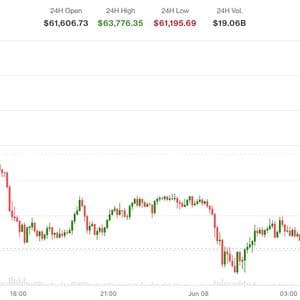
BTC has pulled back from overnight highs as escalating geopolitical tensions weigh over risk sentiment and send oil price higher.
8 Jun 2026, 04:20
Nasdaq-Listed Tron Acquires Additional 152,333 TRX, Total Holdings Reach 699.5 Million
BitcoinWorld Nasdaq-Listed Tron Acquires Additional 152,333 TRX, Total Holdings Reach 699.5 Million Nasdaq-listed company Tron has announced the purchase of an additional 152,333 TRX tokens at an average price of $0.3282 per token. The acquisition brings the firm’s total TRX holdings to 699.5 million tokens, according to an official statement from the company. Strategic Accumulation Continues Tron stated that the latest purchase is part of a broader strategy to expand its TRX reserves. The company indicated it plans to continue accumulating the cryptocurrency as a means to enhance shareholder value over the long term. This move follows a pattern of consistent buying activity by the firm, which has been steadily increasing its TRX treasury since its initial public listing. Market and Industry Context The announcement comes amid a period of relative stability for TRX, which has seen moderate trading volumes on major exchanges. Tron’s decision to increase its holdings signals confidence in the token’s future utility and market performance. The company’s Nasdaq listing adds a layer of regulatory oversight and transparency to its cryptocurrency treasury management, distinguishing it from many private crypto-focused firms. Implications for Shareholders By expanding its TRX reserves, Tron is effectively aligning its corporate treasury with the performance of its native token. Shareholders may view this as a bullish signal, though it also introduces direct exposure to cryptocurrency volatility. The company has not disclosed whether it hedges its crypto holdings or employs risk management strategies. Conclusion Tron’s latest TRX purchase reinforces its commitment to building a substantial cryptocurrency reserve. With nearly 700 million tokens now in its treasury, the company remains one of the most significant publicly traded holders of its own token. Investors and market watchers will be monitoring future buying activity for further signals about the company’s strategic direction. FAQs Q1: Why is Tron buying more TRX? A1: Tron states the purchases are part of a strategy to expand its TRX reserves and enhance shareholder value. The company believes accumulating its native token will benefit long-term investors. Q2: How much TRX does Tron now hold? A2: Following the latest acquisition of 152,333 TRX, Tron’s total holdings stand at 699.5 million TRX tokens. Q3: Is Tron a publicly traded company? A3: Yes, Tron is listed on the Nasdaq stock exchange, which subjects it to regulatory reporting requirements and corporate governance standards. This post Nasdaq-Listed Tron Acquires Additional 152,333 TRX, Total Holdings Reach 699.5 Million first appeared on BitcoinWorld .
8 Jun 2026, 04:15
Hyperliquid Whale Extends 22-Trade Winning Streak, Adds $16.8M ETH Short
BitcoinWorld Hyperliquid Whale Extends 22-Trade Winning Streak, Adds $16.8M ETH Short A prominent trader on the Hyperliquid decentralized exchange, identified by the wallet address pension-usdt.eth, has added a 10,000 Ether (ETH) short position valued at approximately $16.8 million. The move extends the whale’s current winning streak to 22 consecutive profitable trades, according to on-chain analytics firm Lookonchain. Position Details and Track Record The latest position, opened nine hours ago, brings the whale’s total short exposure on Hyperliquid to 60,000 ETH, worth roughly $101 million at current market prices. This trader has accumulated over $45 million in cumulative profits across the 22-trade streak, making it one of the most closely watched accounts on the platform. Hyperliquid, a decentralized perpetual exchange built on the Arbitrum layer-2 network, has gained significant traction among professional traders for its low latency and deep liquidity. Whale activity on the platform often draws attention from the broader crypto community, as large positions can influence market sentiment and short-term price action. Context and Market Implications The whale’s continued short positioning comes amid a period of relative consolidation for Ether, which has traded in a range between $2,600 and $2,800 over the past week. While the trader’s track record suggests a high degree of conviction, it is important to note that past performance does not guarantee future results, and large concentrated positions carry inherent risk. Why This Matters For retail traders and market observers, the activity of large wallets on decentralized exchanges provides real-time insight into professional sentiment. A sustained short position of this size could signal expectations of a price decline, though it also introduces the possibility of a short squeeze if the market moves against the position. The whale’s profitability streak has already made it a case study in risk management and timing within the crypto derivatives space. Conclusion The pension-usdt.eth whale remains a dominant force on Hyperliquid, with a 22-trade winning streak and a $101 million short position in Ether. While the trader’s strategy has been remarkably successful, the broader market will watch closely to see whether this trend continues or reverses. As always, large positions on decentralized exchanges carry both opportunity and risk, and readers should exercise caution when interpreting whale activity as a market signal. FAQs Q1: What is a short position in cryptocurrency trading? A short position is a bet that the price of an asset will decline. The trader borrows and sells the asset, hoping to buy it back later at a lower price to profit from the difference. Q2: Who reported this whale activity? The data was reported by Lookonchain, a blockchain analytics firm that tracks on-chain transactions and wallet activity in real time. Q3: What is Hyperliquid? Hyperliquid is a decentralized perpetual exchange built on the Arbitrum network, known for its high-speed trading and deep liquidity. It allows traders to open leveraged positions on cryptocurrencies without a central intermediary. This post Hyperliquid Whale Extends 22-Trade Winning Streak, Adds $16.8M ETH Short first appeared on BitcoinWorld .
8 Jun 2026, 03:55
Arthur Hayes Denies Purchasing HYPE After On-Chain Report Sparks Confusion
BitcoinWorld Arthur Hayes Denies Purchasing HYPE After On-Chain Report Sparks Confusion BitMEX co-founder Arthur Hayes has publicly denied purchasing the HYPE token, pushing back against an on-chain analytics report that suggested otherwise. The denial, posted on X (formerly Twitter), came shortly after Onchain Lens reported that Hayes had withdrawn 33,979 HYPE — worth approximately $2.09 million — from the exchange Bybit. What Happened: The On-Chain Report and the Denial On March 25, 2025, blockchain analytics platform Onchain Lens published a post stating that a wallet linked to Arthur Hayes had withdrawn a significant amount of HYPE tokens from Bybit. The report quickly circulated across crypto social media, prompting speculation about Hayes’ involvement with the token. Hours later, Hayes responded directly on X, writing: “I did not purchase HYPE. The wallet mentioned is not mine.” He did not provide further evidence or elaborate on the origin of the withdrawal. The denial has not been independently verified, and the wallet in question remains unconfirmed as belonging to Hayes. Why This Matters for Crypto Markets and On-Chain Analytics The incident highlights a recurring challenge in the crypto space: the reliability of on-chain attribution. Blockchain analytics tools can flag wallet activity, but linking those wallets to real-world individuals is often speculative — especially when wallets are not publicly labeled by their owners. For traders and investors, the episode serves as a reminder that on-chain data, while transparent, is not always accurate in attribution. False or premature reports can move markets and create confusion, particularly when involving high-profile figures like Arthur Hayes. Market Impact and Community Reaction Following Hayes’ denial, the HYPE token experienced a brief dip in trading volume, though the price remained relatively stable. On social media, reactions were mixed: some users criticized Onchain Lens for publishing unverified wallet attribution, while others questioned Hayes’ denial without a full explanation. The broader takeaway for the crypto community is the need for caution when interpreting on-chain data, especially when it involves influential individuals. Without direct confirmation from the wallet owner, attribution remains an educated guess. Conclusion Arthur Hayes has firmly denied purchasing HYPE tokens after an on-chain report claimed he withdrew $2.09 million worth from Bybit. The wallet in question has not been verified as his, and the incident underscores the limitations of on-chain attribution tools. As the crypto industry matures, the accuracy of such reports will remain a critical topic for traders, analysts, and platforms alike. FAQs Q1: Did Arthur Hayes actually buy HYPE tokens? No. Arthur Hayes publicly denied purchasing HYPE, stating that the wallet identified by Onchain Lens does not belong to him. Q2: How reliable is on-chain wallet attribution? On-chain attribution is not always reliable. Wallets can be misidentified, and linking them to real-world individuals requires additional verification, such as public statements or official labeling. Q3: What happened to the HYPE token price after the denial? The HYPE token saw a slight dip in trading volume but no major price movement. The market appeared to absorb the denial without significant volatility. This post Arthur Hayes Denies Purchasing HYPE After On-Chain Report Sparks Confusion first appeared on BitcoinWorld .
8 Jun 2026, 03:30
Crypto Liquidations Top $546 Million in 24 Hours as Short Sellers Face Heavy Losses
BitcoinWorld Crypto Liquidations Top $546 Million in 24 Hours as Short Sellers Face Heavy Losses The cryptocurrency market experienced a significant wave of forced position closures over the past 24 hours, with total liquidation volumes across major perpetual futures contracts exceeding $546 million. Data indicates that short sellers bore the overwhelming majority of losses, suggesting a sharp, unexpected price movement that caught bearish traders off guard. Bitcoin Leads Liquidation Wave Bitcoin (BTC) perpetual futures saw the highest liquidation volume, with approximately $325.36 million in positions closed. Notably, short positions accounted for 85.22% of that total, indicating a rapid price increase that forced leveraged bears to exit. This type of event, often referred to as a short squeeze, can amplify upward price momentum as sellers are compelled to buy back assets to cover their positions. Ethereum and Solana Follow Suit Ethereum (ETH) recorded $199.07 million in liquidations, with shorts representing 83.57% of the total. Solana (SOL) saw $22.25 million liquidated, with 79.41% of that figure coming from short positions. The consistent pattern across these major assets points to a broad market rally or a coordinated move that liquidated highly leveraged bearish bets. Market Implications and Trader Sentiment High liquidation volumes, especially those concentrated on one side of the market, often signal a period of heightened volatility. For traders, such events can indicate that the market is flushing out weak hands, potentially setting the stage for a more sustained trend or a reversal. The data underscores the risks associated with high leverage in perpetual futures, where even small price movements can trigger cascading liquidations. Conclusion The $546 million in liquidations over 24 hours highlights the intense volatility currently present in the cryptocurrency derivatives market. With short sellers facing the brunt of the losses, the event serves as a reminder of the leverage-driven nature of crypto trading. Traders should monitor position sizes and risk management protocols closely during such periods of market stress. FAQs Q1: What are crypto perpetual futures? Perpetual futures are derivative contracts that allow traders to speculate on the price of an asset without an expiry date. They often use leverage, which can amplify both gains and losses. Q2: Why did shorts get liquidated so heavily? When the price of an asset rises rapidly, traders with short positions (betting on a price decrease) may face margin calls. If they cannot meet the margin requirements, their positions are forcibly closed, resulting in a liquidation. Q3: How does a short squeeze work? A short squeeze occurs when a sharp price increase forces short sellers to buy back the asset to cover their positions, which in turn drives the price even higher, creating a feedback loop of buying pressure and further liquidations. This post Crypto Liquidations Top $546 Million in 24 Hours as Short Sellers Face Heavy Losses first appeared on BitcoinWorld .


