


 Invest ideas
News
5 Jun 2026, 22:08
ETH drops 5.89 percent to $1,680 as supports fail

📉 ETH plunged 5.89 percent in a single day to $1,680. ⚡ The $1,825 support broke and $1,600 is now key for $ETH. 🔎 Current RSI levels show historic oversold pressure not seen in years. Continue Reading: ETH drops 5.89 percent to $1,680 as supports fail The post ETH drops 5.89 percent to $1,680 as supports fail appeared first on COINTURK NEWS .
5 Jun 2026, 22:05
Why Is Bitcoin Crashing? Worst Week of 2026, $59,100 Low, and More Than Half of All BTC Now in the Red
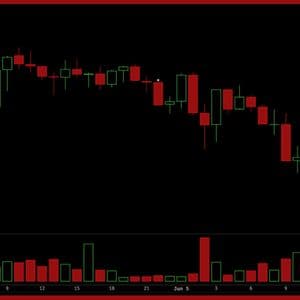
Bitcoin fell to its lowest price of 2026 on Friday, touching $59,100 intraday as over 351,000 traders were liquidated across crypto markets in a single 24-hour window. Bitcoin Falls 19% in 7 Days and Touches $59,100 The move extended a sharp selloff that has taken bitcoin down 19.3% in seven days, 22.2% in the past
5 Jun 2026, 22:00
Injective dips by 19% as sellers tighten their grip: Can INJ recover?

INJ fell by 19% in the last 24 hours as selling pressure continued across the crypto market.
5 Jun 2026, 21:45
Bitcoin Treasury Capital to Launch ‘BTC PREF’ Preferred Stock with 10% Dividend on Spotlight Stock Market

BitcoinWorld Bitcoin Treasury Capital to Launch ‘BTC PREF’ Preferred Stock with 10% Dividend on Spotlight Stock Market Bitcoin Treasury Capital (BTCB) has announced the upcoming launch of ‘BTC PREF,’ a preferred stock that the company describes as Sweden’s first Bitcoin-backed preferred equity instrument. The stock will carry a 10% annual dividend and is scheduled to begin trading on the Spotlight Stock Market on July 20. What Is ‘BTC PREF’ and How Does It Work? According to a statement from Bitcoin Treasury Capital, ‘BTC PREF’ is a preferred stock whose underlying value and dividend payments are directly tied to the company’s Bitcoin holdings. BTCB expects to raise approximately $2.5 million from the offering and plans to use the net proceeds to purchase additional Bitcoin. The 10% dividend is a fixed annual yield, paid out from the company’s operational income or capital reserves, making it a hybrid instrument that combines equity exposure with a fixed-income-like return. Why This Matters for the Nordic Crypto Market The launch of ‘BTC PREF’ on the Spotlight Stock Market, a Swedish multilateral trading facility, marks a notable development for the Nordic region’s digital asset ecosystem. While Bitcoin ETFs and crypto-linked exchange-traded products have gained traction globally, preferred stocks backed by Bitcoin remain rare, particularly in Europe. This offering provides a regulated, listed vehicle for investors seeking exposure to Bitcoin’s price movements while receiving a fixed dividend, potentially appealing to income-focused investors who are wary of direct crypto custody or unregulated platforms. Key Details of the Offering Instrument: Preferred stock (‘BTC PREF’) backed by Bitcoin holdings Dividend: 10% annual fixed yield Listing Date: July 20 Exchange: Spotlight Stock Market Target Raise: Approximately $2.5 million Use of Proceeds: Additional Bitcoin purchases Implications for Investors and the Broader Market For retail and institutional investors in Sweden and the wider Nordic region, ‘BTC PREF’ offers a regulated, dividend-paying entry point into Bitcoin exposure without the need to directly hold or manage the cryptocurrency. However, the 10% dividend yield is notably high, which may reflect the risk profile of the underlying asset’s volatility. Investors should assess the sustainability of the dividend given Bitcoin’s price fluctuations and the company’s ability to generate sufficient income. The offering also signals growing innovation in how traditional financial instruments can be structured around digital assets, potentially paving the way for similar products in other European markets. Conclusion Bitcoin Treasury Capital’s ‘BTC PREF’ represents a novel fusion of traditional preferred equity with Bitcoin exposure, set to debut on a regulated Swedish exchange. While the 10% dividend and Bitcoin backing may attract income-seeking crypto investors, the offering’s success will depend on market demand, Bitcoin’s price trajectory, and the company’s execution. The listing on July 20 will be a key event to watch for signs of institutional appetite for crypto-linked income products in Europe. FAQs Q1: What is ‘BTC PREF’? A1: ‘BTC PREF’ is a preferred stock issued by Bitcoin Treasury Capital, backed by the company’s Bitcoin holdings. It offers a 10% annual dividend and will trade on the Spotlight Stock Market in Sweden. Q2: How is the 10% dividend paid? A2: The 10% annual dividend is a fixed yield paid from the company’s operational income or capital reserves. It is not guaranteed if the company faces financial difficulties, as with any preferred stock. Q3: Why is this considered Sweden’s first Bitcoin-backed preferred stock? A3: While other crypto-linked products like ETFs and ETNs exist in Europe, ‘BTC PREF’ is the first preferred equity instrument listed in Sweden that explicitly ties its value and dividend to a Bitcoin treasury held by the issuing company. This post Bitcoin Treasury Capital to Launch ‘BTC PREF’ Preferred Stock with 10% Dividend on Spotlight Stock Market first appeared on BitcoinWorld .
5 Jun 2026, 21:39
Top US Banks to Launch Tokenized Deposit Network: Report

The biggest banks on Wall Street are reportedly going to launch a tokenized deposit network in the first half of 2027. The effort is being led by the Clearing House, a real-time payments company co-owned by major financial institutions including JPMorgan Chase, Bank of America, Citigroup, and Wells Fargo. Project to Bridge Traditional Payments with Blockchain The Wall Street Journal reports that the project, called “the bridge,” aims to connect traditional banking payment systems to blockchain infrastructure so that tokenized deposits can move instantly with 24/7 settlement. It also states that the underlying blockchain will be built through a partnership with a yet-to-be-selected third-party vendor. “This is a big move for the banks,” said Clearing House Chief Executive David Watson, who said the industry is facing a “radically different” future when it comes to on-chain payments and finance. Citi sees the initiative as an extension of the role banks already play in the financial system. The move was “another step that effectively cements” banks’ role in financing, money management, and capital markets, said Shahmir Khaliq, the firm’s head of services. At the same time, banks have been wary about stablecoins, concerned that their use could divert deposits away from the firms. Financial institutions and crypto institutions have been at loggerheads for months over recently advanced legislation that would allow the latter’s customers to earn interest from their stablecoin holdings. Demand For Adoption Remains Gradual The report states that all US banks will have access to the tokenized deposit network, with possible use cases including real-time liquidity management, programmable treasury operations, and cross-border payments. The Clearing House also expects big multinationals to be among its first users. On the other hand, Mark Monaco, head of global payment solutions at Bank of America, said clients are not “beating down the door” for tokenized deposits yet. However, he also revealed that there is growing interest in the product, further admitting that adoption would take time. JPMorgan has already dipped its toes with JPM Coin, an in-house tokenized deposit system for settling payments on its private blockchain. More recently, the firm also launched a token on Base for its institutional clients. The latest development follows last year’s discussions among major financial institutions about creating a joint stablecoin through The Clearing House and Early Warning Services. As much as this is still being explored, WSJ said that some banking executives are still unsure about the benefits that these digital assets offer outside of cross-border payments. The post Top US Banks to Launch Tokenized Deposit Network: Report appeared first on CryptoPotato .
5 Jun 2026, 21:30
Could Solana Be The Best Spot Trading Market Globally? This Crypto Pundit Thinks So

Heavily haken by ongoing volatility, Solana and its broader market are facing heightened downside pressure, pushing its price to the $68 mark. Despite how bearish SOL has turned out over the past few months, robust optimism continued to be expressed toward the leading altcoin and its market capability. Solana’s Market Structure Draws Bold Endorsement After conducting an extensive review of market structure, a crypto pundit has made an audacious comment on Solana’s market coverage and infrastructure. The evaluation from Chase, a Solana mobile employer, may identify the altcoin’s robust, growing ecosystem as the primary driver of its growing allure. In his view, Solana has the infrastructure to be the best spot market in the entire world. In addition, the network is likely to produce more revenue than any blockchain in the world. As rivalry among the main blockchain networks heats up, Solana has made a name for itself as a hub for capital formation and trade. “Getting more people on-chain and off CEX is how you do it,” Chase stated. According to the pundit, SOL has the assets, the breads, and liquidity, but most people do not know that it is the best place to trade spot markets yet. For those trading outside the network, Chase believes they are never going to grow without expanding SOL’s retail and trader ecosystem. Ultimately, this audacious assertion is probably going to spark more discussion in the cryptocurrency sector as participants continue to assess which networks are most likely to control the upcoming stage of the adoption of digital assets. Solana’s network and its ecosystem continue to demonstrate robust growth and strength. In terms of TCGs (Total Capital Generated), SOL has reached yet another crucial milestone. Zensei reported that the TCGs weekly pack volume recently surged to $73.6 million, marking its all-time high, and underscoring the network’s accelerating economic activity. A surge to a new record for capital generation demonstrates the network’s growing usefulness and capacity to support rising activity levels. This growth was led by Collector Crypt as well as the strong contributions from the phygital. Looking at the chart, both continue to attract significant activity on the Solana network , which remains the undisputed king of on-chain TCGs. A New Leader In Tokenized Stocks Market Cap Another key area of the market where Solana is demonstrating strong dominance is the volume of tokenized stocks. According to Zensei, the network is the new king of tokenized stocks, overshadowing the likes of Ethereum. Data shows that SOL has overtaken Ethereum to become the number 1 chain by tokenized stock market cap. Over the past week, the market grew from $469.9 million to $724.1 million, representing an increase of over 54%. The market has spoken, and more capital is opting for Solana when it comes to tokenized equities. At the time of writing, the SOL price was trading at $64, dropping by almost 9% over the past day.


