


 Invest ideas
News
26 Apr 2026, 18:57
Master the Crypto Mining Workflow: Step-by-Step Guide

Crypto mining follows a precise workflow involving transaction selection, block assembly, hashing, and broadcasting. Hardware choice, electricity costs, and network latency critically impact mining profitability in 2026. Ethereum shifted from Proof-of-Work to Proof-of-Stake in 2022, eliminating traditional mining. Even dedicated crypto enthusiasts often misunderstand how miners turn raw electricity and advanced hardware into new Bitcoin blocks. The process is not random guessing — it follows a precise, methodical sequence that anyone willing to learn can map out. From selecting unconfirmed transactions in the mempool to broadcasting a validated block to thousands of nodes, each phase connects logically to the next. This guide walks through the full crypto mining workflow, step by step, so you can visualize exactly how gear, software, and math combine to produce new coins and secure the network. Table of Contents What you need before starting the crypto mining workflow Step-by-step overview: What actually happens in the crypto mining workflow How mining workflow changes for different cryptocurrencies Troubleshooting and optimizing the crypto mining workflow Our perspective: Why understanding mining workflow matters more in 2026 Take your next step in the crypto mining journey Frequently asked questions Key Takeaways PointDetailsStep-by-step workflowUnderstanding the methodical mining process converts complexity into actionable steps for any miner.Mining requirementsSuccess hinges on proper hardware, cheapest electricity, and the right setup before starting.Workflow differencesProof-of-Work and Proof-of-Stake cryptocurrencies diverge sharply—know what applies to each.Troubleshooting optimizationDetect and resolve workflow issues for higher profits by focusing on software, hardware, and pool strategies.Expert insight mattersMastering workflow, not just buying better gear, is the winning edge in mining’s 2026 landscape. What you need before starting the crypto mining workflow Before you dive into the technical workflow, it's vital to assess what you actually need to start mining. Skipping this stage is where most beginners lose money fast. Hardware is the foundation. Your main options in 2026 include: ASIC miners (Application-Specific Integrated Circuits): purpose-built for one algorithm, extremely fast, and efficient. GPU rigs: more flexible but less competitive for Bitcoin specifically; still viable for certain altcoins. Hydro-cooled ASICs: premium machines with liquid cooling that push efficiency further but demand dedicated infrastructure. Beyond hardware, you also need a stable internet connection, a reliable mining software client (such as CGMiner, BFGMiner, or manufacturer-specific software), and a crypto wallet to receive payouts. Understanding crypto mining hardware differences before buying can save you thousands. Electricity cost is the single biggest ongoing variable in your profit equation. Profitability hinges on electricity rates below $0.05 per kWh as an ideal threshold, alongside the current BTC price. Anything above $0.10 per kWh often makes solo Bitcoin mining economically unworkable for small operators. Cost FactorIdeal RangeImpact on ProfitElectricity rateBelow $0.05/kWhHighHardware efficiencyAbove 30 TH/s per kWHighPool fees1%–2%MediumCooling overheadMinimal/managedMedium Mining pool registration is also a practical necessity. Solo mining a Bitcoin block today takes statistically years for most rigs, so most operators join a pool where hashing power is combined and rewards are split proportionally. Location matters more than many realize. Local regulations on energy use, noise ordinances, and heat dissipation all affect long-term viability. Start your setup planning with a clear-eyed read of starting crypto mining profitably before committing capital. Pro Tip: Run an electricity cost calculator before purchasing any hardware. A rig that looks profitable at $0.04/kWh can bleed money at $0.08/kWh, even with Bitcoin prices climbing. Step-by-step overview: What actually happens in the crypto mining workflow Now that you've got everything ready, here's how the actual mining workflow unfolds, step by step. Transaction selection from the mempool. Your mining software pulls unconfirmed transactions from the mempool — Bitcoin's waiting room for pending transfers — and selects which ones to include based on fee levels. Block template construction. The software assembles these transactions into a candidate block, including a special coinbase transaction at the top. This coinbase transaction is the miner's reward placeholder, encoding the block subsidy and any collected fees. Merkle root computation. All selected transaction IDs get hashed together in a binary tree structure, producing a single Merkle root. This root represents all transactions in a compact, tamper-evident fingerprint. Bitcoin mining involves building this block template, computing the Merkle root, and hashing the block header to find a valid nonce. Block header assembly and hashing. The block header is a compact 80-byte structure. Key block header fields include the version, previous block hash, Merkle root, timestamp, bits (the difficulty target), and the nonce. Nonce cycling. The miner repeatedly hashes the block header using SHA-256, incrementing the nonce each time, trying to produce a hash output below the network's current difficulty target. When the 32-bit nonce space is exhausted without a valid result, miners adjust the extra nonce inside the coinbase transaction, which changes the Merkle root and opens a fresh nonce range. Broadcasting and verification. When a valid hash is found, the block is broadcast across the Bitcoin network. Full nodes verify the block independently, and once confirmed, the block is appended to the chain. Difficulty adjusts automatically every 2,016 blocks (roughly every two weeks), recalibrating to maintain a 10-minute average block time regardless of how much total hash power is on the network. You can learn more about how mining pools work to understand how your share of this process translates into consistent payouts. PhaseKey ActionOutputMempool selectionPick transactions by feeBlock templateMerkle rootHash transaction tree32-byte rootHeader hashingSHA-256 nonce cyclingValid block hashBroadcastSubmit to networkConfirmed block Pro Tip: Track your rig's rejected share rate in your pool dashboard. A high rejection rate often signals a network latency issue, not a hardware problem — and it's quietly killing your effective hash rate. Before finalizing your setup, use a mining profitability check to stress-test your numbers against current difficulty and coin prices. How mining workflow changes for different cryptocurrencies Beyond the Bitcoin model, not all cryptocurrencies follow the same mining workflow. Bitcoin uses classic Proof-of-Work (PoW): miners compete to find a valid block hash, and the winner earns the block reward. Simple in concept, brutally competitive in practice. Ethereum is the most important contrast. Ethereum transitioned to Proof-of-Stake in 2022, meaning block proposals are assigned by stake size, not computational mining. There is no mining workflow for ETH anymore. Validators lock up ETH as collateral and are chosen pseudo-randomly to propose and attest blocks. "Ethereum's move to Proof-of-Stake fundamentally changed the network's energy model, slashing consumption by over 99% and removing miners from the equation entirely." For those interested in ETH exposure without mining, exploring ETH staking alternatives is worth the time. Other PoW coins still active in 2026 include: Litecoin (LTC): Uses the Scrypt algorithm, which was designed to be memory-intensive and GPU-friendly, though ASICs now dominate here too. Dogecoin (DOGE): Merge-mined with Litecoin via Scrypt, meaning miners can mine both simultaneously at no extra energy cost. Monero (XMR): Uses RandomX, an algorithm specifically designed to resist ASICs and favor CPU mining, keeping the network more decentralized. CryptocurrencyConsensusMining Viable?AlgorithmBitcoin (BTC)Proof-of-WorkYesSHA-256Ethereum (ETH)Proof-of-StakeNoN/ALitecoin (LTC)Proof-of-WorkYesScryptMonero (XMR)Proof-of-WorkYesRandomX Understanding these distinctions helps you allocate resources wisely. Chasing ETH mining in 2026 is a dead end; the ecosystem moved on. Troubleshooting and optimizing the crypto mining workflow Even with the steps in place, maximizing your returns and minimizing headaches requires some hands-on troubleshooting and tweaks. Spotting slowdowns is the first skill to develop. Key indicators include: Sudden drop in accepted shares reported by your pool Rising stale or rejected share percentages Unexpected drops in reported hash rate from your mining software vs. your hardware's rated speed Network latency between your rig and the mining pool server is a common culprit. Choose a pool server geographically close to your operation to cut round-trip time. Hardware tuning means finding the sweet spot between raw speed and energy draw. Most modern ASICs allow undervolting, which reduces power consumption without a proportional drop in hash rate. Profitability is closely tied to hardware efficiency, network difficulty, and power rates — so small efficiency gains compound over months. "The difference between a mining operation that breaks even and one that generates meaningful returns often comes down to per-unit energy costs and hardware tuning, not just raw hash rate." Pro Tip: Use your ASIC's built-in web interface to monitor chip temperatures per board. Uneven temperatures often point to airflow issues or failing fans, which hurt both efficiency and hardware lifespan. Common software misconfigurations to watch for: Wrong stratum URL or port number for your pool Incorrect worker name or password format Mining software set to an outdated difficulty target Electricity cost reduction strategies include time-of-use rate arbitrage (mining more aggressively during off-peak hours), negotiating industrial power contracts, and co-locating equipment in regions with naturally low energy costs such as parts of the American Pacific Northwest or certain hydroelectric zones in Scandinavia. For operators not wanting to manage physical hardware, reviewing cloud mining platform features provides a useful comparison of managed mining alternatives. Our perspective: Why understanding mining workflow matters more in 2026 Optimizing your setup is only half the equation. What really separates successful miners from the rest in 2026 is a deeper understanding of the workflow itself, not just the gear powering it. Many newcomers pour capital into the most powerful hardware available and then watch margins evaporate because they never addressed pool selection, latency optimization, or energy scheduling. That is a process failure, not a hardware failure. Advanced miners in 2026 treat workflow mastery as their sharpest competitive tool. They know exactly when to switch pools based on fee structure and luck variance, how to adjust their data pipeline to minimize stale shares, and how to read difficulty trend lines to time hardware deployments. With institutional and industrial mining operations consuming ever-larger shares of total Bitcoin hash rate, small operators cannot win on brute force alone. The ones staying viable are squeezing efficiency out of every layer of the process. A smart workflow tweak often delivers a higher return on investment than an expensive hardware upgrade. For a clear look at where margin actually lives, reviewing mining profitability factors is a useful exercise for any serious operator. Take your next step in the crypto mining journey With a sharper understanding of the mining workflow, you're ready to deepen your crypto expertise or take your setup further. Crypto Daily covers the full spectrum of blockchain news, mining analysis, and market intelligence to keep you ahead of the curve. Whether you are refining a running operation or evaluating your first hardware purchase, grounding yourself in the technology is essential. Start with a solid read on Bitcoin blockchain technology to understand the infrastructure your mining work actually supports. For a broader view of where the market is heading, the 2026 crypto outlook offers context on price trends, regulatory shifts, and mining economics heading into the rest of the year. Frequently asked questions What is the crypto mining workflow in simple terms? A crypto mining workflow processes transactions and builds blocks through repeated hashing of the block header until a valid result is found, then broadcasts the new block to the network for verification. How is Ethereum's mining workflow different in 2026? Ethereum no longer uses mining after its 2022 Proof-of-Stake transition; validators are selected by random lottery weighted by staked ETH, completely replacing the computational mining process. What hardware is best for crypto mining in 2026? For Bitcoin, hydro-cooled ASICs boost efficiency and hashing power beyond standard air-cooled units, though they require dedicated infrastructure investment to deploy effectively. How does electricity cost affect mining profitability? Low electricity rates — ideally under $0.05 per kWh — are one of the most critical variables in mining profitability, often determining whether an operation generates returns or operates at a loss. What is a nonce in crypto mining? A nonce is a number in the block header that miners increment repeatedly; miners exhaust nonces and cycle through extra nonces in the coinbase transaction to keep searching for a hash that meets the network's difficulty target. Recommended How to Check Mining Profitability: A Step-by-Step Guide - Crypto Daily Step-by-Step Guide to Crypto Trading for Profit - Crypto Daily Optimize your crypto workflow: in 2026 Step-by-step crypto guide for new crypto holders Disclaimer: This article is provided for informational purposes only. It is not offered or intended to be used as legal, tax, investment, financial, or other advice.
26 Apr 2026, 13:00
Bitcoin Price Surpasses $79,000 — AJC Mining, the Best Cloud Mining Platform of 2026: Easily Embark on Your Journey to Passive BTC Income

Bitcoin has surged approximately 10% within just 13 trading days, climbing nearly $7,000 to approach the $79,000 threshold. This movement marks a significant breakout from the descending channel that had kept Bitcoin’s price under pressure since October 2025. Ethereum has also joined this upward rally, breaking through multiple key resistance levels within the same timeframe. This dual breakout has led cryptocurrency traders to believe that the months-long bear market—which began in early 2026—has come to an end. With the growing popularity of cryptocurrencies, an increasing number of people are turning their attention to Bitcoin mining. However, traditional mining methods often entail expensive hardware and high electricity costs—a significant challenge for the average investor. Fortunately, cloud mining offers users a low-cost, convenient solution. This article introduces a premier free Bitcoin cloud mining application: AJC Mining. This platform is not only trustworthy but also enables you to effortlessly generate passive income. What is AJC Mining? AJC Mining is a UK-based cloud mining platform dedicated to providing secure, efficient, and scalable cryptocurrency mining services to 6 million users worldwide. According to the platform’s description, AJC Mining currently extends its services to over 170 countries and regions, enabling users to participate in the mining of mainstream cryptocurrencies—including Bitcoin (BTC) , Litecoin (LTC) , and Dogecoin (DOGE) . The platform utilizes a remote cloud-hashing model, eliminating the need for users to deploy mining rigs themselves or handle complex technical issues; this makes AJC Mining particularly well-suited for users seeking to enter the cryptocurrency mining market with minimal barriers to entry. How do I get started with AJC Mining cloud mining? Using AJC Mining cloud mining can generally be divided into three steps: Step 1: Register an Account New users can create an account on the official AJC Mining website: (https://ajcmining.com/) . According to the platform’s description, upon registration, users have the opportunity to receive a $15 welcome bonus and can experience a free cloud mining contract, earning $0.60 daily. Step 2: Select a Cloud Mining Contract AJC Mining offers a variety of short-term and long-term contracts, allowing users to select the most suitable option based on their budget, investment horizon, and risk tolerance. Step 3: Check your daily earnings and apply for withdrawal. After the contract is activated, users can view their daily mining earnings in the backend and apply for withdrawal according to the methods supported by the platform. The Key Advantages of the AJC Mining Cloud Mining Platform No need to purchase mining hardware, lowering the barrier to entry. Traditional mining typically entails purchasing expensive mining rigs, setting up a dedicated mining facility, and continuously bearing the costs of electricity, maintenance, and equipment depreciation. AJC Mining allows users to directly purchase computing power services through cloud mining contracts, thereby reducing the pressure of hardware investment. Supports daily earnings settlement. AJC Mining offers a daily mining revenue tracking feature, allowing users to monitor their mining progress and earnings via their account dashboard. For users seeking greater financial flexibility, the short-term contracts and daily settlement mechanism present a compelling option. Multiple Cryptocurrency Mining Options The platform supports various digital asset-related services, including: BTC, USDC, ETH, XRP, DOGE, SOL (Solana), LTC, BNB, BCH, Trump, USDT (TRC20/ERC20), and ADA. Multi-currency support enables users to select different mining strategies based on their individual preferences. Suitable for novice users. AJC Mining’s operational process is relatively simple; users need only complete registration, select a contract, and launch a mining plan to begin utilizing the cloud mining service. There is no need to master complex mining techniques or manage physical hardware. Remote access for greater convenience. Users can access their accounts via the AJC Mining application or a web browser to view contract status, earnings records, and withdrawal options at any time. This remote management approach is ideal for users seeking flexibility in their participation in cryptocurrency mining. The following are some cloud mining contract examples provided by AJC Mining: Contract Name price Daily Profit Number of Days Principal + Total Return New User Experience Contract $100 $4 2 Days $100 + $8 Avalon Miner A15 $500 $6.25 5 Days $500 + $31.25 Litecoin Miner L9 $1000 $13 10 Days $1000 + $130 Bitcoin Miner S21 XP Imm $5000 $70 25 Days $5000 + $1750 Bitcoin Miner S21e XP Hyd $10000 $150 35 Days $10000 + $5250 ANTSPACE HW5 $50000 $900 45 Days $50000 + $40500 Before selecting a contract, users should conduct a comprehensive assessment based on their own financial situation, cryptocurrency market volatility, and platform rules. Click here to view more contracts . Conclusion: Is AJC Mining Worth Watching? Overall, AJC Mining provides users with a way to participate in cryptocurrency mining without purchasing mining equipment or requiring specialized technical skills through its cloud mining model. Its short-term contracts, daily earnings tracking, multi-currency support, and remote access capabilities position it as one of the platforms worth watching in the 2026 cloud mining market. For users looking to explore BTC mining, passive income from digital currencies, and cloud computing power investment opportunities, AJC Mining offers a relatively simple entry path. For more information, please visit the official AJC Mining website: https://AJCMining.com Disclaimer: This is a sponsored press release for informational purposes only. It does not reflect the views of Times Tabloid, nor is it intended to be used as legal, tax, investment, or financial advice. Times Tabloid is not responsible for any financial losses. The post Bitcoin Price Surpasses $79,000 — AJC Mining, the Best Cloud Mining Platform of 2026: Easily Embark on Your Journey to Passive BTC Income appeared first on Times Tabloid .
26 Apr 2026, 08:50
Elon Musk pitches SpaceX future as blueprint for a global utopia

Self-proclaimed eccentric billionaire Elon Musk is asking SpaceX investors to believe the company is going to take humanity into a global utopia, because… of course he is. The richest man on earth is calling SpaceX the future landlord of space, AI, satellites, cloud compute, mining, and even half the solar system since he always needs extra drama. The company is being tied to a possible $1.8 trillion valuation, while an IPO filing previously reported by Cryptopolitan said its total addressable market is $28.5 trillion, which is literally larger than one-fifth of the world economy. “Any failure or delay in the development of Starship at scale or in achieving the required launch cadence, reusability and capabilities thereof would delay or limit our ability to execute our growth strategy,” the filing interestingly said. Elon Musk is tilting SpaceX’s focus on $23 trillion corporate AI market The biggest part of SpaceX’s pitch is corporate AI, a market the aforementioned filing values at $22.7 trillion. If SpaceX took the whole corporate AI market through orbital data centers and kept a 30% software-style margin, that would mean about $7 trillion in profit. For Elon and SpaceX, rockets are the base, satellites are the cash machine, AI is the giant prize, and orbital data centers are the bridge between both worlds. Space mining sits a bit out, where the spreadsheet starts acting like it had three energy drinks. Over-hyped market claims have burned investors before. Uber Technologies (UBER) did something similar before its 2019 IPO. It told investors its total market could reach $12.3 trillion. That included $5.7 trillion from ride-hailing, with the rest coming from freight and food delivery. But the company then had to prove what part of that world it could actually own. That is the same thing going for SpaceX , because yes, the company has real power in launch and satellites, but the IPO case reaches into markets that do not yet look like normal operating businesses. To me, it’s evident that Elon is setting huge targets so teams build many major businesses at once. And the harsher version is that a sky-high valuation needs sky-high math. SpaceX widens the gap with Europe while Elon’s private control faces investor questions For Europe, SpaceX seems like a seal on its fate in this potential future global utopia. I mean, SpaceX launched 170 rockets last year. Europe launched eight. That difference gives SpaceX a clear opening in a region with major government space demand and old satellite systems that need replacing. European leaders want sovereignty and “strategic autonomy,” but their space system is tied up in politics. ArianeGroup, the private maker of the Ariane 6 heavy rocket, employs 8,700 people across France and Germany and receives up to €340 million in yearly support. In 2025, ArianeGroup placed about 16 tonnes of payload in orbit, while SpaceX placed more than 2,400 tonnes into orbit, literally more than a 100-to-one gap. Then there is the governance problem. In January 2018, Elon needed $100 million and borrowed from SpaceX. Then between 2019, 2020, and 01, he borrowed $500 million in total. Internal SpaceX documents obtained by The New York Times allegedly showed interest rates from below 1% to nearly 3%, with Elon repaying the loans by the end of 2021. The thing is though, under SEC’s laws, public companies can’t just give executives loans like that. Everyone knows SpaceX consistently helps other Elon-linked companies. It lent money to Tesla (TSLA) when the carmaker needed cash, put funds into SolarCity, and bought xAI, his cash-hungry AI company. Some investors, including Founders Fund, co-founded by Peter Thiel, had concerns at times that Elon’s interests came before other shareholders. “There were a few cases where one company was doing considerably better than another, and I borrowed money,” he said in a 2016 interview. “If I ask investors to put money in, then I feel morally I should put money in as well. I should not ask people to eat from the fruit bowl if I have not myself been willing to eat from the fruit bowl.”
26 Apr 2026, 08:30
Latam Insights: Brazil Bans Predictions Markets, Report Highlights Region’s Mining Potential

Welcome to Latam Insights, a compilation of the most relevant crypto news from Latin America over the past week. In this edition, Brazil issues a blanket ban on non-financial prediction markets, Hashrate Index highlights the potential for bitcoin mining growth in the region, and Brazil’s largest bank invests in bitcoin mining. Key Takeaways: On April
26 Apr 2026, 04:10
Olenox Announces Merge With CS Digital to Develop Low Cost, Off-Grid Bitcoin Mining Opportunities
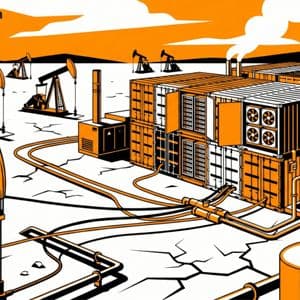
The two companies would agree to merge, with CS Digital receiving $55 million in an all-share transaction, to combine Olenox’s energy expertise with CS Digital’s expertise in bitcoin mining. The combined company would seek to develop off-grid mining and AI data center initiatives close to generation sites. Key Takeaways: Olenox announced a possible $55M merger
25 Apr 2026, 20:54
Litecoin Confirms Zero-Day Bug Caused 13-Block Reorg, Network Patched and Stable

Litecoin’s official account confirmed on Saturday afternoon that a zero-day bug triggered a denial-of-service attack against major mining pools, leading to a 13-block chain reorganization that reversed invalid transactions before they could settle on the main chain. Key Takeaways: Litecoin confirmed a zero-day bug hit major mining pools on April 25, 2026, enabling invalid MWEB


