


 Invest ideas
News
3 May 2026, 16:03
OPEC+ raises output after UAE wealth fund exit

OPEC’s seven major oil-producing nations have agreed to pump an additional 188,000 barrels per day starting in June. This is the group’s first production decision since losing the UAE on May 1 as the key member. The countries involved in the production bump (Saudi Arabia, Russia, Iraq, Kuwait, Kazakhstan, Algeria, and Oman) are adding slightly less than they did in May, when they increased daily output by 206,000 barrels. The latest figure does not include any contribution from the UAE, which is no longer part of the arrangement. In their Sunday statement , the seven nations said they decided on the adjustment “in their collective commitment to support oil market stability,” referencing production changes first announced in April 2023. Global oil supplies remain severely limited The Strait of Hormuz, a narrow waterway that normally carries a large flow of the world’s oil and natural gas shipments, has been blocked for weeks. Oil markets showed some relief on Friday after Iran sent a new peace proposal through mediators in Pakistan, raising hopes that an agreement with Washington might still be possible. U.S. crude prices dropped 3% to close at $101.94 per barrel, while the international Brent benchmark fell nearly 2% to settle at $108.17. Both prices remain roughly 78% higher than they were at the start of this year. President Donald Trump told reporters on Saturday that he had heard about the general outline of a potential deal with Iran but was still waiting for specific details. He cautioned that military strikes could resume if Iran does not follow through on any commitments. According to a senior Iranian official quoted by Reuters, Tehran’s proposal (which Trump has not yet accepted) would reopen the strait and end the American blockade of Iranian ports while postponing discussions about the country’s nuclear program. UAE quits after six decades of membership Cryptopolitan reported the shock announcement from the UAE, which made already strained global oil markets more complex. Abu Dhabi concluded that leaving the group served its national interests after conducting a thorough review of its production strategy and capabilities, according to a statement from the Energy Ministry. For nearly 60 years, the UAE had been deeply involved in the organization’s decision-making. By February, it had become the third-biggest producer in the group, trailing only Saudi Arabia and Iraq. Oil quotas and production disputes are not the only reasons for the UAE. Abu Dhabi no longer depends on the revenue it generated for decades from oil. This is because they have been simultaneously diversifying foreign investments. A prolonged oil shock might boost export revenues in the short term, but it can simultaneously damage the value of stocks, real estate, infrastructure projects, and technology companies that make up the bulk of the UAE’s investment portfolio. This will affect the United States as well in the bigger picture. Gulf Cooperation Council economies (including Bahrain, Kuwait, Oman, Qatar, Saudi Arabia, and the UAE) have built up sovereign wealth funds managing an estimated $4 trillion to $6 trillion in total assets . Last year alone, these funds invested more than $120 billion, with the United States receiving the largest share. However, the ongoing conflict has strained budgets across the Gulf region. Energy exports have been disrupted, tourism has stopped, and governments need more money for defense spending and infrastructure repairs. This could force these countries to keep more capital at home instead of investing it abroad. That poses a potential problem for American technology companies that have come to rely on Gulf money to fund their artificial intelligence projects. If these firms cannot get the capital they need from Middle Eastern investors, they may have to borrow more money through debt, which has already made some investors nervous about their financial health. The smartest crypto minds already read our newsletter. Want in? Join them .
3 May 2026, 13:26
Oscars shut out AI-generated actors

The Academy of Motion Picture Arts and Sciences said on Friday that new rules for the 99th Oscars will not allow AI-generated performances or screenplays to be considered for awards. The Academy’s official release says, “…in the Acting category, only roles credited in the film’s legal billing and demonstrably performed by humans with their consent will be considered eligible.” This means that only acting roles performed by humans and credited in a film’s legal billing would be eligible for acting categories. To be eligible for writing honors, screenplays must be written by humans. The Academy also has the right to ask for further details on how any movie used generative AI. AI Val Kilmer project sparks eligibility debate The restrictions come out as AI-generated characters get closer to being used in movies. A project that used an AI-generated version of Val Kilmer, who died in 2025, brought up direct questions about digital performances after death and whether they should be eligible for awards. Meanwhile, AI “actress” Tilly Norwood has been in the news a lot after talent agents said they wanted to represent the digital character last year. After seeing what OpenAI’s Sora video generator could do, director and actor Tyler Perry shocked the industry in 2024 when he said he was stopping an $800 million expansion of his Atlanta studio complex. Perry said at the time that the technology would “touch every corner of our industry” and cause a lot of actors, editors, and sound specialists to lose their jobs. Perry said, “There needs to be some kind of rules to protect us.” However, OpenAI has discontinued Sora on April 26, according to a dedicated FAQs page . Access to Sora’s API will stop next in September. The usage of AI in movies was a major point of contention during the actors’ and writers’ strikes in 2023. The new Academy rules formalize protections that those labor actions sought to establish. Hollywood will continue to use AI in movies The laws don’t completely stop Hollywood from using AI in movies. Generative AI can still be used as a tool in film creation. The Academy has made it clear that only people who perform and write are eligible for distinction as creative authors. Hachette Book Group has already dropped a novel called “Shy Girl” because it seemed to employ AI. The novel was intended for publication in the United States this spring. The book will be discontinued in the United Kingdom, where it is currently available. The Dolby Theater in Los Angeles will host the 99th Academy Awards on March 14, 2027. Movies that come out between January 1 and December 31, 2026, can be considered. There’s a middle ground between leaving money in the bank and rolling the dice in crypto. Start with this free video on decentralized finance .
3 May 2026, 00:49
Ethereum L2 security questioned as Solana pushes quantum-resistant tech
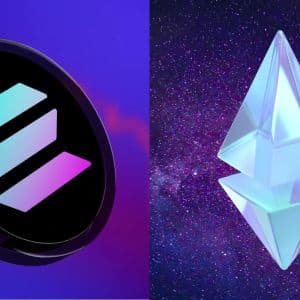
The CEO of Solana Labs and the visionary behind the Solana blockchain, Anatoly Yakovenko, has offered a new perspective on how quantum technology threatens blockchain security. This comes shortly after Solana developed technology capable of withstanding future quantum threats. In a post on X dated May 2, 2026, Yakovenko noted that, “Ethereum L2s are not quantum safe; abandon all hope.” Analysts noted that the statement was significant, as Bitcoin is subject to comparable quantum threats. On April 27, the Solana Foundation shared a website page notifying users that Solana has made a crucial advancement in post-quantum cryptography. Anza and Firedancer, its leading technical teams, selected the Falcon digital signature scheme for post-quantum security. The initial implementations have been finalized and are now available on GitHub. At this point, critics say the security methods used by Ethereum Layer 2 will not be strong enough against advanced quantum computers. They unveiled that most L2 system user wallets utilize the secp256k1 curve and rely heavily on the Elliptic Curve Digital Signature Algorithm (ECDSA). Uncertainty surrounds blockchain’s future as quantum threats intensify First, when a transaction is broadcast, the public keys involved become visible to everyone on the blockchain. These keys may be vulnerable to future cryptographic attacks as quantum computing undermines current encryption. Yakovenko warned that such an incident could result in a “harvest now, decrypt later” threat. Here, an attacker gains access to current transaction data and then stores it for future decryption using Shor’s algorithm on a quantum computer. This technology could let hackers piece together private keys and illicitly access funds. According to tech experts, the quantum security conversation highlights a wider industry vulnerability that extends far beyond Ethereum Layer 2 systems. For instance, Ethereum and Solana, key blockchains, use elliptic curve cryptography to validate transactions. Theoretically, known algorithms could enable powerful quantum computers to compromise these cryptographic systems. Nonetheless, this vulnerability is inherent in almost all blockchains. Analysts argue that it is a long-term concern rather than an immediate threat. Given that Layer 2 solutions rely on the same cryptographic foundations as their main chains, they inherit the same vulnerabilities. Hence, attaining quantum resistance poses an industry-wide challenge. Yakovenko identified issues with the economic design of Layer 2 solutions. According to him, too many rollups fragment liquidity and break up user communities. This splitting could weaken network effects and divert transaction revenue from the main layer. Critics argued that Layer 2 scaling boosts performance but hinders economic alignment within the broader ecosystem. Ethereum ecosystem supporters, on the other hand, have advocated for Layer 2 expansion as a necessity for long-term growth. They accept that it may cause immediate, short-term issues. This debate emerges as blockchain developers explore post-quantum cryptography solutions. Ethereum researchers began testing new signature methods designed to resist future quantum risks. Still, upgrading an active network to new cryptographic standards poses significant technical challenges. The massive data and computational demands of these new solutions hinder their large-scale adoption. Advancing decentralized cryptographic systems also requires careful planning to prevent network disruption and maintain security integrity. Solana solidifies its position as a future leader in blockchain security The Solana Foundation outlined a step-by-step initiative to transition its network to post-quantum cryptography. The plan outlined how advancements would be implemented as quantum computing matures into a practical cybersecurity threat . The foundation shared an official blog post noting that” the roadmap focuses on gradual changes, beginning with research and updates at the wallet level instead of immediate changes to the protocol.” This approach reflects a view that quantum risks are not yet pressing. Solana client development arms Anza and Firedancer created and established early versions of Falcon , a post-quantum digital signature algorithm. This move demonstrates technical alignment on potential network transition strategies. According to the team, adopting Falcon supports their goal of maintaining small signatures and high throughput, both of which are critical to Solana’s performance-focused architecture. Despite this progress, the foundation will not be making any immediate modifications to the network. Instead, they have phased their roadmap to align with advances in quantum technology. Don’t just read crypto news. Understand it. Subscribe to our newsletter. It's free .
2 May 2026, 14:02
Visa, Blue Owl in gainers; Mastercard, insurance stocks among losers: week's financials wrap

More on Financials The Next Rotation (The Value Call Is Wrong) Big Bank Earnings: Resilience And Concern Big Bank Earnings Roundup Ken Griffin sounds alarm on risks of private credit market for wealthy investors: FT Weekly ETF flows: Four of 11 sectors record outflows; technology sector leads inflows
2 May 2026, 11:55
Bitcoin Recovery Tool Claims to Unlock 8,999 BTC Lost in 2010 Bug

BitcoinWorld Bitcoin Recovery Tool Claims to Unlock 8,999 BTC Lost in 2010 Bug A developer claims a new CUDA-based tool can recover 8,999 Bitcoin (BTC) lost in 2010. The funds belong to a user known as Stone Man. The loss occurred due to a bug in an early version of the Bitcoin client. The stash is now valued at over $700 million. Bitcoin Recovery Tool Exploits Weak Entropy The developer, a Reddit user named CompetitiveRough8180, states the tool exploits weak entropy. Entropy refers to the randomness used to generate private keys. In 2010, the Bitcoin client had a flaw. It used weak randomness. This made some private keys predictable. The tool uses CUDA, a parallel computing platform from NVIDIA. It can run on powerful GPUs. This allows it to brute-force the missing keys. The developer claims the tool can recover the lost coins in a reasonable time. This claim has sparked debate. Many experts question its validity. Others see it as a potential breakthrough. The Bitcoin community is watching closely. Stone Man: The Owner of the Lost Bitcoin Stone Man is a pseudonymous user. They lost access to 8,999 BTC in 2010. The loss was due to a bug in the Bitcoin client. At that time, Bitcoin had little value. The loss was not a major concern. Now, the same stash is worth over $700 million. This makes recovery highly desirable. Stone Man has not commented publicly. The developer claims to be working with them. How the CUDA Tool Works The tool uses CUDA to accelerate key generation. It tests millions of potential private keys per second. The process relies on known weaknesses in the 2010 client. Key points about the tool: Platform: CUDA (NVIDIA GPUs) Target: Weak entropy in 2010 Bitcoin client Method: Brute-force private key generation Claimed success: Recover 8,999 BTC The developer has not released the tool publicly. They cite security concerns. They also want to avoid scams. Timeline of the 2010 Bitcoin Bug The bug occurred in an early version of Bitcoin Core. It affected key generation. Users who created wallets in 2010 may have weak keys. Timeline: 2009: Bitcoin launches. Early client software has flaws. 2010: Stone Man loses access to 8,999 BTC. The bug is identified. 2011: Bitcoin client updates fix the entropy issue. 2023: Developer claims new CUDA tool can recover the lost coins. Many other users may have similar losses. The tool could help them too. Expert Reactions and Skepticism Cryptocurrency security experts have mixed reactions. Some believe the claim is plausible. Others call it unrealistic. Dr. Sarah Chen, a blockchain security researcher, says: “Weak entropy is a known issue. A brute-force attack is theoretically possible. But the time and cost are enormous.” Other experts point to the value of the stash. At $700 million, the incentive is huge. This makes the claim worth investigating. Potential Impacts on Bitcoin Security If the tool works, it could change Bitcoin security. It would show that old wallets are vulnerable. Users with wallets from 2010 should take action. However, the tool only targets a specific bug. It does not affect modern wallets. Modern Bitcoin clients use strong entropy. Bitcoin Recovery Tool: Risks and Rewards The developer faces significant risks. They must prove the tool works. They also face legal and ethical questions. Risks include: Legal: Recovering lost coins may have legal implications. Ethical: The tool could be used for malicious purposes. Technical: The tool may not work as claimed. Rewards include: Financial: A potential $700 million recovery. Reputation: Recognition as a top-tier security researcher. Community: Helping others recover lost funds. Conclusion A developer claims a new CUDA tool can recover 8,999 BTC lost in 2010. The Bitcoin recovery tool exploits weak entropy in the old client. The stash, owned by Stone Man, is now worth over $700 million. The claim has sparked debate. Experts are skeptical but intrigued. The Bitcoin community watches closely. If true, this could be a major breakthrough in cryptocurrency recovery. FAQs Q1: What is the Bitcoin recovery tool? A1: It is a CUDA-based tool that claims to recover Bitcoin lost due to weak entropy in the 2010 Bitcoin client. Q2: Who is Stone Man? A2: Stone Man is a pseudonymous user who lost 8,999 BTC in 2010 due to a bug in the Bitcoin client. Q3: How does the tool work? A3: It uses NVIDIA GPUs to brute-force private keys by exploiting weak randomness in the old client software. Q4: Is the tool publicly available? A4: No, the developer has not released it publicly due to security and scam concerns. Q5: Can the tool recover other lost Bitcoin? A5: Possibly, if the loss was due to the same weak entropy bug in the 2010 client. This post Bitcoin Recovery Tool Claims to Unlock 8,999 BTC Lost in 2010 Bug first appeared on BitcoinWorld .
2 May 2026, 07:30
TRON DAO and Securitize Host TRON Whale Night at Bitcoin 2026 with MetaMask, DSA, and B.AI

Geneva, Switzerland, May 1, 2026 — TRON DAO , the community-governed DAO dedicated to accelerating the decentralization of the internet through blockchain technology and decentralized applications (dApps), participated in the Bitcoin 2026 conference, held April 27–29 at The Venetian in Las Vegas. As part of its presence, TRON DAO hosted TRON Whale Night alongside Securitize on April 27, with MetaMask, Digital Sovereignty Alliance (DSA), and B.AI serving as co-hosts. Held at OMNIA Nightclub on the Las Vegas Strip, TRON Whale Night brought together hundreds of participants, including leading institutions, builders, developers, and industry stakeholders. TRON Whale Night served as a flagship gathering, highlighting ongoing industry-wide collaboration and reflecting growing institutional participation in blockchain-based financial infrastructure, including stablecoins, decentralized finance (DeFi), and cross-chain interoperability. Remarks and toasts were delivered by Sam Elfarra, Community Spokesperson at the TRON DAO; Graham Ferguson, Head of Ecosystem at Securitize; and Molly Woodman, Senior Policy Advisor at the Digital Sovereignty Alliance (DSA), reflecting a shared focus on advancing collaboration across the digital asset ecosystem. “Bitcoin 2026 is one of the largest Bitcoin-focused conferences globally and provides an important opportunity to engage with participants across the digital asset ecosystem,” said Sam Elfarra, Community Spokesperson at the TRON DAO. “Our presence reflects a commitment to working alongside industry stakeholders to advance the development and adoption of blockchain infrastructure at a global scale.” TRON DAO’s participation in Bitcoin 2026 reflects its ongoing commitment to community building, ecosystem development, and collaboration across the digital asset industry. For more information about TRON’s initiatives and upcoming events, please visit TRON DAO’s official website . About TRON DAO TRON DAO is a community-governed DAO dedicated to accelerating the decentralization of the internet via blockchain technology and dApps. Founded in September 2017 by H.E. Justin Sun, the TRON blockchain has experienced significant growth since its MainNet launch in May 2018. Until recently, TRON hosted the largest circulating supply of USD Tether (USDT) stablecoin, which currently exceeds $86 billion. As of April 2026, the TRON blockchain has recorded over 379 million in total user accounts, more than 13 billion in total transactions, and over $27 billion in total value locked (TVL), based on TRONSCAN. Recognized as the global settlement layer for stablecoin transactions and everyday purchases with proven success, TRON is “Moving Trillions, Empowering Billions.” TRONNetwork | TRONDAO | X | YouTube | Telegram | Discord | Reddit | GitHub | Medium | Forum Media Contact Yeweon Park [email protected]


