


 Invest ideas
News
23 Mar 2026, 14:22
The $2.4K Fakeout: Why ETH’s Latest Rally Might Just Be a Bull Trap (Ethereum Price Analysis)
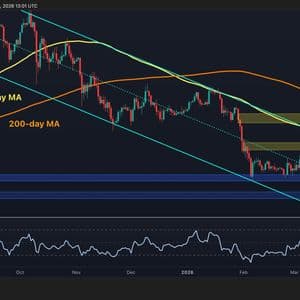
Ethereum is attempting to stabilize after an extended corrective phase. The asset is showing early signs of recovery from the $1.8k demand zone. However, despite the recent bounce, the broader market structure remains under pressure, and the current move appears more like a relief rally than a confirmed trend reversal. The key challenge for bulls lies in reclaiming higher timeframe resistance levels while maintaining momentum. So far, every push upward has been met with selling pressure, suggesting that market participants are still using rallies as exit liquidity. Ethereum Price Analysis: The Daily Chart On the daily timeframe, Ethereum continues to trade within a well-defined bearish structure, printing lower highs and lower lows over the past few months. The price remains below both the 100-day and 200-day moving averages, located around the $2.5k and $3.2k marks, respectively. They are acting as dynamic resistance and reinforcing the overall downtrend bias. The recent bounce from around $1.8k was technically significant, as this level has historically served as a strong demand zone. The move pushed ETH toward the $2.2k–$2.4k resistance region, which aligns with a previous breakdown area and a key supply zone. However, the price action has stalled here, with multiple rejections indicating that sellers are still firmly in control at higher levels. A decisive daily close above $2.4k would be the first meaningful sign of strength, potentially shifting market structure and opening the door toward the next major resistance at $2.8k. On the downside, if ETH fails to hold above the psychological $2k level, the market could revisit $1.8k. A breakdown below this support would likely accelerate bearish momentum and expose lower levels, potentially triggering panic selling. ETH/USDT 4-Hour Chart Zooming into the 4-hour timeframe, ETH had been forming an ascending channel, which typically signals a controlled bullish retracement within a broader downtrend. This structure was supported by higher lows and relatively steady buying pressure. However, the recent price action near the $2.3k–$2.4k resistance resulted in a fake breakout, where the asset briefly pushed above the channel resistance and supply zone, only to be quickly rejected. This type of move often traps late buyers and signals exhaustion in bullish momentum. Following the rejection, ETH dropped back inside the channel and is now trading around $2,150. The loss of momentum is further confirmed by RSI, which showed an overbought signal at the recent highs, indicating that, despite higher prices, buying strength was weakening. Yet, in another interesting development, ETH has jumped significantly from the lower boundary of the channel, indicating that another test of the higher trendline and the $2.4k supply zone could be expected in the coming days. Sentiment Analysis From a sentiment perspective, the Taker Buy Sell Ratio has recently shown a noticeable uptick, moving toward and slightly above the neutral 1.0 level after almost 2 years. This indicates that aggressive buyers (market takers) are becoming more active, suggesting a short-term increase in demand. However, context is crucial. This increase comes after a prolonged period where the ratio remained below 1.0, reflecting dominant selling pressure. In such scenarios, sudden spikes in buying activity during a broader downtrend can sometimes represent short-term relief rallies rather than the beginning of a sustained uptrend. Additionally, the lack of strong follow-through in price despite rising buy pressure suggests that passive sellers are still absorbing demand. For a more convincing bullish signal, the ratio would need to remain consistently above 1.0 while being accompanied by higher highs in price. The post The $2.4K Fakeout: Why ETH’s Latest Rally Might Just Be a Bull Trap (Ethereum Price Analysis) appeared first on CryptoPotato .
23 Mar 2026, 14:16
Silver Price Prediction: XAG/USD Holds $68 Amid Fed Hawkish Outlook

Silver price (XAG/USD) has faced sharp liquidation pressure over the last 48 hours, capitulating to a hawkish Federal Reserve outlook that has strengthened the dollar, which resulted in Silver’s prediction to further falls. Spot prices have retraced significantly from yesterday, currently trading around $68 after running above $95 just 2 weeks ago. This decline extends a volatile period where the metal fell from a weekly high of $74.58, marking a painful rejection for bulls hoping for a sustained rally above the psychological $70 mark. MASSIVE CRASH IN METALS. Gold has crashed -25% from its record high and dropped below $4200, hitting a 100-day low of $4,163. Silver has crashed nearly -50% from its all-time high and hit a 3-month low of $61. Together they have wiped out $13.5 trillion in the past 53 days,… pic.twitter.com/JBclFuGVLW — Bull Theory (@BullTheoryio) March 23, 2026 The technical deterioration has been swift. According to recent data, XAG/USD has logged a near 10% decline over the last seven days, dropping from an open of of $72.86 on March 20. Market participants are reacting to a combination of rising interest rate expectations and liquidation from leveraged accounts, with experts warning that while the long-term demand from solar and EV sectors remains, the short-term chart structure is unstable. Previous recovery attempts have failed to hold, leaving the metal vulnerable to further downside probing. Discover: The Best New Crypto Silver Price Prediction: Can The Metal Defend the $65 Support Level This Week? Current price action suggests a critical test of support is underway. Trading at $68, Silver is hovering dangerously close to the $65 mark, a level analysts identify as the lower boundary of the current bullish channel. With a 24-hour change of +2%, momentum indicators on the 2H charts are flashing neutral signals, following a breakdown from a three-week trend. If the $65 floor gives way, technical selling could accelerate toward subsequent support zones at $63 and potentially as low as $50. Conversely, reclaiming stability would require a push back above resistance at $72, though widely cited analysis suggests valid accumulation zones may be lower (a grim “margin hike” scenario often precipitates such flushes) as seen in prior crashes . Silver USD, TradingView For now, the path of least resistance appears to be downside consolidation unless a catalyst invalidates the stronger dollar narrative. Maxi Doge Targets Early Mover Upside as XAG Tests Key Levels While commodity markets grind through interest rate headwinds and slow-moving macro corrections, speculative capital is increasingly rotating toward high-variance assets that thrive on community energy rather than Fed minutes. As silver bulls nurse losses, volatility traders are eyeing the meme coin sector, where Maxi Doge ($MAXI) is positioning itself as a “Leverage King” alternative to traditional slow-movers. Maxi Doge is explicitly designed for the “1000x leverage” mentality, currently in a presale phase that has already raised more than $4,6 million . Unlike the broader market’s hesitation, this project embraces aggressive “gym-bro” meme culture with the USP of a 240-lb canine juggernaut. Priced at $0.000281, $MAXI offers a high 66% APY staking rewards and holder-only trading competitions, creating a “lift, trade, repeat” ecosystem. While traditional assets like silver face liquidity thinning due to risk-off sentiment, Maxi Doge utilizes a dedicated treasury to maintain momentum. Visit Maxi Doge Presale The post Silver Price Prediction: XAG/USD Holds $68 Amid Fed Hawkish Outlook appeared first on Cryptonews .
23 Mar 2026, 14:15
Bitcoin Soars: BTC Price Surges Above $71,000 Milestone, Fueling Market Optimism

BitcoinWorld Bitcoin Soars: BTC Price Surges Above $71,000 Milestone, Fueling Market Optimism In a significant move for digital asset markets, Bitcoin (BTC) has surged past the $71,000 threshold, trading at $71,058.93 on the Binance USDT market as of today, March 25, 2025. This price action marks a pivotal moment for the flagship cryptocurrency, reigniting discussions about its market trajectory and underlying value drivers. The ascent follows a period of consolidation and reflects a complex interplay of macroeconomic factors, institutional adoption, and evolving regulatory landscapes. Bitcoin Price Analysis: Breaking the $71,000 Barrier Market data from multiple exchanges confirms Bitcoin’s breach of the $71,000 level. This price point represents a key psychological and technical resistance zone. Analysts monitor the trading volume accompanying this move for confirmation of strength. Historically, sustained breaks above round-number milestones often precede extended rallies. However, they also invite increased volatility as profit-taking emerges. The current price sits within a critical range that market participants have watched closely since the previous all-time high cycle. Several on-chain metrics provide context for this price movement. For instance, the number of Bitcoin addresses holding non-zero balances continues to reach new highs. This indicates broadening adoption. Furthermore, the supply held by long-term holders remains historically elevated, suggesting strong conviction. Exchange reserves have been declining, a sign that fewer coins are available for immediate sale. This supply dynamic can create upward pressure on price when demand increases. Drivers Behind the Cryptocurrency Rally Multiple converging factors are contributing to Bitcoin’s current strength. Firstly, macroeconomic conditions play a crucial role. Perceived instability in traditional finance or currency devaluation fears often drive capital toward decentralized assets like Bitcoin. Secondly, the continued maturation of the regulatory framework in major economies provides clearer guidelines for institutional investment. This reduces uncertainty for large-scale asset managers. Another significant driver is the development and adoption of Bitcoin-based financial products. The approval and growth of spot Bitcoin Exchange-Traded Funds (ETFs) in jurisdictions like the United States have created a new, regulated conduit for capital inflow. These products allow traditional investors to gain exposure to Bitcoin without directly managing cryptographic keys. The net flows into these ETFs serve as a tangible gauge of institutional and retail demand. Expert Perspectives on Market Sustainability Financial analysts emphasize the importance of looking beyond the headline price. They assess the quality of the rally by examining derivative markets. For example, funding rates in perpetual swap markets indicate whether leverage is becoming excessive. Currently, reports suggest a measured increase in open interest, not the euphoric leverage seen in prior market peaks. This could imply a more sustainable advance. Furthermore, experts point to the evolving use case of Bitcoin as a digital store of value . Its fixed supply cap of 21 million coins contrasts with the expansive monetary policies of central banks globally. This fundamental scarcity argument remains a core thesis for long-term investors. Network security, measured by the hash rate, also continues to set record highs, underscoring the robustness of the underlying protocol. Historical Context and Future Trajectory To understand the present, one must consider Bitcoin’s past. The cryptocurrency has experienced several boom-and-bust cycles, each reaching higher nominal peaks. The journey to $71,000 follows a substantial correction and subsequent recovery phase. Market technicians often analyze these movements within the context of halving cycles , where the block reward for miners is programmatically cut in half approximately every four years. The most recent halving event occurred in 2024. Historical patterns suggest a period of price appreciation often follows in the subsequent 12-18 months, though past performance never guarantees future results. The current market structure appears different from previous cycles due to the deep involvement of regulated entities and corporations adding Bitcoin to their treasury reserves. This institutional layer may alter the volatility profile and cycle timing. Comparative Market Performance Bitcoin’s performance often sets the tone for the broader digital asset ecosystem, commonly referred to as ‘altcoins.’ The following table illustrates Bitcoin’s dominance and recent performance against other major assets. Asset Approx. 30-Day Change Key Note Bitcoin (BTC) +18% Leading the market, broke $71K resistance. S&P 500 Index +3% Traditional equities show moderate growth. Gold (XAU) +2% Traditional safe-haven asset sees steady demand. Ethereum (ETH) +15% Often correlates with but lags behind BTC surges. This comparative view highlights Bitcoin’s role as a distinct asset class. Its returns are frequently non-correlated with traditional markets, especially over short timeframes. This characteristic makes it attractive for portfolio diversification. However, its higher volatility necessitates a different risk management approach compared to conventional investments. Conclusion Bitcoin’s rise above $71,000 represents a significant milestone, reflecting a combination of sustained investor interest, evolving institutional frameworks, and its core value proposition as a scarce digital asset. While the price movement captures headlines, the underlying fundamentals—network security, adoption metrics, and regulatory clarity—provide a more comprehensive picture of its market health. As the landscape continues to mature, monitoring these foundational elements will remain crucial for understanding the long-term trajectory of the Bitcoin price and the broader role of cryptocurrency in the global financial system. FAQs Q1: What caused Bitcoin to rise above $71,000? The rise is attributed to several factors including increased institutional investment via ETFs, positive macroeconomic sentiment towards alternative assets, a clear regulatory environment in key markets, and sustained growth in network adoption and security. Q2: Is this a good time to buy Bitcoin? Investment decisions depend on individual financial goals, risk tolerance, and time horizon. Cryptocurrencies are highly volatile. Potential investors should conduct thorough research and consider consulting a qualified financial advisor, understanding that prices can fluctuate significantly in both directions. Q3: How does the current price compare to Bitcoin’s all-time high? The current price of approximately $71,058 is below the all-time high recorded in the previous market cycle, which was near $74,000. Breaking through the $71,000 level is seen as a step toward testing that previous peak. Q4: What are the risks associated with Bitcoin at this price level? Primary risks include high volatility, potential regulatory changes in different countries, technological risks associated with digital asset custody, market sentiment shifts, and macroeconomic factors that could reduce risk appetite across all speculative assets. Q5: Does Bitcoin’s performance affect other cryptocurrencies? Yes, Bitcoin is widely considered the market leader or ‘blue chip’ of the crypto space. Its price movements often influence overall market sentiment and capital flows, impacting the prices of other digital assets, though individual project fundamentals also play a major role. This post Bitcoin Soars: BTC Price Surges Above $71,000 Milestone, Fueling Market Optimism first appeared on BitcoinWorld .
23 Mar 2026, 14:15
Katana Acquires IDEX to Launch Katana Perps, Bringing Native Perpetual Futures to Its DeFi Chain

Matthew Fisher appointed CEO as Katana deepens its vertically integrated trading stack. Acquire.Fi served as exclusive sell-side M&A advisor and deal introducer to IDEX. New York, March 23, 2026 — Katana has completed the acquisition of IDEX, a veteran on-chain trading infrastructure team, and launched Katana Perps, its native perpetual futures platform, now live at perps.katana.network. Acquire.Fi, the Web3-native M&A advisory firm, served as exclusive sell-side advisor to IDEX and the original deal introducer. The acquisition marks a significant step in Katana’s strategy to own the core economic engines of its chain rather than rely on third-party applications for trading volume. Katana Perps will be integrated directly into the Katana App alongside spot and routing, making derivatives a native part of the platform rather than a separate product built on top of it. Matthew Fisher has been appointed CEO of Katana to lead this next phase. Fisher brings a background in institutional business development, digital asset policy, and DeFi infrastructure, with prior roles at Diem, Polygon Labs, and Katana itself. IDEX brings nearly a decade of experience building on-chain trading infrastructure. The team’s matching engine delivers CEX-grade performance on-chain, including low-latency execution, advanced order types, chart trading with take-profit and stop-loss functionality, and mature API support for professional integrations. The timing of the launch reflects broader shifts in market structure. Crypto trading activity increasingly occurs outside traditional hours, and demand for always-on, high-performance derivatives venues continues to grow globally. Katana Perps is built to serve that market. Katana Perps is positioned to serve professional and institutional traders, market makers, and crypto-native users who require a performance-oriented venue. Over time, vKAT voters will be able to direct incentives toward perps-related markets and earn fees from them, integrating perps revenue into the same flywheel that powers spot, lending, and launch activity on the chain. Katana’s broader DeFi stack now covers four core verticals: Sushi for spot, Morpho for lending, Kensei for token launches, and Katana Perps for derivatives. The KAT and vKAT token model serves as the coordination layer across all four. Katana Perps launches with Season 1 of a Points Program designed to reward organic trading, sustained participation, liquidity contribution, and referrals.This product is not available to persons located in the United States. Nothing in this release constitutes an offer or solicitation to U.S. persons. Acquire.Fi originated the transaction and served as exclusive sell-side advisor to IDEX, guiding the process from initial introduction through final close. ABOUT KATANA Katana is a DeFi-native chain built around a tightly integrated trading stack. Its core applications span spot, lending, and now perpetual futures. The chain’s economic model centers on KAT and vKAT as coordination and fee-distribution mechanisms across all native venues. ABOUT IDEX / KATANA PERPS IDEX has been building on-chain trading infrastructure for nearly a decade. As Katana Perps, the team now operates as the native derivatives venue of the Katana chain and integrated in the Katana App, delivering a CEX-like experience on-chain with deep API support and a roadmap toward sophisticated market structure tools. ABOUT ACQUIRE.FI Acquire.Fi is a Web3-native M&A advisory firm specializing in buy-side and sell-side mandates across DeFi infrastructure, exchanges, fintech, and digital asset businesses. The firm operates at the intersection of deal origination, institutional buyer relationships, and execution, with over 350 deals seen across its pipeline. Notable credentials include advisory on the Kraken/Vertex perps DEX acquisition and ongoing mandates across regulated entities and high-growth crypto businesses globally. MEDIA CONTACT [Jan Strandberg] [CEO], Acquire.Fi [[email protected]]
23 Mar 2026, 14:10
Michael Saylor’s Strategy (MSTR) buys 1,031 Bitcoin, slows pace of BTC buys

Michael Saylor’s Strategy (previously known as Microstrategy), the world’s largest public holder of Bitcoin, continued adding to its cryptocurrency reserves last week, though at a significantly slower pace compared to its recent large-scale purchases. The company acquired 1,031 Bitcoin for approximately $76.6 million, according to an 8-K filing with the US Securities and Exchange Commission on Monday. The purchase was made at an average price of $74,326 per coin, slightly below the firm’s overall acquisition cost of $75,694 per Bitcoin. The latest buy brings Strategy’s total holdings to 762,099 BTC, acquired for a cumulative cost of around $57.69 billion. Based on current Bitcoin prices near $70,000, the company’s holdings are estimated to be worth roughly $54 billion, leaving it down about 7% on its investment. Smaller purchase follows aggressive accumulation The latest acquisition marks a sharp slowdown in Strategy’s buying activity. In the previous two weeks, the company had made substantially larger purchases, including a 22,337 BTC buy worth $1.6 billion and a 17,994 BTC purchase the week before. The $1.6 billion acquisition ranks among the largest in Strategy’s history and was primarily funded through the issuance of its perpetual preferred equity, known as Stretch (STRC). The offering generated approximately $1.2 billion, accounting for about 75% of the total purchase. By contrast, last week’s more modest purchase suggests a shift in the company’s pace of accumulation, even as it maintains its long-standing strategy of building Bitcoin reserves. In total, Strategy has acquired 41,362 Bitcoin in March alone, spending roughly $2.93 billion during the month. Funding shifts to common stock sales Another notable shift in the latest transaction is the funding source. Unlike the previous large purchases, which relied heavily on preferred equity issuance, the most recent acquisition was funded entirely through the sale of Class A common stock. This change highlights a more measured approach to capital raising, as the company adjusts its funding mix following the sizable inflows generated through its preferred equity program. The filing confirmed that the company used proceeds from common stock sales to finance the $76.6 million purchase. Market conditions weigh on holdings The latest purchase comes amid a softer price environment for Bitcoin. The cryptocurrency averaged around $70,871 during the week of March 16–22, based on daily closing prices, and was trading near $71,600 at the time of writing. As a result, Strategy’s aggregate position is currently under pressure, with the firm sitting on an unrealized loss of approximately 7% relative to its total acquisition cost. Despite this, the company has continued to add to its holdings, reinforcing its conviction in Bitcoin as a long-term treasury asset. Shares of Strategy were modestly higher in premarket trading, rising about 1.7%, even as the pace of Bitcoin purchases slowed. The company’s latest move suggests a more cautious accumulation phase, balancing its aggressive long-term strategy with evolving market conditions and funding dynamics. The post Michael Saylor’s Strategy (MSTR) buys 1,031 Bitcoin, slows pace of BTC buys appeared first on Invezz
23 Mar 2026, 14:10
USD Forecast: Inevitable Decline as Economic Growth Slows – BNP Paribas Analysis
BitcoinWorld USD Forecast: Inevitable Decline as Economic Growth Slows – BNP Paribas Analysis Global currency markets face significant recalibration as BNP Paribas projects a gradual but persistent US dollar decline throughout 2025, directly tied to slowing economic growth patterns and shifting monetary policy landscapes. This comprehensive analysis examines the structural factors driving this forecast, providing traders and policymakers with essential context for navigating coming currency volatility. USD Decline Fundamentals and Economic Context BNP Paribas economists identify multiple converging factors supporting their dollar depreciation outlook. Firstly, US economic growth shows clear deceleration signals across key indicators. The Federal Reserve’s own projections now acknowledge this slowing momentum. Consequently, interest rate differentials between the US and other major economies continue narrowing. Historical data reveals consistent patterns where dollar strength correlates strongly with growth outperformance. Currently, that outperformance shows measurable erosion. Manufacturing PMI readings, consumer spending trends, and business investment metrics all indicate moderation. Therefore, the fundamental support for dollar appreciation weakens systematically. Global capital flows demonstrate noticeable shifts away from dollar-denominated assets. International investors increasingly diversify portfolios toward emerging markets and alternative currencies. This reallocation reflects both growth differential changes and geopolitical considerations. Moreover, central bank reserve managers continue gradual diversification from dollar holdings. Monetary Policy Divergence and Dollar Pressure The Federal Reserve’s policy trajectory remains crucial for dollar valuation. Current indications suggest the Fed will maintain a cautious approach toward further tightening. Meanwhile, other major central banks pursue different strategies. The European Central Bank, for instance, maintains relatively hawkish positioning given persistent inflation concerns in the Eurozone. Interest rate differentials historically drive currency valuations significantly. As these differentials compress, dollar support diminishes correspondingly. The table below illustrates recent changes in key central bank policy rates: Central Bank Current Policy Rate 2025 Projection Policy Stance Federal Reserve 4.50-4.75% 4.00-4.25% Neutral to Dovish European Central Bank 3.75% 3.25-3.50% Moderately Hawkish Bank of England 5.25% 4.50-4.75% Cautiously Hawkish Bank of Japan -0.10% 0.00-0.25% Gradual Normalization These policy divergences create natural pressure on the dollar index. Additionally, reduced volatility in Treasury markets diminishes the dollar’s traditional safe-haven appeal. Market participants now perceive other assets as offering better risk-adjusted returns. Growth Metrics and Currency Valuation Linkages Economic growth differentials provide the most direct explanation for currency movements. The United States currently experiences growth moderation from post-pandemic recovery peaks. Specifically, several indicators demonstrate this trend: GDP Growth: Projected to slow from 2.4% in 2024 to 1.8% in 2025 Manufacturing Activity: ISM Manufacturing PMI consistently below expansion threshold Consumer Confidence: Declining from recent highs amid inflation concerns Business Investment: Capital expenditure plans showing moderation signals Comparatively, other regions demonstrate relative improvement or stabilization. The Eurozone, for example, shows signs of gradual recovery from energy crisis impacts. Asian economies benefit from supply chain normalization and technological advancement. Consequently, growth differentials that favored the US during pandemic recovery now equalize. Global Currency Market Implications A gradual dollar decline carries significant implications across financial markets. Major currency pairs will experience notable repricing as this trend develops. The euro-dollar exchange rate particularly warrants close monitoring. European exporters may face competitive challenges as euro appreciation accelerates. Emerging market currencies typically benefit from dollar weakness. Reduced dollar strength alleviates debt servicing pressures for dollar-denominated borrowers. Additionally, capital flows toward higher-yielding emerging market assets increase naturally. However, this transition requires careful management to prevent disruptive volatility. Commodity markets historically correlate inversely with dollar strength. A declining dollar typically supports commodity prices denominated in dollars. Energy, metals, and agricultural commodities may experience upward price pressure. This dynamic could influence global inflation trajectories significantly. Historical Precedents and Current Distinctions Previous dollar decline cycles offer valuable perspective for current analysis. The 2002-2008 period saw substantial dollar depreciation amid global growth rebalancing. However, current circumstances differ meaningfully in several aspects: Geopolitical Context: Current fragmentation contrasts with earlier globalization momentum Debt Levels: Significantly higher public and private debt constrains policy responses Digital Currencies: Cryptocurrency adoption introduces new currency competition Trade Patterns: Supply chain reorganization alters traditional currency flow patterns These distinctions suggest the coming dollar adjustment may follow unique pathways. Central bank digital currency developments add another dimension to currency competition. Digital dollar initiatives face challenges maintaining dominance amid technological innovation. Risk Factors and Alternative Scenarios While BNP Paribas projects gradual dollar decline, several factors could alter this trajectory. Geopolitical tensions frequently drive safe-haven flows toward the dollar. Escalation in major conflicts could temporarily reverse depreciation trends. Additionally, unexpected US economic resilience might sustain dollar strength longer than anticipated. Federal Reserve policy decisions remain paramount. More aggressive inflation fighting could necessitate renewed tightening. This scenario would support dollar valuation through interest rate differentials. However, current inflation trends suggest diminishing probability of such aggressive action. Global recession risks present complex currency implications. Traditional safe-haven behavior during crises typically benefits the dollar. Yet current debt dynamics and policy constraints might limit this historical pattern. Market participants should monitor recession probability indicators closely. Conclusion BNP Paribas analysis indicates a gradual USD decline throughout 2025, fundamentally driven by slowing economic growth and shifting monetary policy dynamics. This transition carries significant implications for global trade, investment flows, and currency market stability. Market participants must prepare for increased volatility and strategic repositioning as dollar dominance undergoes measured recalibration. The coming period requires careful monitoring of growth differentials, policy decisions, and geopolitical developments that could accelerate or moderate this projected USD decline trajectory. FAQs Q1: What timeframe does BNP Paribas project for the USD decline? The analysis suggests gradual depreciation throughout 2025, with the process potentially extending into 2026 depending on economic developments and policy responses. Q2: How will a weaker dollar affect US consumers and businesses? US consumers may face slightly higher import prices, while exporters could benefit from increased competitiveness in international markets. Businesses with significant overseas earnings may see currency translation benefits. Q3: Which currencies stand to gain most from dollar weakness? Emerging market currencies typically benefit significantly, along with commodity-linked currencies like the Australian and Canadian dollars. The euro and yen may also appreciate, though their movements depend on respective economic conditions. Q4: Could geopolitical events reverse this dollar decline forecast? Yes, significant geopolitical tensions often drive safe-haven flows to the dollar, potentially creating temporary reversals. However, structural economic factors typically reassert dominance over longer periods. Q5: How should investors position portfolios for a declining dollar environment? Diversification into international assets, commodities, and currencies with stronger growth prospects becomes increasingly important. However, specific positioning should align with individual risk tolerance and investment horizons. This post USD Forecast: Inevitable Decline as Economic Growth Slows – BNP Paribas Analysis first appeared on BitcoinWorld .


