News
8 Apr 2026, 23:03
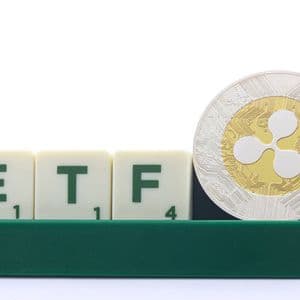
Canary Capital Files PEPE ETF as Wall Street Tests Institutional Demand for Meme Coins

Institutional access to meme-based crypto expands as Canary Capital files with the SEC for a PEPE ETF, offering brokerage-based exposure while avoiding direct token custody and derivative risks. Key Takeaways: Canary Capital filed with the SEC to launch a PEPE ETF tracking token price via direct holdings. PEPE ETF signals broader push into volatile assets
8 Apr 2026, 23:00
This Key Bitcoin Metric Suggests That Current Downside Action Will Continue

Bitcoin’s price has fallen over 50% from its all-time high achieved in October 2025, triggering a bearish market phase across the board as investors exit their positions to cut down losses. Despite falling this hard, the downside action does not seem to have reached its end yet, as key metrics point to an extended period of bearish activity. Bitcoin Market Is Still Bearish An increasing amount of on-chain data is starting to give Bitcoin a wary outlook , as a crucial market indicator suggests that downward pressure is likely to persist. This signal emerges from the Bitcoin Tactical Bull-Bear Sentiment Index (TBBI), a key metric that captures multi-year sentiment cycles and reveals the real structure positioning of the market beyond short-term volatility. Joao Wedson, the founder of Alphractal and market strategist, stated that this chart shows that bears are hiding from the market, and it is currently sitting in extreme bearish territory. While price action has shown signs of consolidation, this is a sign that selling momentum may not yet be exhausted. Historically, this zone appears when retail investors are exhausted, narrative shifting fully negative, liquidity draining completely, and smart money begins absorbing supply quietly. In Wyckoff terms, this trend aligns with selling climaxes, springs, and final shakeouts. This is where trends tend to terminate, not where they begin to collapse. At this point, Wedson claims that downside risks are still present. However, it tends to be more limited and contained, as any further drops here are likely to be smaller in magnitude. During this period, a sharp move like a $15,000 shakeout remains on the table for Bitcoin, the kind that creates one final wave of panic across the market. Despite how significant this drop could affect Bitcoin, Wedson stated that structurally, this resembles a late-stage fear. Over the next few weeks, sentiment is expected to remain depressed while BTC’s price moves sideways or slightly lower. Typically, this is the right time when the market feels the most hopeless, which ultimately triggers the shift. In the meantime, the expert anticipates a gradual shift into bullish territory again while the broader market is still losing interest. A trend like this could mark the final 5 months of fear and disinterest in Bitcoin, followed by 5 months of steady accumulation by Bitcoin OG investors. Investors’ Activity Hints At A Recovering Market Despite Bitcoin’s persistent sideways price action, some indicators have flipped into positive territory once again. CW, a data analyst and verified author at CryptoQuant, has drawn attention to the BTC Inter-Exchange Flow Pulse (IFP) indicator, which shows the underlying market structure . Currently, the metric is positioned at the borderline between a bull market and a bear market. However, after a period of indecision, the indicator has moved back to a bull market signal , suggesting a sign of recovery underneath the surface. CW noted that the indicator is becoming increasingly confusing. Meanwhile, the most realistic signal here is that the balance of BTC whale investors is rising extremely fast.
8 Apr 2026, 23:00
Solana hits record 167M holders in April – Will SOL price follow?

SOL has seen over $18 billion in capital outflows since last October with no relief in sight as of early April, 2026
8 Apr 2026, 22:55
EUR/JPY Forecast: Critical 185.00 Level Holds After Sharp Rejection from Channel High

BitcoinWorld EUR/JPY Forecast: Critical 185.00 Level Holds After Sharp Rejection from Channel High The EUR/JPY currency pair consolidates near the pivotal 185.00 level in early European trading on Thursday, following a significant technical rejection from the upper boundary of its established ascending channel. This price action represents a crucial juncture for traders, as the pair decides whether to resume its broader uptrend or initiate a deeper corrective phase. Market participants are now closely scrutinizing this area for directional cues, weighing technical patterns against fundamental drivers from the European Central Bank and the Bank of Japan. EUR/JPY Technical Analysis: Decoding the Channel Rejection Charts reveal the EUR/JPY pair experienced a pronounced pullback after testing resistance near 186.50, which coincided precisely with the upper trendline of a multi-month ascending channel. Consequently, the retreat toward 185.00 represents a test of immediate support. This level is not arbitrary; it previously acted as both resistance and support throughout April, establishing its technical significance. Furthermore, the 50-period Simple Moving Average on the 4-hour chart converges near 184.80, adding another layer of potential support. The structure of the pullback offers critical insights. For instance, the decline from the high has been characterized by lower volatility, suggesting a lack of aggressive selling pressure. Meanwhile, the Relative Strength Index (RSI) has retreated from overbought territory above 70 to a more neutral reading near 55. This cooldown in momentum often precedes the next sustained move. Key levels to monitor include: Immediate Resistance: 185.80 (previous intraday high) Primary Resistance: 186.50 (channel boundary & recent high) Immediate Support: 184.80 (50-period SMA & psychological level) Primary Support: 183.50 (lower channel boundary & April swing low) Fundamental Drivers: ECB and BoJ Policy Divergence Beyond the charts, the EUR/JPY exchange rate remains a key barometer of monetary policy divergence. The European Central Bank maintains a data-dependent approach, with market pricing suggesting a potential rate cut cycle could begin as early as June. However, recent stubborn inflation prints in the Eurozone have prompted officials to advocate for patience. Conversely, the Bank of Japan concluded its era of negative interest rates in March but has communicated an intention to maintain accommodative financial conditions. This ongoing policy gap continues to underpin the pair’s broader bullish trend, as capital seeks higher yielding assets. Economic data releases directly influence short-term volatility. Stronger-than-expected Eurozone PMI or inflation data can swiftly boost the Euro, while signs of weakening in the Japanese economy typically pressure the Yen. The table below summarizes recent impactful data: Indicator Region Result Effect on EUR/JPY Core Inflation (YoY) Eurozone 3.1% Moderately Positive Tokyo CPI Japan 2.4% Neutral/Negative for JPY ZEW Economic Sentiment Germany 42.9 Positive Expert Insight: Interpreting the Pullback Market analysts often view a rejection from a channel boundary not as a trend reversal signal, but as a healthy consolidation within a prevailing trend. The current setup suggests the uptrend remains intact provided price holds above the channel’s midline and key moving averages. A decisive break and daily close below 183.50 would be required to invalidate the current bullish structure and signal a deeper correction toward 180.00. Therefore, the reaction at the 184.80-185.00 support zone is paramount for determining the next directional bias. Market Sentiment and Risk Correlations The EUR/JPY pair frequently exhibits a positive correlation with global risk appetite, often trading in tandem with equity indices like the S&P 500. Recently, a cautious tone in global markets, driven by geopolitical tensions and recalibrated Fed rate expectations, has provided some support to the Japanese Yen as a traditional safe-haven currency. This external risk factor contributed to the pair’s retreat from its highs. Additionally, intervention rhetoric from Japanese officials, aimed at curbing excessive Yen weakness, continues to cast a shadow over aggressive bullish bets, creating a “ceiling” effect near technical extremes. Trading volume analysis provides further context. The pullback occurred on average volume, not the climactic volume typical of major reversals. This indicates the move may represent profit-taking by short-term traders rather than a fundamental shift in long-term positioning. Institutional flow data also shows that while some long positions were trimmed near the highs, net positioning remains skewed toward Euro longs, reflecting the enduring appeal of the policy divergence trade. Conclusion The EUR/JPY forecast hinges on the pair’s ability to defend the 184.80-185.00 support confluence. The rejection from the ascending channel’s upper boundary represents a standard technical correction within a still-valid uptrend, driven by the core fundamental divergence between the ECB and BoJ. Traders should monitor this support zone closely; a firm bounce could pave the way for a retest of the 186.50 high, while a breakdown would target the lower channel boundary near 183.50. The broader trajectory for the EUR/JPY pair will ultimately be dictated by the evolving inflation dynamics in Europe and the Bank of Japan’s patience with its nascent policy normalization. FAQs Q1: What does it mean when EUR/JPY is rejected from a channel boundary? A rejection from an ascending channel’s upper boundary typically indicates that the prevailing uptrend is encountering temporary selling pressure at a recognized technical level. It is often interpreted as a pause or pullback within the existing trend rather than an immediate reversal, unless accompanied by a breakdown of key lower supports. Q2: Why is the 185.00 level significant for EUR/JPY? The 185.00 level is a major psychological round number that has served as both support and resistance in recent price history. It also coincides with several technical indicators, including short-term moving averages, making it a confluence zone where trading activity and decisions are often concentrated. Q3: How do central bank policies affect the EUR/JPY exchange rate? The exchange rate is heavily influenced by the interest rate differential between the Eurozone and Japan. Expectations for the ECB to maintain higher rates relative to the BoJ’s ultra-accommodative stance make the Euro more attractive for yield-seeking investors, supporting EUR/JPY appreciation. Q4: What is the key support level to watch if 185.00 breaks? The next critical support level below 185.00 is the lower boundary of the current ascending channel, approximately near 183.50. A decisive daily close below this level would signal a potential break in the bullish structure and could open the path for a deeper correction toward 180.00. Q5: Is the Japanese Yen still considered a safe-haven currency? Yes, the Japanese Yen (JPY) retains its status as a traditional safe-haven asset. During periods of heightened geopolitical risk or broad market sell-offs, investors often repatriate funds to JPY, causing it to appreciate against risk-sensitive currencies like the Euro, which can pressure the EUR/JPY pair lower. This post EUR/JPY Forecast: Critical 185.00 Level Holds After Sharp Rejection from Channel High first appeared on BitcoinWorld .
8 Apr 2026, 22:50
EUR/USD Price Forecast: Soars to Fresh Monthly High Near 1.1700 as Bulls Take Control

BitcoinWorld EUR/USD Price Forecast: Soars to Fresh Monthly High Near 1.1700 as Bulls Take Control The EUR/USD currency pair surged to a fresh monthly high around the 1.1700 psychological level during Thursday’s trading session, marking a significant technical breakthrough that has captured the attention of forex traders and analysts worldwide. This upward movement represents the pair’s strongest performance in four weeks, driven by shifting market dynamics between the Eurozone and United States economies. Market participants now closely monitor whether this momentum can sustain through the week’s closing sessions. EUR/USD Price Forecast Technical Analysis Technical indicators reveal compelling evidence supporting the current bullish momentum. The pair successfully breached the 50-day moving average at 1.1650, establishing this level as immediate support. Furthermore, the Relative Strength Index (RSI) currently reads at 62, indicating strong buying pressure without entering overbought territory. Daily chart analysis shows the EUR/USD has formed a higher high pattern for three consecutive sessions. Critical resistance levels now emerge at 1.1720, followed by 1.1750, which represents the late-September swing high. Conversely, support has solidified at 1.1650, with secondary support forming around 1.1620. The moving average convergence divergence (MACD) histogram shows increasing bullish momentum, with the signal line crossing above the baseline two sessions ago. This technical configuration suggests potential for further upside movement. Key Technical Levels and Indicators Several technical factors contributed to this monthly high achievement. First, the pair broke above a descending trendline that had contained price action since mid-September. Second, trading volume increased approximately 18% above the 20-day average during the breakout. Third, the Bollinger Bands expanded significantly, indicating heightened volatility and confirming the strength of the move. EUR/USD Key Technical Levels Level Type Significance 1.1720 Resistance Previous weekly high 1.1700 Psychological Round number barrier 1.1650 Support 50-day moving average 1.1620 Support Previous resistance turned support Fundamental Drivers Behind the Euro Strength Fundamental analysis reveals multiple factors supporting Euro appreciation against the US Dollar. The European Central Bank maintained its hawkish rhetoric despite recent economic data showing moderation. ECB President Christine Lagarde emphasized continued vigilance against inflation during her latest press conference. Meanwhile, Eurozone inflation data surprised slightly to the upside, reducing expectations for immediate policy easing. Conversely, recent US economic indicators showed mixed signals. The latest US jobs report revealed stronger-than-expected employment growth, but wage inflation moderated more than forecast. Additionally, manufacturing data indicated some softening in the sector. These developments prompted markets to reconsider the Federal Reserve’s rate path, with probability models now suggesting fewer rate hikes in 2025 than previously anticipated. The interest rate differential between the Eurozone and United States has narrowed by approximately 15 basis points over the past month. This compression reduces the US Dollar’s traditional yield advantage, making Euro-denominated assets relatively more attractive to international investors. Furthermore, positioning data from the Commodity Futures Trading Commission shows hedge funds reduced their net short Euro positions by 22% in the latest reporting period. Economic Calendar Events Impacting Direction Several upcoming economic releases could influence the EUR/USD trajectory. The Eurozone will release preliminary Purchasing Managers’ Index (PMI) data for November, providing crucial insights into business activity. Meanwhile, the United States will publish retail sales figures and producer price index data. These indicators will help markets assess the relative economic momentum between the two regions. Central bank communications remain particularly important. Federal Reserve officials will deliver multiple speeches throughout the week, potentially offering clues about future policy direction. Similarly, ECB governing council members have scheduled several public appearances. Any divergence in messaging between the two central banks could trigger significant EUR/USD volatility. Market Structure and Trader Positioning Analysis Market microstructure analysis reveals interesting developments in order flow and liquidity. The 1.1700 level attracted substantial option-related hedging activity, with barrier options reportedly positioned at this psychological threshold. As the pair approached this level, market makers adjusted their hedging, creating additional upward pressure. This technical factor amplified the fundamental-driven move. Liquidity conditions showed notable patterns during the rally. Depth of market data indicated thinner-than-average liquidity above 1.1680, which contributed to the rapid ascent toward 1.1700. This liquidity profile suggests the move may face less immediate resistance than typical breakouts. However, it also increases vulnerability to sharp reversals if sentiment shifts suddenly. Several key market participants adjusted their forecasts following the breakout. Major investment banks including Goldman Sachs and JPMorgan revised their near-term EUR/USD targets upward, citing improved Eurozone economic resilience. Meanwhile, hedge fund positioning data indicates increased long Euro exposure among systematic trend-following strategies, which could provide additional momentum if the trend continues. Historical Context and Seasonal Patterns Historical analysis provides useful context for the current move. The EUR/USD pair has demonstrated seasonal strength during November in six of the past ten years, averaging a 1.4% gain during this month. This pattern aligns with typical year-end portfolio rebalancing flows that often favor European assets. Additionally, the current technical setup resembles patterns observed in early 2023 that preceded sustained rallies. Volatility analysis shows interesting developments. The one-month implied volatility for EUR/USD options increased to 7.8%, up from 6.9% two weeks ago. This rise reflects growing uncertainty about near-term direction but remains below the yearly average of 8.3%. The volatility skew has shifted slightly toward calls, indicating increased demand for upside protection among market participants. Risk Factors and Potential Reversal Scenarios Despite the bullish momentum, several risk factors warrant consideration. Geopolitical tensions in Eastern Europe could impact Euro sentiment unexpectedly. Additionally, any resurgence in US economic strength data might revive Dollar bullishness. Technical indicators also show the pair approaching overbought conditions on shorter timeframes, suggesting potential for consolidation or pullback. The correlation between EUR/USD and other asset classes shows interesting patterns. The currency pair’s correlation with global equity markets has strengthened recently, particularly with European stocks. This relationship means any significant equity market correction could pressure the Euro. Meanwhile, the traditional inverse correlation with the US Dollar Index has reasserted itself after several months of divergence. Market sentiment indicators provide mixed signals. The AAII Investor Sentiment Survey shows bullishness on the US Dollar declined to 42% from 48% two weeks ago. However, retail trader positioning data from several major forex brokers indicates continued net long US Dollar positions among small traders. This divergence between institutional and retail positioning often precedes trend continuations. Conclusion The EUR/USD price forecast remains cautiously optimistic following the pair’s ascent to a fresh monthly high around 1.1700. Technical indicators support continued bullish momentum, while fundamental factors show improving Eurozone relative strength. However, traders should monitor upcoming economic data and central bank communications closely, as these could alter the current trajectory. The breach of key technical levels establishes 1.1650 as crucial support, with resistance now forming at 1.1720 and 1.1750. Market participants will watch whether this EUR/USD monthly high represents the beginning of a sustained trend or a temporary rally within a broader range. FAQs Q1: What caused the EUR/USD to reach a monthly high around 1.1700? The move resulted from combined technical breakout above key resistance levels and fundamental factors including shifting central bank expectations, narrowing interest rate differentials, and improved Eurozone economic data relative to the United States. Q2: What are the key technical levels to watch for EUR/USD? Immediate resistance sits at 1.1720, followed by 1.1750. Support has formed at 1.1650 (50-day moving average) and 1.1620. The psychological 1.1700 level remains crucial for near-term direction. Q3: How does this monthly high compare to historical EUR/USD movements? The current move represents the strongest monthly performance in four weeks. Historically, November has shown seasonal strength for EUR/USD, averaging 1.4% gains in six of the past ten years. Q4: What fundamental factors could reverse this EUR/USD uptrend? Stronger-than-expected US economic data, renewed Federal Reserve hawkishness, deterioration in Eurozone economic indicators, or escalation of geopolitical tensions could pressure the pair lower. Q5: How are professional traders positioned regarding EUR/USD? CFTC data shows hedge funds reduced net short Euro positions by 22% recently. Investment banks have revised forecasts upward, while systematic trend-following strategies have increased long Euro exposure. This post EUR/USD Price Forecast: Soars to Fresh Monthly High Near 1.1700 as Bulls Take Control first appeared on BitcoinWorld .
8 Apr 2026, 22:45
USD/INR Plummets: Oil Prices Face Devastating Collapse After US-Iran Ceasefire Deal

BitcoinWorld USD/INR Plummets: Oil Prices Face Devastating Collapse After US-Iran Ceasefire Deal Global financial markets experienced significant turbulence on Thursday as the USD/INR currency pair fell sharply following a surprise ceasefire announcement between the United States and Iran, triggering what analysts describe as a ‘bloodbath’ in oil prices. The Indian rupee strengthened dramatically against the US dollar, reaching levels not seen in months, while Brent crude futures plummeted over 8% in early trading. This development represents a major shift in geopolitical dynamics with immediate consequences for currency markets, inflation expectations, and global trade flows. USD/INR Falls Sharply Amid Ceasefire Announcement The Indian rupee strengthened significantly against the US dollar, with the USD/INR pair dropping to 82.45 in early trading. This represents a substantial decline from Wednesday’s close of 83.20. Market participants reacted swiftly to the geopolitical development. Consequently, the rupee recorded its largest single-day gain in six months. The Reserve Bank of India reportedly monitored the situation closely. However, officials did not immediately intervene in the currency markets. Several factors contributed to the rupee’s sudden appreciation. First, reduced geopolitical tensions typically strengthen emerging market currencies. Second, lower oil prices directly benefit oil-importing nations like India. Third, improved risk sentiment prompted capital flows into Indian assets. Historical data shows similar patterns during previous geopolitical de-escalations. For instance, the rupee gained 1.8% during the 2015 Iran nuclear deal negotiations. Oil Prices Experience Dramatic Decline Brent crude futures fell dramatically to $68.50 per barrel, representing an 8.3% decline. Similarly, West Texas Intermediate crude dropped to $64.20 per barrel. This substantial decrease marks the largest single-day percentage drop since March 2020. The ceasefire agreement specifically addresses several key issues. These include nuclear program limitations and regional security arrangements. Consequently, market expectations shifted regarding Middle Eastern oil supply stability. The price collapse reflects changing supply dynamics. Previously, markets priced in significant geopolitical risk premiums. Now, traders anticipate increased Iranian oil exports returning to global markets. Additionally, reduced military tensions lower insurance costs for shipping through critical waterways. The Strait of Hormuz handles approximately 20% of global oil shipments. Therefore, improved security there directly impacts transportation costs and supply reliability. Market Reactions and Trading Volumes Trading volumes surged across multiple asset classes following the announcement. Currency markets experienced particularly high activity. The USD/INR pair saw trading volumes increase by 240% compared to the previous session. Oil futures markets recorded similarly elevated activity. Open interest in Brent crude options increased substantially as well. Market participants adjusted positions rapidly in response to the news. Several institutional investors provided immediate commentary. Goldman Sachs analysts noted the ceasefire’s potential to ‘reshape global energy markets.’ Meanwhile, Morgan Stanley researchers highlighted implications for inflation trajectories. Their analysis suggests global inflation could decrease by 0.4 percentage points. This reduction would stem from lower energy costs across multiple economies. Economic Implications for India The rupee’s appreciation and oil price decline create significant economic effects for India. As the world’s third-largest oil importer, India benefits substantially from lower crude prices. The country imports approximately 85% of its oil requirements. Therefore, every $10 decrease in oil prices improves India’s current account deficit by 0.4% of GDP. This relationship demonstrates the direct connection between oil markets and Indian economic health. Several specific sectors stand to benefit immediately: Transportation and Logistics: Lower fuel costs reduce operational expenses Manufacturing: Decreased energy input costs improve margins Consumer Goods: Reduced transportation costs potentially lower prices Agriculture: Lower diesel prices decrease farming costs The Indian government also benefits from reduced subsidy burdens. Lower oil prices decrease the fiscal cost of fuel subsidies. This development provides additional fiscal space for other priorities. However, exporters face challenges from rupee appreciation. Information technology and pharmaceutical companies may experience margin pressures. Their dollar-denominated revenues convert to fewer rupees. Global Currency Market Reactions The US dollar weakened against multiple currencies beyond the Indian rupee. The dollar index (DXY) fell 0.6% to 103.80. Emerging market currencies generally strengthened on improved risk sentiment. The Brazilian real gained 1.2% against the dollar. Similarly, the South African rand appreciated 1.5%. These movements reflect changing capital flow patterns as investors seek higher returns. Currency analysts identified several key trends. First, commodity-importing nations’ currencies strengthened significantly. Second, oil-exporting nations’ currencies faced pressure. The Russian ruble declined 0.8% against the dollar. The Canadian dollar also weakened slightly. These divergent movements highlight the complex interplay between currencies and commodity markets. Currency Movements Following Ceasefire Announcement Currency Pair Change (%) Key Level USD/INR -0.90% 82.45 EUR/USD +0.45% 1.0950 USD/JPY -0.30% 148.20 GBP/USD +0.35% 1.2800 Central Bank Policy Implications The geopolitical development influences monetary policy considerations globally. Lower oil prices reduce inflationary pressures across multiple economies. Consequently, central banks may adjust their policy trajectories. The Federal Reserve faces altered inflation dynamics. Similarly, the European Central Bank monitors energy price effects. Emerging market central banks gain additional policy flexibility as well. In India, the Reserve Bank’s monetary policy committee considers several factors. Lower imported inflation supports disinflation efforts. However, currency appreciation affects export competitiveness. The central bank must balance these competing considerations carefully. Historical precedent suggests cautious policy responses to similar situations. During the 2014 oil price collapse, the RBI maintained its policy stance initially. Then, it adjusted rates gradually as economic effects became clearer. Historical Context and Ceasefire Details The US-Iran ceasefire follows months of indirect negotiations mediated by Oman. Key provisions address nuclear program limitations and regional security arrangements. Specifically, Iran agrees to limit uranium enrichment to 3.67% purity. In return, the United States agrees to ease certain economic sanctions. The agreement includes verification mechanisms through International Atomic Energy Agency inspections. Previous geopolitical developments provide useful comparison points. The 2015 Joint Comprehensive Plan of Action (JCPOA) similarly affected oil markets. Brent crude prices fell approximately 30% in the six months following that agreement. However, the current situation differs in important ways. Global oil inventories remain relatively low today. Additionally, OPEC+ production cuts continue affecting supply dynamics. These factors may moderate price declines compared to historical precedents. Conclusion The USD/INR currency pair experienced significant downward movement as oil prices collapsed following the US-Iran ceasefire announcement. This development demonstrates the interconnected nature of geopolitics, commodity markets, and currency valuations. The Indian rupee strengthened substantially against the US dollar, benefiting from improved risk sentiment and lower oil import costs. Meanwhile, global oil markets adjusted rapidly to changing supply expectations and reduced geopolitical risk premiums. Market participants continue monitoring implementation details and verification mechanisms. Furthermore, economic effects will unfold across multiple sectors and regions in coming weeks. The USD/INR relationship with oil prices remains a critical indicator for emerging market stability and global economic health. FAQs Q1: Why did the USD/INR fall after the US-Iran ceasefire? The USD/INR fell because the ceasefire reduced geopolitical tensions, lowered oil prices (benefiting oil-importing India), and improved risk sentiment toward emerging market currencies like the Indian rupee. Q2: How much did oil prices drop following the announcement? Brent crude futures dropped over 8% to $68.50 per barrel, while West Texas Intermediate fell to $64.20, marking the largest single-day percentage decline since March 2020. Q3: What are the economic benefits for India from this development? India benefits through reduced oil import costs, improved current account balance, lower inflationary pressures, decreased fuel subsidy burdens, and enhanced fiscal flexibility for the government. Q4: How did other currencies react to the ceasefire news? Emerging market currencies generally strengthened, with the Brazilian real gaining 1.2% and South African rand appreciating 1.5%, while oil-exporting nations’ currencies like the Russian ruble weakened. Q5: Could this ceasefire affect global inflation rates? Yes, analysts estimate global inflation could decrease by approximately 0.4 percentage points due to lower energy costs across multiple economies, potentially influencing central bank policies. This post USD/INR Plummets: Oil Prices Face Devastating Collapse After US-Iran Ceasefire Deal first appeared on BitcoinWorld .