


 Invest ideas
News
20 May 2026, 12:45
Bitcoin Eyes $78K Breakout as Momentum Indicators Remain Neutral
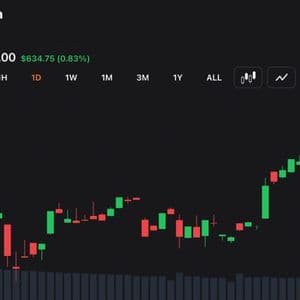
Bitcoin trades modestly higher early May 20 at 8 a.m. ET, holding near the mid-$77,000 range as traders evaluate mixed technical indicators and tightening resistance levels. Market participants continue watching whether BTC can reclaim higher resistance zones after stabilizing above a key support cluster near $76,000. Bitcoin Chart Outlook Bitcoin is priced at $77,440 during
20 May 2026, 12:41
Bitcoin Price Prediction: South Carolina Moves Against CBDCs With Zero-Tax BTC Bill

South Carolina just became the most aggressive pro-Bitcoin state in America. Bitcoin may be down, its price prediction is also hitting a low, but with regulatory clarity and institutional adoption, BTC is coiling. Governor Henry McMaster signed Senate Bill S.163 into law on May 19, 2026, implementing a total ban on CBDCs, tax neutrality for crypto payments, and hard protections for miners and self-custody holders. The vote was resolved at 110-1 in the House, a genuine bipartisan conviction. The document states: AN ACT TO AMEND THE SOUTH CAROLINA CODE OF LAWS BY ADDING CHAPTER 47 TO TITLE 34 SO AS TO PROHIBIT A GOVERNING AUTHORITY FROM ACCEPTING OR REQUIRING PAYMENT USING CENTRAL BANK DIGITAL CURRENCY OR PARTICIPATING IN A TEST OF CENTRAL BANK DIGITAL CURRENCY; TO PERMIT INDIVIDUALS OR BUSINESSES USING DIGITAL CURRENCY FOR TRANSACTIONS; TO PROVIDE THAT DIGITAL ASSETS MAY NOT BE SINGLED OUT FOR DISPARATE TAX TREATMENT; TO PROVIDE THAT DIGITAL CURRENCY TRANSACTION MAY BE TAXED IF THE TAXATION IS THE SAME AS IF THE TRANSACTION USED UNITED STATES LEGAL TENDER; TO RESTRICT CERTAIN ACTIVITY FOR DIGITAL CURRENCY OPERATIONS THAT ARE ZONED FOR INDUSTRIAL USE; TO PROVIDE THAT DIGITAL ASSET MINING BUSINESS OPERATIONS SHALL NOT PLACE ANY ADDITIONAL STRESS ON THE ELECTRICAL GRID FOR WHICH THEY ARE CONNECTED AND TO PROVIDE THAT DIGITAL MINING BUSINESSES MUST PROVIDE CERTAIN INFORMATION TO THE PUBLIC SERVICE COMMISSION UPON REQUEST; TO PROVIDE THAT THOSE ENGAGED IN DIGITAL MINING OPERATIONS DO NOT HAVE TO OBTAIN CERTAIN LICENSES AND THAT THOSE WHO PROVIDE CERTAIN SERVICES RELATED TO DIGITAL MINING OR STAKING ARE NOT OFFERING A SECURITY; TO PROVIDE THAT THE ATTORNEY GENERAL CAN PROSECUTE AN INDIVIDUAL OR BUSINESS THAT FRAUDULENTLY CLAIM TO BE OFFERING DIGITAL ASSET MINING AS SERVICE OR STAKING AS A SERVICE; AND TO DEFINE NECESSARY TERMS. The law bars state agencies from accepting or testing any federal central bank digital currency, shields proof-of-work mining operations from discriminatory zoning and noise ordinances, and eliminates extra fees or levies on goods purchased with digital assets . A separate House Bill, H.4256, would additionally allow South Carolina’s treasurer to allocate up to 10% of unallocated state funds into Bitcoin as an inflation hedge, capped at 1,000,000 BTC. Discover: The best crypto to diversify your portfolio with Bitcoin Price Prediction: Reclaim $80,000 as State-Level Adoption Accelerates? At $77,000, Bitcoin is pulling back from recent highs but remains structurally elevated. The $75,000 level is the line that matters as a major psychological and technical support zone that needs to be defended to keep the uptrend intact. A daily close below that threshold would shift short-term momentum decisively bearish. The weekly 4.5% drop reads as profit-taking after a rally from $66,000 to $83,000, particularly given the macro and legislative tailwinds accumulating beneath the price. ETF inflows remain a persistent bid, and the state-level reserve demand would represent a structural buyer class that doesn’t sell on red candles. Bitcoin (BTC) 24h 7d 30d 1y All time If Bitcoin could hold $75,000 as support and legislative momentum from South Carolina accelerates copycat bills in other states, ETF inflows could push the price back through $80,000. However, a break below $75,000 on volume would open the door to the $72,000 range, likely triggering forced liquidations and headlines of ETF outflows. Regulatory clarity tends to compress volatility and attract institutional positioning, meaning South Carolina’s move may be more consequential for medium-term price structure than this week dip suggests. Discover: The best pre-launch token sales Bitcoin Hyper Targets Early-Mover Upside as Bitcoin Tries to Break Downtrend Bitcoin consolidating away from all-time highs is a familiar frustration: the macro thesis is right, the entry is not that cheap, and the asymmetric upside that early adopters captured has already been realized. That’s the gap a project like Bitcoin Hyper is targeting: infrastructure-layer exposure to Bitcoin’s growth cycle at presale prices, before exchange listing. Bitcoin Hyper ($HYPER) is positioning as the first Bitcoin Layer 2 with Solana Virtual Machine (SVM) integration, delivering sub-second finality and low-cost smart contract execution while inheriting Bitcoin’s security model. Hyper aims to break Bitcoin’s core limitations, like slow throughput, high fees, and zero programmability, without abandoning Bitcoin’s trust layer. The project has raised more than $32 million at a current presale price of just $0.0136 , with 35% APY staking available for early holders. Hyper also offers a Decentralized Canonical Bridge that handles BTC transfers across the Layer 2 for traders watching Bitcoin’s state-level policy cycle accelerate, Bitcoin Hyper represents early infrastructure-layer positioning that is worth researching. The post Bitcoin Price Prediction: South Carolina Moves Against CBDCs With Zero-Tax BTC Bill appeared first on Cryptonews .
20 May 2026, 12:40
US Dollar Index Price Forecast: Downside Path to 100.00 Remains Intact as Hawkish Fed Bets Firm

BitcoinWorld US Dollar Index Price Forecast: Downside Path to 100.00 Remains Intact as Hawkish Fed Bets Firm The US Dollar Index (DXY) continues to trade under selling pressure, with the broader technical and fundamental outlook pointing toward a sustained decline toward the 100.00 psychological level. Despite a hawkish repricing of Federal Reserve rate expectations, the dollar has struggled to regain upside momentum, weighed down by a combination of technical resistance and shifting global risk sentiment. Technical Setup Favors Further Weakness From a technical perspective, the DXY remains entrenched in a bearish trend that has been in place since late 2023. The index has repeatedly failed to break above the 104.00–104.50 resistance zone, and the most recent price action suggests sellers are regaining control. The 100-day simple moving average (SMA) has acted as dynamic resistance, while the Relative Strength Index (RSI) hovers near oversold territory but has not yet signaled a reversal. The next major support level sits at the 100.00 round number, a level that has historically attracted significant buying interest. A daily close below 101.00 would likely accelerate selling pressure, opening the door for a test of the 100.00 handle in the coming weeks. Conversely, a recovery above 102.50 would be needed to alleviate near-term bearish pressure, though such a move appears unlikely without a fundamental catalyst. Fundamental Backdrop: Hawkish Fed, Yet Dollar Falters The Federal Reserve has maintained a hawkish stance in recent months, pushing back against market expectations of early rate cuts. Stronger-than-expected US labor market data and sticky inflation readings have reinforced the narrative that interest rates will remain higher for longer. Typically, such a backdrop would support the dollar, but the currency has failed to capitalize. One key factor is the growing divergence in global monetary policy. The European Central Bank (ECB) and the Bank of England (BoE) have also signaled a cautious approach to easing, limiting the dollar’s yield advantage. Additionally, risk appetite has improved in some segments, reducing safe-haven demand for the greenback. Why the 100.00 Level Matters The 100.00 level is not just a psychological round number; it also represents a key long-term support zone that has held since mid-2023. A decisive break below this level would mark a significant technical breakdown, potentially triggering a wave of stop-loss selling and accelerating the downtrend. For traders, this level is a critical line in the sand. For investors and businesses with USD exposure, the trajectory of the dollar has broad implications. A weaker dollar tends to boost US multinational earnings, support emerging market currencies, and lift commodity prices. Conversely, a sustained decline could reignite inflationary pressures in import-dependent economies. Conclusion The US Dollar Index remains on a clear downward trajectory, with the 100.00 level acting as the next major target. While hawkish Fed bets provide some underlying support, technical resistance and shifting global dynamics continue to weigh on the greenback. Traders should monitor the 101.00–102.50 range closely, as a break below the lower bound would confirm the bearish outlook. FAQs Q1: What is the US Dollar Index (DXY)? The US Dollar Index (DXY) measures the value of the US dollar against a basket of six major currencies: the euro, Japanese yen, British pound, Canadian dollar, Swedish krona, and Swiss franc. It is widely used as a benchmark for dollar strength. Q2: Why is the 100.00 level important for the DXY? The 100.00 level is a key psychological support zone that has historically attracted buying interest. A break below this level would signal a significant technical breakdown and could accelerate selling pressure. Q3: How does a weaker US dollar affect global markets? A weaker dollar typically boosts US exports, supports emerging market currencies, and lifts commodity prices. It can also increase the value of foreign holdings for US investors and reduce the burden of dollar-denominated debt for emerging economies. This post US Dollar Index Price Forecast: Downside Path to 100.00 Remains Intact as Hawkish Fed Bets Firm first appeared on BitcoinWorld .
20 May 2026, 12:35
Jane Street Faces Insider Trading Allegations Over $192M UST Sale Before Terra Collapse
BitcoinWorld Jane Street Faces Insider Trading Allegations Over $192M UST Sale Before Terra Collapse A new legal filing has placed global quantitative trading firm Jane Street at the center of a controversy surrounding the collapse of the Terra ecosystem in May 2022. The Terraform Labs bankruptcy trustee has accused Jane Street of selling approximately $192 million worth of UST, the Terra ecosystem’s algorithmic stablecoin, shortly before its dramatic de-pegging event. The allegations, reported by CoinDesk, were detailed in a lawsuit filed in Manhattan federal court, claiming the firm acted on insider information. Allegations of Insider Knowledge The lawsuit alleges that Jane Street gained non-public information about Terra’s internal instability through a private Telegram chatroom named “Bryce’s Secret.” According to the filing, Bryce Pratt, a Jane Street employee at the time and a former intern at Terraform Labs, provided the firm with insights from his contacts within the project. This information allegedly prompted Jane Street to liquidate its entire holding of roughly 193 million UST on May 7, 2022, just hours before the stablecoin lost its dollar peg. Timing and Financial Details The filing highlights a particularly suspicious sequence of events. It claims that Jane Street sold $85 million in UST just nine minutes after Terraform Labs withdrew $150 million in liquidity from a Curve Finance (CRV) pool—a move that the trustee argues signaled internal distress. The trustee further alleges that Jane Street profited by approximately $134 million from a short position taken after the sale. The total value of the UST sold by Jane Street before the collapse is pegged at roughly $192 million. Jane Street’s Response Jane Street has strongly denied the allegations. In a statement, the firm asserted that the losses suffered by Terra and LUNA investors were the result of a multi-billion dollar fraud perpetrated by Terraform Labs’ management. The company has pledged to “vigorously defend” itself against what it described as baseless claims, framing the lawsuit as an attempt to shift blame away from the project’s founders. Broader Implications for the Crypto Industry This case adds another layer of legal scrutiny to the Terra collapse, one of the most catastrophic events in cryptocurrency history, which erased an estimated $40 billion in market value. The allegations against a major, established trading firm like Jane Street raise serious questions about information asymmetry and market manipulation in the largely unregulated crypto space. The outcome of this lawsuit could have significant implications for how insider trading laws are applied to digital assets and decentralized finance (DeFi) protocols. Conclusion The lawsuit against Jane Street is a developing story that underscores the ongoing legal and regulatory fallout from the Terra collapse. While the allegations are serious, they remain unproven, and Jane Street has signaled its intent to contest them in court. For investors and market observers, this case serves as a critical test of legal accountability in the cryptocurrency market. FAQs Q1: What is Jane Street accused of doing? The Terraform Labs bankruptcy trustee alleges that Jane Street used insider information to sell $192 million in UST and profit $134 million from a short position just before the Terra ecosystem collapsed in May 2022. Q2: What is the basis of the insider trading claim? The lawsuit claims that a Jane Street employee, Bryce Pratt, who was a former Terraform Labs intern, shared information from a private Telegram chatroom that alerted the firm to the project’s internal problems before the public knew. Q3: How has Jane Street responded to the allegations? Jane Street has denied the claims, stating that the losses were caused by fraud at Terraform Labs. The firm has said it will “vigorously defend” itself against what it calls baseless accusations. This post Jane Street Faces Insider Trading Allegations Over $192M UST Sale Before Terra Collapse first appeared on BitcoinWorld .
20 May 2026, 12:34
Bitcoin Rally Begins: Too Little, Too Late or the Real Turnaround?

Around 1% up on Wednesday and trading at $77,500, the $BTC price has finally entered a bullish phase. However, with a lot of resistance overhead can the bulls initiate a real turnaround or is this rally just going to be too little and too late? $BTC price finally beginning to rise - but how far will it go? Source: TradingView The 4-hour chart above tells us that the $BTC price is finally beginning to rise after a couple of days of sideways consolidation. That said, as can be seen, the price needs to break above the $77,400 horizontal resistance and force its way back into the descending channel . Even then, it’s probably not until the price holds above the $78,400 resistance that the bulls can start to breathe easier. With the US and Iran conflict possibly about to heat up again, this is likely to have an adverse effect on the U.S. stock market and by the same token Bitcoin. On the other hand, if a deal is reached, a surge up and out of the bear flag is certainly still a possibility. Two major levels of interest Source: TradingView The daily chart reveals that there are currently two major levels of interest for Bitcoin. To the upside, a breakout of the $80,000 horizontal level (and also the 200-day SMA ) would put the bulls firmly back in the driving seat. Conversely, a break below the major horizontal support at $76,000 could help to drag the $BTC price back into the bear market. At the bottom of the chart the Stochastic RSI indicator lines have hit bottom and are posturing a cross back up . Good news for the bulls? Yes, possibly, although if one looks left at the nosedive out of the previous bear flag, the indicator lines chopped along the lower limit of their range for some time until the bottom was finally reached. Might the same thing happen again? Strong rejection so far in 2-week chart Source: TradingView Zooming right out into the 2-week time frame it appears that the horizontal resistance shifts. As can be seen here, the major resistance level is at around $82,350. While the bulls will be happy to see the Stochastic RSI indicator lines climbing and signalling upside price momentum, the actual position for the bulls here does not look good. So far, the current 2-week candle is being strongly rejected from the major resistance. Unless there is a huge turnaround in the next 4 days, and that would be to the tune of an upside swing of more than $5,000, the bulls are staring down the barrel of more downside price action that could take $BTC back to $66,000. Once again investors will need to keep their eyes firmly on the $BTC price going into the close on Sunday. The price direction for the next few weeks, and even months, could depend upon the outcome. Disclaimer: This article is provided for informational purposes only. It is not offered or intended to be used as legal, tax, investment, financial, or other advice.
20 May 2026, 12:31
Crypto trader makes $1 million from this single bet

A cryptocurrency prediction markets trader has generated millions in profits through aggressive sports betting activity on Polymarket . One of the standout trades saw the investor , identified as “0x949,” make nearly $1 million from a single football wager after correctly betting on Manchester City to defeat Chelsea in the FA Cup final played on May 16, according to insights from Arkham Intelligence . The trader purchased roughly $1.10 million worth of “Yes” shares backing Manchester City at an average price of 53.3 cents. After the match settled in Manchester City’s favor, the position was sold for about $2.06 million, resulting in a profit of approximately $963,250 from that single bet alone. On-chain analytics of the trader. Source: Arkham Intelligence At the same time, the trader also emerged as one of the biggest winners in a broader month-long streak that pushed the wallet’s total profits above $4.2 million. On-chain data shows the account, labeled “Polymarket Proxy Wallet,” executed more than 4,300 prediction trades since being created in April 2026. They generated the gains primarily through sports prediction markets, with football bets accounting for several of the largest wins. Other profitable positions included bets tied to AS Monaco, Liverpool, Wolverhampton Wanderers, and RC Strasbourg, with some individual trades generating profits between $500,000 and $800,000. Trader’s recorded losses Despite the outsized gains, the account also recorded major losses. One failed bet on a Stuttgart versus Bayer Leverkusen match resulted in a loss exceeding $727,000, while another Barcelona versus Real Madrid position lost more than $680,000. The wallet processed more than $39 million in total trading volume and maintained a prediction win rate of 50.6%. Meanwhile, recent activity indicates the trader continues to place active football wagers on Polymarket, including fresh Aston Villa-related bets. On-chain analytics of the trader. Source: Arkham Intelligence The surge in high-profile crypto trading profits comes as another blockchain trader, as reported by Finbold, turned a modest Ethereum ( ETH ) investment into a fortune. In this case, an early Ethereum holder transformed an initial allocation worth about $120 in 2015 into nearly $900,000 after holding 400 ETH for almost 11 years. The wallet transferred 350 ETH valued at about $789,600, to Bitstamp while moving the remaining 50 ETH, worth roughly $112,750, into a new wallet. The trader held through multiple crypto bear markets and did not sell even when Ethereum reached record highs in 2021 and again in 2025. The post Crypto trader makes $1 million from this single bet appeared first on Finbold .


