News
20 Apr 2026, 18:00
EUR/USD Analysis: How Economic Surveys and ECB Caution Are Crushing Euro’s Rally Potential

BitcoinWorld EUR/USD Analysis: How Economic Surveys and ECB Caution Are Crushing Euro’s Rally Potential Financial markets are closely monitoring the EUR/USD currency pair as recent economic surveys and European Central Bank policy signals create significant headwinds for the Euro’s appreciation potential against the US Dollar. According to analysis from ING, Europe’s largest financial services provider, multiple factors are converging to limit upside momentum for the common currency. The EUR/USD exchange rate, currently trading around 1.0850, faces persistent pressure from diverging monetary policy paths and mixed economic indicators across the Atlantic divide. EUR/USD Technical and Fundamental Analysis Currency traders are navigating complex crosscurrents in the EUR/USD market. The pair has remained range-bound between 1.0750 and 1.0950 for several weeks. Technical analysis reveals key resistance levels at 1.0950 and 1.1000 psychological barrier. Meanwhile, support appears around 1.0750, with stronger foundation near the 1.0700 level. Market participants are weighing multiple fundamental factors. These include inflation differentials, interest rate expectations, and economic growth projections. The Euro’s performance reflects broader global macroeconomic trends. Consequently, traders must consider both technical patterns and fundamental drivers. Recent price action shows the Euro struggling to maintain momentum above 1.0900. This resistance level has proven formidable throughout the current quarter. Trading volumes have increased during European and US overlapping sessions. Market liquidity remains adequate for institutional positioning. Several technical indicators suggest consolidation may continue. The 50-day moving average currently sits at 1.0820. Additionally, the 200-day moving average provides support at 1.0780. These levels create important reference points for market participants. Economic Survey Data Impact on Currency Markets Recent economic surveys from Europe present a mixed picture for currency traders. The Eurozone Purchasing Managers’ Index (PMI) data shows manufacturing contraction. Services sector activity demonstrates modest expansion. This divergence creates uncertainty about economic momentum. German Ifo Business Climate Index readings have stabilized. However, they remain below historical averages. French business sentiment indicators show similar patterns. These survey results influence currency market expectations. They provide forward-looking insights into economic performance. Consumer confidence surveys across Europe reveal cautious optimism. The European Commission’s Economic Sentiment Indicator shows gradual improvement. Yet concerns about inflation persistence remain prevalent. Employment expectations have strengthened slightly. Industrial confidence remains subdued. These mixed signals create challenges for currency forecasters. Survey data influences monetary policy expectations. Consequently, it affects currency valuation models. Market participants analyze these indicators carefully. They seek clues about future economic direction. Key Eurozone Economic Survey Indicators (Latest Readings) Indicator Current Value Previous Month Market Impact Manufacturing PMI 45.6 46.1 Negative for EUR Services PMI 52.9 53.3 Moderately Positive Economic Sentiment Indicator 96.3 95.5 Neutral to Positive Consumer Confidence -14.3 -14.9 Slightly Positive Survey methodology varies across different indicators. Some focus on business leaders’ expectations. Others measure consumer spending intentions. The European Central Bank monitors these surveys closely. They inform monetary policy decisions. Currency markets react to surprises in survey data. Significant deviations from expectations can trigger volatility. Therefore, traders must stay informed about upcoming releases. European Central Bank Monetary Policy Stance The European Central Bank maintains a cautious approach to monetary policy. Recent communications emphasize data dependency. ECB President Christine Lagarde has highlighted several considerations. Inflation remains above the 2% target. Core inflation measures show persistent pressures. Wage growth continues at elevated levels. These factors suggest caution in policy normalization. The ECB’s Governing Council meets regularly. They assess economic developments comprehensively. Monetary policy decisions influence currency valuations significantly. ECB officials have signaled several key points: Interest rate decisions will depend on incoming data Inflation projections guide policy path adjustments Financial stability considerations remain important Transmission mechanism effectiveness requires monitoring Market participants analyze ECB communications carefully. Speeches by Governing Council members receive close attention. The central bank’s balance sheet reduction program continues. This quantitative tightening affects liquidity conditions. Bond purchase programs have concluded. Reinvestment policies have been adjusted. These technical factors influence currency markets. They affect relative yield differentials between currencies. ING’s Analytical Perspective on Currency Dynamics ING’s currency research team provides valuable insights. Their analysis combines multiple methodologies. Technical analysis identifies key price levels. Fundamental analysis examines economic drivers. Flow analysis tracks institutional positioning. The research team monitors several specific factors. These include interest rate differentials. They also watch capital flows between regions. Additionally, they analyze geopolitical developments. Their comprehensive approach informs currency forecasts. The financial institution publishes regular research reports. These documents analyze currency market developments. They provide forward-looking assessments. ING’s economists consider multiple scenarios. Their base case assumes gradual Euro appreciation. However, they identify significant headwinds. Monetary policy divergence remains a key challenge. Economic growth differentials favor the United States. Energy market dynamics create additional complications. These factors collectively limit Euro upside potential. Comparative Analysis: Eurozone vs United States Economic Fundamentals Economic fundamentals diverge significantly between regions. The United States demonstrates stronger growth momentum. Labor market conditions remain robust. Consumer spending shows resilience. Business investment continues at healthy levels. These factors support the US Dollar. They create challenges for Euro appreciation. Currency markets reflect these relative strengths. The Dollar benefits from its safe-haven status. Global uncertainty often boosts Dollar demand. The Eurozone faces several structural challenges. Energy dependency remains a concern. Demographic trends create headwinds. Productivity growth has moderated. Fiscal policy coordination requires improvement. These factors influence long-term currency valuation. Short-term fluctuations reflect cyclical developments. However, structural factors create persistent pressures. Market participants must consider both time horizons. They influence trading strategies and risk management approaches. Inflation dynamics differ between regions. The United States has made significant progress. Eurozone inflation remains more persistent. Service sector inflation proves particularly stubborn. This divergence affects monetary policy expectations. Federal Reserve and ECB paths may continue diverging. Currency markets price these expectations continuously. Forward rate agreements provide market-based forecasts. These instruments offer valuable insights. They help traders anticipate policy developments. Market Implications and Trading Considerations Currency traders face several important considerations. Position sizing requires careful attention. Risk management remains paramount. Volatility expectations influence strategy selection. Liquidity conditions vary across sessions. These practical considerations affect trading outcomes. Market participants must stay informed about developments. Economic data releases create trading opportunities. Central bank communications trigger market reactions. Geopolitical events influence risk sentiment. Several specific trading factors deserve attention: Carry trade dynamics influence currency flows Hedging activity affects market liquidity Option market positioning provides sentiment signals Technical levels create important reference points Institutional investors approach currency markets systematically. They employ sophisticated risk management techniques. Their positioning influences market dynamics. Retail traders must understand these flows. They affect price discovery processes. Market microstructure considerations matter. Execution quality varies across platforms. These practical aspects influence trading performance. Conclusion The EUR/USD currency pair faces significant challenges. Economic survey data presents mixed signals. European Central Bank policy remains cautious. These factors collectively limit Euro appreciation potential. ING’s analysis highlights these constraints. Market participants must monitor developments closely. Economic data releases will provide important signals. Central bank communications will guide expectations. Technical levels will influence price action. The EUR/USD analysis suggests continued range-bound trading. Breakouts require significant catalyst developments. Traders should maintain flexible approaches. Risk management remains essential in current conditions. FAQs Q1: What are the main factors limiting EUR/USD upside according to ING? ING identifies economic survey weakness and European Central Bank caution as primary constraints. Specifically, manufacturing contraction in PMI data and the ECB’s data-dependent approach create headwinds for Euro appreciation against the Dollar. Q2: How does ECB policy affect the EUR/USD exchange rate? The European Central Bank’s monetary policy directly influences the Euro’s value through interest rate decisions, forward guidance, and balance sheet policies. When the ECB maintains a cautious stance relative to other central banks, particularly the Federal Reserve, it typically limits the Euro’s appreciation potential. Q3: What economic surveys are most important for EUR/USD traders? Purchasing Managers’ Index (PMI) data, the German Ifo Business Climate Index, and the European Commission’s Economic Sentiment Indicator provide crucial forward-looking insights. These surveys influence market expectations about economic growth and, consequently, monetary policy direction. Q4: How does technical analysis complement fundamental analysis in EUR/USD trading? Technical analysis identifies key support and resistance levels, trend patterns, and momentum indicators. When combined with fundamental analysis of economic data and policy developments, it provides a comprehensive framework for understanding price action and making informed trading decisions. Q5: What should traders monitor for potential EUR/USD breakout signals? Traders should watch for significant deviations from expected economic data, changes in central bank communication tone, breaks through key technical levels with confirmation, and shifts in risk sentiment that might alter capital flows between currencies. This post EUR/USD Analysis: How Economic Surveys and ECB Caution Are Crushing Euro’s Rally Potential first appeared on BitcoinWorld .
20 Apr 2026, 17:50
Brent Crude: Navigating Volatile Swings Amid Critical Iran Risk – Deutsche Bank Analysis

BitcoinWorld Brent Crude: Navigating Volatile Swings Amid Critical Iran Risk – Deutsche Bank Analysis Global energy markets are experiencing significant turbulence as Brent crude oil prices demonstrate volatile swings amid escalating geopolitical tensions involving Iran, according to recent analysis from Deutsche Bank. The international benchmark for oil prices has shown remarkable sensitivity to developments in the Middle East, reflecting the complex interplay between supply concerns, regional stability, and global economic factors that characterize contemporary energy markets. Brent Crude Price Dynamics and Market Structure Brent crude serves as the primary pricing benchmark for approximately two-thirds of the world’s internationally traded crude oil. This North Sea-derived blend represents a critical reference point for global energy pricing, influencing everything from gasoline costs to industrial production expenses. Recent trading sessions have demonstrated unusual volatility patterns, with intraday price movements frequently exceeding 3-4% as market participants react to evolving geopolitical developments. The current market structure reveals several important characteristics. First, backwardation in the futures curve indicates immediate supply concerns. Second, trading volumes have increased significantly across all contract months. Third, options markets show elevated implied volatility readings. These technical indicators collectively suggest a market preparing for potential supply disruptions while balancing fundamental supply-demand considerations. Historical Context of Middle East Volatility Energy markets have historically demonstrated sensitivity to Middle Eastern geopolitical developments. The region accounts for approximately 30% of global oil production and nearly 50% of proven petroleum reserves. Previous episodes of regional tension have produced varying impacts on Brent pricing, depending on the specific circumstances and market conditions at the time of each event. Recent Brent Crude Price Movements and Catalysts Time Period Price Range (USD/barrel) Primary Market Catalyst Previous Month 82.50-86.75 OPEC+ production decisions Current Week 84.25-89.50 Iran-related geopolitical developments Intraday High-Low 3.25-4.75 variance News flow and technical positioning Iran Geopolitical Risk Assessment Deutsche Bank’s analysis highlights several specific risk factors related to Iran that currently influence Brent crude pricing. The bank’s energy commodities team has identified multiple channels through which Iranian developments could affect global oil markets. These channels include potential supply disruptions, changes in regional shipping patterns, and broader geopolitical implications that might influence production decisions across the Middle East. The Strait of Hormuz represents a particularly critical chokepoint for global oil transportation. Approximately 20-21 million barrels of oil pass through this narrow waterway daily, representing about one-fifth of global petroleum consumption. Any disruption to shipping through this vital passage would have immediate and significant consequences for Brent pricing and global energy security. Key factors currently monitored by market analysts include: Shipping insurance costs for vessels transiting the region Regional military posturing and diplomatic communications Compliance levels with existing sanctions regimes Production capacity among alternative suppliers Strategic petroleum reserve levels in major consuming nations Deutsche Bank’s Market Analysis Framework Deutsche Bank employs a comprehensive analytical framework when assessing energy market developments. This approach combines quantitative modeling with qualitative geopolitical analysis, creating a multidimensional view of market dynamics. The bank’s commodities research team examines both fundamental supply-demand balances and technical market factors, providing clients with integrated perspectives on potential price trajectories. The analytical process incorporates several distinct components. First, researchers assess physical market conditions including inventory levels and refining margins. Second, they analyze financial market positioning through futures and options data. Third, they evaluate geopolitical developments using established risk assessment methodologies. Finally, they synthesize these inputs to generate probabilistic price forecasts and identify key risk scenarios. Supply Chain Considerations and Alternatives Global energy supply chains have evolved significantly in recent years, creating both vulnerabilities and resilience factors. The increasing diversification of supply sources has provided some buffer against regional disruptions, though certain logistical constraints remain. Major consuming nations have developed more sophisticated emergency response mechanisms, including coordinated strategic petroleum reserve releases and demand management protocols. Alternative shipping routes represent another important consideration. While the Strait of Hormuz remains the most efficient passage for Middle Eastern crude exports, several bypass options exist with varying capacity limitations. Pipeline infrastructure has expanded in recent years, though significant bottlenecks persist in certain regions. These logistical factors influence how quickly and severely supply disruptions might affect Brent pricing under different scenarios. Global Economic Implications Brent crude price volatility carries significant implications for the global economy. Energy costs represent a substantial component of production expenses across numerous industries, influencing corporate profitability and consumer purchasing power. Central banks carefully monitor energy price developments when formulating monetary policy, as petroleum costs directly affect inflation metrics and economic growth projections. Emerging market economies demonstrate particular sensitivity to oil price movements. Many developing nations remain net energy importers, making them vulnerable to terms-of-trade deterioration during price spikes. Conversely, major petroleum exporters benefit from revenue increases during periods of elevated pricing, though they may face challenges related to Dutch disease effects and fiscal management. The transportation sector represents the most direct channel through which Brent price changes affect economic activity. Aviation, shipping, and ground transportation costs all correlate closely with petroleum pricing, influencing everything from consumer goods prices to industrial supply chain efficiency. These transmission mechanisms create complex feedback loops between energy markets and broader economic performance. Market Participant Responses and Strategies Various market participants employ different strategies when navigating volatile conditions. Physical traders focus on logistical optimization and inventory management, seeking to balance supply security against storage costs. Financial participants utilize derivatives instruments to hedge exposures or express directional views, contributing to market liquidity and price discovery. Corporate energy consumers implement comprehensive risk management programs, often combining physical procurement strategies with financial hedging instruments. These programs aim to stabilize input costs while maintaining operational flexibility. The sophistication of these approaches has increased significantly in recent years, reflecting lessons learned from previous episodes of market volatility. Key strategic considerations for market participants include: Portfolio diversification across supply sources and contract types Scenario planning for various geopolitical developments Liquidity management during periods of heightened volatility Regulatory compliance across multiple jurisdictions Stakeholder communication regarding risk management approaches Conclusion Brent crude oil markets continue to demonstrate significant sensitivity to geopolitical developments involving Iran, creating volatile trading conditions that require careful navigation by market participants. Deutsche Bank’s analysis highlights the complex interplay between regional tensions, global supply-demand balances, and financial market dynamics that currently characterize energy markets. While the specific trajectory of Brent pricing remains uncertain, the structural importance of Middle Eastern supplies ensures continued market attention to developments in the region. Market participants must maintain flexible approaches that balance risk management objectives with operational requirements, recognizing that geopolitical factors will likely remain important drivers of Brent crude price movements in the foreseeable future. FAQs Q1: What makes Brent crude different from other oil benchmarks? Brent crude serves as the primary international pricing benchmark, particularly for Atlantic Basin and Middle Eastern crude exports. Its pricing reflects a blend of North Sea crudes and influences approximately two-thirds of globally traded oil, distinguishing it from regional benchmarks like WTI (West Texas Intermediate). Q2: How does geopolitical risk typically affect oil prices? Geopolitical risk affects oil prices through several channels: potential supply disruptions, increased transportation costs, higher risk premiums demanded by investors, and precautionary inventory building by consumers. The magnitude of impact depends on the perceived probability of actual supply loss versus temporary market sentiment. Q3: What specific Iran-related factors are markets currently monitoring? Markets are monitoring several Iran-related factors including: developments in nuclear negotiations, regional proxy conflicts, shipping security in the Strait of Hormuz, compliance with sanctions regimes, domestic political developments, and diplomatic communications between Iran and other regional powers. Q4: How do analysts quantify geopolitical risk in oil markets? Analysts use multiple approaches including: tracking options market implied volatility, monitoring shipping insurance premiums for Persian Gulf routes, analyzing political risk insurance costs, examining futures curve structures, and employing specialized geopolitical risk indices that quantify regional stability metrics. Q5: What strategies can businesses use to manage oil price volatility? Businesses employ various strategies including: fixed-price supply contracts, financial hedging using futures and options, physical inventory management, diversification of supply sources, operational flexibility to switch between energy inputs, and strategic petroleum reserve participation where available. This post Brent Crude: Navigating Volatile Swings Amid Critical Iran Risk – Deutsche Bank Analysis first appeared on BitcoinWorld .
20 Apr 2026, 17:45
WTI Oil Surges: Critical Rebound from Lows as US-Iran Tensions Escalate Supply Fears

BitcoinWorld WTI Oil Surges: Critical Rebound from Lows as US-Iran Tensions Escalate Supply Fears West Texas Intermediate crude oil prices staged a significant recovery this week, rebounding sharply from recent multi-month lows as renewed geopolitical tensions between the United States and Iran injected fresh supply concerns into global energy markets. The benchmark WTI contract surged over 4% in Thursday’s trading session, marking its strongest single-day gain in three weeks and reversing a downward trend that had persisted through much of the previous month. This sudden shift occurred against a backdrop of escalating rhetoric and military posturing in the Strait of Hormuz, through which approximately 20% of global oil shipments transit annually. Market analysts immediately noted the correlation between geopolitical developments and price movements, highlighting how energy markets remain acutely sensitive to Middle Eastern stability. Furthermore, the timing of this rebound coincides with ongoing OPEC+ production discussions and shifting global demand patterns, creating a complex interplay of fundamental and geopolitical factors. WTI Oil Price Recovery and Technical Rebound WTI crude futures for July delivery climbed to $78.45 per barrel during Thursday’s session, representing a substantial recovery from Tuesday’s low of $74.12. This price movement established a clear technical rebound pattern that market technicians had anticipated following several weeks of consolidation. The rally gained momentum after breaking through key resistance levels at $76.80 and $77.50, triggering algorithmic buying programs and short covering by speculative traders. Volume during the surge reached 150% of the 30-day average, indicating strong institutional participation in the move. Meanwhile, open interest in WTI options increased significantly, particularly in call options with strike prices above $80, suggesting traders are positioning for further upside potential. The price recovery also narrowed the spread between WTI and Brent crude to $3.25 per barrel, down from $4.10 earlier in the week, indicating improved relative strength for the American benchmark. Several technical indicators confirmed the shift in market sentiment. The 14-day Relative Strength Index climbed from oversold territory below 30 to a more neutral 48, while moving average convergence divergence histograms turned positive for the first time in 15 trading sessions. Additionally, the commodity channel index broke above the -100 threshold, signaling the end of the recent downtrend. These technical developments occurred alongside fundamental improvements in market structure, including a drawdown in U.S. commercial crude inventories reported by the Energy Information Administration. The EIA data showed a reduction of 2.5 million barrels for the week ending May 20, exceeding analyst expectations and providing fundamental support for the price recovery. This combination of technical and fundamental factors created conditions conducive to sustained upward movement. Geopolitical Context of US-Iran Tensions The immediate catalyst for the oil price rebound emerged from the Persian Gulf region, where U.S. and Iranian naval forces engaged in heightened posturing near critical shipping lanes. On Wednesday, the U.S. Fifth Fleet announced it had increased patrols in the Strait of Hormuz following what it described as “harassment” of commercial vessels by Iranian Revolutionary Guard Corps speedboats. This development followed weeks of escalating rhetoric regarding Iran’s nuclear program and regional activities. Iranian officials subsequently issued statements warning of “consequences” for what they characterized as American provocations in the region. Historical context reveals that similar tensions have previously disrupted oil flows through the Strait of Hormuz, most notably during the 2019 tanker attacks and the 2020 assassination of Iranian General Qasem Soleimani. Each previous incident resulted in temporary oil price spikes of 10-15%, though markets typically normalized within weeks absent further escalation. Current tensions occur within a broader geopolitical framework that includes ongoing nuclear negotiations, regional proxy conflicts, and shifting global energy alliances. The United States maintains approximately 2,500 troops in the region with naval assets including the USS Dwight D. Eisenhower carrier strike group positioned in the Arabian Sea. Meanwhile, Iran continues to develop its military capabilities despite economic sanctions that have limited its oil exports to approximately 1.5 million barrels per day, down from pre-sanction levels exceeding 2.5 million barrels. Regional analysts note that both nations appear to be calibrating their actions to avoid direct military confrontation while demonstrating resolve to domestic and international audiences. This delicate balance creates persistent uncertainty for energy markets, as any miscalculation could quickly escalate into supply disruptions affecting global oil flows. Supply Chain Vulnerabilities and Market Impact Global oil supply chains face particular vulnerability in the Strait of Hormuz, where geography creates natural chokepoints for maritime traffic. The narrow waterway, only 21 miles wide at its narrowest point, handles approximately 20.7 million barrels of oil daily, representing about 21% of global petroleum liquids consumption. Any significant disruption to transit through this corridor would immediately impact Asian markets, which receive about 76% of Hormuz oil shipments, with China, India, Japan, and South Korea as primary destinations. Shipping insurance premiums for vessels transiting the region have already increased by 15% this month, adding to transportation costs that ultimately affect delivered oil prices. Furthermore, alternative routing options remain limited and significantly more expensive, with the Bab el-Mandeb Strait and Cape of Good Hope routes adding 10-14 days to voyage times and increasing costs by 30-40%. The potential supply impact extends beyond immediate shipping disruptions. Iran itself produces approximately 3.2 million barrels per day of crude oil, representing about 3% of global supply. While U.S. sanctions have limited Iranian exports, any military conflict could remove this volume from the market entirely. Additionally, neighboring producers including Saudi Arabia, the United Arab Emirates, Kuwait, and Qatar collectively export about 17 million barrels daily through the same waterways. A comprehensive closure of the Strait of Hormuz, while unlikely, would represent the most significant supply shock since the 1973 oil embargo, potentially removing 20% of global supply from the market. More probable scenarios involve targeted disruptions, shipping delays, or insurance market tightening that would create price premiums without causing physical shortages. Market participants currently price in a 5-8% risk premium for Middle Eastern crude, reflecting these geopolitical uncertainties. Fundamental Market Factors Supporting Recovery Beyond geopolitical developments, several fundamental factors created conditions supporting the WTI price rebound. Global oil inventories have tightened considerably since March, with OECD commercial stocks falling to their lowest levels since 2018 relative to demand. The International Energy Agency reported in its May oil market report that global inventories declined by 34.5 million barrels in April, exceeding seasonal norms. This drawdown occurred despite strategic petroleum reserve releases by IEA member countries totaling 60 million barrels announced in early 2023. Demand fundamentals also show resilience, with global consumption reaching 101.7 million barrels per day in the first quarter, only 0.8% below pre-pandemic peaks. The transportation sector continues to drive recovery, particularly in aviation where jet fuel demand has reached 95% of 2019 levels. Meanwhile, Chinese demand shows signs of accelerating following the easing of COVID-19 restrictions, with refinery throughput increasing 4.5% year-over-year in April. Supply-side dynamics further support price recovery. OPEC+ continues to implement production adjustments, maintaining its planned output increase of 432,000 barrels per day for June despite pressure from consuming nations to accelerate production growth. Several member countries, including Nigeria, Angola, and Libya, have struggled to meet their production quotas due to infrastructure challenges and political instability, creating a de facto supply shortfall relative to targets. Non-OPEC production growth has also disappointed expectations, with U.S. shale producers emphasizing capital discipline and shareholder returns over volume growth. The U.S. rig count has increased only modestly despite higher prices, with producers citing supply chain constraints, labor shortages, and investor pressure to maintain financial discipline. These combined factors have created a supply-demand balance more supportive of prices than market sentiment suggested during the recent decline. Expert Analysis and Market Outlook Energy market analysts offer varied perspectives on the sustainability of the current rebound. Dr. Sarah Chen, Senior Energy Strategist at Global Markets Research, notes that “geopolitical risk premiums typically account for $5-8 per barrel during periods of elevated tension, but these premiums can evaporate quickly if tensions ease without actual supply disruption.” She emphasizes that fundamental factors including inventory levels, OPEC+ discipline, and demand recovery will determine medium-term price direction. Meanwhile, Michael Rodriguez, Head of Commodities Trading at Horizon Capital, observes that “options market positioning suggests traders are hedging against both upside and downside risks, reflecting genuine uncertainty about near-term direction.” He points to increased volatility expectations priced into options markets, with implied volatility for WTI rising from 35% to 42% during the recent price movement. Historical analysis provides context for current developments. Previous geopolitical events affecting the Strait of Hormuz have generated average price spikes of 12.7% with a median duration of 17 trading days before normalization. However, the current situation differs from historical precedents due to several factors: the existence of substantial strategic petroleum reserves in consuming countries, increased U.S. shale production capacity, and alternative supply routes developed over the past decade. These factors may dampen price impacts relative to historical patterns. Looking forward, market participants will monitor several key indicators including U.S.-Iran diplomatic communications, shipping traffic through the Strait of Hormuz, inventory data from major consuming nations, and OPEC+ production decisions at their June 4 meeting. The interplay between these factors will determine whether the current rebound represents a temporary correction or the beginning of a sustained upward trend. Conclusion WTI oil prices have demonstrated significant resilience, rebounding decisively from recent lows as escalating US-Iran tensions revived legitimate supply concerns in global energy markets. This recovery reflects the complex interplay between geopolitical developments, fundamental supply-demand dynamics, and technical market factors. While the immediate catalyst emerged from the Strait of Hormuz, underlying market conditions including tightening inventories, disciplined OPEC+ production policies, and recovering global demand created an environment conducive to price recovery. Market participants now face the challenge of balancing geopolitical risk premiums against fundamental valuations, with historical precedents suggesting that sustained price elevation requires either actual supply disruption or escalating conflict. The coming weeks will test whether diplomatic channels can contain tensions or whether energy markets must price in more permanent risk to Middle Eastern oil flows. Regardless of near-term developments, this episode reinforces the enduring sensitivity of WTI oil prices to geopolitical stability in the world’s most important oil-producing region. FAQs Q1: What caused WTI oil prices to rebound from recent lows? The rebound resulted primarily from escalating tensions between the United States and Iran in the Strait of Hormuz, reviving concerns about potential supply disruptions. Additional factors included tightening global inventories, disciplined OPEC+ production, and stronger-than-expected demand recovery. Q2: How significant is the Strait of Hormuz for global oil supplies? The Strait of Hormuz handles approximately 20.7 million barrels of oil daily, representing about 21% of global petroleum consumption. It serves as the primary transit route for exports from Saudi Arabia, Iran, the UAE, Kuwait, and Qatar, making it the world’s most important oil chokepoint. Q3: What historical precedents exist for oil price movements during US-Iran tensions? Previous incidents including the 2019 tanker attacks and 2020 assassination of General Soleimani resulted in temporary price spikes of 10-15%, typically normalizing within weeks absent further escalation. Markets have historically priced in risk premiums of $5-8 per barrel during periods of elevated tension. Q4: How have fundamental oil market factors contributed to the price recovery? Global inventories have tightened to multi-year lows relative to demand, OPEC+ maintains production discipline, and demand recovery continues despite economic headwinds. U.S. shale production growth remains constrained by capital discipline and supply chain challenges. Q5: What indicators should market watchers monitor following this rebound? Key indicators include diplomatic communications between the U.S. and Iran, shipping traffic through the Strait of Hormuz, weekly inventory data from the EIA and API, OPEC+ production decisions, and options market positioning for WTI crude. This post WTI Oil Surges: Critical Rebound from Lows as US-Iran Tensions Escalate Supply Fears first appeared on BitcoinWorld .
20 Apr 2026, 17:42
BITO: Distributions Run Dry

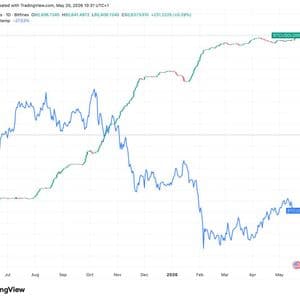
Summary ProShares Bitcoin ETF is not an income fund; its distributions are highly variable and not directly tied to bitcoin price movements. BITO's recent distribution cuts reflect management's discretion, tax-driven timing, and the need to avoid further NAV erosion after significant losses. Distributions are primarily determined by annual profit/loss recognition at the subsidiary level, with flexibility to adjust payouts throughout the tax year. Expect continued low distributions unless Bitcoin rallies significantly, as management balances NAV preservation against potential AUM declines. I last wrote about the ProShares Bitcoin ETF ( BITO ) in January and warned that it is not an income fund. Of course, with a headline 77% yield, it was widely regarded as one, but that was not the fund's intended strategy, and there was a risk of distributions drying up as Bitcoin ( IBIT ) dropped. Since that article, the last three monthly dividends have taken a huge dive. The April payout was only $0.0061, which is less than 1% of the December payout of $0.7432. Seeking Alpha This article looks at what is behind the massive cut and what could happen over the rest of 2026. BITO Strategy With income ETFs all the rage in recent years and 100% yields not uncommon, BITO may be mistakenly grouped alongside these ETFs. Despite the significant drop in recent payments, its headline TTM yield is still 73%. However, BITO is different — it does not use an options overlay to boost yield, and its distributions derive from profits in bitcoin derivatives such as futures and swaps. It was never intended to be an income fund. Due to its holdings, BITO also has a large holding in money market funds, which are used as collateral. This pays interest and likely accounts for the recent small distributions. The Variable Distribution BITO primarily gains exposure to bitcoin through futures contracts. As per the prospectus: Bitcoin Futures Contracts – Standardized, cash-settled bitcoin futures contracts traded on commodity exchanges registered with the Commodity Futures Trading Commission (“CFTC”). The Fund seeks to invest in cash-settled, front-month bitcoin futures. Here are the current holdings, which show April futures. Proshares The futures positions are rolled each month, and the assumption is that any profits are distributed. On the other hand, if there is a loss, no distributions would be made. However, it is not quite as simple as that, and there is no strong correlation between a monthly gain/loss and the next distribution. This is illustrated by the two charts below, which show bitcoin fell in five months in a row from October 2025, but distributions remained large and only fell in February. Coinglass Seeking Alpha Also note that the two red months in early 2025 did not lead to a missed dividend. The distribution did fall by about 50%, but payments continued. How was BITO able to do that? Distribution Size is a Decision Made by the Fund There are two points to make about the imperfect relation between bitcoin's monthly gains and subsequent distributions. Firstly, futures contracts need to be rolled before the settlement dates. For CME bitcoin futures, that is the last Friday of the month. So the monthly bitcoin gain/loss is not an exact reflection of the gain/loss on any particular monthly contract (but it's usually pretty close). Another reason for the discrepancies comes from factors like contango or backwardation when the contract is rolled. As per the prospectus: ...when a bitcoin futures contract is nearing expiration, the Fund will “roll” the futures contract, which means it will generally sell such contract and use the proceeds to buy a bitcoin futures contract with a later expiration date. When rolling futures contracts that are in contango, the Fund would sell a lower priced, expiring contract and purchase a higher priced, longer-dated contract. The price difference between the expiring contract and longer-dated contract associated with rolling bitcoin futures is typically substantially higher than the price difference associated with rolling other futures contracts. However, these factors account for only minor differences between bitcoin price movements and subsequent distributions. The main reason is that profits/losses are not recognized each roll but at the end of the year. As per the ProShares site: Each of the Funds gets exposure to oil or crypto futures contracts, or swap on a commodity or crypto index or an index of futures contracts, as applicable, by investing in a wholly owned subsidiary which, in turn, invests in such futures contracts or swap agreements. For tax purposes, each Fund recognizes any net income of its subsidiary, including gains on such futures contracts or swap agreements in which its subsidiary invests, as an ordinary dividend on the final day of the subsidiary’s tax year. The final day of the tax year in 2026 will be September 30th. Up until that time, the fund has a lot of flexibility to adjust distributions depending on what it thinks the annual profit/loss will be at the end of the year. The amount of each Fund’s monthly dividend distribution (if any) is intended to estimate the Fund’s current required calendar year distribution allocated equally over the remaining months of the calendar year. It is important to remember that the dividend distribution amount for each Fund may change significantly from month to month. In some months, a Fund may not make any dividend distributions at all. For example, a Fund may not make distributions if its subsidiary has had significant recent losses or if the distributions previously paid by the Fund have already covered the Fund’s expected required calendar-year dividend distribution. That flexibility means the fund may overestimate (overpay) dividends through some periods. It can be seen by the NAV erosion through 2024 and 2025 even when Bitcoin rallied and total returns were positive. The fund paid out more than it made. Data by YCharts Just to clarify, the NAV and total return were almost identical in 2022 because BITO did not pay any dividend. That's also the case in 2026 since the distributions have been tiny. Data by YCharts Implications for the Distribution The current tax year started on October 1st, 2025, which means there has been a large loss in the period so far. Data by YCharts As already shown, the fund made payments in October through January and only cut in February. That resulted in NAV erosion. Data by YCharts While bitcoin posted a small gain in March and is doing well in April, that won't necessarily mean the fund managers will be confident enough to raise the distributions again. Remember, BITO is actively managed, so the payments depend on their decisions and outlook. I think they may be cautious over the coming months, as raising it too soon risks more NAV losses. That said, keeping it at these levels could lead to more losses in AUM, so they will have some difficult decisions to make. Data by YCharts Of course, a rally in Bitcoin would make their decision much easier. Bitcoin Outlook Bitcoin has been making higher lows since February and held up well during the stock (SPY) drop throughout March. You could say it acted somewhat as a safe haven, and there may also be an element of it hedging against inflation as investors fear a second wave of inflation brought on by elevated oil prices. Most of all, though, I think bitcoin was oversold. The final capitulation came when gold and silver crashed - not because of anything related to Bitcoin, and they all found support around the same time in early February. When we look at the Bitcoin chart, the recovery does not yet look convincing in the context of the preceding drop, and there is an active head and shoulders pattern with a target way down at $34 thousand. The pattern looks similar to the last major top in 2021. Tradingview What worries me most is the relative weakness compared to other assets such as stocks. The S&P 500 has just ripped to new all-time highs, showing risk appetite is strong, but Bitcoin is still languishing. While it could recover to test the head and shoulders neckline around $85 thousand, I'd need to see higher highs above $98 thousand as well as higher lows before I would be confident of a new uptrend. Assuming Bitcoin reaches $85k and either turns lower or just moves sideways, BITO's NAV for the 2025-2026 period would still be negative. Distributions are therefore not guaranteed, and while I would expect management to deliver some payments, they may stay small and below the $0.74 paid out in December. Short-term, taking advantage of a rally to $85k would be better with a low-cost ETF like the iShares Bitcoin ETF ((IBIT)). It outperforms BITO in the majority of periods and timeframes due to BITO's complex structure and expenses. Data by YCharts Bitcoin futures are in contango, as the May contract is trading around $200 higher than the April contract, so the roll decay will drag on NAV. This contango is likely to continue as long as Bitcoin stays steady, and backwardation is only usual during steep sell-offs. Conclusions The distribution cuts this year underline the point I made in my last article: BITO is not an income fund. The monthly distributions are variable and are decided by management based on annual distribution levels for tax reasons; they do not necessarily reflect the bitcoin price movements in the previous months. After three tiny payments this year, and after some recovery in the bitcoin price, management may decide to make some higher distributions in the months to come. However, I suspect they will remain at low levels until Bitcoin rallies significantly, as they risk eroding NAV even further.
20 Apr 2026, 17:38
Real World Asset (RWA) Tokenization: ATOM on the Verge of Closing Its Whitelist After Reaching 91% Participation

BitcoinWorld Real World Asset (RWA) Tokenization: ATOM on the Verge of Closing Its Whitelist After Reaching 91% Participation Initial registration phase reaches near-full capacity as the project prepares to transition into its full-scale asset tokenization rollout. Chicago, IL – The transformation of the digital economy has found its ultimate catalyst. The Atom Foundation announced today that its highly anticipated whitelist has reached 91% of its capacity, marking a decisive milestone ahead of its official launch. This resounding initial success underscores the market’s deep interest in a project designed to lead and redefine the decentralized financial ecosystem. For the Atom Foundation, the tokenization of Real World Assets (RWA) is the undeniable future of global finance, rather than a mere trend. The foundation’s vision extends beyond facilitating token issuance, aiming to build a comprehensive and seamless decentralized environment that sets a new industry standard. An “All-in-One” Decentralized Ecosystem The Atom Foundation distinguishes itself by unifying the blockchain industry’s most profitable verticals under a single, high-performance infrastructure. The ATOM ecosystem will offer a complete suite of solutions: Real World Asset (RWA) Tokenization: As the foundation’s cornerstone, this secure institutional platform enables the digitization, fractionalization, and trading of tangible assets like prime real estate, structured debt, and commodities. This process injects immediate liquidity into historically illiquid markets. Online Bitcoin Mining: The ecosystem integrates solutions for remote, 100% online Bitcoin mining to democratize wealth generation. This approach removes complex technical barriers, expensive hardware requirements, and maintenance costs for users. Advanced Financial dApp: This next-generation decentralized application serves as a financial hub. It integrates frictionless Peer-to-Peer (P2P) markets, sophisticated arbitrage algorithms, and a professional trading interface. Uncompromised Security and Regulatory Certainty The Atom Foundation emphasizes transparency and regulatory compliance. The project has achieved a flawless 100% security score following comprehensive smart contract and platform audits. Additionally, the foundation operates under a strict legal framework with an official commercial registry in Chicago, Illinois. This structure guarantees legal security and investment protection, bridging the gap between traditional finance (TradFi) and decentralized finance (DeFi). The Window of Opportunity: From Private Phase to Tier-1 Exchanges The rapid absorption of the whitelist reflects a strategic launch designed to maximize value for community pioneers. Investors securing a spot in the remaining 9% of the whitelist can acquire the ATOM token at a private entry price of $0.05. According to the project’s public roadmap, the official Public Sale price is set at $0.50. Furthermore, ATOM aims to launch simultaneously on prestigious Tier-1 exchanges, including Binance, Kraken, OKX, Gate.io, and Bitmart. Imminent Phase Closure With 91% of the quota assigned, the Atom Foundation warns that the whitelist closure is imminent and could occur within hours. Once the final slots are exhausted, the foundation will focus on its Token Generation Event (TGE) and the global deployment of its ecosystem. Media Contact & Official Links Whitelist & Registration: https://whitelist.atomfoundation.io/ Main Website: https://www.atomfoundation.io/ Telegram Community: https://t.me/atomzkvm X (Twitter): https://x.com/atomrwa Brian Corso [email protected] This post Real World Asset (RWA) Tokenization: ATOM on the Verge of Closing Its Whitelist After Reaching 91% Participation first appeared on BitcoinWorld .
20 Apr 2026, 17:35
EUR/USD Rebounds Within Friday’s Range as Critical Iran Ceasefire Deadline Looms

BitcoinWorld EUR/USD Rebounds Within Friday’s Range as Critical Iran Ceasefire Deadline Looms The EUR/USD currency pair staged a significant rebound during Monday’s Asian session, recovering from early losses to trade firmly within Friday’s established range as market participants brace for a critical geopolitical development. Traders globally are closely monitoring the looming deadline for a potential ceasefire agreement involving Iran, which has injected substantial volatility into currency markets. This movement represents a crucial test for the euro-dollar exchange rate, currently hovering near key technical levels that could determine its medium-term trajectory. Market analysts note that the pair’s ability to hold within Friday’s parameters suggests a temporary equilibrium, but warn that any breakthrough or breakdown in Middle Eastern diplomacy could trigger sharp directional moves. EUR/USD Technical Analysis and Friday’s Range Technical analysts immediately identified the importance of Friday’s trading range for the EUR/USD pair. The currency pair found solid support at the 1.0720 level during early Monday trading, mirroring Friday’s low. Subsequently, it rebounded to test resistance near 1.0765, effectively remaining within Friday’s 45-pip range. This price action demonstrates several key market characteristics. First, it shows that institutional traders are establishing clear boundaries for the pair amid uncertainty. Second, it indicates that algorithmic trading systems are responding to these technical levels with precision. Finally, the contained range suggests that neither bulls nor bears have gained decisive control, creating a tense equilibrium. Market technicians highlight several critical technical factors currently influencing the EUR/USD pair: 200-Day Moving Average: The pair continues to trade below this long-term indicator at 1.0785, maintaining a bearish structural bias Fibonacci Retracement: Friday’s low aligned closely with the 61.8% retracement level from the March rally Volume Profile: Trading volume remains elevated but concentrated within the established range Relative Strength Index: The daily RSI reading of 42 suggests neither overbought nor oversold conditions Furthermore, option market data reveals significant gamma positioning around the 1.0750 level. This positioning typically acts as a magnet for spot prices, explaining the pair’s tendency to revert to this midpoint. Market makers hedging their options exposure contribute to this mean-reverting behavior, especially during periods of geopolitical uncertainty when directional conviction remains low. Geopolitical Context: The Iran Ceasefire Deadline The immediate catalyst for the EUR/USD’s contained volatility stems from diplomatic developments in the Middle East. International mediators have established a midnight deadline for Iran to respond to a proposed ceasefire framework involving regional conflicts. This deadline carries substantial implications for global financial markets through multiple transmission channels. Energy markets represent the most direct pathway, as any escalation could disrupt oil supplies from the Persian Gulf. European economies remain particularly vulnerable to energy price shocks, explaining the euro’s sensitivity to these developments. Historical analysis reveals clear patterns in how the EUR/USD responds to Middle Eastern geopolitical events: Event EUR/USD Reaction Timeframe Oil Price Impact 2019 Gulf Tensions -1.8% 3 Days +12% 2022 Nuclear Deal Progress +0.9% 2 Days -4% 2023 Strait of Hormuz Incident -2.1% 5 Days +15% Diplomatic sources indicate that the current negotiations involve multiple stakeholders, including European Union representatives who have been actively mediating. Consequently, the euro serves as a proxy for market perceptions of European diplomatic success or failure. A successful ceasefire agreement would likely reduce risk premiums embedded in European assets, potentially supporting the euro. Conversely, diplomatic collapse could trigger safe-haven flows into the US dollar, pressuring the EUR/USD pair lower. Central Bank Policy Divergence Considerations Beyond immediate geopolitics, monetary policy expectations continue to influence the EUR/USD trajectory. The European Central Bank maintains a cautious stance toward interest rate adjustments, emphasizing data dependency amid persistent services inflation. Meanwhile, the Federal Reserve has signaled greater flexibility, particularly if labor market conditions soften. This policy divergence creates a fundamental backdrop against which geopolitical developments play out. Analysts note that while geopolitics dominate short-term price action, medium-term direction will likely revert to central bank policy expectations once the immediate crisis resolves. Interest rate differentials between German bunds and US treasuries have narrowed slightly in recent sessions, providing modest support for the euro. However, the 10-year spread remains firmly in favor of US assets, maintaining structural dollar strength. Options markets price approximately a 65% probability of an ECB rate cut by September, compared to 70% for the Fed during the same period. This modest expectation gap explains why the EUR/USD hasn’t broken decisively lower despite dollar-friendly geopolitics. Market Structure and Participant Behavior Institutional flow data reveals distinct patterns in how different market participants are positioning ahead of the deadline. Hedge funds have increased short euro positions modestly, according to recent CFTC commitment of traders reports. However, these positions remain below extreme levels, suggesting room for additional selling if the situation deteriorates. Conversely, real money accounts including pension funds and insurance companies have been steady buyers on dips toward 1.0720, viewing these levels as attractive for long-term euro exposure. Several structural factors are influencing market behavior during this period: Liquidity Conditions: Trading volumes in Asian sessions have increased 25% above average as global participants monitor developments Cross-Asset Correlations: The traditional inverse correlation between EUR/USD and oil prices has strengthened to -0.78 Volatility Expectations: One-week implied volatility has spiked to 8.5%, well above the 6.2% monthly average Carry Trade Unwinds: Some leveraged accounts are reducing euro-funded carry trades amid uncertainty Market microstructure analysis reveals that algorithmic trading systems have adjusted their parameters to account for potential headline volatility. These systems now incorporate news sentiment analysis focused on Middle Eastern diplomacy, allowing for faster reaction times to developments. Consequently, human traders report that market moves following headlines have become more abrupt but shorter-lived, as algorithms quickly establish new equilibrium levels. Regional Economic Impacts and Transmission Channels The geopolitical situation transmits to currency markets through several identifiable economic channels. European energy dependence creates the most direct vulnerability, with natural gas prices particularly sensitive to Middle Eastern stability. Manufacturing surveys already show concerns about input costs among European producers, potentially affecting the euro area’s fragile economic recovery. Additionally, trade routes through critical waterways could face disruption, impacting European exports and imports. Banking sector analysis reveals that European financial institutions have modest direct exposure to the region, limiting immediate financial stability concerns. However, secondary effects through energy prices and economic confidence could pressure bank profitability. European equity markets have underperformed their US counterparts during recent sessions, reflecting these regional vulnerabilities. This relative equity performance typically correlates with EUR/USD movements, creating a self-reinforcing dynamic during risk-off periods. Conclusion The EUR/USD pair’s rebound within Friday’s established range demonstrates technical resilience amid substantial geopolitical uncertainty. Market participants have effectively contained volatility through defined support and resistance levels while awaiting clarity on the Iran ceasefire deadline. Technical analysis suggests the 1.0720 level represents critical support, while fundamental considerations highlight European vulnerability to Middle Eastern developments. Ultimately, the currency pair’s trajectory will likely depend on diplomatic outcomes and their implications for energy markets and central bank policies. Traders should monitor both technical breaks and fundamental developments, as sustained movement outside Friday’s range could signal the next directional phase for the euro-dollar exchange rate. FAQs Q1: Why is the EUR/USD pair sensitive to Middle Eastern geopolitics? The EUR/USD pair responds to Middle Eastern developments primarily through energy markets. Europe imports significant energy resources from the region, so geopolitical instability can increase energy costs, potentially weakening the euro through economic channels. Q2: What technical levels are most important for EUR/USD currently? Key technical levels include support at 1.0720 (Friday’s low), resistance at 1.0765 (Friday’s high), and the 200-day moving average at 1.0785. A break above or below these levels could signal the next directional move. Q3: How do ceasefire negotiations typically affect currency markets? Successful ceasefire negotiations generally reduce geopolitical risk premiums, potentially supporting risk-sensitive currencies like the euro. Failed negotiations typically boost safe-haven assets like the US dollar, pressuring EUR/USD lower. Q4: What role do central bank policies play amid geopolitical events? Central bank policies establish the fundamental backdrop. While geopolitics dominate short-term moves, medium-term trends typically revert to interest rate differentials and economic outlooks once immediate crises resolve. Q5: How are institutional traders positioning ahead of the deadline? Positioning data shows hedge funds have modest short euro positions, while real money accounts are buying dips. Overall positioning isn’t extreme, suggesting room for additional moves in either direction depending on developments. This post EUR/USD Rebounds Within Friday’s Range as Critical Iran Ceasefire Deadline Looms first appeared on BitcoinWorld .