


 Invest ideas
News
22 May 2026, 06:55
Thorchain Outlines Recovery Plan After $10 Million Exploit

BitcoinWorld Thorchain Outlines Recovery Plan After $10 Million Exploit The Thorchain Foundation, the organization behind the decentralized cross-chain liquidity protocol RUNE, has publicly detailed its recovery strategy following a security exploit that resulted in the loss of approximately $10 million in digital assets. The announcement comes as the protocol works to stabilize its operations and reassure its user base after the incident. Recovery Strategy and Loss Absorption According to the foundation’s statement, the primary mechanism for covering the losses will be the Protocol Owned Liquidity (POL), a reserve of assets held by the protocol itself. This fund is designed to act as a buffer against such events, absorbing the initial financial shock. Any remaining deficit that exceeds the POL capacity will be addressed through a proportional adjustment applied to holders of synthetic assets (Synths) within the Thorchain ecosystem. The foundation noted that the exact ratio of this distribution is still being finalized to ensure a fair and accurate allocation. No RUNE Dilution Planned A key point in the announcement is the foundation’s explicit commitment to avoid issuing or selling additional RUNE tokens to cover the losses. This decision is significant for current token holders, as it means there will be no dilution of their existing stakes. By choosing to absorb the impact through internal reserves and targeted adjustments rather than market-based fundraising, the foundation aims to maintain the existing tokenomics structure and limit secondary market disruption. Implications for the DeFi Ecosystem This incident underscores the persistent security challenges faced by decentralized finance protocols, particularly those handling cross-chain transactions. Thorchain’s recovery plan is being closely watched by the broader DeFi community as a case study in crisis management. The use of POL as a first line of defense aligns with best practices for protocol risk management, while the decision to avoid minting new tokens may help preserve market confidence. However, the impact on Synth holders, who will bear part of the residual loss, remains a point of focus. The foundation has not yet provided a specific timeline for the full implementation of the recovery plan, and the situation continues to develop. Conclusion Thorchain’s recovery plan reflects a structured approach to managing a significant security incident, prioritizing internal loss absorption and avoiding token dilution. While the immediate financial impact has been contained, the long-term effect on user trust and the protocol’s security posture will depend on the successful execution of the plan and any subsequent security enhancements. The event serves as a reminder of the inherent risks in decentralized finance and the importance of robust risk management frameworks. FAQs Q1: How much did Thorchain lose in the exploit? The Thorchain Foundation reported a loss of approximately $10 million in digital assets due to a vulnerability exploit. Q2: Will RUNE token holders be affected by the recovery? No. The foundation has stated it will not issue or sell additional RUNE tokens, meaning there will be no dilution of existing holder stakes. Q3: Who will cover the losses not absorbed by the Protocol Owned Liquidity? Any remaining deficit after the POL is used will be distributed among holders of synthetic assets (Synths) within the Thorchain ecosystem, with the exact ratio still being finalized. This post Thorchain Outlines Recovery Plan After $10 Million Exploit first appeared on BitcoinWorld .
22 May 2026, 06:55
Bitcoin ETFs Bleed $1.3B as Coinbase Premium Hits Monthly Low, Korea Reviews Crypto Tax Repeal
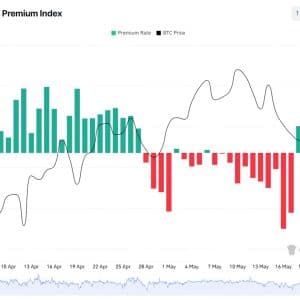
Crypto News The Coinbase premium has sunk to its lowest level this month, signaling intensifying institutional selling pressure across the US spot market. The indicator, which measures the price ga...
22 May 2026, 06:46
Coinbase premium drops to minus 0.098% as BTC falls

📉 The Coinbase premium dropped to minus 0.098% as $BTC slid. Institutional sales in US markets are intensifying and spot Bitcoin ETFs lost $1.3 billion in just four days. Continue Reading: Coinbase premium drops to minus 0.098% as BTC falls The post Coinbase premium drops to minus 0.098% as BTC falls appeared first on COINTURK NEWS .
22 May 2026, 06:36
XRP ETFs attract inflows amid wallet surge. bitcoin, ether funds struggle.

Fresh inflows into XRP-linked funds and a spike in newly created wallets suggest some traders may be rotating into the token while trimming exposure to crypto’s largest assets.
22 May 2026, 06:35
Bitcoin Holds Near $77K, Analysts Eye $75K-$77K as Key Support Zone
BitcoinWorld Bitcoin Holds Near $77K, Analysts Eye $75K-$77K as Key Support Zone Bitcoin (BTC) continues to trade near the $77,000 mark, with market analysts pointing to the $75,000 to $77,000 range as a critical short-term support level. The recent price action, characterized by heightened volatility, has raised questions about the sustainability of the current trend, though some experts argue the move does not signal a deeper structural shift. Analyst: Recent Drop Driven by Leverage, Not Trend Reversal According to a report from CoinDesk, Tim Sun, an analyst at HashKey Research, stated that the recent price decline was not indicative of a structural trend reversal. Instead, Sun attributed the increased volatility to a wave of leverage liquidations, which temporarily amplified selling pressure. He noted that while the market experienced a sharp correction, the underlying fundamentals have not deteriorated to the point of signaling a prolonged bearish phase. Sun emphasized that the current market environment is being shaped by a confluence of macroeconomic factors that are limiting new capital inflows. Specifically, he pointed to rising U.S. 30-year Treasury yields, elevated oil prices, persistent inflation concerns, and heightened geopolitical tensions between the U.S. and Iran as key headwinds. These factors, he argued, are creating a defensive, range-bound trading environment for Bitcoin in the near term. Macro Pressures and the Path to a Rebound The analyst further explained that the interplay between traditional financial markets and crypto assets is becoming increasingly pronounced. Rising bond yields and oil prices typically signal expectations of tighter monetary policy or inflationary pressures, which can dampen risk appetite across all asset classes, including cryptocurrencies. The ongoing U.S.-Iran tensions add another layer of uncertainty, as any escalation could further disrupt global energy markets and fuel inflation. However, Sun also outlined a potential catalyst for a Bitcoin rebound. He noted that if diplomatic efforts succeed in significantly de-escalating tensions between the U.S. and Iran, it could lead to a decline in oil prices and, consequently, lower inflation expectations. Such a scenario would likely ease the macroeconomic pressure on risk assets, potentially creating room for Bitcoin to recover and test higher levels. What This Means for Traders For traders and investors, the $75,000 to $77,000 zone now serves as a critical line of defense. A sustained break below this range could expose BTC to further downside, while a successful hold could pave the way for a consolidation phase or a gradual recovery. The market remains highly sensitive to macro developments, and any significant shift in U.S.-Iran relations or inflation data could trigger the next major move. It is important to note that the current environment is not unique to Bitcoin. Traditional markets, including equities and commodities, are also grappling with similar macro uncertainties. This interconnectedness suggests that Bitcoin’s near-term trajectory may be more dependent on external economic factors than on internal network fundamentals. Conclusion Bitcoin’s price action around $77,000 reflects a market caught between the immediate impact of leverage-driven volatility and broader macroeconomic headwinds. While the $75,000 to $77,000 support zone appears resilient for now, the path forward hinges on developments in global bond markets, energy prices, and geopolitical tensions. Traders should remain cautious and monitor these external factors closely, as they are likely to dictate the next phase of Bitcoin’s price discovery. FAQs Q1: Why is the $75,000 to $77,000 range considered a key support level for Bitcoin? A1: Analysts have identified this range as a critical support zone based on recent price action and order book analysis. It represents a level where buying interest has historically emerged, and a break below it could signal further downside. The range is also psychologically significant, as it aligns with round-number levels that often attract trader attention. Q2: How do U.S. Treasury yields and oil prices affect Bitcoin’s price? A2: Rising U.S. Treasury yields and oil prices typically indicate expectations of higher inflation or tighter monetary policy. This can reduce investor appetite for risk assets, including Bitcoin, as capital flows toward safer investments like bonds. Higher oil prices also increase production costs and can dampen economic growth, further pressuring risk-on assets. Q3: Could Bitcoin rebound if U.S.-Iran tensions ease? A3: Yes, according to analysts. A significant de-escalation of tensions between the U.S. and Iran could lead to lower oil prices and reduced inflation expectations. This would likely improve the macroeconomic environment for risk assets, potentially allowing Bitcoin to recover from its current range-bound trading and move higher. This post Bitcoin Holds Near $77K, Analysts Eye $75K-$77K as Key Support Zone first appeared on BitcoinWorld .
22 May 2026, 06:25
Crypto Finance Enters Its Next Phase: How HTX Earn Is Rebuilding Certainty in a Highly Volatile Market

Panama City, May 22, 2026 — The crypto narrative over the past decade has been primarily FOMO-driven, with users chasing rallies in bull markets, sitting on the sidelines during bear markets, and rotating from one hot narrative to another… most exchange-held assets are either trapped in frantic high-frequency trading or left dormant. However, since 2025, a subtle yet unmistakable shift has taken shape: stablecoin market caps continue to hit new highs, alongside the enduring growth of on-chain yield products across market cycles. More users are starting to ask: Can crypto assets be managed with the same seriousness as traditional assets? This shift signals that crypto finance is moving away from a purely high-risk speculative game and entering an era centered on long-term asset allocation. As user needs evolve, trading platforms are evolving into long-term asset management gateways. Over the past 15 months, the evolution of HTX Earn’s product lineup, adjustments to its yield system, and optimization of its asset structure have all revolved around one central question: should a truly mature crypto earn business as the industry embraces long-termism? The Four Strategic Pillars of HTX Earn Returning Certainty to Users: The crypto world has never been short of stories of high yields. What remains genuinely scarce is robust yield that can withstand market cycles under real risk conditions. Over the past year, HTX Earn has continued building its flexible stablecoin products as a foundational capability. Centered around major stablecoins such as USDT, USDD, USDC, USDE, and USAT, the platform has established a basic yield framework characterized by low barriers to entry, deep liquidity, transparent returns, and flexible deposits and withdrawals. Absorbing Liquidity Risks: In crypto finance, high yields often come with hidden liquidity risks. One of the most notable achievements for HTX Earn has been its record of zero risk-related incidents over the past 15 months. Behind that track record lies HTX’s 13 years of secure operational experience, as well as deep risk-control efforts in its capital management framework, including dynamic liquidity management, subscription/redemption stress testing, and risk isolation across yield pools. In addition, HTX has now published Merkle Tree Proof of Reserves data for 43 consecutive months, leveraging its transparent asset disclosure mechanism to alleviate trust concerns across market cycles. Empowering User Choice via Segmentation: User segmentation in crypto is even more pronounced than in traditional finance. Over the past 15 months, HTX Earn has rolled out three major product matrices: Simple Earn: Covers over 300 cryptos, offering one-click subscriptions to Flexible and Fixed products, built for average users. Structured Products: Features strategy offerings such as Shark Fin, catering to more advanced yield needs. On-Chain Earn: An upgraded SmartEarn experience that expands user access to on-chain yield. Bridging Earn with Active Trading: HTX is working to redefine Earn as the capital management hub of the entire trading ecosystem, proposing a clear user pathway: “Trade in active markets; earn in quiet ones.” The platform aims to keep user assets operating at maximum efficiency at all times through Auto-Earn, exclusive perks, and an integrated trade-to-earn experience. Product Highlights and Case Studies USDD Flexible: Stablecoin Cash Management In Q1 2025, the market entered a period of volatile pullbacks. Recognizing a drop in user risk appetite, HTX partnered with the TRON ecosystem to launch the USDD Flexi Max product. Unlike traditional stablecoin products focused strictly on minimal volatility, USDD offers a compelling combination of competitive yields, seamless conversion, and deep liquidity backed by HTX’s trading depth. At launch, HTX built market awareness through a limited-time 20% APY campaign, later stabilizing incentive yields between 8% and 12% while supporting direct 1:1 USDT-to-USDD subscriptions with zero slippage. Today, USDD Flexible remains one of HTX’s flagship offerings, maintaining a highly competitive 4% to 6% APY while much of the industry offers yields between 1% and 5%. USDT VIP Flexible: High-Net-Worth Customization In 2026, as yields on standard flexible earn products compressed across the market, HTX launched USDT VIP Flexible, which is deeply integrated with its Prime membership system. Designed specifically for high-net-worth users with large idle funds, it offers up to 9% APY—far above the sub-2% levels commonly seen in standard flexible products during the same period. The product maintains the core advantages of a flexible structure: deposits and withdrawals anytime, hourly compounding, and auto-subscription functionality. $TRUMP Flexible: Navigating VolitiFi Volatility For high-momentum PolitiFi assets like $TRUMP, where price movements are heavily influenced by market sentiment, HTX adopted a solution centered around boosted APYs. While preserving a flexible mechanism, the platform allows users to enjoy a “hold-and-earn” experience, reducing both the opportunity cost of holding assets and short-term selling pressure. 15 Months of Consolidation: Longtermism Embedded Into the DNA Over the past 15 months, HTX Earn has recorded steady, sustainable growth across multiple core metrics: User Base Expansion: Total subscribed users surpassed 600,000, representing a 66.47% YoY increase. Total Value Subscribed (TVS): Increased by 31.39% YoY , with cumulative user earnings rising by 31.52% YoY . Assets under management across Fixed and Flexible products have reached multi-billion-dollar levels. Stablecoin Growth: Core stablecoin balances recorded double-digit growth for four consecutive quarters. Driven by Launchpool integrations and seasonal campaigns, stablecoin balances on the platform surged by 64.15% between October 11, 2025, and the end of that year. Structured Products: Launched 292 phases of Shark Fin products, with cumulative subscriptions approaching $1 billion . Ecosystem Engagement: Hosted 13 Earn Bonanza events and 8 Launchpool campaigns, drawing nearly 300,000 cumulative participants and driving tens of millions of dollars in net capital inflows. Final Thoughts Every market cycle in the crypto industry reshuffles the players. In the FOMO era, those best at telling stories will stand out; while in the age of long-termism, the winners are those who understand users best, respect risk the most, and possess the utmost patience. HTX believes that crypto finance is entering a more mature stage of development where stability, transparency, and sustainability are the capabilities that truly endure. Over the next 15 months, HTX Earn will continue forging along this path, balancing product innovation with institutional-grade risk control. To learn more about HTX, please visit https://www.htx.com/ or HTX Square , and follow HTX on X , Telegram , and Discord . The post Crypto Finance Enters Its Next Phase: How HTX Earn Is Rebuilding Certainty in a Highly Volatile Market first appeared on HTX Square .


