


 Invest ideas
News
21 May 2026, 10:53
Ripple Prime integrates EDX Markets for unified crypto access

🚀 Ripple Prime’s integration with EDX Markets gives institutions unified access to spot and perpetual crypto trading. $XRP now supports trading with one-stop collateral management, thanks to RLUSD stablecoin. ⚡️ Critical data: This partnership removes the need for separate capital allocations across platforms. Continue Reading: Ripple Prime integrates EDX Markets for unified crypto access The post Ripple Prime integrates EDX Markets for unified crypto access appeared first on COINTURK NEWS .
21 May 2026, 10:53
The $6 billion expiration countdown: Traders pile into $82,000 bitcoin calls ahead of May 29 expiry
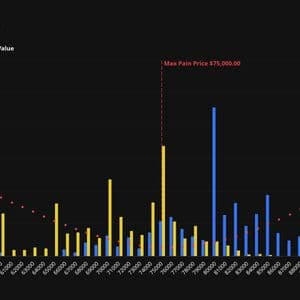
Deribit’s bitcoin open interest has overtaken BlackRock’s IBIT as traders brace for a showdown between $75K max pain and $80K call positioning.
21 May 2026, 10:52
HYPE leads crypto rebound as traders position for volatility breakout
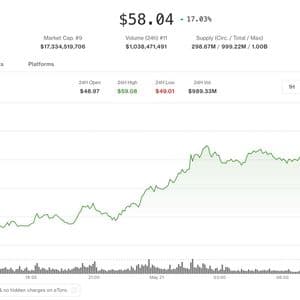
Bitcoin and ether stabilized as derivatives activity rebounded, HYPE rose for a fifth straight day and options traders positioned for a breakout.
21 May 2026, 10:50
Former Silvergate CRO Breaks Silence: Regulatory Pressure, Not Bank Run, Caused Collapse

BitcoinWorld Former Silvergate CRO Breaks Silence: Regulatory Pressure, Not Bank Run, Caused Collapse Kate Fraher, the former Chief Risk Officer of Silvergate Bank, has publicly stated for the first time that the bank’s 2023 collapse was driven by regulatory pressure rather than a traditional bank run. Speaking after the U.S. Securities and Exchange Commission repealed its ‘gag rule’ — a policy that previously prevented settling parties from commenting on their cases — Fraher offered a detailed rebuttal to the narrative that Silvergate failed solely due to depositor panic following the FTX collapse. Fraher’s First Public Statement After SEC Settlement Fraher settled with the SEC in 2024, agreeing to a $250,000 civil penalty and a five-year ban from serving as an officer of any public company. In her statement, she emphasized that she settled only to avoid protracted and costly legal battles, not because she admitted wrongdoing. She maintained that no financial regulator ever proved that Silvergate had deficient Anti-Money Laundering (AML) controls — a key allegation that had shadowed the bank’s final months. The timing of Fraher’s statement is notable. The SEC’s recent removal of the gag rule allows settling parties to speak publicly about their cases without risking additional penalties. This policy change has opened the door for executives like Fraher to provide their side of the story, adding a new layer of complexity to the already contentious history of Silvergate’s failure. Was It a Bank Run or Regulatory Pressure? Fraher acknowledged that Silvergate lost approximately 70% of its deposits in the wake of the FTX collapse in November 2022. However, she argued that by early 2023, the bank had successfully readjusted its capital reserves and staffing levels, positioning itself to continue operations. She insisted that the real obstacle was not a liquidity crisis but mounting regulatory pressure on the broader crypto industry, which made it unsustainable for Silvergate to maintain its business model. This perspective challenges the widely accepted narrative that Silvergate was a victim of a classic bank run triggered by contagion from FTX’s fraud. Fraher’s account suggests that regulatory actions — including informal pressure from banking supervisors and shifting policy priorities — played a more decisive role in the bank’s closure than the deposit outflows themselves. Implications for the Crypto Banking Sector Fraher’s comments carry weight because they come from the bank’s top risk officer, the person responsible for ensuring compliance and financial stability. Her claim that Silvergate’s AML controls were never formally proven deficient raises questions about the proportionality of regulatory responses to crypto-linked financial institutions. The collapse of Silvergate, along with Signature Bank and Silicon Valley Bank in early 2023, reshaped the landscape for crypto-friendly banking in the United States. Many crypto firms have since struggled to find reliable banking partners, with some moving operations offshore. Fraher’s statement adds to a growing body of criticism that U.S. regulators may have overcorrected in their response to the FTX crisis, potentially stifling innovation without corresponding safety gains. Conclusion Kate Fraher’s first public statement since Silvergate’s collapse introduces a significant alternative explanation for the bank’s failure — one centered on regulatory pressure rather than a simple bank run. While the SEC’s repeal of the gag rule allowed this perspective to emerge, it remains one side of a complex story. For readers following the intersection of crypto regulation and banking stability, Fraher’s account offers a critical counterpoint to the prevailing narrative and underscores the ongoing debate over how aggressively regulators should police digital asset markets. FAQs Q1: Why did Kate Fraher settle with the SEC if she maintains her innocence? Fraher stated she settled to avoid years of expensive litigation, a common practice even among parties who believe they have strong defenses. The settlement included a $250,000 penalty and a five-year officer ban but did not require an admission of guilt. Q2: What was the SEC’s ‘gag rule’ and why was it repealed? The gag rule was an SEC policy that prohibited settling parties from publicly commenting on their cases. It was repealed in early 2025 as part of broader SEC reforms aimed at increasing transparency. The repeal allows individuals like Fraher to speak freely about their cases without violating settlement terms. Q3: How did Silvergate’s collapse affect the broader crypto industry? Silvergate’s closure, along with Signature Bank and Silicon Valley Bank in early 2023, severely reduced the availability of U.S. banking services for crypto companies. Many firms were forced to seek banking partners overseas or rely on smaller, less regulated institutions, increasing operational complexity and cost. This post Former Silvergate CRO Breaks Silence: Regulatory Pressure, Not Bank Run, Caused Collapse first appeared on BitcoinWorld .
21 May 2026, 10:42
Bitcoin price forms double bottom as Trump signals Iran negotiations may conclude soon

21 May 2026, 10:40
Attempted Kidnapping Targets Wife of The Sandbox Co-Founder in France
BitcoinWorld Attempted Kidnapping Targets Wife of The Sandbox Co-Founder in France In a deeply concerning development for the cryptocurrency industry, the wife of Sebastien Borget, the COO and co-founder of the popular metaverse platform The Sandbox (SAND), was the target of an attempted kidnapping at their family home in France. The incident, first reported by The Block, highlights a troubling escalation in violent crimes targeting executives and their families in the crypto space. Details of the Attack According to initial police reports, the perpetrators disguised themselves as delivery drivers to gain access to the property. They were accompanied by masked accomplices. The group attempted to forcibly place the victim into a waiting vehicle. The attack was thwarted when neighbors heard the victim’s screams and intervened, causing the suspects to flee the scene. French authorities have since arrested two individuals in connection with the attempted kidnapping. However, four other suspects remain at large, and a manhunt is ongoing. Investigators have confirmed that, based on preliminary findings, they are actively exploring a potential link to cryptocurrency-related crime. The precise motive remains under investigation, but the profile of the target strongly suggests the perpetrators were aware of Borget’s prominent role in the blockchain industry. A Growing Pattern of Crypto-Related Violence in Europe This incident is not isolated. French police data indicates that the country has recorded 41 crypto-related kidnappings or attempted kidnappings this year alone. This alarming statistic underscores a rapid and concerning increase in violent crimes targeting individuals associated with digital assets across Europe. The trend has fueled fears among industry leaders, many of whom are now reassessing their personal security protocols. The Sandbox, a leading virtual world platform where users can buy, sell, and build on virtual land using SAND tokens, has a high public profile. Borget is a well-known figure in the Web3 space, frequently speaking at conferences and appearing in media. This visibility, while beneficial for business, appears to have made him and his family a target. Why This Matters to the Crypto Community For investors, developers, and users of platforms like The Sandbox, this event is a stark reminder that the digital asset industry’s growth has attracted not only legitimate interest but also serious criminal elements. The safety of industry executives is now a pressing concern that could impact how companies operate and where they choose to base their operations. It also raises questions about the level of personal risk associated with high-profile roles in the decentralized finance and metaverse sectors. This case also puts pressure on law enforcement agencies across Europe to develop specialized units capable of handling the unique intersection of digital finance and violent crime. The industry itself may need to implement more robust security frameworks and support networks for its key figures. Conclusion The attempted kidnapping of Sebastien Borget’s wife is a serious and sobering event that signals a new, darker phase for the cryptocurrency industry. While the immediate situation appears to be under control with the victim safe and two suspects in custody, the broader implications for security, privacy, and the personal safety of crypto leaders are profound. As the investigation continues, the industry will be watching closely for answers and for signs of a coordinated effort to address this growing threat. FAQs Q1: Who was the target of the attempted kidnapping? The target was the wife of Sebastien Borget, the COO and co-founder of The Sandbox (SAND). The attack occurred at their home in France. Q2: How many suspects have been arrested? Two suspects have been arrested by French police. Four others remain at large and are being actively sought. Q3: Is there a confirmed link to cryptocurrency? Police are investigating a potential link to cryptocurrency-related crime based on their initial findings, but the exact motive has not yet been officially confirmed. This post Attempted Kidnapping Targets Wife of The Sandbox Co-Founder in France first appeared on BitcoinWorld .

