


 Invest ideas
News
21 May 2026, 08:23
XRP ETF inflows hit $1.39 billion as price holds $1.37
🚨 XRP ETF inflows reached $1.39 billion as price held $1.37. $XRP struggled to break $1.50, facing strong resistance. Critical data: Futures open interest climbed to $2.93 billion. 📅 Fed minutes and inflation updates may sway next moves. Continue Reading: XRP ETF inflows hit $1.39 billion as price holds $1.37 The post XRP ETF inflows hit $1.39 billion as price holds $1.37 appeared first on COINTURK NEWS .
21 May 2026, 08:21
HYPE and ZEC Steal the Show, BTC Price Stopped at $78K: Market Watch

Bitcoin’s price recovery that started a couple of days ago pushed the asset to just over $78,000 before it was stopped and driven south by around $500. Minor gains are evident from BNB, SOL, and DOGE, but, as mentioned in the title, two larger-cap alts have stolen the show. BTC Progress Stopped at $78K Bitcoin was rejected at $82,000 on a few occasions last week, with the last such example taking place on Thursday. At the time, the cryptocurrency had gained over $3,000 in hours after the CLARITY Act passed the US Senate Banking Committee. However, it couldn’t keep climbing and quickly lost the $80,000 psychological level. It dived further by Friday evening to under $79,000 before the bears drove it a step lower to beneath $78,000 on Saturday. After a relatively calm Sunday, the largest digital asset fell again on Monday and Tuesday. This time, it dumped to $76,000, which became its lowest price tag in over three weeks. After it had lost over $6,000 in several days, the bulls finally intervened and prevented another setback. BTC started a gradual recovery that drove it to over $77,000 yesterday and to just north of $78,000 earlier this morning. However, it couldn’t keep climbing and now sits below that level. Its market capitalization is down to under $1.560 trillion, while its dominance over the alts has been reduced slightly to 58.2% on CG. BTCUSD May 21. Source: TradingView ZEC, HYPE on the Rise Ethereum continues with its underwhelming performance, being slightly in the red daily, but it still stands above $2,100. In contrast, BNB, SOL, DOGE, BCH, and XMR are with 1-2% gains. HYPE has rocketed the most from the larger-cap alts. It’s up by 19% daily to $58, which brings it inches away from a new all-time high. ZEC has added over 13% of value and now trades well above $660. DASH, MNT, ONDO, and TAO follow suit, while SUI and NEAR are next in terms of daily gains. The total crypto market cap has increased by over $30 billion in a day and is close to $2.680 trillion on CG. Cryptocurrency Market Overview May 21. Source: QuantifyCrypto The post HYPE and ZEC Steal the Show, BTC Price Stopped at $78K: Market Watch appeared first on CryptoPotato .
21 May 2026, 08:16
SOL vs XRP: Which Altcoin Benefits More From ETF Demand?
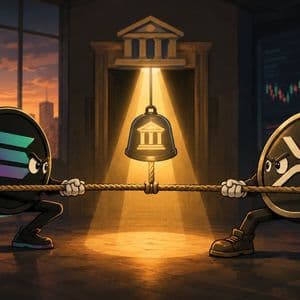
ETF demand has become one of the most important institutional narratives in crypto. After Bitcoin and Ethereum opened the door for mainstream spot crypto products, investors have started asking which major altcoins could benefit most from the next wave of regulated exchange-traded exposure. Solana and XRP are two of the most watched candidates, but they represent very different crypto theses. SOL is tied to a high-throughput smart contract ecosystem with DeFi, trading, consumer apps, NFTs, staking, and on-chain infrastructure. XRP is linked to the XRP Ledger, a payments-focused network with a long-running institutional settlement narrative. So, which altcoin benefits more from ETF demand? The practical answer is nuanced: SOL may have stronger upside sensitivity if ETF inflows chase growth, staking, and ecosystem activity, while XRP may benefit more from improved accessibility, regulatory clarity, and institutional legitimacy. This comparison breaks down how ETF demand could affect both assets, what investors should watch, and where the main risks sit. It is for market education only and should not be treated as personal financial advice. Key Takeaways PointDetailsSOL has stronger growth leverageSolana may react more sharply to ETF inflows because it combines smart contract adoption, staking, and active ecosystem narratives.XRP has a clearer access storyXRP may benefit from easier regulated exposure after years of legal uncertainty and from its payments-focused positioning.Staking matters for SOLSome Solana ETF products include staking strategies, which can change how investors compare total return, fees, and operational risks.XRP demand is narrative-sensitiveXRP ETF demand depends heavily on payments adoption, regulatory perception, liquidity, and confidence in the XRP Ledger ecosystem.ETF flows are not fundamentalsInflows can support liquidity and price action, but they do not automatically prove long-term network usage or real-world adoption. ETF Demand Is Not the Same as Real Network Demand An ETF can make a crypto asset easier to access. Investors can gain exposure through a brokerage account without managing wallets, private keys, seed phrases, exchange accounts, or direct custody. That convenience is one reason crypto ETFs matter for institutional and retail adoption. However, ETF demand is not the same as organic blockchain demand. Someone buying a spot crypto ETF may never use the network directly. They may not interact with DeFi, send a transaction, use a wallet, bridge assets, stake tokens, or participate in governance. This distinction matters when comparing SOL and XRP. ETF inflows can increase market liquidity and improve institutional access, but they do not automatically prove that a blockchain is gaining sustainable users, developers, revenue, or real-world utility. The regulatory backdrop also changed in 2025, when the SEC approved generic listing standards for commodity-based trust shares, including products holding spot digital assets that meet the relevant requirements. That helped create a clearer route for more crypto exchange-traded products beyond Bitcoin and Ethereum. ( SEC ) Why SOL Has a Stronger Growth Narrative Around ETFs Solana’s ETF story is powerful because it connects to several themes institutional investors already understand: network activity, staking, application growth, trading volume, infrastructure demand, and high-beta exposure to crypto cycles. Solana is not only a payment asset. It is a smart contract platform used across decentralized exchanges, liquid staking, token launches, NFTs, consumer apps, gaming experiments, DePIN projects, and stablecoin activity. That gives SOL a broader ecosystem narrative than many single-use crypto assets. ETF demand could amplify that narrative. If institutions buy SOL exposure through regulated products, the market may interpret it as a vote of confidence in Solana’s role as a major smart contract network. This can increase attention from traders, analysts, allocators, and crypto-native investors. The staking angle is especially important. Bitwise announced the Bitwise Solana Staking ETF, BSOL, as a U.S. Solana ETP with direct SOL exposure and a staking strategy. That makes the SOL ETF conversation different from a simple passive spot product because staking may affect how investors think about returns, expenses, custody, validator selection, and operational risk. ( Bitwise ) Where SOL ETF demand could help most Improving mainstream access to Solana exposure. Increasing liquidity around SOL markets. Strengthening Solana’s position as an institutional smart contract asset. Making staking economics more visible to traditional investors. Supporting the broader Solana ecosystem narrative during bullish market phases. The main caution is that ETF demand can move faster than fundamentals. Solana still faces competition from Ethereum layer-2 networks, other high-performance layer-1 chains, app-specific chains, and emerging modular blockchain infrastructure. Investors should also watch network reliability, validator decentralization, fee market development, DeFi retention, stablecoin liquidity, and whether Solana activity remains durable when speculative trading cools. Why XRP Has a Stronger Access and Clarity Story XRP’s ETF case is different. It is less about smart contract growth and more about payments, settlement, liquidity, and regulated access. XRP is the native token of the XRP Ledger. Ripple describes XRP as a token used to facilitate transactions, protect the ledger from spam, and bridge currencies in the XRP Ledger’s decentralized exchange. ( Ripple ) That gives XRP a simpler institutional narrative than many altcoins. It is commonly discussed as a payments and settlement asset rather than a broad smart contract ecosystem token. For some investors, that clarity is useful. They do not need to evaluate hundreds of DeFi apps, NFT platforms, gaming projects, or memecoin cycles to understand the core XRP thesis. The other major factor is legal and regulatory perception. XRP spent years under a legal cloud because of the SEC’s case against Ripple. A clearer regulatory environment can make XRP easier for issuers, custodians, advisers, and institutions to evaluate, even though regulatory risk has not disappeared entirely. Bitwise announced that its XRP ETF began trading on the New York Stock Exchange, giving U.S. investors a regulated way to gain spot XRP exposure through a traditional investment product. ( Bitwise ) Where XRP ETF demand could help most Improving mainstream access to XRP exposure. Reducing friction for investors who avoid direct exchange custody. Increasing perceived institutional legitimacy. Supporting liquidity around XRP markets. Reframing XRP from a legal-risk asset into a more accessible payments-focused crypto exposure. The main caution is that improved access does not automatically prove adoption. XRP still needs measurable network usage, liquidity depth, developer activity, payment corridor relevance, and durable demand beyond market speculation. SOL vs XRP ETF Demand: Side-by-Side Comparison FactorSOLXRPCore narrativeHigh-performance smart contract ecosystemPayments, settlement, and bridge liquidityMain ETF demand driverGrowth exposure, staking, and ecosystem activityRegulated access, liquidity, and clarityProduct structure advantageStaking-enabled products may offer a differentiated return profileSimple spot exposure may be easier for traditional investors to understandPotential ETF impactHigher price sensitivity during strong inflow cyclesStronger legitimacy and access benefitsMain riskCompetition, network reliability, speculative activity cyclesAdoption uncertainty, regulatory perception, narrative dependenceBest-fit investor thesisSmart contract platform growthPayments and settlement exposure If the question is which asset may react more strongly to new ETF inflows, SOL has the stronger case. It has a broader growth narrative, an active app ecosystem, and the additional staking angle. In bullish markets, those factors can create stronger reflexivity: inflows attract attention, attention supports price action, and price action attracts more market discussion. If the question is which asset benefits more from improved legitimacy, XRP has a strong case. ETF access can help normalize XRP exposure for investors who previously avoided it because of legal uncertainty, custody friction, or limited traditional access. A practical way to frame the comparison is this: SOL may benefit more from ETF demand as a growth catalyst, while XRP may benefit more from ETF demand as an access and credibility catalyst. The Risks Investors Should Not Ignore ETF demand can support liquidity, but it can also encourage investors to chase a simplified narrative. That is risky in altcoin markets, where sentiment can change quickly and price action often moves ahead of fundamentals. For SOL, the biggest risk is that ETF inflows price in ecosystem growth before the network proves durable demand across multiple market cycles. Solana has strong visibility, but investors should separate sustainable app usage from short-term speculative volume. Important SOL risks include network competition, validator economics, congestion, potential outages, token supply dynamics, staking risks, and overreliance on high-risk trading activity. A strong ETF launch does not remove these issues. For XRP, the biggest risk is that ETF access improves liquidity without meaningfully changing real-world usage. XRP has a clear payments narrative, but investors still need to check whether that narrative is reflected in actual XRP Ledger activity, institutional adoption, liquidity flows, and developer growth. Important XRP risks include regulatory uncertainty, payment adoption gaps, Ripple-related sentiment, token concentration concerns, and the possibility that market enthusiasm may exceed measurable network utility. ETF-specific risks also matter. Management fees reduce returns over time. Shares may trade at premiums or discounts during stressed market conditions. Custody arrangements need review. Staking strategies introduce validator and operational considerations. Liquidity can weaken during risk-off markets. How to Evaluate ETF-Driven Altcoin Demand The best way to compare SOL and XRP is not to ask which token is “better” in a broad sense. A more useful question is: what type of demand is entering the market, and is that demand durable? 1. Track ETF flows beyond launch week Launch-day and first-week inflows can be noisy. They may reflect pent-up demand, marketing, seed capital, or short-term positioning. Sustained inflows over several months are more meaningful than a single headline number. 2. Compare ETF demand with liquidity ETF demand is more valuable when it improves market quality. Watch trading volume, bid-ask spreads, order book depth, and whether liquidity remains stable during volatile periods. 3. Check whether on-chain activity supports the narrative For SOL, useful indicators include active addresses, transaction fees, decentralized exchange volume, stablecoin activity, app retention, and developer momentum. For XRP, useful indicators include payment activity, active accounts, DEX usage, liquidity paths, and growth in XRP Ledger development. 4. Understand the ETF structure A staking-enabled SOL product is not the same as a simple spot product. Investors should review staking policy, reward treatment, validator selection, custody, fees, and tax considerations. XRP products are generally simpler, but they do not have the same native staking component. 5. Separate market narrative from investment thesis ETF headlines can create short-term excitement, but a real thesis needs more than access. Investors should ask whether the underlying asset has a clear use case, competitive position, liquidity base, developer ecosystem, and risk-adjusted reason to hold it. Common Mistakes When Comparing SOL and XRP One mistake is comparing SOL and XRP only by price performance. Price can reflect liquidity, leverage, sentiment, and short-term positioning. It does not always reflect adoption or long-term network quality. Another mistake is treating ETF approval or ETF launch as a guarantee of future returns. ETFs can improve access, but they do not eliminate volatility, regulatory risk, custody risk, or market cycle risk. A third mistake is ignoring token-specific fundamentals. SOL investors need to understand Solana’s ecosystem, staking model, and competitive landscape. XRP investors need to understand the XRP Ledger, Ripple’s role, payment adoption claims, and legal history. Finally, investors should avoid assuming that institutional access automatically means institutional conviction. Some ETF flows may be tactical, short-term, or arbitrage-driven rather than long-term allocation. Which Altcoin Benefits More Overall? SOL appears better positioned to benefit from ETF demand if the market rewards growth, staking, and smart contract ecosystem exposure. It has more ways to connect ETF flows to broader crypto narratives, including DeFi, consumer apps, token launches, stablecoins, and infrastructure growth. XRP appears better positioned to benefit if the market rewards clarity, accessibility, and payments-focused institutional narratives. Its ETF story is less about ecosystem breadth and more about removing friction for investors who want XRP exposure through a regulated wrapper. For active traders, SOL may offer more volatility and narrative momentum during strong inflow periods. For investors focused on legal clarity and payment-sector positioning, XRP may offer a cleaner story. Neither asset should be viewed as risk-free. The balanced conclusion is that SOL may benefit more from ETF demand in terms of growth-driven upside potential, while XRP may benefit more in terms of improved legitimacy and access. The stronger choice depends on whether an investor prioritizes ecosystem expansion or payments-focused exposure. Where Crypto Daily Fits Into the Research Process Crypto Daily helps readers follow ETF developments, altcoin narratives, market structure, regulation, and crypto adoption trends without relying only on hype. For a comparison like SOL vs XRP, the useful approach is to track ETF flows, fundamentals, risks, and market context together. Readers researching altcoin ETF demand can use Crypto Daily to stay informed about what changed, why it matters, and which data points deserve attention before making any crypto-related decision. Frequently Asked Questions Does SOL or XRP benefit more from ETF demand? SOL may benefit more from ETF demand as a growth catalyst because it has a broader smart contract ecosystem and a staking angle. XRP may benefit more from improved access, liquidity, and institutional legitimacy. Are Solana ETFs and XRP ETFs the same type of product? No. Some Solana products may include staking strategies, while XRP products are generally simpler spot exposure vehicles. Investors should always check the fund structure, fees, custody model, and risk disclosures. Does ETF demand mean SOL or XRP will rise in price? No. ETF inflows can support demand and liquidity, but prices still depend on market conditions, risk appetite, token supply, macro trends, liquidity, and sentiment. Why does staking matter for SOL ETFs? SOL is a proof-of-stake asset, so staking can potentially affect the return profile of a product. However, staking also adds operational risks, validator considerations, and product-specific complexity. Why is XRP’s legal history important for ETF demand? XRP’s legal history affected how some institutions viewed the asset. A clearer legal backdrop can make XRP easier to evaluate, although regulatory and market risks still remain. Which is better for long-term investors: SOL or XRP? It depends on the investor’s thesis. SOL fits a smart contract platform growth thesis. XRP fits a payments, settlement, and liquidity-access thesis. Both require independent research and risk management. What should investors watch next? Investors should monitor ETF inflows, trading volume, liquidity, spreads, on-chain activity, regulatory updates, custody arrangements, staking policies, and whether market narratives are supported by real network usage. Disclaimer: This article is provided for informational purposes only. It is not offered or intended to be used as legal, tax, investment, financial, or other advice.
21 May 2026, 08:02
When Ripple President Drops Big Statement about XRP and Bank of America

Crypto analyst Xaif Crypto has highlighted comments from Monica Long regarding XRP, digital asset adoption, and the changing stance of major financial institutions such as Bank of America. In a tweet on X, Xaif Crypto revisited remarks made by Long in which she described what she believes is a significant turning point for banks entering the crypto sector. According to the post, Long said the “floodgates are going to open” this year as regulatory conditions in the United States become more favorable for digital asset companies and financial institutions. Xaif Crypto connected those remarks directly to XRP and the growing institutional interest in blockchain-based payment systems. The comments came during a discussion in which Long spoke about recent developments surrounding banking regulations and the changing attitude among financial institutions toward digital assets. She pointed to the removal of SAB 121 as a major event that immediately shifted sentiment among banks. Remember when Monica Long reveals Bank of America CEO says "We're all in on $XRP The flood gates are about to burst… https://t.co/h0JHnnLuXc pic.twitter.com/np4x4ckGYS — Xaif Crypto (@Xaif_Crypto) May 19, 2026 Ripple President References Bank of America’s Position In the video attached to the X post, Long recalled hearing statements from banking executives shortly after SAB 121 was rolled back. She specifically cited Bank of America, stating that the bank’s chief executive indicated the institution was “all in.” Long also reminded listeners that Bank of America was one of Ripple’s early partners during the company’s earlier payment messaging initiatives. She explained that Ripple has maintained relationships with large banks for years, even during periods when regulatory uncertainty limited deeper involvement with blockchain technology and digital assets. According to Long, financial institutions previously faced an environment in which the use of crypto-related technology was often viewed negatively or treated as risky by regulators. She suggested that this attitude discouraged banks from fully exploring blockchain payment solutions and digital asset services. Her comments focused heavily on the dramatic change she has observed in recent months. Long stated that conversations with banks changed rapidly following the U.S. presidential election in November. She explained that discussions surrounding reserve banking partnerships, stablecoin operations, and payment infrastructure became noticeably more positive almost overnight. We are on X, follow us to connect with us :- @TimesTabloid1 — TimesTabloid (@TimesTabloid1) June 15, 2025 Regulatory Shift Seen as Key Turning Point The discussion around SAB 121 remains important because the rule has created significant accounting complications for banks interested in digital asset custody services. SAB 121 required institutions safeguarding crypto assets to record those holdings as liabilities on their balance sheets, a requirement many industry participants considered restrictive. That policy officially ended in January 2025 when the U.S. Securities and Exchange Commission replaced it with SAB 122. The repeal removed a major obstacle for traditional financial institutions seeking involvement in digital assets, including custody and payment services tied to blockchain technology. Xaif Crypto presented Long’s comments as further evidence that major financial institutions may now be preparing for broader participation in the crypto sector. The analyst’s post centered on the possibility that XRP-related infrastructure and Ripple’s banking relationships could benefit from this changing regulatory climate. Long’s remarks also reflected Ripple’s long-standing focus on cross-border payments and partnerships with established financial institutions. Her statements suggested that banks that once moved cautiously around digital assets may now be more willing to support blockchain-based financial services and related technologies. Disclaimer : This content is meant to inform and should not be considered financial advice. The views expressed in this article may include the author’s personal opinions and do not represent Times Tabloid’s opinion. Readers are advised to conduct thorough research before making any investment decisions. Any action taken by the reader is strictly at their own risk. Times Tabloid is not responsible for any financial losses. Follow us on X , Facebook , Telegram , and Google News The post When Ripple President Drops Big Statement about XRP and Bank of America appeared first on Times Tabloid .
21 May 2026, 08:00
Community Is King: Why Wadoozie Is Ditching Online Hype for Real-World Participation

Wadoozie is a narrative-driven, on-chain attention network built on Ethereum, pairing a native ERC-20 token ($WADZ) with a real-world 48-state U.S. tour, 576 Signal Fragments redeemable for tokens (336 hidden across the 48 states, 240 in an online pool), and a Publishers Network that pays creators directly from a dedicated 7% of total supply. This
21 May 2026, 08:00
By The Numbers: How Much Bitcoin Supply Is Exposed To Quantum Risk?

Analytics firm Glassnode has broken down how much of the Bitcoin supply is at risk due to Quantum Computing and what its composition looks like. 6.04 Million Bitcoin Is Estimated To Be Exposed To Quantum Risk In a new X article , Glassnode has talked about the part of the Bitcoin supply in circulation that’s exposed to the risk posed by Quantum Computing . “Quantum Computing” refers to an emerging class of computers that can, in theory, be powerful enough to break advanced cryptographic systems. Bitcoin and other cryptocurrencies could be examples of such systems. While Quantum Computing is something that has been “upcoming” for years now, the technology has made some advancements recently that has made many in the digital asset industry talk about its possible consequences for the sector. For Bitcoin, the main threat from Quantum Computing involves the supply that’s sitting in vulnerable wallets. “The relevant threshold is whether the public key needed to spend a coin is already visible on-chain,” noted Glassnode. Based on this criteria, the analytics firm has estimated 6.04 million tokens to be vulnerable to potential Quantum Computing attacks. In terms of the supply percentage, these coins make up for more than 30% of all BTC in existence today. The supply at risk to the Quantum Computing threat can be further divided into two categories. As Glassnode explained: The first is structural exposure: outputs whose script type reveals the public key by design. The second is operational exposure: coins that may have been protected initially, but where address reuse, partial spending, or custody behaviour has already made the public key visible while BTC remains tied to it. Below is a chart that shows how the composition of the Bitcoin supply has changed in terms of these two categories over the years. As is visible in the graph, a major part of the Bitcoin supply was structurally unsafe during the cryptocurrency’s early years. This is naturally due to the fact that early wallets weren’t as secure as those in use today. As the years have gone by and investors have adopted better wallet standards, the structurally unsafe supply has shrunken to just 9.6%. A notable 20.6% of the supply, however, is still inside the operationally unsafe category. This part of the supply has actually seen some growth in recent years. In pure numbers, the operationally unsafe supply includes about 4.12 million BTC right now, as the below chart shows. Meanwhile, the structurally unsafe supply is made up of 1.92 million BTC, while the safe one includes 13.99 million BTC. BTC Price At the time of writing, Bitcoin is floating around $77,000, down more than 3% in the last seven days.


