


 Invest ideas
News
20 May 2026, 19:30
Bitcoin Seeing A Crucial Shift In Demand Dynamics While Price Action Weakens

As volatility persists in the market, Bitcoin faces a potential retest of the $70,000 price level following the recent pullback. With this waning price action, demand for the flagship asset among investors and traders is exhibiting a trend that could spell trouble for its near-term direction. Demand Patterns For Bitcoin Are Undergoing A Change Bitcoin continues to struggle with heightened bearish pressure, and a subtle but crucial shift is currently emerging in the market. Currently, BTC’s downside price action has begun to reflect changes in its demand dynamics. In an analysis of the Bitcoin Spot and Perpetual Futures Demand Growth, Julio Moreno has shared that BTC’s total demand entered into a contraction phase on Monday, May 18. This shift comes after a steady upside since early March this year, driven by speculative demand. With fading buying pressure and cooling speculative activity colliding , this development triggered concerns about whether the market is either getting ready for a wider trend reversal or is about to enter a consolidation phase. Moreno highlighted that speculative demand growth, which is represented by the blue bars on the chart, reached its highest level as prices approached the $80,000 mark. However, this activity has since slowed down significantly. Meanwhile, spot demand, indicated as the grey bars on the chart, is contracting slightly faster than the speed of the cooling speculative demand. As demand patterns continue to adjust, this could play a role in shaping BTC’s next major move in either direction. BTC Held At Loss Matching Past Levels During this weakening momentum, another development that is drawing attention is the number of Bitcoins held at a loss. According to Darkfost, another CryptoQuant author, the supply of BTC held at a loss by long-term holders is not 5.7 million BTC, matching levels previously seen at the peak of past bear markets. In 2015, it was 5.96 million BTC, in 2019, it was 5.8 million BTC, while in 2022, it was 6.8 million BTC. It is worth noting that the most severe discomfort was felt by LTHs during the last cycle. Nonetheless, the recent 52% decline in Bitcoin is still significantly lower than what was observed in earlier bear markets. Darkfost stated that this suggests a very large number of BTC was exchanged between $80,000 and $126,000, and the losses are probably present among the youngest cohort of LTHs. What’s important here is that the trend is not completely confirmed yet, but a slight distortion caused by the movement of 800,000 BTC from Coinbase on November 21 and 22 was observed. Furthermore, a spike of more than 740,000 BTC can clearly be seen around April 21 and 22, while on Bitbo, the transaction to long-term holders occurs after 155 days. By adjusting the figure for this movement, the value could still be around 4.93 million BTC, which remains historically significant. In the following 3 to 4 days, Darkfost noted that a number of LTH-related measures on platforms that use a 6-month threshold may also begin to move quickly. At that point, these BTC, which moved around $84,500, will officially shift from STH to LTH supply.
20 May 2026, 19:30
Washington Targets Iran’s $7 Billion Crypto Network To Cut Off Financial Channels—FOX

US authorities are reportedly stepping up efforts to disrupt Iran’s cryptocurrency activity, as Washington works to choke off financial channels linked to the regime amid escalating tensions in the Middle East. ‘Breadcrumbs’ In Crypto A FOX Business report released Wednesday points to new figures from a threat-detection data firm estimating that Tehran controls roughly $7.7 billion in digital assets. Officials and analysts behind the crackdown argue that, despite claims by foreign adversaries that cryptocurrencies can help them evade sanctions, the technology can still leave clear trails that investigators can follow. Chris Perkins, the CEO of 250 Digital Asset Management, is quoted in the report describing why crypto can be useful for law enforcement to monitor. He said investigators repeatedly found that adversaries using digital assets inadvertently create “breadcrumbs,” making transactions easier to track than some might expect. Iran Advances Hormuz Insurance Using Bitcoin The report also suggests the US could apply even more pressure by leveraging threats to the on-ramps that make crypto movement easier. Industry insiders believe Washington may escalate its stance by warning it could cut off crypto exchanges from the American banking system, a move that would raise operational risks for firms handling transactions tied to sanctioned networks. At the same time, the US crackdown comes alongside reports that Iran has moved forward with a new digital insurance platform for cargo ships operating through the Strait of Hormuz. As Bitcoinist reported earlier this week, payments tied to the insurance are being settled entirely in Bitcoin (BTC), linking Iran’s maritime finance strategy directly to the cryptocurrency ecosystem that US officials are targeting. The Iranian Ministry of Economic Affairs and Finance had been working on the strait-related insurance plan. The initiative is designed to make management of the strait possible through insurance products, including maritime insurance policies and financial responsibility certificates. The scheme could allegedly produce more than $10 billion in revenue for Iran, potentially creating an additional stream of funding that supporters of the plan believe could be harder for international enforcement to interrupt. Featured image created with OpenArt, chart from TradingView.com
20 May 2026, 19:28
Bitfinex Analysts Warn $85,900 BTC Resistance Could Cap Any Recovery Rally
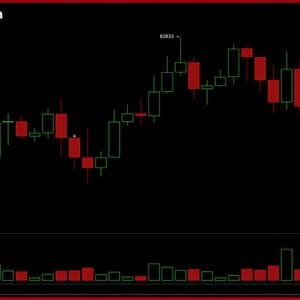
Bitcoin traders absorbed $584 million in long liquidations on Monday as geopolitical pressure and rising Treasury yields dragged the price toward a key onchain support level, according to Bitfinex analysts. BTC Longs Drop $584M in One Session as Bitcoin Tests May Monthly Open Support The sell-off came as Donald Trump posted on social media about
20 May 2026, 19:24
Trump Media drops BTC and ETH ETF plans as fees fall

🚨 Trump Media withdrew its new spot BTC and ETH ETF plans. The market’s fee war forced management to pull applications from the SEC. 🥇 Key point: $BTC ETFs now charge as little as 0.14%, making new products hard to launch. Continue Reading: Trump Media drops BTC and ETH ETF plans as fees fall The post Trump Media drops BTC and ETH ETF plans as fees fall appeared first on COINTURK NEWS .
20 May 2026, 19:10
CME’s XRP Futures Hit $63 Billion Volume in First Year

Chicago Mercantile Exchange (CME) Group is celebrating the one-year anniversary of its XRP futures suite with a massive milestone.
20 May 2026, 19:10
South Korean funeral firm loses $33M of customer prepayments on leveraged crypto ETF

Bumo Sarang, a South Korean funeral mutual aid company, recorded 49.3 billion won ($33 million) in unrealized losses after an audit revealed where it was investing its customers’ prepayment funds. The money was put into a leveraged cryptocurrency ETF tied to Bitmine (NYSE: BMNR), where it crashed and lost over half of its value. An investigation launched into South Korean funeral mutual aid companies revealed that 43% of them hold fewer assets than given to them by customers. Bumo Sarang’s crypto gamble goes wrong South Korea’s funeral mutual aid model works on advance payments. Customers pay upfront to lock in the cost of future funeral services, accumulating pools of capital that companies are expected to hold conservatively. Bumo Sarang, whose name translates roughly to “love for parents,” and is the seventh-largest funeral service provider in South Korea, poured approximately $40 million (59.5 billion won) into a risky bet on crypto. The company invested in the T-REX 2X Long BMNR Daily Target ETF (BMNU), a product designed to double the daily price movement of Bitmine Immersion Technologies (NYSE: BMNR). Cryptopolitan previously reported that Bitmine is the world’s largest corporate holder of Ethereum, with 5.2 million ETH on its balance sheet valued at roughly $12.3 billion. Bitmine purchased over 100,000 ETH per week at its peak before recently slowing to 26,659 ETH in its latest buy. By the end of 2025, Bumo Sarang’s investment book value had crashed to just $6.8 million (10.2 billion won), leaving the funeral company with a staggering 49.3 billion won in unrealized loss. Leveraged ETFs amplify gains and losses equally, so any given trading day, a decline in BMNR stock hits Bumo Sarang’s position at twice the magnitude. Due to the repeated price swings, the products suffer from extreme volatility and have had their value eroded over time, even when the underlying asset ends flat. Bumo Sarang’s initial 59.5 billion won investment fell to a book value of just 10.2 billion won after market declines, producing the 49.3 billion won loss figure. A company representative called it a “short-term unrealized loss” and said it was within the company’s “financial buffer.” What is the ‘zombie’ funeral crisis? An investigative review of 75 South Korean funeral mutual aid companies found that 32 of them, roughly 43%, hold total assets below the sum of their customer advance payments. That gap means these companies may not be able to honor their obligations if large numbers of customers cancel. Local media have described this as a “Zombie Sangjo” (zombie mutual aid) crisis. South Korean funeral companies are supervised by the Fair Trade Commission rather than financial regulators , meaning they face no capital adequacy requirements and no solvency thresholds. Under current law, these companies only need to keep 50% of customer prepayments “safe.” The other half can be invested in almost anything, including leveraged crypto ETFs. Korea Economic Daily reported that this lack of oversight extends across a market worth an estimated 10 trillion won. Investigators also flagged a pattern of related-party lending, where some funeral companies issued loans to major shareholders in amounts exceeding total customer payments. As of May 2026, six legislative proposals are pending to restrict how these companies invest funds and to ban loans to major shareholders. If you're reading this, you’re already ahead. Stay there with our newsletter .
