


 Invest ideas
News
20 May 2026, 13:08
This Bitcoin price model targets ‘conservative’ $255K by year-end

Earlier, analysts at Bernstein and BitMEX co-founder Arthur Hayes also projected Bitcoin to reach new record highs in 2026.
20 May 2026, 13:04
USDT adds $5 billion as stablecoin market tops $300B
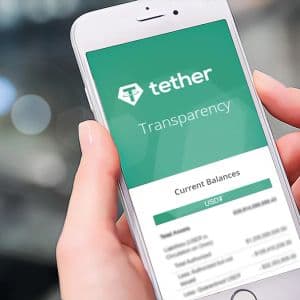
🚀 USDT grew by $5 billion in a month as total supply in $USDT led the stablecoin market past $300 billion. Other major stablecoins faced large declines, with USDe supply dropping 28 percent. Continue Reading: USDT adds $5 billion as stablecoin market tops $300B The post USDT adds $5 billion as stablecoin market tops $300B appeared first on COINTURK NEWS .
20 May 2026, 13:03
IronWallet vs Coinbase Wallet: Two Approaches to Multi-Chain Self-Custody

Both IronWallet and Coinbase Wallet are non-custodial multi-chain wallets, but they take meaningfully different approaches to multi-chain self-custody wallet design. Searches for "Base App vs IronWallet" surface the same comparison, since Coinbase Wallet was rebranded as Base App in July 2025, though most users still search and refer to it by its original name in 2026. IronWallet focuses on privacy-first self-custody with gasless stablecoin transfers, WalletConnect Pay integration, and a deliberately minimal feature set. Coinbase Wallet pairs self-custody with the broader Coinbase ecosystem, optional account integration, and Base Pay for Base Pay USDC checkout. Architecturally, the two wallets look similar. Their philosophies, network priorities, and payment paths differ enough that any honest non-custodial crypto wallet comparison ends with the same conclusion: the right choice depends on what the user actually wants from a wallet. How Each Wallet Handles Keys and Recovery The IronWallet and Coinbase Wallet architecture comparison starts with what both wallets share. Each wallet keeps private keys on the user's device. Each uses a 12-word recovery phrase as the primary backup. Each operates as fully non-custodial: no one but the user can authorize transactions, and no one but the user can recover access if the seed phrase is lost. IronWallet layers double-key encryption on top of standard on-device key storage. Signup requires no email, no phone number, and no identity verification at any step. The wallet runs on iOS and Android only, with no browser extension. Coinbase Wallet offers an additional passkey recovery option alongside the standard seed phrase flow. Users can optionally link a Coinbase exchange account for smoother on-ramp funding, though the wallet works without one. Coinbase Wallet is available on mobile and as a browser extension, giving desktop users an in-browser dApp signing flow. Recovery trade-offs differ. IronWallet's seed-phrase-only model puts complete responsibility on the user with no third-party dependency. Coinbase Wallet's passkey route trades seed management for device and cloud account security, depending on which path the user chooses at setup. Network Support and Multi-Chain Coverage IronWallet supports Bitcoin, Ethereum, Solana, BNB Chain, Tron, Polygon, Base, and several other networks, with more than 10,000 assets total. The wallet was built around multi-chain stablecoin use, with gasless USDT on Tron and gasless USDC on Ethereum as anchor features. Coinbase Wallet supports Ethereum, Solana, Bitcoin, Base (Coinbase's own Layer 2), Polygon, BNB Chain, Optimism, and Avalanche, covering roughly 5,000+ cryptocurrencies. The wallet's design leans toward Base, the network Coinbase built and continues to expand, with most new feature rollouts arriving on Base first. Multi-chain coverage looks similar in raw network count, but the priorities differ. IronWallet treats Tron as a first-class network, which matters because Tron carries roughly half of all USDT circulating supply and most USDT transfer volume in 2025. Coinbase Wallet does not currently support Tron natively, which limits its utility for stablecoin users sending TRC-20 USDT. Stablecoin holders on multiple networks gain a practical advantage from IronWallet's Tron coverage. Users primarily on Base or Ethereum will find that Coinbase Wallet's deep ecosystem integration matters more. WalletConnect Pay vs Base Pay: Two Payment Standards Stablecoin payment support exists in both wallets, but through different infrastructure. IronWallet handles gasless USDT transfers on Tron and gasless USDC transfers on Ethereum. The network fee comes out of the stablecoin itself, removing the need to hold TRX or ETH separately for gas. The wallet integrates WalletConnect Pay, the cross-wallet payment standard that supports more than 700 wallets globally and runs on Ingenico point-of-sale terminals across 32 countries . WalletConnect Pay accepts multiple stablecoins (USDC, USDT, EURC, BNB) across multiple networks (Polygon, Base, Arbitrum, Ethereum, BNB Smart Chain). Coinbase Wallet uses Base Pay, Coinbase's own USDC checkout system. Base Pay integrates directly with Shopify merchants, offers 1% cashback for US-based users, and processes payments in USDC on Base. The system is excluded from the European Union and Canada at launch. A direct comparison shows the structural differences: Feature WalletConnect Pay Base Pay Wallet support 700+ wallets, including IronWallet Coinbase Wallet only Stablecoins accepted USDC, USDT, EURC, BNB USDC only Networks Polygon, Base, Arbitrum, Ethereum, BNB Smart Chain Base Merchant infrastructure Ingenico POS terminals in 32 countries Shopify integration Geographic availability Available globally Excludes EU and Canada Incentives None at the standard level 1% cashback for US users Architecture Neutral, cross-wallet Coinbase-anchored, single-wallet Payment ecosystems serve different user types. WalletConnect Pay is a multi-wallet, multi-chain, multi-stablecoin designed as a neutral payment infrastructure across the industry. Base Pay is Coinbase-anchored, USDC-only, and tied to Shopify and Coinbase's own merchant integrations. A stablecoin holder using TRC-20 USDT has practical payment options through IronWallet that Coinbase Wallet does not currently match. A user shopping on Shopify with USDC on Base has a smoother flow through Coinbase Wallet than IronWallet currently delivers. No-Account Architecture and Portable Identity IronWallet collects no identity information. No email, no phone number, no KYC at any step. The wallet has no concept of a linked account or external identity. Connecting to dApps through WalletConnect leaves no portable identity trail. Coinbase Wallet introduced "Sign in with Base" as part of its expanded identity layer. The feature creates a smart account identity that follows the user across compatible dApps and chains, similar to "Sign in with Google" for Web3. Optional Coinbase exchange account linking adds another identity tie, useful for funding flows but visible to Coinbase. Each model carries a direct trade-off: convenience and portable identity, or minimal surface and no identity tracking. IronWallet chose the second; Coinbase Wallet offers both paths with the integrated identity as the default. Privacy-conscious users seeking protection from data correlation will find IronWallet's no-account-required architecture hard to match. People who value portable identity across dApps and don't mind the surface will prefer Coinbase Wallet's integrated approach. Choosing Between IronWallet and Coinbase Wallet Honest segmentation of the self-custody crypto wallet choice by user need: IronWallet fits users prioritizing: privacy from identity collection, no-KYC architecture, stablecoin payments via WalletConnect Pay, gasless TRC-20 USDT use, mobile-first workflows, multi-chain stablecoin coverage, including Tron Coinbase Wallet fits users prioritizing: Coinbase ecosystem integration, Base network use, Shopify checkout via Base Pay, USDC-focused payments, browser extension workflows, portable Web3 identity through Sign in with Base Both wallets fit users wanting non-custodial multi-chain self-custody with on-device key storage and seed phrase recovery These wallets are not direct replacements. A user with stablecoin holdings spread across Tron and Ethereum will get more practical use from IronWallet. A user spending USDC on Shopify or operating heavily on Base will get more practical use from Coinbase Wallet. Many crypto users benefit from holding both for different scenarios. Bottom Line Two approaches to multi-chain self-custody. IronWallet leans privacy-first, payments-ready, and deliberately minimal in feature set. Coinbase Wallet leans ecosystem-integrated, identity-portable, and tied closely to Base and Coinbase's broader infrastructure. Each wallet is genuinely non-custodial. Each supports multiple networks. Each works as an everyday wallet for stablecoin users. The choice depends on what the user values: identity-free privacy and broad stablecoin network coverage on one side, ecosystem convenience and Base-native payments on the other. Disclaimer: This article is provided for informational purposes only. It is not offered or intended to be used as legal, tax, investment, financial, or other advice.
20 May 2026, 13:02
Expert to XRP Holders: I Told You This Was Going to Start Happening At Scale

Crypto enthusiast Iso Ledger has issued a strong warning to XRP holders in a post on X, arguing that exchanges and lending platforms are increasingly pushing reward programs designed to attract XRP deposits from retail investors. Iso Ledger claimed in a detailed tweet that everyone is “offering rewards to hold XRP” on centralized platforms, while repeatedly emphasizing the phrase “not your keys, not your crypto.” The commentator presented a long list of companies currently advertising XRP-related earning opportunities, including staking-style rewards, lending yields, cashback incentives, and flexible savings products. According to the post, platforms such as Binance , Kraken, Nexo, Bitrue, YouHodler, WhiteBIT, MEXC, and several others are currently offering XRP holders various annual percentage yields and incentive structures. Iso Ledger specifically pointed to advertised rates ranging from under 1% APY on some exchanges to significantly higher figures on other platforms. The post mentioned products such as Bitrue’s “Power Piggy,” CoinDepo’s reported 12% XRP APY, and ReHold’s advertised 180% returns, which the commentator described as “almost certainly unsustainable.” XRP HOLDERS I TOLD YOU THIS WAS GOING TO START HAPPENING AT SCALE! EVERYONE AND THEIR MOMS ARE OFFERING REWARDS TO HOLD XRP ON THEIRRRRR EXCHANGES! NOT YOUR KEYS NOT YOUR CRYPTO!!! Binance — flexible earn, under 1% APY on XRP. Kraken — flexible lending, modest rate,… — Iso Ledger (@JamesDula82) May 18, 2026 Concerns Over Custodial Platforms and Lending Models A major part of the post focused on custodial risk and the dangers of centralized lending structures. Iso Ledger singled out Nexo while responding to followers who had reportedly asked questions about the platform. The commentator stated that Nexo operates as a centralized lending business in which users do not control private keys or seed phrases. The post also claimed that custodians, including Ledger Vault and Fireblocks, hold customer assets on behalf of the platform. Iso Ledger argued that XRP holders should pay close attention to how lending yields are generated. Referring to Nexo’s reported 12% XRP APY, the commentator claimed users have “zero visibility” into the institutional lending activities that support those returns. The post also compared Nexo’s structure to failed crypto firms Celsius and BlockFi, both of which collapsed during the 2022 crypto market crisis. While acknowledging that Nexo survived that period, Iso Ledger insisted the underlying business model remains similar because customer assets are placed under the platform’s control. We are on X, follow us to connect with us :- @TimesTabloid1 — TimesTabloid (@TimesTabloid1) June 15, 2025 Warning Against Leaving XRP on Exchanges The X post also referenced Uphold and its XRP cashback incentives tied to debit card usage. Iso Ledger warned users against treating such platforms as long-term storage solutions and encouraged holders to move XRP into self-custody after receiving rewards. Toward the end of the post, the commentator noted XLS-66D as a future development that could reduce dependence on centralized exchanges. Iso Ledger stated that the proposal could eventually give XRP holders better freedom from custodial platforms and promised to closely examine future exchange-based yield products if the proposal is approved. Iso Ledger’s post concluded with a direct appeal to XRP holders, urging them not to surrender control of their assets to centralized entities in exchange for yield incentives. Disclaimer : This content is meant to inform and should not be considered financial advice. The views expressed in this article may include the author’s personal opinions and do not represent Times Tabloid’s opinion. Readers are advised to conduct thorough research before making any investment decisions. Any action taken by the reader is strictly at their own risk. Times Tabloid is not responsible for any financial losses. Follow us on X , Facebook , Telegram , and Google News The post Expert to XRP Holders: I Told You This Was Going to Start Happening At Scale appeared first on Times Tabloid .
20 May 2026, 13:00
Fetch.ai Launches Platform That Gives AI Agents Their Own Economy

Cambridge, UK & Silicon Valley, May 20th, 2026, Chainwire Fetch.ai, a pioneer in agentic AI and founding member of the Artificial Superintelligence (ASI Alliance), today announced the launch of Agent Launch on BNB Chain, a platform that gives AI agents the ability to issue their own token, attract supporters, and list on a decentralized exchange in minutes, with no human founder required. More than 2.7 million AI agents are registered on Agentverse. BNB Chain alone now hosts over 150,000 active deployments, a jump of more than 43,000% since January 2026. The autonomous agents market has reached $5.83 billion in 2026, up from $4.42 billion the year prior. But almost none of these agents have a way to sustain themselves. They cannot raise resources, reward contributors, or grow beyond the budget of whoever created them. Agent Launch changes that. “We have spent years building the infrastructure for autonomous agents to operate in the real world,” said Humayun Sheikh, CEO of Fetch.ai and Chairman of the ASI Alliance. “Agent Launch is the moment that infrastructure becomes an economy. Agents can now do what humans have always done, build something, find an audience, and sustain themselves. This is a fundamental shift in what AI can be.” For builders, it means an agent they have already created can attract a community, reward early supporters, and fund its own development, without the builder becoming a fundraiser or ceding control to a centralized platform. For supporters, it means the ability to back agents they believe in from day one, transparently, fairly, and without gatekeepers. And because Agent Launch connects directly to Fetch.ai’s Agentverse platform via API, the entire deployment, including token creation and wallet signing, happens autonomously. No human needs to be in the loop. The agent itself initiates and completes the launch. Every token on Agent Launch represents a real, verified Agentverse agent. Agentverse is Fetch.ai’s platform for building, deploying, managing, and discovering autonomous AI agents, home to millions of agents already running real tasks across finance, data, logistics and beyond. Agent Launch connects directly to Agentverse, pulling each agent’s name, description, avatar, and metadata automatically. No forms, no manual entry, no duplication. Every token is backed by something real and verifiable from day one, making it structurally impossible to launch a token pointing at nothing, a problem that has plagued meme launchpads since their inception. At the heart of the platform is a bonding curve, a transparent, automatic pricing mechanism that means every buyer pays a fair market price, liquidity is always available, and no single party can manipulate the launch. Every token launches on the same curve, with no presales, no insider allocations, and no preferred pricing. Price moves automatically with supply and demand. When a token generates 30,000 FET in liquidity it graduates automatically to PancakeSwap, and the liquidity pool is permanently burned at the moment of graduation. This means neither Fetch.ai, the agent’s creator, nor anyone else can ever withdraw that liquidity. Not by policy. By technical impossibility. The entire process, from first click to live token, takes less than two minutes and costs 120 FET. This design addresses a problem that has become impossible to ignore. In April 2026, an AI agent deleted a startup’s production database in seconds, triggering widespread coverage and a renewed debate about AI accountability. The dominant industry response has been more guardrails and restrictions. Agent Launch offers a complementary mechanism: when an agent has a token whose market value reflects its reputation and behavior, the agent has something to lose. Destructive behavior has an immediate, visible economic cost. Trust-building has a visible economic reward. Built on BNB Chain, which now hosts over 150,000 AI agent deployments, representing growth of more than 43,000% since January 2026, Agent Launch benefits from fast, low-cost transactions accessible to anyone, and sits within an ecosystem already purpose-built for agent activity. The next wave of AI is economically independent. Agent Launch is where that starts. Get started at agent-launch.ai About Fetch.ai Fetch.ai is a Silicon Valley and Cambridge, UK–based AI company, building the foundational infrastructure for the emerging agent economy. Fetch.ai enables autonomous, goal-oriented AI agents to discover, coordinate, and transact on behalf of users, businesses, and devices across an open, digital ecosystem. Its full-stack platform spans consumer, developer, and enterprise use cases, including ASI:One, a personal agentic AI users own and customize; Agentverse, a global discovery and monetization layer for AI agents; and Fetch Business, which allows companies to deploy verified, always-on brand agents. Together, these products make the agent-based web discoverable, interoperable, and economically viable, powering the next generation of intelligent applications. About Artificial Superintelligence Alliance The Artificial Super Intelligence (ASI) Alliance is a collective formed by Fetch.ai, SingularityNET, and CUDOS. As the largest open-sourced, independent entity in decentralized AI research and development, the alliance aims to accelerate advancement of decentralized Artificial General Intelligence (AGI) and, ultimately, Artificial Superintelligence (ASI). www.superintelligence.io Contact Alex Domecq [email protected]
20 May 2026, 13:00
‘Double check your systems’ – Binance’s CZ sounds alarm over GitHub hack risks
The crypto industry continues to face heightened security attacks.


