


 Invest ideas
News
20 May 2026, 12:10
Bitcoin Reclaims $77K as Realized Cap Stabilizes and RHODL Ratio Hits Cycle Extreme
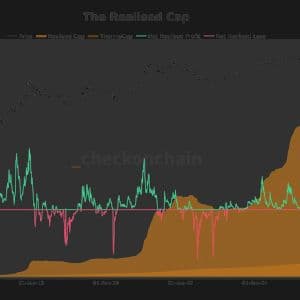
Bitcoin News On-chain data suggests Bitcoin 's deepest correction since the October all-time high may have already bottomed near the February dip toward $60,000. The Realize
20 May 2026, 12:10
Whale's Insight: U.S. Equities Rally To ATH - Why Hasn't Bitcoin Followed?

Summary U.S. equities hit all-time highs on AI and U.S.-China optimism, but BTC stays pinned near $80,000. CPI at 3.8%, PPI at 6.0%, and an untested new Fed Chair mean limited risk capital is reaching crypto. Spot BTC ETFs broke a six-week inflow streak: $635 million out on May 13, $1.26 billion over five days. JPMorgan boosted IBIT 174% in Q1, and the first U.S. Hyperliquid ETF launched on Nasdaq. Perpetual positioning at record net-short. Squeeze fuel building, catalyst still missing. U.S. equities are partying at all-time highs, but BTC can't break out of the $80,000 range, sitting 35-40% below last October's peak. This week: $635 million pulled from spot ETFs in a single day, $500 million in longs liquidated at the 200-day MA, and a new Fed Chair whose first move remains unknown. Yet beneath the surface, JPMorgan quietly tripled its Bitcoin ETF position, and perpetual shorts have hit record levels. Will Bitcoin stay stuck? U.S. Equities Rally to ATH. Why Hasn't Bitcoin Followed? U.S. equities are deep into a risk-on rally. The S&P 500 and Nasdaq continue to print record highs, with the Dow reclaiming the 50,000 level. AI momentum, strong corporate earnings, and optimism around U.S.-China cooperation following the Beijing summit are fueling aggressive equity inflows. Yet, Bitcoin ( BTC-USD ) remains range-bound near $80,000, roughly 35-40% below its October 2025 all-time high above $126,000. Source: @TheBTCTherapist The disconnect has become one of the most discussed questions among investors this week. Two factors explain the divergence: 1 - Bitcoin may have already priced in its risk cycle ahead of equities. As a 24/7 globally traded asset, Bitcoin reprices geopolitical shocks, liquidity shifts, and weekend headlines in real time, while equities wait for the next session open. When BTC hit $126,000 last October, leverage and greed were at extremes, followed by mass liquidations. That was crypto's version of peak risk appetite. U.S. equities, driven by AI trades and the China thaw, appear to be entering a similar euphoric phase now. Bitcoin is not lagging; it may have front-run this cycle. 2 - The real constraint is liquidity. Bitcoin is highly sensitive to global liquidity conditions. Rate cuts, QE expectations, and loose financial conditions drive crypto inflows. The current macro environment offers none of that. April CPI came in at 3.8% YoY, the highest since May 2023. The PPI print was even more striking: 1.4% MoM, the largest monthly jump since March 2022, with YoY at 6.0%, the highest since December 2022. Core PPI hit 5.2% YoY. The inflation pipeline is not cooling; it is accelerating. In this environment, limited risk capital flows to the highest-conviction trades first, which right now means U.S. large-cap tech and AI. The new Fed Chair adds uncertainty. Bitcoin is not without demand, but last week's upward momentum stalled this week as BTC settled back into consolidation near $80,000. Part of the reason may be that the market is front-running the uncertainty around Kevin Warsh's arrival as Fed Chair. Warsh was confirmed on May 13 in a 54-45 vote, replacing Jerome Powell, whose term ends May 15. Risk capital hates uncertainty above all else, and the new chair's policy leanings remain an open question. Warsh's first FOMC meeting is scheduled for June 16-17, and markets are watching whether he will lean toward cuts under political pressure or hold the line on inflation. The 10-year Treasury yield has climbed to 4.54%, its highest since May 2025. For Bitcoin to challenge its prior high above $126,000, a fundamental shift in the liquidity regime is required, and that has not arrived. ETF Inflows Snap, but Institutions Keep Buying the Dip U.S. spot Bitcoin ETFs recorded a $635 million single-day outflow on May 13, the largest since late January. BlackRock's IBIT accounted for nearly half. Over the past five trading days, the 11 listed funds have bled $1.26 billion in total, pulling cumulative net inflows since launch down to $58.5 billion from $59.76 billion a week earlier. The exit came on the same day as the hot PPI print and Warsh's confirmation, erasing in one week what took the March-April inflow streak six weeks to build. By May 15, flows had turned positive again at $131 million, with total net assets at $107.75 billion. The reversal suggests the outflow was reactive rather than structural, but whether inflows can sustain depends on macro conditions stabilizing. Institutions are still accumulating. JPMorgan's Q1 13F filing , published May 13, revealed the bank increased its IBIT holdings by 174% to 8.3 million shares, worth roughly $390 million at current prices. The bank also expanded exposure to Fidelity, Bitwise, and ProShares Bitcoin funds and added new positions in Solana staking and Ethereum-linked ETFs. This accumulation happened while BTC fell over 22% during Q1, indicating a deliberate buy-the-dip posture rather than momentum chasing. Morgan Stanley's spot Bitcoin ETF ( MSBT ), launched April 8, has recorded zero outflow days since inception and accumulated approximately $256 million to date. The altcoin ETF universe continues to expand. 21Shares launched the first U.S. spot Hyperliquid ETF ( THYP ) on Nasdaq on May 12, attracting $1.2 million in net inflows and $1.8 million in trading volume on day one. Analysts described the debut as "very solid" for an altcoin ETF. Bitwise and Grayscale are preparing competing HYPE products. The launch reflects a broader trend: regulated crypto exposure is diversifying beyond BTC and ETH into protocol-specific assets, expanding the institutional access surface. Leveraged Longs Flushed at the 200-Day Line On May 13, over $500 million in long positions were liquidated across the crypto derivatives market as the hot PPI print, BOJ hawkish signals, and Warsh's confirmation converged in a single session. The selloff was triggered at the 200-day moving average near $82,000, which has acted as key resistance throughout this rally. On-chain data adds context. As BTC approached $80,000, short-term holders realized profit spiked to $4 million per hour, roughly 4x the April baseline. The selling pressure from profit-taking overwhelmed buy-side demand at that level. The short-term holder cost basis distribution heatmap confirms dense supply concentration around $79,000-$82,000, making this zone a structural ceiling until absorbed. Looking at positioning, perpetual futures directional premium has flipped to a record net-short position. Historically, such extreme short-side crowding has often preceded inflection points. The fuel for a short squeeze is accumulating, but requires a catalyst. The liquidation heatmap reinforces this setup: dense short liquidation clusters sit above $82,000, while long liquidation concentration builds below $78,000. A decisive move in either direction will trigger cascading forced closures. Week Ahead Ongoing: CLARITY Act full Senate floor timeline; Ongoing: U.S.-China post-summit bilateral outcomes; May 20: FOMC Minutes (April 28–29 meeting); and May 22: UMich Consumer Sentiment, Final May The CLARITY Act now needs 60 votes on the full Senate floor, with direct implications for crypto-exposed equities like Coinbase and Circle. Watch for stock price volatility around the vote timeline. On the macro side, Wednesday's FOMC minutes deserve close attention. The April meeting saw four dissents, the most since 1992. Governor Miran voted for a cut; three regional presidents objected to language perceived as dovish. With CPI at 3.8% and the Iran energy shock unresolved, the minutes will reveal whether the internal split is merely about timing or whether rate hikes have formally entered the discussion. The U.S.-China summit is expected to yield cooperation frameworks across AI, energy, and trade. Monitor related statements closely. Disclaimer: The information provided herein does not constitute investment advice, financial advice, trading advice, or any other sort of advice and should not be treated as such. All content set out above is for informational purposes only. Original Post
20 May 2026, 12:02
Chainlink and RWA: Why LINK Could Matter in Tokenized Finance

Real-world asset tokenization has become one of crypto’s most serious infrastructure narratives. Instead of focusing only on speculative tokens, the RWA sector is trying to bring assets such as Treasuries, private credit, money market funds, commodities, and other financial instruments onto blockchain rails. That shift creates a practical problem. Tokenized finance does not work simply because an asset is represented by a token. It needs reliable data, reserve transparency, cross-chain movement, settlement logic, compliance-aware workflows, and connections to existing financial systems. This is where Chainlink becomes relevant. Chainlink is often described as an oracle network, but its role in tokenized finance now reaches beyond price feeds. Its infrastructure includes off-chain data delivery, Proof of Reserve, cross-chain messaging through CCIP, and institutional tokenization workflows. For LINK holders and crypto researchers, the key question is not whether RWA is a popular market narrative. It is whether Chainlink can become a useful infrastructure layer for tokenized finance — and whether LINK captures meaningful value from that role. Key Takeaways PointDetailsChainlink is infrastructure, not an RWA issuerChainlink does not usually tokenize assets directly. Its role is data, interoperability, automation, and verification.RWA needs trusted informationTokenized funds, Treasuries, credit products, and stablecoins need reliable NAV, reserve, pricing, and settlement data.CCIP is central to the thesisChainlink’s Cross-Chain Interoperability Protocol supports cross-chain token transfers, messaging, and programmable transfers.LINK value capture is not automaticLINK may benefit if Chainlink usage creates durable fees, staking demand, Payment Abstraction flows, or reserve accumulation.Institutional pilots matter, but they are not guaranteesWork with financial institutions is important, but pilots do not automatically translate into token price appreciation.The risks remain significantLINK faces competition, regulatory uncertainty, tokenomics questions, market volatility, and possible delays in RWA adoption. The RWA Opportunity Is Really an Infrastructure Problem Tokenized finance is often described as “putting real-world assets on-chain,” but that phrase hides the hard part. A tokenized Treasury product, fund share, or private credit instrument is not useful just because it exists as a blockchain token. It becomes useful when the token reliably represents ownership, stays connected to real-world data, settles correctly, and follows the rules that apply to the underlying asset. That means tokenized finance needs more than smart contracts. It needs trusted data sources, reserve checks, identity-aware transfer rules, payment connections, and infrastructure that can work across different chains and institutional systems. RWA.xyz tracks tokenized real-world asset activity across public blockchains, including categories such as tokenized Treasuries, commodities, private credit, stablecoins, and other asset classes. The exact numbers change over time, but the market has already moved beyond theory into measurable on-chain activity. ( RWA.xyz ) For investors, the important point is that RWA growth may not only benefit asset issuers. It may also benefit the infrastructure providers that make tokenized assets usable, verifiable, and transferable. Where Chainlink Fits Into Tokenized Finance Chainlink’s role in RWA can be understood through four infrastructure layers: data, reserves, interoperability, and institutional workflow integration. Data for tokenized assets Blockchains cannot automatically know the net asset value of a fund, the yield of a tokenized Treasury product, the reserves behind a stablecoin, or the price of an off-chain asset. That information has to come from outside the blockchain. Chainlink’s oracle networks are designed to bring external data on-chain so smart contracts can use it. In DeFi, this has historically meant price feeds. In tokenized finance, the data problem is broader. Tokenized funds and other RWA products may need NAV, AUM, yields, reserve data, corporate actions, and settlement information. Chainlink’s SmartData product is positioned around bringing financial data such as NAV, AUM, yields, and reserves on-chain for tokenized assets. This matters because tokenized assets need more than a ticker symbol. They need reliable financial context that can move with them across blockchain environments. ( Chainlink SmartData ) Reserve transparency Many tokenized assets depend on off-chain collateral. A stablecoin may claim to be backed by cash and Treasuries. A wrapped asset may claim to be backed by another asset held elsewhere. A tokenized fund may represent claims on a portfolio held by a custodian. Chainlink Proof of Reserve is designed to verify cross-chain and off-chain reserves backing tokenized and wrapped assets. This can help reduce hidden collateral risk by making reserve information available to smart contracts and market participants. ( Chainlink Proof of Reserve ) Proof of Reserve does not remove all trust. Investors still need to understand the issuer, custodian, legal structure, redemption rights, and audit process. However, reserve data can make certain risks more visible and programmable. Cross-chain movement RWA markets are unlikely to live on a single blockchain. Institutions may use permissioned systems. DeFi users may use public chains. Liquidity may exist across Ethereum, Layer-2 networks, appchains, and other environments. Chainlink’s Cross-Chain Interoperability Protocol, or CCIP, is designed for cross-chain token transfers, messaging, and programmable token transfers. In an RWA context, this matters because tokenized assets may need to move between chains while preserving data, permissions, and settlement instructions. ( Chainlink CCIP Documentation ) A basic bridge may not be enough for institutional finance. Tokenized assets often need more controlled movement, especially when compliance, transfer restrictions, or institutional settlement processes are involved. Why LINK Could Have a Role in the RWA Thesis The LINK token is central to the Chainlink ecosystem, but investors should be precise. “Chainlink is useful” and “LINK must appreciate” are not the same statement. LINK may matter if Chainlink adoption creates durable demand for network services, staking, fee payments, reserve accumulation, or other mechanisms that connect real usage to token economics. The strength of the LINK thesis depends on whether Chainlink can translate infrastructure demand into measurable value capture. LINK and staking Chainlink Staking allows participants to commit LINK in smart contracts to support performance guarantees around oracle services. Chainlink describes staking as part of its Economics 2.0 model, adding a cryptoeconomic security layer to the network. ( Chainlink Staking ) This could become more relevant as tokenized finance grows. If more value depends on Chainlink services, the argument for stronger economic security may become more important. However, staking does not eliminate market risk, and reward structures can change over time. Payment Abstraction and the Chainlink Reserve One common concern around infrastructure tokens is value capture. If institutions use Chainlink but pay in stablecoins, fiat, or gas tokens, does that help LINK? Chainlink introduced Payment Abstraction to reduce payment friction by allowing users to pay for Chainlink services in preferred assets while payments can be converted into LINK through Chainlink services and decentralized exchange infrastructure. Chainlink also launched the Chainlink Reserve, designed to accumulate LINK from off-chain and on-chain revenue sources. ( Chainlink Reserve Announcement ) This is an important part of the LINK thesis because it attempts to connect broader Chainlink usage with LINK demand. Still, investors should evaluate the scale, timing, transparency, and consistency of these mechanisms rather than assuming they will automatically dominate market supply dynamics. Institutional Signals: What Matters and What Does Not Chainlink has attracted attention because of its work with financial institutions and market infrastructure providers. These signals are worth studying, but they should not be treated as automatic investment conclusions. DTCC Smart NAV pilot DTCC’s Smart NAV pilot explored how trusted net asset value data could be made available across blockchain networks. DTCC described the pilot as a way to support business workflows by bringing structured, verifiable data to blockchain environments, with Chainlink CCIP serving as an interoperability layer. ( DTCC Smart NAV Pilot ) For Chainlink, this is relevant because fund tokenization depends heavily on accurate NAV data. A tokenized fund cannot function properly if the market cannot trust the data that defines its value. Swift, UBS, and tokenized fund settlement Swift, UBS Asset Management, and Chainlink completed a pilot under Singapore’s Project Guardian that explored how existing Swift infrastructure could support off-chain cash settlement for tokenized fund subscriptions and redemptions. ( Swift, UBS, and Chainlink Pilot ) The practical point is not that traditional finance will immediately move fully on-chain. It is that tokenized finance needs middleware that can connect blockchain networks with existing payment, messaging, and settlement systems. Investors should distinguish between proof of concept, pilot, production use, and scaled adoption. A pilot can validate technical feasibility, but recurring revenue and broad market usage are stronger signals. How to Evaluate Chainlink Beyond the RWA Hype A serious LINK thesis should not rely only on social media narratives. Chainlink may be well positioned for tokenized finance, but investors still need a framework for separating real adoption from market excitement. Check which Chainlink service is actually being used Not every Chainlink integration has the same significance. A price feed integration, Proof of Reserve feed, CCIP deployment, SmartData use case, or institutional workflow each has a different impact. The more mission-critical the service, the stronger the infrastructure argument. Separate adoption from token value capture Chainlink adoption can be positive for the network, but LINK value capture depends on economics. Investors should look for recurring service payments, staking demand, reserve accumulation, Payment Abstraction flows, and evidence that usage creates measurable demand for LINK. A weak thesis says: “A major institution tested Chainlink, so LINK must rise.” A stronger thesis asks: “Does this integration create recurring demand for Chainlink services, and how does that demand interact with LINK?” Watch cross-chain activity CCIP is one of Chainlink’s most important RWA-related products. If tokenized assets spread across multiple chains, interoperability becomes more valuable. If institutions mostly use isolated private ledgers, the public-chain opportunity may develop more slowly. Useful signals include more supported chains, more tokenized asset projects using CCIP, higher message and transfer activity, more institution-facing integrations, and clearer evidence of recurring usage. Compare Chainlink with competing infrastructure Chainlink does not operate without competition. Other oracle providers, interoperability protocols, data networks, and institution-built systems may compete for parts of the same market. Chainlink’s advantage is its established oracle brand, broad DeFi footprint, institutional relationships, and expanding product suite. Its challenge is proving that those advantages can translate into durable economics for the network and LINK token. Main Risks for LINK and Tokenized Finance A balanced Chainlink RWA analysis has to include risks. Tokenization may grow, but not necessarily in the way crypto investors expect. Tokenization may happen in closed systems Institutions may tokenize assets on permissioned networks with limited public-chain composability. Chainlink could still play a role in that world, but the benefit to open DeFi markets may be slower or narrower than crypto investors hope. LINK value capture is not guaranteed Even if Chainlink becomes widely used, LINK’s market performance depends on fee design, staking demand, liquidity, supply dynamics, investor expectations, and broader market conditions. Infrastructure adoption does not always translate directly into token appreciation. Regulatory uncertainty remains high Tokenized funds, credit products, securities, and yield-bearing assets may face strict regulatory requirements. Rules vary by jurisdiction and can change. This affects issuers, exchanges, DeFi integrations, custodians, and users. This article is for educational purposes only and should not be treated as financial, legal, or tax advice. Smart contract and oracle risks still exist Chainlink is designed to reduce certain data and interoperability risks, but no system is risk-free. Oracle failures, incorrect data, smart contract bugs, bridge vulnerabilities, governance issues, or integration errors can still create losses. RWA liquidity can be misunderstood Tokenization does not automatically make illiquid assets liquid. A tokenized private credit product can still have lockups, limited buyers, redemption restrictions, or thin secondary markets. Investors should read the product terms instead of assuming every tokenized asset trades like a liquid crypto token. Practical Checklist Before Building a LINK Thesis Before buying, trading, or researching LINK because of the RWA narrative, use a disciplined checklist. Identify the actual Chainlink service: Is the project using Price Feeds, Proof of Reserve, CCIP, SmartData, Automation, or an institutional workflow standard? Check whether the integration is live: A production deployment matters more than a vague partnership announcement. Look for recurring demand: One-off pilots are less important than repeatable service usage. Study LINK value capture: Look for staking demand, Payment Abstraction flows, reserve accumulation, or other measurable economic mechanisms. Evaluate the RWA product itself: Tokenized assets still need credible issuers, custodians, redemption rules, legal claims, and compliance controls. Watch market expectations: A strong long-term narrative can still be a poor entry if the market has already priced in aggressive growth. Define what would disprove the thesis: Weak CCIP adoption, limited institutional usage, stronger competitors, or unclear token economics could all weaken the case. The goal is not to decide whether LINK is “good” or “bad” based on a headline. The goal is to understand whether Chainlink’s infrastructure is becoming more necessary as tokenized finance matures — and whether that usage creates durable relevance for LINK. Crypto Daily Perspective For readers following tokenized finance, Chainlink is one of the infrastructure projects worth monitoring closely. Its RWA relevance comes from the practical needs of tokenized markets: data, reserve verification, cross-chain movement, and institutional connectivity. Crypto Daily covers these themes to help readers separate durable crypto infrastructure from short-term market hype. As RWA grows, the most important question may not be which tokenized asset launches next, but which networks become necessary for those assets to function safely and efficiently. ( Crypto Daily ) Frequently Asked Questions Is Chainlink an RWA project? Chainlink is not primarily an RWA issuer. It is an oracle and blockchain infrastructure network that can support RWA applications through data feeds, Proof of Reserve, SmartData, CCIP, and institutional workflow tools. Why is Chainlink important for tokenized assets? Tokenized assets need reliable off-chain data, reserve verification, cross-chain communication, and links to existing financial systems. Chainlink provides infrastructure designed to solve several of these problems. Does LINK directly represent real-world assets? No. LINK does not represent a Treasury, fund, commodity, or credit product. It is the native token used within the Chainlink ecosystem for functions such as staking, payments, and network economics. Could RWA adoption increase demand for LINK? It could, but it is not guaranteed. The thesis depends on whether Chainlink’s RWA-related services create recurring fees, staking demand, Payment Abstraction flows, reserve accumulation, and broader network usage. What is Chainlink CCIP? CCIP is Chainlink’s cross-chain interoperability protocol. It allows developers to build applications that transfer tokens, messages, or both across different blockchains. What are the biggest risks of investing in LINK for the RWA narrative? Key risks include crypto volatility, uncertain token value capture, competition, regulatory delays, institutional adoption moving slowly, smart contract risk, and market hype getting ahead of real usage. Is LINK a good long-term RWA investment? That depends on the investor’s risk tolerance, time horizon, and view of Chainlink’s ability to capture value from tokenized finance. LINK may be relevant to the RWA infrastructure thesis, but it should be researched carefully and not treated as a guaranteed winner. Disclaimer: This article is provided for informational purposes only. It is not offered or intended to be used as legal, tax, investment, financial, or other advice.
20 May 2026, 12:02
Analyst Says BlackRock Insider Leak Exposed Their Final XRP ETF Plan

Crypto analyst BullRunners recently shared an opinion suggesting that BlackRock not yet filing for an XRP exchange-traded fund may not indicate a lack of interest in XRP. Instead, the analyst suggested that the world’s largest asset manager could already be strategically involved in Ripple’s infrastructure while remaining silent publicly. BullRunners opened the discussion by claiming that seven spot XRP ETFs are already live and trading in the United States. According to the analyst, the products collectively manage more than $1.5 billion in assets while hundreds of millions of XRP tokens remain locked in custody. He argued that BlackRock’s absence from the market stands out because competing firms such as Franklin Templeton, Grayscale, Bitwise, and Canary Capital have already moved forward with XRP-related products. Ripple #XRP IT'S ALL RIGGED! BlackRock Insider Leak Exposed Their Final XRP ETF Plan… pic.twitter.com/4rxwaq1meu — BULLRUNNERS (@BullrunnersHQ) May 18, 2026 Comparison With BlackRock’s Bitcoin ETF Strategy A major part of the presentation focused on BlackRock’s previous approach to Bitcoin ETFs. BullRunners pointed to the launch of BlackRock’s iShares Bitcoin Trust, known as IBIT, and said the company historically waits until market conditions strongly favor approval before filing products with regulators. The analyst stated that BlackRock has submitted hundreds of ETF applications over the years and has faced very few rejections from the U.S. Securities and Exchange Commission. He argued that the firm prefers its competitors to market first. BullRunners compared that strategy to the current XRP market, noting that multiple companies have already launched or proposed XRP investment products while BlackRock has remained publicly inactive. He suggested this silence may represent a deliberate strategy rather than a lack of interest. Ripple Conference Appearance Draws Attention The video also highlighted BlackRock’s participation in Ripple’s Swell conference in late 2025 . BullRunners referenced comments allegedly made by Maxwell Stein, BlackRock’s director of digital assets, during the event. According to the analyst, Stein praised Ripple’s infrastructure and stated that blockchain systems built by companies like Ripple could facilitate trillions of dollars in value movement in the future. BullRunners argued that BlackRock’s decision to send a senior executive to Ripple’s private institutional conference contradicts the idea that the company lacks interest in XRP-related infrastructure. BullRunners further discussed BlackRock’s BUIDL tokenized money market fund and its reported integration with RLUSD through Securitize on the XRP Ledger. He claimed this demonstrates that BlackRock’s products are already connected to Ripple-based infrastructure in a real-world environment. We are on X, follow us to connect with us :- @TimesTabloid1 — TimesTabloid (@TimesTabloid1) June 15, 2025 Focus on BlackRock Executive Robert Mitchnick Another key section of the video centered on Robert Mitchnick, BlackRock’s global head of digital assets. BullRunners noted that Michnik reportedly interned at Ripple in 2017 and later co-authored crypto valuation research alongside Ripple board member Susan Athey. The analyst argued that Mitchnick’s prior relationship with Ripple makes BlackRock’s current position on XRP more significant. BullRunners repeatedly questioned why the company has not filed for an XRP ETF despite its connections and involvement in tokenized asset infrastructure linked to Ripple technology. Throughout the video, BullRunners maintained that institutional investors often position themselves privately before making public announcements. He suggested that BlackRock may already be preparing for future XRP involvement behind the scenes, though he acknowledged that no official XRP ETF filing from BlackRock currently exists. Disclaimer : This content is meant to inform and should not be considered financial advice. The views expressed in this article may include the author’s personal opinions and do not represent Times Tabloid’s opinion. Readers are advised to conduct thorough research before making any investment decisions. Any action taken by the reader is strictly at their own risk. Times Tabloid is not responsible for any financial losses. Follow us on X , Facebook , Telegram , and Google News The post Analyst Says BlackRock Insider Leak Exposed Their Final XRP ETF Plan appeared first on Times Tabloid .
20 May 2026, 12:00
Algorand rallies off Robinhood news, keeps April’s bullish breakout going
Algorand raced higher by nearly 7% for the day following news that ALGO trading was live on Robinhood.
20 May 2026, 12:00
Ripple And Project Eleven Join Forces To Make XRP Ledger Quantum-Ready

A full audit of the XRP Ledger’s validators, custody systems, wallets, and networking layers is now underway, led by quantum security firm Project Eleven in collaboration with Ripple. The review is part of a broader push to prepare the XRP Ledger ecosystem for a future where quantum computers could threaten the cryptographic systems that blockchains currently rely on. Related Reading: XRP Will Go ‘Higher, Much Higher,’ Analyst Says, Betting On Explosive Breakout Project Eleven’s Scope Goes Beyond Research Project Eleven described the collaboration as one of the first major efforts in the industry to move post-quantum blockchain security out of the theoretical stage and into real-world deployment. The firm said the work will produce actual code, real-world performance testing, and a roadmap toward production. Plans also include building hybrid signature systems that combine current cryptographic standards with quantum-resistant protections, along with a prototype quantum-secure custody wallet. Alex Pruden, CEO of Project Eleven, said most conversations around quantum risk in the blockchain space have stayed at the research level. Ripple, he said, is treating it as a practical engineering problem. The $XRP Ledger is built for the Quantum Era. It runs on a native account based architecture with built in key rotation. This allows businesses, projects, and users to seamlessly switch to quantum-resistant signatures while keeping the exact same r-addresses their customers… https://t.co/ydDVSrdFkL pic.twitter.com/cXij19CNq1 — XRP Ledger Foundation (@XRPLF) May 19, 2026 The US government has set a 2035 deadline for federal systems to move away from encryption standards considered vulnerable to quantum attacks. Google and Cloudflare have both targeted 2029 for their own transitions to quantum-safe systems. XRP Ledger’s Built-In Advantages The XRP Ledger Foundation said the network is not starting from scratch. According to the foundation, XRPL already supports key rotation and coordinated validator upgrades, features that give it structural advantages as the broader ecosystem moves toward quantum-resistant cryptography. One detail the foundation highlighted: users and businesses will be able to switch to quantum-resistant signatures without changing their existing XRP wallet addresses. Those addresses, known as r-addresses, are already recognized by customers. Keeping them intact during a migration removes a significant technical and operational hurdle. J. Ayo Akinyele, head of engineering at RippleX, said the goal is to have XRPL production-ready well before quantum threats become a real danger. Related Reading: Zcash Soars 88% In 30 Days: Is ZEC The Stealth Winner Of This Crypto Cycle? According to Project Eleven, the Ripple partnership is its most comprehensive blockchain security engagement to date. The cryptography protecting major blockchains including Bitcoin, Ethereum, XRP, and Solana could eventually be broken by advanced enough quantum computers, the firm said. Featured image from Unsplash, chart from TradingView


