


 Invest ideas
News
19 May 2026, 20:47
Even a mountain of T-bills won't save Tether and Circle from a sudden liquidity crisis, expert says
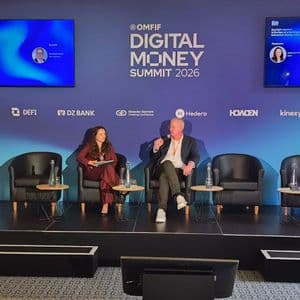
The head of digital assets and tokenization at one of Germany’s largest asset managers said that USDT and USDC are not stablecoins, from his perspective.
19 May 2026, 20:40
Musk’s Lawsuit Against OpenAI Failed — But the Trial Revealed His Own Similar Ambitions

BitcoinWorld Musk’s Lawsuit Against OpenAI Failed — But the Trial Revealed His Own Similar Ambitions A jury’s swift rejection of Elon Musk’s lawsuit against Sam Altman, Greg Brockman, and Microsoft last week confirmed what many courtroom observers noted: Musk’s case was legally weak, in part because he waited years to file it. The trial, however, exposed uncomfortable parallels between Musk’s own actions and the very behavior he accused his former co-founders of. The Case Against Altman — and What It Overlooked Musk’s central claim was that Altman and Brockman breached a charitable trust by diverting OpenAI’s nonprofit resources to a for-profit entity, enriching themselves in the process. During closing arguments, OpenAI’s attorneys systematically dismantled the legal basis of the claim, while Musk’s team focused heavily on Altman’s credibility — a strategy that ultimately failed to sway the jury. But testimony revealed that Musk himself had redirected OpenAI’s resources for his own benefit. In 2017, Greg Brockman testified that Musk asked him to bring a team of OpenAI researchers — including Andrej Karpathy, Ilya Sutskever, and Scott Grey — to Tesla’s headquarters to assist a “demoralized” autopilot team. The scientists worked for weeks on Tesla’s self-driving technology without reimbursement to OpenAI. Musk also asked Brockman to recommend Tesla employees to fire, a request Brockman declined. Another source familiar with the incident confirmed Brockman’s account, noting that Tesla did not compensate OpenAI for the time and expertise of its staff. Musk’s family office, Excession, did not respond to requests for comment. A Double Standard on Charitable Trust The irony was not lost on legal experts. Dorothy Lund, a professor at Columbia Law School and co-host of the Beyond Unprecedented podcast, told Bitcoin World that Musk’s lawsuit appeared hypocritical. “It’s a bit rich for Musk to be suing for breach of a charitable trust, when he appears to have been redirecting assets in a way that was inconsistent with that mission,” she said. Musk’s donations to OpenAI, which he deducted from his taxes, funded scientists hired to secure the benefits of artificial general intelligence. Yet he then used those same scientists for free at his for-profit car company. While Tesla’s self-driving work involved AI, witnesses for Musk emphasized it was distinct from OpenAI’s core research agenda. OpenAI’s attorneys, however, portrayed the episode as a violation of Musk’s duty to the lab — especially after Karpathy left OpenAI for Tesla shortly afterward. Musk’s Own Push for Control Another critical fact that emerged during the trial was Musk’s extensive efforts in 2017 to gain sole control of a potential OpenAI for-profit affiliate. He deployed a mix of incentives and threats — offering co-founders free Teslas while threatening to withhold donations — in an attempt to secure total control. His attorneys struggled to convince the jury that Musk’s vision for a “small adjunct” for-profit was fundamentally different from the one Altman eventually created. Testimony from Musk’s own associates revealed that he refuses to invest in any business he cannot control. This made it harder for the jury to see Musk as a victim of a charitable trust violation when he had actively sought a similar arrangement. Why the Statute of Limitations Mattered Some have dismissed the jury’s decision as a technicality, but the statute of limitations has substantive purpose: it prevents parties from waiting years to unwind decisions made in good faith. The jury was asked to consider whether Musk should have known before August 5, 2021, that OpenAI was spending resources outside its mission or launching a for-profit affiliate. The evidence suggested Musk himself was involved in those very activities. Conclusion The trial did not just vindicate Altman and Brockman — it revealed that Musk’s own actions mirrored the misconduct he alleged. His lawsuit, filed years after the fact, failed not because of a legal technicality, but because the facts undercut his claims. The case serves as a reminder that accusations of charitable trust violations require clean hands, and the courtroom proved Musk’s were not as clean as he argued. FAQs Q1: Why did the jury reject Elon Musk’s lawsuit against OpenAI? The jury found that Musk waited too long to file his claims, and that his own actions — including redirecting OpenAI researchers to work for free at Tesla — undermined his accusations of breach of charitable trust. Q2: Did Elon Musk benefit from OpenAI’s nonprofit resources? Yes. Testimony showed that in 2017, Musk asked OpenAI to send top researchers to help Tesla’s autopilot team without reimbursement, effectively using nonprofit-funded talent for his for-profit company. Q3: What was Musk’s main legal argument? Musk argued that Sam Altman and Greg Brockman breached a charitable trust by diverting OpenAI’s nonprofit assets to a for-profit entity, enriching themselves. The court found the claim unsupported by the evidence and barred by the statute of limitations. This post Musk’s Lawsuit Against OpenAI Failed — But the Trial Revealed His Own Similar Ambitions first appeared on BitcoinWorld .
19 May 2026, 20:35
Ripple and XRPL Foundation Team Up on Quantum Security

Ripple and the XRP Ledger Foundation have joined forces with cryptography firm Project Eleven to future-proof the XRP Ledger (XRPL) against looming quantum computing threats. Moving beyond theoretical research,.
19 May 2026, 20:34
Data shows Bitcoin dip buyers waiting for lower prices: Is $70K BTC’s next stop?

Bitcoin futures and orderbook data show dip buyers waiting for a BTC price drop below $70,000.
19 May 2026, 20:30
Wintermute-Linked Wallets Receive 500 BTC Worth $38M From Decade-Old Bitcoin Holder
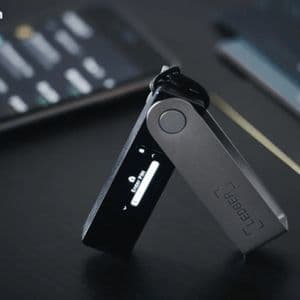
With bitcoin drifting just beneath the $77,000 range, a whale moved a cache of 500 BTC from a wallet established more than a decade ago. The funds appear to have flowed through the over-the-counter (OTC) desk Wintermute and a wallet identified as a Binance deposit address. Bitcoin Whale Moves 500 BTC; Assets Likely Sold A
19 May 2026, 20:30
This bitcoin bear market is different with 'uniquely pessimistic' traders limiting downside, K33 says
The research firm said bitcoin traders remain unusually defensive, reducing the risk of the kind of leverage-driven collapse seen in prior downturns.


