


 Invest ideas
News
6 Jun 2026, 13:55
HTX Delists WLFI and USD1 Amid Sanctions Dispute, Converts User Balances to USDT

BitcoinWorld HTX Delists WLFI and USD1 Amid Sanctions Dispute, Converts User Balances to USDT Cryptocurrency exchange HTX has officially ceased trading support for World Liberty Financial (WLFI) and its associated stablecoin, USD1, following a deepening dispute over sanctions compliance. The exchange also converted all existing USD1 balances on its platform to USDT, crediting the equivalent value to user accounts. Background of the Dispute The conflict traces back to May, when World Liberty Financial froze on-chain addresses linked to HTX. The move came after the United Kingdom added HTX to its sanctions list, citing concerns over financial crime and illicit activity. WLFI argued the freeze was necessary to comply with international sanctions regulations. HTX, however, has contested the freeze, claiming it was implemented without sufficient prior consultation or a clear legal basis. The exchange stated that the action unfairly restricted some users from trading their WLFI holdings, particularly those who had no direct connection to sanctioned entities. HTX’s Response and User Impact In response to the freeze, HTX suspended all WLFI trading pairs and halted USD1 deposits and withdrawals. To mitigate disruption for its user base, the exchange automatically converted all USD1 balances to USDT, a widely accepted stablecoin with deeper liquidity. The converted amounts were credited directly to user accounts. HTX has publicly emphasized that the frozen addresses belong to regular retail users, not sanctioned individuals or the exchange itself. The company has urged WLFI to lift the freeze, arguing that the action penalizes innocent traders caught in a broader regulatory crossfire. Why This Matters for Crypto Traders This incident highlights a growing tension between decentralized finance projects and centralized exchanges operating under conflicting regulatory regimes. For users, the dispute underscores the risk of holding tokens tied to projects that may unilaterally freeze addresses based on geopolitical sanctions. It also raises questions about due process and user protection when compliance decisions are made without transparent legal review. The conversion of USD1 to USDT, while providing immediate liquidity, also illustrates how exchange-level decisions can reshape user portfolios without direct consent. Traders holding WLFI or USD1 on HTX are now effectively forced into alternative positions. Conclusion The HTX-WLFI dispute serves as a case study in the complex interplay between sanctions enforcement, decentralized token projects, and centralized exchange operations. As regulatory pressure on crypto platforms intensifies globally, similar conflicts are likely to emerge. For now, HTX users have seen their USD1 balances converted, while WLFI holders on the exchange face an uncertain path to trading their tokens. The broader industry will be watching closely to see whether WLFI responds to HTX’s request to lift the freeze, and whether regulatory bodies clarify the legal boundaries of such actions. FAQs Q1: What happened to my USD1 balance on HTX? HTX automatically converted all USD1 balances to USDT and credited the equivalent value to your account. You can now trade or withdraw USDT as usual. Q2: Can I still trade WLFI on HTX? No. HTX has suspended all WLFI trading pairs. You cannot buy, sell, or transfer WLFI on the platform at this time. Q3: Why did WLFI freeze HTX-related addresses? WLFI stated it froze the addresses to comply with UK sanctions after HTX was added to the UK sanctions list. HTX disputes the legal basis and claims the freeze was implemented without proper consultation. This post HTX Delists WLFI and USD1 Amid Sanctions Dispute, Converts User Balances to USDT first appeared on BitcoinWorld .
6 Jun 2026, 13:53
Bitcoin rebounds as Saylor outlines four community factions

🚨 Michael Saylor says the $BTC community now has four clear ideological camps. 💬 Maximalists, capitalists, technologists, and fundamentalists each shape Bitcoin’s future differently. 📈 Saylor believes balance between these groups is key to long-term network strength. Continue Reading: Bitcoin rebounds as Saylor outlines four community factions The post Bitcoin rebounds as Saylor outlines four community factions appeared first on COINTURK NEWS .
6 Jun 2026, 13:50
Hype-Driven Rallies Unwind: NEAR and WLD Round-Trip as Zcash Rebounds 18% From Its 50% Drop

Two of the crypto market’s hottest recent rallies have fully unwound, with Near Protocol’s NEAR and the Worldcoin token WLD round-tripping to their pre-rally levels, even as Zcash’s ZEC rebounded roughly 18% in 24 hours following a near-50% crash. Zcash Whipsaws On an Orchard Pool Flaw The sharpest swing belonged to zcash given ZEC had
6 Jun 2026, 13:38
XRP Kickstarts June With Weak ETF Performance as Price Volatility Intensifies
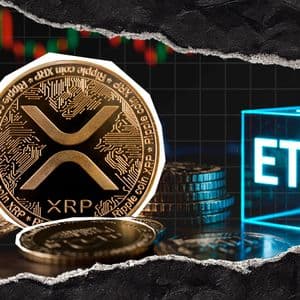
XRP ETFs have recorded the lowest weekly inflow since the past five weeks as momentum begins to slow in the new month and lesser capital entering into the product.
6 Jun 2026, 13:35
Michael Saylor: Bitcoin Remains the Superior Long-Term Asset Amid AI-Driven Market Shifts
BitcoinWorld Michael Saylor: Bitcoin Remains the Superior Long-Term Asset Amid AI-Driven Market Shifts MicroStrategy co-founder and executive chairman Michael Saylor has reiterated his conviction that Bitcoin remains the superior asset for long-term investors, even as global capital flows are being reshaped by the rapid expansion of artificial intelligence infrastructure. In a post on X, Saylor acknowledged that the construction of AI infrastructure is absorbing capital on a historic scale, creating temporary pressure across global markets. However, he argued that this trend does not weaken Bitcoin’s position but instead reinforces the need for scarce, liquid digital capital. Saylor’s Argument in Context Saylor’s comments come at a time when major technology companies and governments are pouring unprecedented sums into AI data centers, chips, and energy infrastructure. This capital absorption has contributed to tighter liquidity conditions in traditional markets, with some analysts drawing parallels to the macroeconomic effects of large-scale industrial mobilization. Saylor, however, views this as a validation of Bitcoin’s core value proposition. He contends that in an environment where vast amounts of capital are being deployed into long-duration, capital-intensive projects, the scarcity and portability of Bitcoin become increasingly attractive. MicroStrategy’s Continued Bitcoin Strategy MicroStrategy, under Saylor’s leadership, has accumulated approximately 214,400 Bitcoin as of early 2025, making it the largest corporate holder of the cryptocurrency. The company has consistently used debt and equity offerings to fund its Bitcoin purchases, a strategy that has drawn both praise and criticism. Saylor’s latest statement reinforces the company’s long-term thesis: that Bitcoin is a digital store of value superior to traditional assets like gold, real estate, or bonds, particularly in an era of monetary expansion and technological disruption. Implications for Investors For retail and institutional investors, Saylor’s perspective offers a counter-narrative to concerns that AI investment is crowding out other asset classes. Rather than viewing AI-driven capital flows as a threat to Bitcoin, Saylor frames them as a catalyst that highlights the unique properties of digital capital. This view aligns with a growing segment of the investment community that sees Bitcoin as a hedge against both inflation and the concentration of capital in large-scale infrastructure projects. Broader Market Dynamics The intersection of AI infrastructure spending and cryptocurrency markets is a developing story. Some analysts note that while AI investment may temporarily divert capital from risk-on assets like Bitcoin, the long-term demand for decentralized, programmable money could benefit from the same technological trends driving AI adoption. Saylor’s comments add a prominent voice to this debate, reinforcing the idea that Bitcoin’s role as a non-sovereign store of value is complementary to, rather than competitive with, the AI revolution. Conclusion Michael Saylor’s latest statement on X underscores his unwavering belief in Bitcoin as the premier long-term asset, even as global capital markets adjust to the massive scale of AI infrastructure investment. While the short-term effects of this capital absorption may create volatility, Saylor argues that the fundamental case for Bitcoin—scarcity, liquidity, and decentralization—remains intact and is, in fact, strengthened by the current environment. Investors watching the intersection of AI and digital assets will find Saylor’s perspective a key data point in understanding the evolving landscape. FAQs Q1: What did Michael Saylor say about Bitcoin and AI infrastructure? Saylor stated that AI infrastructure construction is absorbing capital on a historic scale, creating temporary market pressure, but that this reinforces Bitcoin’s value as scarce, liquid digital capital, making it the superior long-term asset. Q2: How much Bitcoin does MicroStrategy hold? As of early 2025, MicroStrategy holds approximately 214,400 Bitcoin, making it the largest corporate holder of the cryptocurrency. Q3: Why does Saylor believe AI investment benefits Bitcoin? Saylor argues that large-scale capital deployment into AI infrastructure highlights the need for assets that are scarce, portable, and independent of traditional financial systems, which is exactly what Bitcoin offers. This post Michael Saylor: Bitcoin Remains the Superior Long-Term Asset Amid AI-Driven Market Shifts first appeared on BitcoinWorld .
6 Jun 2026, 13:30
Want In On SpaceX? Kraken Unveils Early IPO Access Via xStocks

Kraken has opened a path for eligible customers in more than 110 markets to register interest in SpaceX before the company starts public trading, and anyone who receives an allocation will get SPCXx, a tokenized claim backed 1:1 by the underlying shares. The move puts one of the year’s most watched offerings inside a crypto app, but only for users outside the US, Canada, Australia and the UK. How The Access Works To take part, users need a verified Kraken account and the Kraken mobile app, not Kraken Pro or the desktop site. Kraken said the SpaceX program is being run through xStocks IPO Access, which lets eligible customers submit interest ahead of the listing, and any allocation will be issued as a token rather than a traditional brokerage position. The company’s support pages say the feature is available in the EEA and most of the rest of the world, while US residents and clients in Canada, Australia and the UK are excluded. Kraken also said the tokenized shares can trade around the clock on Kraken and other participating xStocks venues after allocation. The structure matters because it changes who can get near an IPO at all. In the usual process, access to pricing near the offering often goes to large institutions and a limited set of broker clients, while most retail buyers only show up once trading is already live. A Wider Push Into Tokenized Markets Kraken is pitching the offering as part of a broader push to bring tokenized equities into everyday use, and SpaceX is the first IPO it has placed behind that door. The exchange’s blog says the company is opening the door to a large global audience, while its support material frames the program as a way to let eligible customers submit interest before the stock begins open-market trading. That gives the product a different feel from a standard stock listing. Instead of waiting for a broker to open a book order or for a public market debut to settle, users would be dealing with a token tied to the share after allocation, with trading possible across the xStocks network at any hour. SpaceX Becomes The Test Case SpaceX is a fitting first name for the experiment because demand for the company has been intense and the public offering is being watched closely. The company is expected to begin trading publicly on June 12 and that demand has already topped the number of shares available, based on Bloomberg’s reporting. Featured image from Unsplash, chart from TradingView


