


 Invest ideas
News
27 Apr 2026, 17:13
Iran finally calls Trump with a permanent deal offer to open the Strait of Hormuz
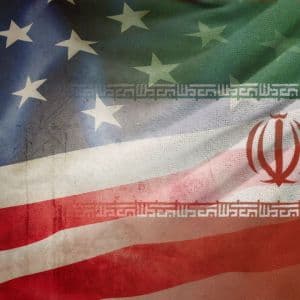
After many days of waiting, Iran has finally picked up the phone and made a call to the Oval Office, in order to offer what was allegedly called a permanent ceasefire deal that would reopen the Strait of Hormuz, stop the war forever, but… leave the nuclear argument for at least a decade. According to a report from Axios, a US official and two briefed sources told them on Sunday night that Tehran made it clear to Trump that they want a faster track that deals with the sea blockade first, because the talks are stuck and the nuclear file is a mess inside Iran’s own leadership. Iran asks mediators to open Hormuz now, while Tehran delays the uranium fight Iranian Foreign Minister Abbas Araghchi brought the plan into weekend talks in Islamabad, telling mediators from Pakistan, Egypt, Turkey, and Qatar that Iran’s leadership has not agreed on how far it can go on US nuclear demands. But if the US ends the blockade before Iran gives ground on uranium, Trump loses the main tool he has been using to squeeze Tehran’s oil income. Trump is expected to meet his top national security and foreign policy team in the Situation Room on Monday, and the meeting will center on Iran, the deadlocked talks, and what comes next. One source said the team will go through the failed diplomacy and the options still on the table. Trump told Fox News on Sunday that he wants the naval blockade to continue because it is choking Iran’s oil exports. He said pressure on Tehran could bring results within weeks. “When you have vast amounts of oil pouring through your system … if for any reason this line is closed because you can’t put it into containers or ships … what happens is that line explodes from within. … They say they only have about three days before that happens,” Trump said . The weekend talks worsened after Abbas went to Pakistan and returned without progress. Cryptopolitan previously reported that the White House said Trump envoys Steve Witkoff and Jared Kushner would meet Abbas in Islamabad, but Iran did not confirm the meeting. Trump then pulled the trip. The blockade traps crews, tankers, and cargo as clashes keep the strait closed After the Pakistan track stalled, Abbas went to Muscat on Sunday for talks with Omani officials about the Strait of Hormuz. He later returned to Islamabad for another round. On Monday, he was expected in Moscow for a meeting with Russian President Vladimir Putin. At sea, the human cost is getting uglier. Around 2,400 seafarers are stuck on more than 105 tankers in the closed strait, tanker trade group Intertanko said. Its managing director, Tim Wilkins, told the BBC’s Today program that crews are stranded off Iran’s coast with no clear way home. Tim said there is a “huge amount of anxiety, stress, and fatigue on board” because crews are rationing basics, handling food and water, and dealing with garbage while they wait. He added, “Many are stuck on board with no certainty as to when they’ll be able to return home.” Iran says the Strait of Hormuz cannot reopen because the US and Israel committed “blatant violations of the ceasefire.” The ceasefire has not stopped trouble in nearby waters. Last week, Iran said it seized two cargo ships in the strait for “inspection.” Other vessels reported attacks while trying to sail through the area. The US has also intercepted several ships since it imposed a blockade on maritime traffic entering and leaving Iranian ports on April 13. That blockade is now the center of the fight. Iran wants shipping lanes reopened before the nuclear question is settled. Trump wants the chokehold to stay until Tehran gives way on enrichment and uranium stockpiles. Don’t just read crypto news. Understand it. Subscribe to our newsletter. It's free .
27 Apr 2026, 17:11
Canada advances total ban on crypto political donations

🚨 Parliament in Canada advances a total ban on political donations in $BTC and other cryptocurrencies. No major parties have received crypto donations so far, and crypto as a funding tool remains almost unused. 🧐 Key point: Canada joins the UK in moving to restrict digital asset donations, while the US continues to allow them. Continue Reading: Canada advances total ban on crypto political donations The post Canada advances total ban on crypto political donations appeared first on COINTURK NEWS .
27 Apr 2026, 17:09
Shibarium Hits 1B Transactions as SHIB User Growth Accelerates

Shiba Inu has recorded fresh growth across its ecosystem, with new wallet data indicating stronger user activity in April 2026. The increase comes as the broader crypto market shows signs of recovery after months of weak momentum and cautious trading. Shiba Inu Records Strong Wallet Growth According to data shared by the Shiba Inu team on X, SHIB added 24,000 new wallets between April 20 and April 27, 2026. The sharp rise pushed total SHIB holders above 1.585 million, marking a new all-time high for the token’s wallet count. The strongest daily increase came on April 25, when the network added 10,718 new holders in one day. This marked the highest daily wallet growth for Shiba Inu in 2026. The figures suggest that user interest has returned as market conditions improve. Growth slowed after the April 25 spike, but the network still recorded steady additions. Shiba Inu added 1,040 holders on April 26 and another 1,100 holders on April 27. These gains show continued onboarding, even after the strongest surge had passed. Shibarium Reaches 1 Billion Transactions Shibarium, the Shiba Inu layer 2 network, has also reached a major activity milestone. The network has now processed more than 1 billion transactions, according to the latest ecosystem update. The achievement highlights rising usage across Shibarium as more users interact with the network. Layer 2 activity remains important for Shiba Inu because it supports cheaper and faster transactions within the ecosystem. The milestone also comes at a time when SHIB holders are increasing at a faster pace. This link between wallet growth and transaction activity shows that the ecosystem is seeing broader participation, not just passive holding.
27 Apr 2026, 17:08
Strategy Tops Bitcoin Holdings With $255 Million Purchase

Strategy doesn’t miss on its regular Monday purchases as the firm scoops another $255 million worth of Bitcoin this new week.
27 Apr 2026, 17:05
Bitwise Sees XRP Price Closing 2026 At $6.53, Sets Targets for 2027 and 2030
XRP has regained attention in institutional market discussions as long-term valuation models increasingly incorporate blockchain infrastructure into traditional finance forecasts. Analysts now see the asset less as a speculative token and more as part of a broader shift toward tokenization and digital settlement rails. That perspective gained renewed traction after RippleXity shared Bitwise projections on X outlining XRP’s expected price trajectory through the end of the decade. The forecast presents a structured outlook that ties XRP’s growth potential to adoption cycles in fintech infrastructure and digital asset markets. Bitwise Long-Term XRP Outlook RippleXity reported that Bitwise expects XRP to close 2026 at $6.53, rise to $9.60 by the end of 2027, and potentially reach $29.32 by 2030. The projection places XRP in a multi-year growth framework driven by rising institutional participation and broader financial integration. JUST IN: Bitwise sees $XRP price closing 2026 at $6.53, climbing to $9.60 by the end of 2027, and reaching $29.32 by 2030. — RippleXity (@RippleXity) April 26, 2026 Bitwise builds its outlook on the assumption that digital assets will continue to embed themselves into global financial infrastructure. Rather than focusing on short-term market cycles, the model evaluates XRP through long-term adoption, liquidity demand, and transaction utility. XRP and the Shift Toward Fintech Infrastructure The Bitwise forecast aligns with a growing institutional narrative that places XRP within the fintech infrastructure category. This view suggests XRP functions as a settlement and liquidity layer for cross-border payments and tokenized financial systems, rather than as a traditional retail-driven cryptocurrency. Bitwise strategists have previously described XRP as transitioning from a speculative asset class into a structural component of financial infrastructure. This shift reflects a broader change in how asset managers evaluate blockchain technology, with increased emphasis on utility, scalability, and real-world integration. We are on X, follow us to connect with us :- @TimesTabloid1 — TimesTabloid (@TimesTabloid1) June 15, 2025 Market Conditions and Structural Drivers XRP trades far below multi-year targets, but bulls cite several structural drivers for their long-term outlook. These include increasing interest in tokenized assets, growing experimentation by financial institutions, and gradual improvements in regulatory clarity across major markets. The continued development of blockchain-based settlement systems also supports XRP’s relevance in institutional discussions. Financial firms are increasingly turning to distributed ledger technology for faster, cheaper cross-border payments , bolstering XRP’s long-term case. A Long-Term Narrative Shaped by Adoption Cycles The Bitwise projection reinforces a broader shift in how market participants evaluate XRP’s future. Instead of relying solely on short-term price action, analysts now incorporate long-term infrastructure adoption cycles and macro-financial transformation trends into valuation models. Bitwise’s forecast reflects a shift: XRP’s growth hinges less on speculation and more on sustained integration into global financial systems. While volatility will continue to define shorter timeframes, long-term projections increasingly frame XRP as a foundational element in the next phase of digital finance evolution. Disclaimer : This content is meant to inform and should not be considered financial advice. The views expressed in this article may include the author’s personal opinions and do not represent Times Tabloid’s opinion. Readers are urged to do in-depth research before making any investment decisions. Any action taken by the reader is strictly at their own risk. Times Tabloid is not responsible for any financial losses. Follow us on Twitter , Facebook , Telegram , and Google News The post Bitwise Sees XRP Price Closing 2026 At $6.53, Sets Targets for 2027 and 2030 appeared first on Times Tabloid .
27 Apr 2026, 17:05
Solana Falcon Signature Scheme: A Powerful Shield Against Quantum Threats

BitcoinWorld Solana Falcon Signature Scheme: A Powerful Shield Against Quantum Threats The Solana Foundation has officially proposed the Falcon signature scheme as a robust defense against future quantum computing threats. This move positions the Solana network at the forefront of blockchain security innovation. The announcement, made on April 27, details how two core development teams, Anza and Jump Crypto’s Firedancer, have already begun initial work on this quantum-resistant solution. Solana Foundation Proposes Falcon Signature for Quantum Resistance The Solana Foundation’s proposal centers on the Falcon signature scheme , a digital signature algorithm designed to withstand attacks from quantum computers. Unlike classical computers, quantum machines can break widely-used cryptographic systems like ECDSA and EdDSA. Falcon offers a lattice-based alternative that remains secure even in a post-quantum world. The foundation states that Falcon is well-researched, understood, and ready for deployment. This proactive approach addresses a long-term vulnerability before it becomes an immediate crisis. Why Quantum Computing Threatens Solana and Other Blockchains Quantum computing represents a paradigm shift in computational power. These machines can solve complex mathematical problems exponentially faster than classical computers. This capability directly threatens the cryptographic foundations of blockchain networks. For Solana, the risk involves the private keys that secure user wallets and validator operations. If a quantum computer could derive a private key from a public key, it could steal funds or manipulate the network. The Solana Foundation recognizes this threat and acts now, even though practical quantum computers remain years away. This strategy mirrors best practices in cybersecurity: prepare defenses before the attack vector matures. The Specific Role of Anza and Jump Crypto’s Firedancer Two key development teams drive this initiative. Anza, a core Solana contributor, focuses on the network’s protocol upgrades. Jump Crypto’s Firedancer team, known for building a high-performance validator client, brings deep expertise in cryptographic implementation. Together, they evaluate Falcon’s integration into the Solana ecosystem. Their initial development work includes testing Falcon’s performance, memory requirements, and compatibility with existing infrastructure. This collaboration ensures that the solution meets Solana’s high-speed transaction demands without compromising security. Understanding the Falcon Signature Scheme The Falcon signature scheme belongs to the family of lattice-based cryptography. The National Institute of Standards and Technology (NIST) selected Falcon as one of its post-quantum cryptography standards in 2022. Its key advantages include relatively small signature sizes and fast verification speeds. For a high-throughput blockchain like Solana, these characteristics are critical. Falcon signatures are compact enough to fit within transaction blocks without causing bloat. They also verify quickly, which aligns with Solana’s requirement for sub-second finality. The foundation emphasizes that Falcon is not experimental but a standardized, production-ready algorithm. Feature Falcon Current Solana Scheme (Ed25519) Cryptographic Basis Lattice-based Elliptic curve Quantum Resistance Yes No Signature Size ~666 bytes ~64 bytes Verification Speed Fast Very fast NIST Standard Yes (2022) No Timeline and Deployment Strategy The Solana Foundation has not provided a specific launch date for the Falcon upgrade. However, the initial development phase has begun. This phase includes: Implementation: Writing the Falcon algorithm in Rust, Solana’s primary programming language. Testing: Rigorous benchmarking on testnets to measure performance under load. Integration: Adapting the Solana runtime and validator software to support Falcon signatures. Auditing: Third-party security audits to verify the implementation’s correctness. After these steps, the foundation will propose a formal upgrade via Solana’s governance process. Validators will then vote on activation. This measured approach ensures that the transition to quantum resistance does not disrupt the network’s operation. Broader Industry Context and Implications Solana is not alone in preparing for quantum threats. Other blockchain projects, including Ethereum, Bitcoin, and Cardano, have research initiatives exploring post-quantum cryptography. However, Solana’s proactive proposal with a concrete scheme like Falcon sets it apart. This move signals to investors, developers, and users that the network prioritizes long-term security. It also positions Solana as a thought leader in blockchain security. The broader cryptocurrency market watches these developments closely. A successful quantum-resistant upgrade could become a competitive advantage, attracting users concerned about future-proofing their assets. Expert Perspectives on the Falcon Proposal Cryptography experts generally view Falcon as a strong choice for blockchain applications. Dr. Sarah Chen, a post-quantum cryptography researcher at MIT, notes: ‘Falcon offers a good balance between security and efficiency. Its lattice-based structure is well-understood and resistant to known quantum attacks.’ However, some experts caution that transitioning to new cryptographic systems requires careful handling. ‘The main risk is not the algorithm itself but the implementation and migration process,’ says Dr. James Miller, a blockchain security consultant. ‘Solana must ensure backward compatibility and user education.’ Potential Challenges and Mitigations Implementing the Falcon signature scheme on Solana presents several challenges. First, Falcon signatures are larger than current Ed25519 signatures. This increase could impact transaction throughput and storage requirements. The development teams must optimize the implementation to minimize overhead. Second, the migration of existing wallets and smart contracts to support Falcon requires careful coordination. Users must generate new quantum-resistant keys and transfer assets. The foundation plans to support both old and new signature schemes during a transition period. This hybrid approach prevents disruption while encouraging adoption. Conclusion The Solana Foundation’s proposal to adopt the Falcon signature scheme represents a forward-thinking move to secure the network against future quantum computing threats. By engaging core development teams Anza and Jump Crypto’s Firedancer, the foundation demonstrates a commitment to proactive security. While quantum computers are not yet a practical threat, the groundwork laid today ensures that Solana remains resilient tomorrow. This initiative not only protects user assets but also strengthens the network’s reputation as a secure and innovative blockchain platform. The cryptocurrency community will closely monitor the progress of this quantum resistance effort. FAQs Q1: What is the Falcon signature scheme? The Falcon signature scheme is a post-quantum cryptographic algorithm based on lattice mathematics. The National Institute of Standards and Technology (NIST) selected it as a standard in 2022 for its strong security and efficient performance. Q2: Why does Solana need quantum resistance now? Quantum computers, when fully realized, can break current cryptographic systems like Ed25519. Solana prepares now to ensure a smooth transition before quantum technology becomes a real threat, protecting user assets and network integrity. Q3: How will the Falcon upgrade affect Solana users? Users will need to generate new quantum-resistant keys and migrate their assets. The foundation plans a transition period supporting both old and new signature schemes to minimize disruption. No immediate action is required. Q4: Who is developing the Falcon implementation for Solana? Two core development teams lead the effort: Anza, which focuses on protocol upgrades, and Jump Crypto’s Firedancer team, known for building high-performance validator clients. Q5: When will the Falcon upgrade be deployed on Solana? The foundation has not announced a specific date. The current phase involves initial development, testing, and auditing. After completion, a formal governance proposal will allow validators to vote on activation. This post Solana Falcon Signature Scheme: A Powerful Shield Against Quantum Threats first appeared on BitcoinWorld .


