News
24 Mar 2026, 23:55
Sui Blockchain Hosts Crucial Networking Event at Hong Kong Web3 Festival 2025

BitcoinWorld Sui Blockchain Hosts Crucial Networking Event at Hong Kong Web3 Festival 2025 The Sui blockchain has announced it will host a significant networking event called Sui Connect during the Hong Kong Web3 Festival on April 21, 2025. This strategic move positions Sui at the center of Asia’s growing Web3 ecosystem. The event will feature prominent industry figures and provide valuable networking opportunities for blockchain developers and entrepreneurs. Sui Connect Event Details and Schedule The Sui Connect networking event will take place in Hong Kong for four hours, beginning at 8:00 a.m. UTC on April 21, 2025. Organizers have designed the event to maximize interaction between participants. The schedule includes a keynote presentation followed by structured networking sessions. Event planners have allocated specific time slots for different discussion topics. Hong Kong has emerged as a major hub for blockchain innovation in recent years. The city’s regulatory framework has attracted numerous Web3 companies. Consequently, the Hong Kong Web3 Festival has become a premier gathering for industry professionals. The festival typically draws thousands of attendees from across Asia and globally. Key Speaker and Industry Significance Adeniyi Abiodun, an early contributor to Sui and co-founder of Mysten Labs, will deliver the main presentation. Abiodun brings extensive experience in blockchain infrastructure development. His talk will likely address current challenges and opportunities in layer 1 blockchain technology. Following his presentation, attendees will have direct access to industry founders and builders. The networking component represents a crucial aspect of the event. Industry events often facilitate important business connections and collaborations. For instance, previous blockchain conferences have resulted in significant partnerships and project launches. The table below shows recent major blockchain networking outcomes: Event Year Notable Outcome Token2049 Singapore 2024 5 major partnership announcements Consensus Austin 2024 12 project collaborations formed Devcon Southeast Asia 2023 8 developer teams recruited Sui’s Strategic Positioning in Asia Sui’s decision to host this event in Hong Kong reflects several strategic considerations. First, Asia represents the fastest-growing blockchain adoption region globally. Second, Hong Kong has established clear regulatory guidelines for digital assets. Third, the city serves as a gateway to mainland China’s technology ecosystem. Industry analysts note that physical events remain essential despite digital communication tools. Blockchain networks increasingly recognize the value of in-person gatherings. These events help build trust within developer communities. They also facilitate knowledge sharing about technical implementations. Furthermore, they create opportunities for cross-chain collaboration discussions. The Sui ecosystem particularly benefits from direct engagement with potential builders. Technical Context and Blockchain Landscape Sui operates as a layer 1 blockchain with several distinctive technical features. The network utilizes a unique consensus mechanism called Narwhal and Bullshark. This design aims to achieve high throughput and low latency. The platform also employs an object-centric data model rather than traditional account-based systems. The current blockchain landscape features intense competition among layer 1 networks. Major players include established platforms and newer entrants. Each network seeks to differentiate itself through technical innovations and ecosystem development. Networking events like Sui Connect help educate developers about specific advantages. Key differentiators among layer 1 blockchains include: Transaction speed and finality times Development environment and tooling quality Ecosystem funding and grant programs Cross-chain interoperability capabilities Governance models and decentralization levels Hong Kong’s Evolving Web3 Ecosystem Hong Kong has implemented progressive policies toward Web3 technologies since 2022. The government has established licensing regimes for virtual asset service providers. Additionally, regulatory authorities have created sandboxes for blockchain innovation. These measures have attracted substantial investment to the region. The Hong Kong Web3 Festival itself has grown significantly since its inception. Previous editions have featured hundreds of speakers and exhibitors. Attendance numbers have increased year-over-year, reflecting growing industry interest. The festival now ranks among Asia’s most important blockchain gatherings alongside events in Singapore and Seoul. Industry Impact and Future Implications The Sui Connect event will likely produce several important outcomes for the blockchain industry. First, it may accelerate developer adoption of the Sui platform. Second, it could facilitate partnerships between Sui-based projects and Asian companies. Third, it might influence regulatory discussions about blockchain technology in the region. Industry observers will monitor several aspects of the event’s impact. They will track subsequent project announcements from participants. They will also observe developer migration patterns following the event. Additionally, they will analyze any technical innovations presented during networking sessions. The event’s success could establish a template for future blockchain community gatherings. Networking remains particularly valuable in the blockchain sector due to its collaborative nature. Many successful projects emerge from partnerships formed at such events. The decentralized development model common in Web3 benefits from strong community connections. Physical events complement online communities by building stronger personal relationships. Conclusion The Sui blockchain networking event at the Hong Kong Web3 Festival represents a strategic initiative to strengthen its Asian presence. The Sui Connect gathering will provide valuable opportunities for industry professionals to connect and collaborate. With Adeniyi Abiodun’s participation and structured networking sessions, the event positions Sui as an engaged participant in Asia’s growing Web3 ecosystem. The outcomes will likely influence both the Sui network’s development and broader blockchain adoption patterns in the region. FAQs Q1: What is the Sui Connect event? The Sui Connect event is a networking gathering hosted by the Sui blockchain during the Hong Kong Web3 Festival on April 21, 2025. It features presentations and networking opportunities with industry founders and builders. Q2: Who is speaking at the Sui Connect event? Adeniyi Abiodun, an early contributor to Sui and co-founder of Mysten Labs, is scheduled to speak at the event. He will discuss blockchain technology and the Sui ecosystem. Q3: Why is Hong Kong important for blockchain events? Hong Kong has established clear regulatory frameworks for digital assets and serves as a gateway to Asian markets. The city has become a major hub for Web3 innovation and investment in recent years. Q4: What makes Sui different from other blockchains? Sui utilizes a unique object-centric data model and Narwhal-Bullshark consensus mechanism designed for high throughput and low latency. These technical differences aim to improve scalability and developer experience. Q5: How do networking events benefit blockchain ecosystems? Networking events facilitate partnerships, knowledge sharing, and community building. They help developers connect with potential collaborators and learn about new technical approaches and opportunities. This post Sui Blockchain Hosts Crucial Networking Event at Hong Kong Web3 Festival 2025 first appeared on BitcoinWorld .
24 Mar 2026, 23:35
Loopring (LRC) Price Prediction 2026-2030: Critical Analysis of Recovery Potential and Market Trajectory

BitcoinWorld Loopring (LRC) Price Prediction 2026-2030: Critical Analysis of Recovery Potential and Market Trajectory As the cryptocurrency market continues its evolution beyond 2025, investors and analysts are closely examining the trajectory of specific Layer-2 solutions like Loopring (LRC). This analysis provides a comprehensive, evidence-based examination of Loopring’s potential price movements from 2026 through 2030, considering technological developments, market adoption, and broader economic factors. The central question remains whether LRC is positioned for a sustainable recovery or faces significant structural challenges in the coming years. Loopring (LRC) Price Prediction 2026: Foundation and Immediate Outlook Projecting Loopring’s price for 2026 requires analyzing its current technological foundation. Loopring operates as a zk-Rollup protocol designed to enhance Ethereum’s scalability. Consequently, its value proposition remains tightly coupled with Ethereum’s adoption and the competitive landscape of Layer-2 solutions. Market data from 2023-2025 shows that LRC’s price often correlates with network activity metrics like transaction volume and unique wallet growth. Several factors will influence the 2026 outlook. First, the successful implementation of planned protocol upgrades is crucial. Second, the broader regulatory environment for decentralized exchanges (DEXs) will play a defining role. Finally, user migration from centralized platforms to secure, non-custodial solutions could provide a significant tailwind. Historical volatility patterns suggest that while short-term fluctuations are likely, the fundamental utility of the protocol will be the primary price driver. Technical Roadmap and Ecosystem Growth for 2027-2028 The mid-term forecast for 2027 and 2028 hinges on Loopring’s execution of its technical roadmap. The development team has consistently emphasized improvements in transaction finality speed and cost reduction. Furthermore, strategic partnerships with wallet providers and other DeFi applications could substantially increase the network’s total value locked (TVL). Expert Perspectives on Adoption Metrics Industry analysts frequently highlight that sustainable growth for Layer-2 tokens depends on organic usage, not speculative trading. For instance, a report from a major blockchain analytics firm in late 2024 noted that protocols demonstrating consistent quarter-over-quarter growth in developer activity and dApp integration tend to outperform in subsequent years. Loopring’s commitment to open-source development and its grant program for ecosystem projects are positive signals tracked by these metrics. Comparative analysis with other zk-Rollup solutions is also essential. The competitive intensity in the scaling sector means that technological differentiation and user experience are paramount. Loopring’s focus on specific use cases, such as high-frequency trading and NFT marketplaces, may carve out a defensible niche. Market share within the zk-Rollup segment will be a critical indicator to monitor through 2027. Key Loopring Network Metrics (Hypothetical Projection) Metric 2025 Baseline 2027 Projection Primary Driver Daily Transactions ~85,000 ~250,000 dApp Integration Average Fee (USD) ~$0.25 Protocol Optimization Unique Active Wallets ~120,000 ~500,000 Wallet Partnerships Long-Term Vision and 2029-2030 Price Trajectory Analysis The long-term price prediction for Loopring extending to 2029 and 2030 enters the realm of strategic forecasting. This period will likely be defined by the maturation of the entire blockchain industry. Key considerations include the potential for Ethereum’s base layer improvements to reduce the relative advantage of Layer-2s and the possibility of widespread institutional adoption of scalable DEX infrastructure. Potential positive scenarios for LRC involve: Mass adoption of decentralized trading for both crypto and tokenized real-world assets. Sustained technological leadership in zk-proof efficiency, maintaining a cost advantage. Regulatory clarity that favors non-custodial, transparent financial protocols. Conversely, challenges could stem from: Intense competition from other Layer-2 and Layer-1 solutions with larger ecosystems. Technational stagnation if development fails to keep pace with industry innovations. Macro-economic headwinds that reduce risk appetite across all cryptocurrency investments. Financial models often use discounted cash flow analyses based on projected fee revenue or comparisons to traditional financial exchange valuations. However, these models carry high uncertainty for nascent technologies. A more robust approach examines the protocol’s ability to capture value from the economic activity it secures and enables. Conclusion In summary, formulating a precise Loopring (LRC) price prediction for 2026 through 2030 is an exercise in analyzing probabilities, not delivering certainties. The token’s future value will be fundamentally tied to the network’s utility, security, and adoption. While the protocol possesses a strong technological foundation focused on efficient scaling, its success depends on execution amidst fierce competition and an evolving regulatory landscape. Investors should prioritize monitoring on-chain metrics, development progress, and partnership announcements over short-term price speculation. The path to recovery or growth for LRC will be paved by sustained, real-world usage of the Loopring network. FAQs Q1: What is the main factor that will influence Loopring’s price in 2026? The primary factor will be the growth in organic network usage , measured by transaction volume, unique users, and Total Value Locked (TVL) in its zk-Rollup. Price often follows utility in mature crypto projects. Q2: How does Loopring’s technology compare to other Layer-2 solutions? Loopring utilizes zk-Rollup technology, offering strong security guarantees by bundling transactions and submitting validity proofs to Ethereum. Its focus has been on decentralized exchange (DEX) applications, competing with other zk-Rollups and Optimistic Rollups that may have different trade-offs in speed, cost, and generalizability. Q3: Could Ethereum’s own upgrades make Loopring obsolete? While Ethereum’s roadmap includes scalability improvements (like danksharding), experts anticipate a multi-layered future. Layer-2 solutions like Loopring are expected to remain crucial for achieving the high throughput and low costs needed for mass adoption, even as the base layer improves. Q4: What are the biggest risks to the LRC price prediction for 2030? The largest risks include technological disruption by a superior scaling solution, a failure to attract developer mindshare and build a vibrant dApp ecosystem, and adverse global regulations targeting decentralized finance protocols. Q5: Is LRC considered a good long-term investment? As a journalistic analysis, this article does not provide investment advice. The long-term viability of any cryptocurrency, including LRC, depends on its ability to solve real-world problems, achieve widespread adoption, and maintain a competitive technological edge. Investors should conduct thorough, independent research aligned with their risk tolerance. This post Loopring (LRC) Price Prediction 2026-2030: Critical Analysis of Recovery Potential and Market Trajectory first appeared on BitcoinWorld .
24 Mar 2026, 23:31
How prepared is the Ethereum Foundation for the post-quantum era?

Today, March 24, the Ethereum Foundation launched a new public dashboard to track its progress towards making Ethereum quantum-resistant across every layer. The dashboard comes as one of the solutions built after a January 24 tweet , where Ethereum Foundation researcher Justin Drake formally declared post-quantum security as a top strategic priority. In his January tweet, Drake stated that “After years of quiet R&D, EF management has officially declared PQ security a top strategic priority. It’s now 2026, timelines are accelerating. Time to go full PQ.” From the lab to the roadmap The Ethereum Foundation’s new site was launched by its post-quantum, cryptography, protocol architecture and protocol coordination teams in a coordinated effort that began as far back as 2018. The website provides the full post-quantum roadmap, open repositories, formal specifications, research papers, EIPs, and a 14-question FAQ written directly by the PQ team. It also contains a six-part interview series produced with Knowledge FM. So far, over ten teams are already building and shipping devnets through the PQ Interop process. Projects like Lighthouse and Grandine have already implemented PQ devnets, and Prysm is expected to follow suit. The Ethereum Foundation also runs biweekly developer sessions led by researcher Antonio Sanso on post-quantum transactions. Notably, the Ethereum Foundation made some serious financial commitments to get this project done. Last year, the Foundation announced a $1 million Poseidon Prize to improve a hash function key to Ethereum’s zero-knowledge proof systems. This was in addition to the $1 million Proximity Prize targeted around broader post-quantum cryptographic research since last year. Additionally, there’s also the zkEVM Formal Verification Project , a $20 million verification initiative led by Alex Hicks that helps ensure every cryptographic component the Foundation builds performs exactly as designed. What the threat actually is Ethereum’s security (like most of the internet) depends on mathematics that’s easy to compute in one direction and cannot be reversed currently. A private key (like a password) can generate a public key (like a username), but no computer today can work backwards from a public key to recover the private key. However, hypothetically speaking, a powerful enough quantum computer running Shor’s algorithm can. Most engineering roadmaps place cryptographic emergence in the early 2030s, but the Foundation believes that timeline uncertainty is not a reason to wait. Upgrading a global decentralized protocol takes years of coordination and engineering, meaning that the work must start long before the threat comes. Nonetheless, Ethereum doesn’t share the same risk profile as Bitcoin. With Bitcoin, up to 5% of the supply is associated with early address formats that are mostly abandoned. On the other hand, Ethereum‘s exposure is closer to 0.1%, making the challenge more manageable and not as urgent. What the Ethereum Foundation still needs to do Earlier this week, BTQ Technologies launched the first working implementation of Bitcoin’s BIP 360 quantum-resistant proposal on a live testnet. However, while Bitcoin is held back mostly by slow governance processes, Ethereum uses a more structured model with dedicated teams, formal roadmaps etc, giving it a more predictable upgrade trajectory. Nonetheless, Ethereum still has to prove that it can execute at scale. Migrating hundreds of millions of accounts to quantum-safe authentication without downtime, losses, or creating new attack surfaces is a much different issue than designing the cryptography itself. Based on the Foundation’s current assessment, core L1 protocol upgrades could be completed by 2029, with full execution-layer migration coming years later. Whether that assessment will hold depends on how well the governance process, clients, and the broader Ethereum ecosystem collaborate over the next few years. Ethereum is currently trading around $2,140, down about 0.25% over the last 24 hours, maintaining above the $2,100 level for most of the day. Get seen where it counts. Advertise in Cryptopolitan Research and reach crypto’s sharpest investors and builders.
24 Mar 2026, 23:30
Expert Says Ripple’s XRP Is Designed For More, Here’s What He Means

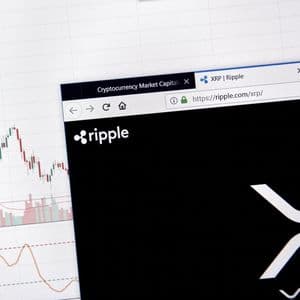
X Finance Bull, a well-known Ripple advocate and market analyst, has placed XRP back into the spotlight with fresh insights into its design and utility. According to him, XRP was never just a payment token but a digital currency built for far more, with multi-functional capabilities now being backed by Evernorth, a billion-dollar institutional XRP treasury . Analyst Highlights Ripple’s XRP Strength Beyond Payments In an X post on March 21, X Finance Bull declared that XRP, the native token of the XRP Ledger (XRPL), was never designed to be just a payments token . Usually, XRP has been used for cross-border transactions, enabling users to execute fast and secure transfers at scale. However, X Finance Bull noted that XRP’s infrastructure was always designed to handle much more than its current usage. According to him, the crypto network allows users to create, manage, and trade tokenized digital assets , lend and borrow funds, utilize XRP as collateral, and settle global transactions quickly. All of this occurs directly on the XRP Ledger, making it a unique multi-functional network in the crypto space. The analyst also emphasized that major players like Evernorth have publicly confirmed XRP’s wide range of use cases . He stated that Evernorth noted that, aside from XRPL, no other blockchain “combines all these capabilities natively,” while maintaining “the regulatory clarity that institutions require.” X Finance Bull highlights the significance of Evernorth’s words because they show that XRP’s utility has evolved beyond simple transfers or remittances, now supporting a wide range of financial operations within a single ecosystem. He highlights that institutions are already deploying XRP in various ways financially. Many now hold it, borrow or lend it, and use it as part of decentralized finance (DeFi) infrastructure. X Finance Bull further noted that XRP receiving support from a major institution such as Evernorth, which is backed by top firms including Ripple, SBI Holdings , Pantera, and Kraken, suggests that the cryptocurrency’s potential is being realized globally. He noted that XRP’s use cases are no longer just theory but a working framework already being implemented by major industry players. Evernorth Praises XRP’s Network Utility In his X post, X Finance Bull shared a screenshot of Evernorth’s remarks about Ripple’s XRP and its blockchain. According to Evernorth, XRP initially began primarily as a payments network. They noted that trillions of dollars remain idle in bank accounts worldwide to facilitate international transfers. However, XRP can move the same money in seconds , at a fraction of a cent. Evernorth further stated that, in reality, XRP was designed as a single digital asset network capable of bridging various financial and global infrastructure use cases. The firm also noted that it holds XRP in an actively managed institutional treasury while simultaneously contributing to the growth of the XRP DeFi ecosystem . In their words: “we can lend it, deploy it, and put it to work like it was designed to do.”
24 Mar 2026, 23:30
Will Bitcoin repeat the 2021 ‘gasoline fractal’? THIS data says…

Bitcoin has held a relatively firm structure despite escalating geopolitical tensions involving the United States, Israel, the Gulf states, and Iran. The market has absorbed repeated shocks, yet Bitcoin continues to trade without a decisive breakdown. At the time of writing, Bitcoin [BTC] hovered around $71,000, showing resilience under pressure. This suggests that current macro Continue reading "Will Bitcoin repeat the 2021 ‘gasoline fractal’? THIS data says…"
24 Mar 2026, 23:12
Rising US treasury yields, war in Iran, rising inflation risk pressure Bitcoin price

Falling tech stock prices and rising bond yields have forced a rush for cash, preventing Bitcoin from gaining any bullish momentum.