


 Invest ideas
News
25 Apr 2026, 19:53
All they have to do is call: Trump cancels negotiations with Iran after being stood up
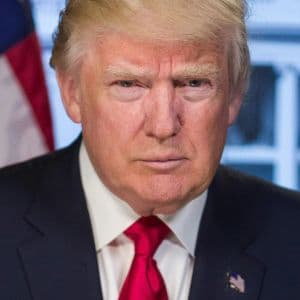
Donald Trump tried to “save face” on Saturday by announcing that he had canceled negotiations with Iranian leaders in Islamabad after they had already stood his envoys up and told the whole world they weren’t going to be there. Hours after they made that perfectly clear, Trump went on Truth Social to say: “I just cancelled the trip of my representatives going to Islamabad, Pakistan, to meet with the Iranians. Too much time wasted on traveling, too much work! Besides which, there is tremendous infighting and confusion within their ‘leadership.’ Nobody knows who is in charge, including them. Also, we have all the cards, they have none! If they want to talk, all they have to do is call!!!” Iranian officials remain unfazed by US theatrics Before heading back to Washington later on, Trump told reporters that the Islamabad trip made no sense because it involved “too much travel.” He said the US had “all the cards” and added that nothing had changed in recent days. He also said, “Too much travelling, takes too long, too expensive. I’m a very cost conscious person.” The president framed the cancelled trip as a cost and time issue, but the reality is, America needs this deal more than Iran. And the Iranians know that, so even though both sides claim they want peace, Iran isn’t willing to be pushed around for it. They’ve made clear what they want in negotiations, and they aren’t budging on a single one. Steve Witkoff and Jared Kushner were the US envoys expected to travel. The White House had said on April 24 that both men would go to Islamabad on Saturday for more talks with Iran. On the same day, Iran’s foreign minister arrived in Pakistan for meetings, but an Iranian official said there were no scheduled negotiations with the US. That killed the mood fast. Pakistan had been acting as the mediator and had even closed parts of its capital for days to prepare for possible talks. But by April 25, Iran’s foreign minister had already met Pakistan’s prime minister and the country’s army chief, then left for Oman without any announcement about when Trump’s team would arrive. On April 11, senior US and Iranian officials met in Pakistan for more than 21 hours, but of course, no deal came out of it, though both sides said the talks had made progress. Then on April 19, Trump said his representatives would return to Pakistan, but the plan stalled after Iran said it had not decided whether it would join. On April 21, Trump agreed to extend the ceasefire with Iran for an open-ended period, so diplomacy could continue. Four days later, the talks were still floating in the air. While attending a cryptocurrency event at Mar-a-Lago, where he was due to speak, Trump spent the day taking calls and confirming to media outlets that the trip was off. A New York Post reporter who was in Islamabad covering the expected talks reportedly got a text from Trump telling her, “Come home!!!” That pretty much told the story. The table was set, the room was ready, and the main event did not happen. Israel strikes Hezbollah sites while the Strait of Hormuz keeps oil markets nervous The failed US-Iran push landed while Israel was hitting Hezbollah targets in Lebanon. Israeli Prime Minister Benjamin Netanyahu ordered the Israel Defense Forces to “vigorously attack Hezbollah targets in Lebanon,” his office said. The IDF also posted several Telegram updates on Saturday, accusing Hezbollah of breaking the ceasefire between Israel and Lebanon. Hezbollah and Israel have each accused the other side of violating that same agreement, so yes, another ceasefire is already sitting in the usual Middle East paperwork shredder. While attention stayed on Trump, Iran, and the missing Islamabad talks, the IDF said it was still striking Hezbollah-linked buildings in southern Lebanon. The Israeli military said the targets were used to threaten IDF troops and Israeli civilians. Earlier this week, Trump said the Israel-Lebanon ceasefire would be extended by three weeks. That extension is now running beside fresh strikes and new claims from both sides. Trump said the US Navy is clearing Iranian mines from Iran’s waterway, the Strait of Hormuz, which normally carries about 20% of the world’s oil. If you want a calmer entry point into DeFi crypto without the usual hype, start with this free video.
25 Apr 2026, 19:44
Pavel Durov Unveils Massive TON Fee Cut With Near-Zero Costs Incoming

Telegram founder and CEO Pavel Durov said that within a week, transaction fees on TON will be reduced sixfold to 0.00039 TON (about $0.0005) per transaction. Moreover, fees will remain fixed regardless of network load. Zero-Fee Transactions In his latest update, Durov also noted that shortly after, most transactions on the network are expected to become fully feeless, meaning users will pay zero commission. His tweet read, “Soon after most transactions go fully feeless. Zero commission. MTONGA!” The TON blockchain is built to handle transactions and support mini-apps used inside Telegram. Even though it operates as a separate system, it remains closely tied to Telegram. Earlier this month, it implemented a network upgrade that reduced transaction finality time from around ten seconds to approximately one second. The update went live on mainnet on April 10th, introducing sub-second finality. The change is driven by Catchain 2.0, a revised consensus mechanism that modifies how the network reaches agreement on transactions. Following the upgrade, blocks are produced every 400 milliseconds, and a streaming layer delivers updates to applications with minimal delay, which allows faster confirmation times. The shorter finality period reduces the time between initiating and confirming transactions. Payments now settle in about one second, while trades and other on-chain actions are processed without the earlier multi-second lag. The upgrade also increases the number of blocks generated, which in turn raises validator rewards and alters staking dynamics. TON’s annual inflation rate is expected to increase from roughly 0.6% to about 3.6% as a result, with rewards adjusting over time as staking participation changes. xStocks Expands to TON Ecosystem Months before this upgrade, Kraken-owned tokenized equities platform xStocks announced its expansion to the TON blockchain, bringing tokenized US equities to the ecosystem. The integration includes support for Telegram’s non-custodial Wallet to help users access these assets directly within the app. The launch enabled users to buy, hold, and transfer tokenized versions of stocks such as Tesla Inc. and NVIDIA Corporation, along with ETFs, across TON-based wallets. The post Pavel Durov Unveils Massive TON Fee Cut With Near-Zero Costs Incoming appeared first on CryptoPotato .
25 Apr 2026, 19:43
Inside Bitwise’s Growing Control of the XRP ETF Space

Bitwise Dominates XRP ETF Flows as Investor Demand Surges Past $1B Mark Fresh capital is pouring into XRP-linked investment products, and one issuer is pulling ahead of the pack. Data from market tracker Xaif Crypto shows Bitwise’s XRP ETF million pulling in a single day , making it the only fund in its category to post net inflows during that session. It’s not a one-off spike, but part of a broader trend. With cumulative inflows now at $426 million, Bitwise isn’t just competing in the XRP ETF space, it’s emerging as the clear market leader. Fresh data underscores Bitwise’s tightening grip on a rapidly expanding XRP ETF market. As rival products struggle to sustain momentum, Bitwise continues to pull in consistent inflows, an indication that investors are placing greater trust in its strategy, structure, and market execution. Earlier this month, confidence in XRP-linked funds was already on full display. Daily XRP ETF trading volume surged past $26 million, with Bitwise dominating the flow at $11.14 million. The lead wasn’t marginal, it was decisive, reinforcing its position as competition heats up. More than a short-term spike, the surge pointed to stronger liquidity and consistent market participation, signaling that investor interest is not only growing, but sticking. Beneath the headline figures, a clear shift in investor sentiment is taking shape. XRP-linked ETFs have now crossed $1.08 billion in total net assets, a milestone that points to rapidly building demand. For investors, these funds offer a simpler, regulated way to tap into XRP’s upside without the complexities of direct ownership, making them an increasingly appealing option as the digital asset space continues to mature. Bitwise Pulls Ahead as XRP ETF Demand Breaks $1B Milestone The widening gap between Bitwise and its rivals points to a clear strategic edge. Whether it’s product design, distribution strength, or brand credibility, something is landing with investors. In a market where capital moves fast, sustained inflows aren’t just rare, they’re a signal of conviction. Rising assets and fresh inflows signal a broader shift taking shape. Once a polarizing name in crypto, XRP is drawing renewed institutional attention, largely through ETFs that convert blockchain exposure into familiar, regulated investment vehicles. If momentum persists, Bitwise’s early advantage may be hard to erode. In a market where perception often moves as fast as capital, being the only fund attracting net inflows, even briefly, can redefine leadership. For now, Bitwise isn’t just participating in the narrative, it’s setting it.
25 Apr 2026, 19:36
Bitcoiners cast doubt on the US military's understanding of the network

Bitcoin advocate Matthew Kratter said US Navy Admiral Samuel Paparo's Senate testimony on Tuesday sounded like it was written by an "intern."
25 Apr 2026, 19:31
XRP sees $34.94 million withdrawn as price hits $1.43

🚨 $34.94 million in XRP was withdrawn from exchanges in one day. XRP price remains steady at $1.43 with potential for 30% upside. Continue Reading: XRP sees $34.94 million withdrawn as price hits $1.43 The post XRP sees $34.94 million withdrawn as price hits $1.43 appeared first on COINTURK NEWS .
25 Apr 2026, 19:30
Iran’s Crypto Lifeline Hit As US Freezes $344 Million In Funds

Iran had already begun collecting crypto payments from ships crossing the Strait of Hormuz when US authorities moved to cut off the money. On Friday, the Treasury Department announced it had frozen over $340 million in cryptocurrency tied to Iranian military and political groups — the same amount stablecoin issuer Tether had quietly locked down just 24 hours earlier. Bitcoin Tolls At A Global Chokepoint Reports say Iran had been charging vessels in Bitcoin for safe passage through the Strait of Hormuz , one of the world’s most critical shipping lanes for oil and other cargo. Reports disclose that Iran had already banked revenue from those crypto tolls. The move came amid an ongoing standoff over the strait, where Iranian forces reportedly attacked three ships and US naval forces established a blockade. US President Donald Trump said this week that the US and Iran had reached a ceasefire agreement. But tensions on the water tell a different story. The attacks on commercial ships and the US blockade suggest the situation remains far from settled. Under Economic Fury, @USTreasury will continue to systematically degrade Tehran’s ability to generate, move, and repatriate funds. Treasury’s Office of Foreign Assets Control is sanctioning multiple wallets tied to Iran — resulting in the freeze of $344 million in… — Treasury Secretary Scott Bessent (@SecScottBessent) April 24, 2026 Treasury Moves Against Iranian Wallets Treasury Secretary Scott Bessent posted Friday on X that the Office of Foreign Assets Control had sanctioned two cryptocurrency addresses on the Tron blockchain. The wallets, officials said, were connected to the Islamic Revolutionary Guard Corps and Hizballah. Combined, they held $344 million. “We will follow the money that Tehran is desperately attempting to move outside of the country and target all financial lifelines tied to the regime,” Bessent said. The freeze, he added, was part of a broader effort to “systematically degrade Tehran’s ability to generate, move, and repatriate funds.” The announcement came one day after Tether disclosed that it had frozen over $344 million of its USDt stablecoin at the request of US law enforcement. At the time, the company cited “activity tied to unlawful conduct” but did not name Iran. Treasury’s Friday notice made the connection explicit. The US and Israel had launched joint airstrikes against Iran back in late February. Since then, American financial pressure on Tehran has intensified across both traditional and crypto markets. Crypto’s Limits As A Sanctions Workaround Iran’s attempt to use cryptocurrency as a financial workaround ran into a hard wall. The Tron addresses flagged by OFAC now appear on the agency’s Specially Designated Nationals list, effectively making them off-limits for any US person or entity to deal with. The episode shows how Iran’s crypto lifeline, including the $344 million frozen across those two Tron wallets, can still be disrupted through centralized stablecoin issuers willing to act on law enforcement requests. Tether’s compliance with the US request happened before the public sanctions notice was even issued. Featured image from Pexels, chart from TradingView


