


 Invest ideas
News
25 Apr 2026, 15:00
Why Bitcoin Price Failed To Breach $80K: An On-Chain Deep Dive

After the early-week jitters, the Bitcoin price eventually mustered the bullish momentum that has become a mainstay of its weekly performance. Rising from its sub-$74,000 ashes, the premier cryptocurrency soared to an almost three-month high above $79,000 on Wednesday, April 22. However, there has been a minor concern about Bitcoin’s price failing to breach $80,000 in its latest rally. Below is an on-chain perspective on why the market leader’s price action has slowed over the past few days. Bitcoin Price Faces Significant Resistance At $80K In a new post on the social media platform X, Alphractal CEO and founder Joao Wedson has offered one reason why the Bitcoin price struggled to break $80,000 in recent days. According to the pundit, BTC’s price faced resistance at a relevant on-chain level known as the True Market Mean Price. For context, the True Market Mean Price is a metric that estimates the average cost basis of active market participants. This on-chain indicator excludes dormant (or lost) coins and miner revenue, focusing on the real, circulating portion of the supply. The True Market Mean Price distinguishes between traders and long-term dormant holders, providing a more precise average cost basis for active participants (who tend to have a greater impact on the price). Hence, it functions as a dynamic support and resistance level, due to its psychological relevance to traders. As Wedson noted in his post, the True Market Mean Price is one of the reasons the Bitcoin price failed to maintain its rally above $79,000. As shown in the chart above, the on-chain metric also provided significant support for the premier cryptocurrency in late 2025. Wedson added that even if the price of BTC breaks the True Market Mean, it would be best for investors to wait about 3 days for confirmation of a breakout. “Otherwise, the higher probability is that bears may gain some control over price in the coming days/week,” the Alphractal founder warned. Crowd FOMO Crashes $80K Party For BTC Another reason the Bitcoin price momentum slowed was a shift in investor sentiment , with the crypto crowd moving into FOMO (fear of missing out) mode on Thursday, April 23rd. According to Santiment, the market was euphoric — a clear caution signal — as premier cryptocurrency approached $80,000. The analytics firm wrote on X: Prices can continue to rally, and a breach above this resistance level would be massive in bringing in new and returning traders. However, it will ideally happen when optimism calms down just slightly. As of this writing, the price of BTC stands at around $77,588, reflecting a mere 0.3% dip in the past 24 hours.
25 Apr 2026, 15:00
Bitcoin at $40,000 would be 'near-unprecedented' statistical outcome, analyst says
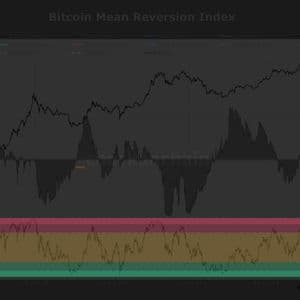
Mean-reversion models suggest bearish targets imply a 0.4th percentile event, far beyond typical market corrections.
25 Apr 2026, 14:55
Aave Labs Leads Urgent Proposal to Unfreeze Arbitrum ETH for rsETH Collateral Stabilization

BitcoinWorld Aave Labs Leads Urgent Proposal to Unfreeze Arbitrum ETH for rsETH Collateral Stabilization Aave Labs has taken the lead in a critical governance proposal to unfreeze 30,765.67 ETH on Arbitrum. This action aims to stabilize rsETH collateral. The funds were frozen by the Arbitrum Security Council on April 21. The proposal now moves to a community vote. This event marks a significant moment for decentralized finance (DeFi) governance. Aave Labs Leads Proposal to Unfreeze Arbitrum ETH The proposal, co-authored by Aave Labs, Kelp DAO, LayerZero, EtherFi, and Compound, outlines a clear plan. The frozen ETH will be moved to a 2-of-3 Gnosis Safe (SAFE) address. This multisig wallet will be jointly controlled by Aave Labs, Kelp DAO, and Certora. The primary goal is to use these assets exclusively for stabilizing rsETH collateral. Unused assets will be returned to the Arbitrum DAO. This structure ensures accountability. It also prevents any single entity from controlling the funds. The proposal emphasizes transparency. Each step requires multiple signatures. Background of the Arbitrum Security Council Freeze On April 21, the Arbitrum Security Council froze the ETH. This action responded to a potential risk to the rsETH market. The freeze aimed to prevent further instability. It temporarily locked the assets to allow for a structured resolution. The council acted under its emergency powers. These powers exist to protect the Arbitrum ecosystem. The freeze halted any immediate threat. It also gave stakeholders time to design a safe recovery plan. Key Players in the Unfreeze Proposal Several major DeFi protocols support this initiative. Aave Labs brings deep experience in lending markets. Kelp DAO is the issuer of rsETH. LayerZero provides cross-chain messaging infrastructure. EtherFi is a leading liquid staking protocol. Compound offers additional lending expertise. Certora will audit the smart contract logic for the Gnosis Safe. Aave Labs: Leading the proposal and co-signing the multisig. Kelp DAO: Issuer of rsETH, directly affected by the freeze. LayerZero: Ensuring secure cross-chain communication. EtherFi: Providing liquid staking insights. Compound: Offering governance and lending expertise. Certora: Auditing the smart contract for the multisig wallet. How the 2-of-3 Gnosis Safe Will Work The Gnosis Safe will require two out of three signers to approve any transaction. The signers are Aave Labs, Kelp DAO, and Certora. This setup prevents unilateral control. It also reduces the risk of a single point of failure. The safe will hold the 30,765.67 ETH. It will only release funds for rsETH collateral stabilization. Any leftover ETH will go back to the Arbitrum DAO. This mechanism ensures the funds serve their intended purpose. Impact on rsETH and the Arbitrum Ecosystem rsETH is a liquid restaking token. Its stability depends on sufficient collateral. The frozen ETH directly supports this collateral. Unfreezing it will restore confidence in rsETH. The Arbitrum ecosystem benefits from this resolution. A stable rsETH market attracts more users. It also strengthens Arbitrum’s reputation as a secure L2. This event demonstrates the network’s ability to handle crises. Timeline of Events Here is a timeline of key dates: Date Event April 21 Arbitrum Security Council freezes 30,765.67 ETH May 5 Aave Labs leads proposal to unfreeze funds May 10 Community vote expected to begin May 15 Funds transferred to Gnosis Safe (if approved) Expert Analysis on the Governance Process DeFi governance experts highlight the importance of this proposal. It shows how emergency powers can be used responsibly. The involvement of multiple protocols adds legitimacy. It also sets a precedent for future crises. The proposal includes a detailed audit by Certora. This step ensures the smart contract is secure. It also builds trust among the community. The use of a multisig wallet aligns with best practices. What Happens Next The Arbitrum community will vote on the proposal. If it passes, the funds will move to the Gnosis Safe. Then, Aave Labs, Kelp DAO, and Certora will manage the assets. The focus will be on stabilizing rsETH collateral. This process could take several weeks. The community expects full transparency. Regular updates will be provided. The goal is to return the ecosystem to normal. Conclusion Aave Labs leads the proposal to unfreeze Arbitrum ETH for rsETH collateral. This action involves a 2-of-3 Gnosis Safe and strict fund usage rules. The proposal represents a collaborative effort among major DeFi protocols. It demonstrates effective governance in a crisis. The outcome will impact the entire Arbitrum ecosystem. FAQs Q1: Why did the Arbitrum Security Council freeze the ETH? The council froze the ETH on April 21 to prevent potential instability in the rsETH market. It acted under its emergency powers to protect the ecosystem. Q2: Who controls the 2-of-3 Gnosis Safe? Aave Labs, Kelp DAO, and Certora jointly control the safe. Two of the three signers must approve any transaction. Q3: What will the unfrozen ETH be used for? The ETH will be used exclusively for stabilizing rsETH collateral. Any unused assets will be returned to the Arbitrum DAO. Q4: How does this proposal affect rsETH holders? If approved, the proposal will restore confidence in rsETH by ensuring sufficient collateral. This should stabilize the token’s value. Q5: When will the community vote take place? The vote is expected to begin around May 10. The exact date depends on the Arbitrum governance timeline. Q6: What happens if the proposal fails? If the proposal fails, the funds will remain frozen. The community would need to submit a new proposal to address the situation. This post Aave Labs Leads Urgent Proposal to Unfreeze Arbitrum ETH for rsETH Collateral Stabilization first appeared on BitcoinWorld .
25 Apr 2026, 14:50
Top 8 stories: What happened in crypto market this week & what's next?

More on Bitcoin USD, Grayscale Bitcoin Mini Trust ETF Whale's Insight: If BTC's Top Was Pulled Forward, Why Not The Bottom? Markets Are Stuck In The Waiting For U.S.-Iran Talks Bitcoin 2026 Price Prediction: Why The Dollar, Global Liquidity And Volume Signal More Downside Ahead Metaplanet issues ¥8B bonds for BTC; zero-yield hits shares Saylor's setup uncovered: Inside Strategy’s $2.8B gain at $79K BTC
25 Apr 2026, 14:43
Analyst: Bitcoin’s February Dip to $60K Marked Cycle Low

Popular crypto analyst Ash Crypto has said that Bitcoin’s drop to around $60,000 in February 2026 was the bottom of the current market cycle, based on a pattern he says has played out precisely across the past two cycles. If he’s right, the king cryptocurrency may already be in the early stages of a new leg higher. The 23-Month Pattern Behind the Call Ash Crypto’s argument is simple: “Each cycle, BTC has made a new ATH,” he wrote on X. “And the bottom happened exactly 23 months after making a new ATH.” To back his theory, he went back to January 2017 when BTC hit an all-time high. This was followed 23 months later by a cycle low in December 2018. The same thing happened in the cycle after that, the analyst said. BTC hit its peak in December 2020, and 23 months later, in November 2022, it bottomed. “This cycle, Bitcoin made a new ATH in March 2024. If it goes by history, the bottom has already happened in February 2026 (23 months),” the analyst concluded. This was right around the time BTC touched the $60,000 level, then went back above $70,000. The timing alone would be easy to dismiss, but Ash Crypto added three technical signals that all fired during the low earlier in the year. The weekly RSI dropped to a four-year low. The sentiment index hit its worst reading on record. And Bitcoin retested the 2021 cycle high. “All these things combined have previously marked the bottom for Bitcoin,” he wrote, “and maybe ‘THIS TIME IT’S NOT DIFFERENT.'” On-chain data from analyst Ali Martinez tells a similar story, at least partially. Bitcoin’s Sharpe Ratio collapsed to -43 before recovering to around 20, suggesting that the market absorbed the worst of the selling. At the same time, the share of Bitcoin’s realized market cap held by people who bought within the last month has fallen below 7%, which in past cycles has meant retail is largely gone and supply has settled into stronger hands. Bears Aren’t Convinced Fellow analyst Ted Pillows is seeing things differently. According to him, a small bounce had happened, but he still expected new lows on the higher timeframe. “That’s often how it works,” he wrote. “Temporary strength pulls people in and ends up becoming exit liquidity.” Bitcoin was trading around $78,500 at the time of writing, and Ash Crypto sees two paths from here: a daily close above $80,000 that could push BTC to $86,000 to $90,000, or a rejection that pulls it back into the $68,000 to $74,000 range. Its latest bounce was helped along by news of an extended US-Iran ceasefire, which lifted the broader market before fresh tension reports stopped the OG crypto just short of $80,000. On his part, Martinez has flagged $73,700 as the number to watch. Hold it, and the road to $96,000 stays open. Lose it and the bullish bottom call starts to look shaky, with $55,000 back in the conversation. The post Analyst: Bitcoin’s February Dip to $60K Marked Cycle Low appeared first on CryptoPotato .
25 Apr 2026, 14:41
BNB Technical Analysis 25 April 2026: Support Resistance Levels

BNB is sideways between 623 support and 653 resistance from 632.70 USD. Breakout direction will clarify with BTC movements; invalidation below 611 increases downside risk.


