


 Invest ideas
News
21 Apr 2026, 09:39
Strategy overtakes BlackRock IBIT in bitcoin holdings after bear market buying
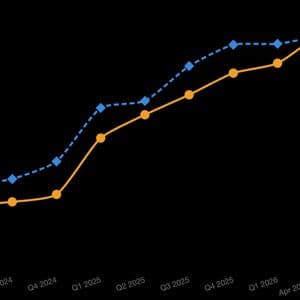
Leveraged accumulation and new capital tools push MSTR ahead of the world’s largest spot bitcoin ETF.
21 Apr 2026, 09:30
Strategy Overtakes BlackRock’s Bitcoin Holdings, But Is Saylor Done Buying?

Michael Saylor announced on Monday that Strategy had carried out another massive Bitcoin buy. The multi-billion-dollar Bitcoin purchase did not come as a surprise to the market, given that the company had already been raising more money to buy BTC leading up to the day. However, what is interesting is how much BTC the public company now holds and what it means in comparison to other counterparts with large holdings in the market. Strategy’s BTC Holdings Have Now Crossed 800,000 BTC With the most recent buy, where the company bought 34,164 BTC, it has now seen its Bitcoin holdings cross the 800,000 BTC mark for the first time. According to the announcement, this latest BTC buy had set the company back a whopping $2.54 billion with an average price of $74,395 per Bitcoin. Related Reading: Ethereum Flips Key Resistance, ETF Demand Returns, Analysts Eye Next Leg Higher This brought the company’s total holdings to 815,061 BTC, with the total purchase history coming out to $61.56 billion spent so far. This buy also brought down the company’s average buy price for its BTC holdings to $75,527, decreasing its total entry point. With the holdings now sitting above 815,000 BTC, though, this means that Strategy has actually surpassed BlackRock when it comes to BTC holdings. Previously, BlackRock had dominated the market as Spot Bitcoin ETFs gained popularity rapidly, and BlackRock’s holdings grew very fast. However, at the time of writing, the BlackRock IBIT total BTC holdings sit below 800,000, at 798,062, according to data from Bitbo. This is a small gap, but it shows how Strategy’s BTC buys have continued to balloon, going toe-to-toe with BlackRock, which is a company that handles over $12 trillion in assets. Will Michael Saylor Stop Buying Bitcoin? In the past, Michael Saylor has said that Strategy’s move to buy Bitcoin as a treasury asset was not a short-term plan, and this has been proven over the years. The company began buying Bitcoin back in 2020, and five years on, it is still buying BTC and remains the company with the largest BTC holdings in the world. Related Reading: Dogecoin Nears Key Turning Point As TCT Model Begins To Form In an interview with CNBC back in February, Saylor reiterated his stance on Bitcoin, explaining that the company does not plan to sell its Bitcoin holdings anytime soon. So far, the company has not made its exit plan, or if there is one, public yet. So for now, the focus remains on the company’s BTC buys rather than a possible sell. Featured image from Dall.E, chart from TradingView.com
21 Apr 2026, 09:30
Critical Bitcoin Threshold: A Move Above $77K Could Unleash $580M in Short Liquidations

BitcoinWorld Critical Bitcoin Threshold: A Move Above $77K Could Unleash $580M in Short Liquidations Global cryptocurrency markets are watching a pivotal Bitcoin price level, as data reveals a move above $77,015 could trigger a massive $579.67 million liquidation event for short positions across major exchanges. This analysis, based on verifiable data from Coinglass, highlights the fragile equilibrium in current derivatives markets. Conversely, a decline below $75,503 presents a symmetrical risk, threatening $187.64 million in long positions. These figures underscore the heightened volatility and leveraged nature of modern crypto trading. Analyzing the Bitcoin Liquidation Thresholds Coinglass, a leading provider of cryptocurrency derivatives data, tracks open interest and liquidation levels across centralized exchanges. The platform’s metrics show a significant concentration of leveraged short bets placed just above the current Bitcoin price. Specifically, the aggregate liquidation price for these positions clusters around $77,015. A sustained move above this level would automatically close these leveraged shorts, forcing traders to buy back Bitcoin to cover their positions. This process, known as a short squeeze, can create rapid upward price momentum. Furthermore, the data reveals a distinct asymmetry in market positioning. The potential short liquidation volume of $579.67 million vastly exceeds the $187.64 million at risk for long positions below $75,503. This disparity suggests a prevailing cautious or bearish sentiment among leveraged traders at these higher price levels. The Mechanics of a Liquidation Cascade Liquidations are a core function of leveraged trading platforms. Exchanges use these automated processes to protect themselves from counterparty risk when a trader’s position loses too much value. When Bitcoin’s price hits a specific liquidation threshold, the exchange forcibly closes the position using its internal market. A cascade occurs when multiple liquidations happen in quick succession. Consequently, these forced market orders can exacerbate price movements in the underlying asset. For example, a wave of short liquidations requires buying pressure, which can push the price higher and trigger even more liquidations. This feedback loop is a key driver of extreme volatility in cryptocurrency markets. Contextualizing the Current Crypto Derivatives Landscape The current liquidation data must be viewed within the broader context of the cryptocurrency derivatives market. Following the 2022 market downturn, exchanges and regulators have implemented stricter risk controls. Despite these measures, the total open interest in Bitcoin futures and perpetual swap contracts remains substantial. This open interest represents the total value of all outstanding derivative contracts. High open interest near current spot prices often indicates a market primed for volatility. Major exchanges like Binance, Bybit, and OKX dominate this landscape. Their collective data forms the basis for the Coinglass analysis. Historically, similar liquidation clusters have acted as both magnets and barriers for price action. Traders often anticipate these levels, leading to intensified buying or selling pressure as the price approaches. Key characteristics of the current derivatives market include: High Leverage Availability: Many platforms still offer high leverage ratios, amplifying potential gains and losses. Cross-Margin Dependencies: Liquidations on one major exchange can impact liquidity and sentiment across the entire ecosystem. Algorithmic Trading Influence: Automated systems often set orders and stops near known liquidation levels. Historical Precedents and Market Impact Previous market cycles provide clear examples of liquidation cascades influencing Bitcoin’s price trajectory. Notably, the bull run of late 2020 and early 2021 featured several episodes where breaking key resistance levels led to massive short liquidations. These events fueled powerful, sustained rallies. Conversely, the bear market of 2022 saw repeated long liquidation cascades that accelerated downward trends. The potential $580 million short liquidation event would be significant but not unprecedented. Analysts compare it to similar-sized events that have occurred during periods of high market uncertainty and consolidation. The impact of such a liquidation event depends on broader market liquidity. In a high-liquidity environment, the market may absorb the forced buying smoothly. However, in a thinner market, the effect on price could be more pronounced and sustained. Expert Analysis on Market Sentiment and Structure Market structure experts point to the liquidation data as a sentiment indicator. The large volume of shorts positioned just above the market suggests many traders are betting on a rejection at the $77,000 level. This creates a classic “wall” of sell-side pressure. If Bitcoin’s price absorbs this pressure and breaks through, the resulting short squeeze could provide powerful fuel for a continued uptrend. The smaller long liquidation volume below $75,503 indicates fewer traders are using tight leverage on the long side at this level. This might imply that long-term holders are not heavily leveraged here, or that stop-losses are set further below. The data, therefore, paints a picture of a market where short-term bears are clustered at a specific resistance point, while bulls may have a deeper support structure. Comparative Liquidation Levels (Approximate Data) Price Direction Critical Level Potential Liquidation Value Position Type Upside Break $77,015 $579.67 Million Short Positions Downside Break $75,503 $187.64 Million Long Positions Conclusion The Coinglass data highlights a critical juncture for Bitcoin price action, centered on the $77,015 short liquidation threshold. A decisive break above this level risks triggering over half a billion dollars in forced buy orders, potentially catalyzing a significant short squeeze. The asymmetry between short and long liquidation risks near the current price reveals underlying market sentiment and positioning. While these derivatives metrics are a crucial piece of market microstructure, they operate within a wider framework of macroeconomic factors, adoption trends, and regulatory developments. Market participants should monitor these Bitcoin short liquidation levels as key technical and psychological markers, understanding they represent a snapshot of leveraged market sentiment that can quickly change with evolving conditions. FAQs Q1: What does “short liquidation” mean in cryptocurrency trading? A short liquidation occurs when a trader who has borrowed and sold an asset (like Bitcoin), betting its price will fall, is forced to buy it back because the price has risen to a level where their collateral is insufficient. This forced buying can push the price even higher. Q2: Where does the $77,015 Bitcoin liquidation threshold data come from? The data is sourced from Coinglass, an analytics platform that aggregates real-time information on open positions and their estimated liquidation prices from major centralized cryptocurrency exchanges like Binance, Bybit, and OKX. Q3: Why is the potential short liquidation volume ($580M) so much larger than the long liquidation volume ($188M)? This disparity indicates that, at these specific price levels, a larger amount of capital is using leverage to bet against Bitcoin (shorting) than is using leverage to bet on it (going long). It reflects a concentration of bearish sentiment among leveraged traders. Q4: Does a liquidation event guarantee the price will continue moving in that direction? Not necessarily. While a short liquidation cascade creates buying pressure, its effects can be temporary if broader market sentiment or fundamentals are weak. The event may cause a sharp spike, but sustained direction depends on organic buying demand after the forced orders are filled. Q5: How can traders use this liquidation data? Some traders monitor these levels as potential areas of increased volatility. A price approach to a large liquidation cluster may see intensified trading as participants defend or attack these levels. However, it is one of many factors and should not be used in isolation for trading decisions. This post Critical Bitcoin Threshold: A Move Above $77K Could Unleash $580M in Short Liquidations first appeared on BitcoinWorld .
21 Apr 2026, 09:28
XRP leads crypto rally: can bulls push price beyond $1.50 next?

Bitcoin (BTC) and Ether (ETH) are in the green as the broader cryptocurrency market recovers from yesterday’s dip. BTC is trading above $76,000 , while Ether has reclaimed the $2,300 level. XRP, the native coin of the Ripple ecosystem, is also not left out. It is up by 2.5% in the last 24 hours, making it the best performer among the top 10 cryptocurrencies by market cap. XRP is currently trading above a key resistance level after finding support around the $1.390 zone on Monday. Strengthening on-chain activity, improving derivatives data, and bullish momentum indicators collectively support a positive outlook for the altcoin, setting the stage for a potential upside move. On-chain and derivatives data show a bullish bias XRP has outperformed other major cryptocurrencies in the last 24 hours and could rally higher in the near term. At press time, XRP is trading at $1.44, with the bulls eyeing the $1.50 psychological level over the next few hours or days. CryptoQuant summary data suggests a neutral to bullish outlook for XRP. XRP’s spot markets show large whale orders and cooling conditions, with mostly neutral conditions across other metrics, suggesting a potential upside move. The derivatives data also suggests that retail traders have increased their participation in the market. XRP’s funding rate has turned bullish. CoinGlass’ OI-Weighted Funding Rate for XRP flipped to a positive rate last week and has remained there, currently at 0.0003% on Tuesday. This positive rate indicates that longs are paying shorts and that sentiment is bullish. The futures Open Interest (OI) now reads $2.62 billion, up from the $2.45 billion recorded on Monday. In addition to the positive derivatives data, institutional demand for XRP has also been growing. CoinGlass’s ETF page reveals that spot XRP ETFs recorded an inflow of $3.1 million on Monday, after the $13.63 million reported on Friday. If the ETF inflows intensify, XRP could rally higher in the near term. XRP technical outlook: Momentum indicators show bullish signals Similar to BTC and ETH, the XRP/USD 4-hour remains bearish and efficient despite the recent rally. XRP price is trading at $1.44 on Tuesday after closing above the key 50-day Exponential Moving Average (EMA) at $1.41 the previous day. The momentum indicators suggest that XRP’s price could rally higher in the near term. The Relative Strength Index (RSI) on the 4-hour chart is around 56, and a positive Moving Average Convergence Divergence (MACD) reading suggests mildly constructive momentum. The improvements in the momentum indicators are not sufficient to negate the prevailing downtrend defined by the higher 100-day and 200-day EMAs and the descending channel. If the rally persists, initial resistance would be met at the 100-day EMA near $1.54, followed by the next major one at $1.65. A daily candle close above these levels would expose the 200-day EMA at $1.78 and the horizontal barrier at $1.90 in the medium term. However, if the market undergoes a correction, immediate support is provided by the 50-day EMA at $1.41. A daily candle break below this level would expose the horizontal floor at $1.30, with a strong demand level also seen at $0.83. The post XRP leads crypto rally: can bulls push price beyond $1.50 next? appeared first on Invezz
21 Apr 2026, 09:25
Bitcoin is less volatile than South Korea's stock market right now

Bitcoin's comparative stability during geopolitical turmoil has reinforced its appeal as a hedge.
21 Apr 2026, 09:25
Strait of Hormuz Crypto Scam: Deceptive Bitcoin and USDT Tolls Target Stranded Ships
BitcoinWorld Strait of Hormuz Crypto Scam: Deceptive Bitcoin and USDT Tolls Target Stranded Ships Maritime authorities issued a stark warning in early 2025 about a sophisticated cryptocurrency scam targeting commercial vessels stranded in the strategic Strait of Hormuz. According to reports from the Greek maritime risk management firm MARISKS, scammers are impersonating Iranian officials and demanding payments in Bitcoin and Tether for fraudulent “safe passage approval.” This scheme directly exploits Iran’s established policy of accepting digital currency for official maritime tolls, creating a dangerous and convincing facade for ship operators. Currently, hundreds of ships and approximately 20,000 sailors face this threat in one of the world’s most critical shipping lanes. Anatomy of the Strait of Hormuz Crypto Scam The fraudulent operation follows a specific and alarming pattern. Initially, scammers contact vessel masters or shipping company offices via satellite communication or email. They present themselves as representatives of Iranian maritime authorities. Subsequently, they issue official-looking invoices demanding payment for passage through Iranian territorial waters. Crucially, these invoices specify payment exclusively in Bitcoin (BTC) or Tether (USDT), mirroring Iran’s legitimate procedures. The urgency of the situation for stranded ships creates pressure to comply quickly, often bypassing standard verification protocols. MARISKS, a respected firm in maritime risk assessment, confirmed the scheme’s spread after investigating multiple reports from its client network. The firm emphasizes that the scammers possess detailed knowledge of regional maritime protocols and cryptocurrency transaction processes. This knowledge makes their communications appear highly credible to stressed crews and logistics managers. Furthermore, the geopolitical tension in the region provides a perfect backdrop for such deception, as legitimate fees and procedures can change rapidly. Exploiting Iran’s Official Cryptocurrency Policy This scam’s effectiveness hinges entirely on its exploitation of a real-world policy. Iran formally began accepting cryptocurrency for oil and gas exports in recent years, extending this to certain port and transit fees. This move aimed to circumvent international financial sanctions. Consequently, the concept of paying a digital toll is not fictitious, which blurs the line for potential victims. The table below outlines the key differences between legitimate and fraudulent demands: Legitimate Iranian Toll Fraudulent Scam Demand Uses official government channels and verified contact points. Initiated via unsolicited emails or unverified satellite calls. Provides detailed, traceable payment instructions to official wallets. Directs payments to anonymous, often newly created, cryptocurrency wallets. Issues proper documentation and receipts through port authorities. Fails to provide verifiable confirmation or official documentation after payment. Follows a consistent fee structure based on ship tonnage and cargo. Often presents inflated or irregular fee amounts with urgent deadlines. Security analysts note that the scam’s sophistication indicates possible insider knowledge of shipping logistics. The criminals likely monitor maritime traffic data to identify targets that are stationary or delayed in the strait. They then time their fraudulent demands to coincide with peak operational stress for the crew and company. Expert Analysis from Maritime Security Captain Dimitrios Vlachos, a veteran maritime security consultant, provided critical context. “The convergence of geopolitical strain, legitimate crypto adoption, and high-value maritime traffic creates a perfect storm for fraud,” Vlachos explained. He further detailed that stranded ships face immense financial pressure from daily operating costs, known as demurrage, which can exceed tens of thousands of dollars. This pressure makes them vulnerable to schemes promising swift resolution. Vlachos advises all shipping companies to implement a mandatory dual-verification protocol for any cryptocurrency payment demand in the region. The Broader Impact on Global Shipping and Crypto Adoption This incident represents a significant escalation in cyber-physical threats to global supply chains. The Strait of Hormuz is a vital chokepoint, with about 20% of the world’s oil shipments passing through it. Any disruption or fear of fraud has immediate ripple effects on global energy prices and shipping insurance premiums. Moreover, the scam threatens to undermine trust in legitimate cryptocurrency applications within international trade. Industry bodies like the International Chamber of Shipping (ICS) are now developing new guidelines specifically addressing crypto-related maritime fraud. The human impact is equally severe. An estimated 20,000 sailors aboard the stranded vessels work under difficult conditions. The added psychological burden of targeted financial scams compounds their stress. Seafarer welfare organizations have begun distributing advisories in multiple languages, warning crews about the specific tactics used by the scammers. Key red flags include: Unsolicited Contact: Legitimate authorities rarely make first contact for fees via unsecured channels. Pressure to Pay Quickly: Scammers create artificial urgency to prevent victim verification. Anonymous Wallets: Demands for payment to non-official, anonymous cryptocurrency addresses. Vague Documentation: Inability to provide official government seals or verifiable reference numbers. Conclusion The emergence of the Strait of Hormuz crypto scam highlights a dangerous new frontier in maritime crime, where digital currency fraud directly impacts physical global trade. This scheme successfully exploits a legitimate geopolitical and financial reality, making detection difficult for even experienced shipping operators. The incident underscores the critical need for enhanced verification protocols, industry-wide information sharing, and specific training for maritime personnel on cryptocurrency threats. As digital assets become more integrated into global commerce, the shipping industry must adapt its security frameworks to address these hybrid risks, ensuring the safety of both assets and crew in vital waterways like the Strait of Hormuz. FAQs Q1: What is the Strait of Hormuz cryptocurrency scam? Scammers are impersonating Iranian authorities and demanding Bitcoin or USDT payments from stranded ships for fake “safe passage” approvals, exploiting Iran’s real policy of accepting crypto for tolls. Q2: How are the scammers contacting their targets? They primarily use unsolicited satellite communications or emails that mimic official channels, often targeting vessels known to be delayed or stationary in the strait. Q3: Has Iran actually authorized cryptocurrency payments for maritime tolls? Yes, Iran has a formal policy of accepting cryptocurrency for certain official transactions, including some port and transit fees, which is why this scam appears credible. Q4: What should a shipping company do if they receive such a demand? They must initiate a mandatory dual-verification process. This involves contacting known, official Iranian port authorities through independent channels to confirm any invoice before even considering payment. Q5: What is the broader significance of this scam for global trade? It represents a serious hybrid threat that combines cyber fraud with physical supply chain disruption. It risks increasing insurance costs, delaying critical shipments, and eroding trust in legitimate uses of cryptocurrency for international commerce. This post Strait of Hormuz Crypto Scam: Deceptive Bitcoin and USDT Tolls Target Stranded Ships first appeared on BitcoinWorld .


