


 Invest ideas
News
23 Mar 2026, 14:52
Kraken Traders Buying Dogecoin Dip, 4.5 Million DOGE Bought in 12 Hours

US investors via Kraken are buying Dogecoin, a move that comes as the DOGE price dropped below $0.09.
23 Mar 2026, 14:50
H100 Group and Boyaa Interactive ramp up Bitcoin bets with major treasury expansion plans

Sweden’s H100 Group AB and Hong Kong’s Boyaa Interactive have announced massive new plans to increase their digital asset reserves. H100 Group AB plans to acquire two Norwegian firms to increase its holdings by 233%, while Boyaa Interactive is seeking approval to invest $70 million on top of its reserves. How is H100 Group scaling its Bitcoin reserves? H100 Group AB has signed a Letter of Intent (LOI) to acquire two Norwegian companies: Moonshot AS and Never Say Die AS. Currently, H100 Group holds 1,051 Bitcoins while the two companies it’s targeting hold approximately 2,450 Bitcoins together. H100 currently has 1,051 BTC in its treasury. Source: BitcoinTreasuries.net Once the merger is complete, H100’s total stash will jump to 3,501 BTC, representing an increase of roughly 233%. Under the terms of the deal, ownership in the new combined company will be decided by how much Bitcoin each party brings to the table. Based on the numbers, existing H100 shareholders will own about 30% of the company, while the owners of the Norwegian firms will hold 70%. The target companies are owned by Geir Harald Hansen, the founder of the Bitminter mining pool in 2011. His pool was responsible for mining over 208,000 Bitcoins, which is about 1% of the total supply that will ever exist. CEO Eirik Grottum, who is a systematic trading expert, and Chief Investment Officer Peter Warren, a veteran hedge fund manager with decades of experience in global markets, will also be joining the team. H100 has confirmed that its original health technology business will continue to operate without any changes. The company intends to sign the final agreements by April 22, 2026, with the deal closing shortly after their annual meeting on May 21. Why is Boyaa Interactive committing another $70 million to crypto? The board of directors of Hong Kong’s Boyaa Interactive has recommended a new purchase authorization that would allow them to spend up to $70 million on cryptocurrencies over the next year. In 2025, the company spent over $80 million on Bitcoin between August and November. As of late March 2026, Boyaa holds 4,092 Bitcoins bought at an average price of $68,211 each, 302 Ethers bought at an average of $1,661 each, and 7,000,700 Tether stablecoins (USDT). The company’s leadership believes that the current downturn in the market is an opportunity to expand its holdings. Despite reporting a net loss for the fiscal year of 2025, the board remains committed. Boyaa stated that its cryptocurrency purchases will take place on regulated trading platforms for security and liquidity reasons. Boyaa plans to use these assets to fund the research and development of blockchain-based games and infrastructure. In 2025 alone, they added 818 Bitcoins to their treasury. Like many other companies, Boyaa views Bitcoin as a “resilient store of value” that protects its balance sheet from the risks of traditional money printing and inflation. A formal circular with full details is expected to be sent to shareholders by April 24, 2026. Bitcoin is currently trading above $71,300, after surging from lows around $68,000 following President Trump’s hint at de-escalation talks with Iran, even though the regime has denied the claims. If you're reading this, you’re already ahead. Stay there with our newsletter .
23 Mar 2026, 14:48
53% of XRP transactions are payments, study shows

The XRP Ledger (XRPL) network, which uses the native token ( XRP ), has more than half of its transactions focused on payments, as of March 23, 2026. A recent study of 5,000 XRPL blocks shows that 53.20% of the more than 1 million transactions sampled involved payments. Notably, a period of 5,000 blocks is about 4 hours due to the network’s high throughput and finality. As for the OfferCreate transfers, a transaction type that shows the way users place orders on the XRPL’s built-in decentralized exchange (DEX), was the second largest with about 371,895 transactions, representing 34.2%. The NFTokenBurn transaction type was the third with about 65,369 transfers, according to on-chain analysis by Vet, an XRPL validator. XRPL transaction types. Source: xrp.Vet As such, it highlights the mainstream adoption of XRPL to facilitate cross-border payments closely followed by decentralized financial (DeFi) activity. Ripple USD stablecoin dominates XRPL transactions The rising use of stablecoins on the XRPL network significantly contributes to high-volume transfers. During the analyzed blocks, Ripple USD ( RLUSD ) accounted for 92,699 transfers. The ARK token recorded the second-highest transfers on the XRPL with about 10,281. XRPL token transfer. Source: xrp.Vet Other notable tokens with high amounts of onchain transactions on the XRPL include RPR, ASC, PLR, and STX. What’s the impact on XRP? A rising demand for XRPL to facilitate cross-border payments could have a longstanding demand for XRP . Furthermore, Ripple Labs has partnered with banks, payment service providers, and fintechs to streamline cross-border payments, with XRP use at the core. As such, XRP’s price could continue to benefit from the rising use of the XRPL network for payments. Earlier this month, Ripple Labs reported that Ripple Payments, the company’s solution for moving money across both traditional and digital rails, had surpassed $100 billion in total volume as RLUSD crossed $1 billion in market cap. The post 53% of XRP transactions are payments, study shows appeared first on Finbold .
23 Mar 2026, 14:45
Revolutionary: MoonPay’s Open Wallet Standard Unlocks Secure AI Agent Transactions Across Multiple Blockchains

BitcoinWorld Revolutionary: MoonPay’s Open Wallet Standard Unlocks Secure AI Agent Transactions Across Multiple Blockchains In a landmark development for blockchain interoperability and artificial intelligence integration, MoonPay has unveiled its open-source Open Wallet Standard (OWS), fundamentally transforming how AI agents interact with cryptocurrency networks. This groundbreaking protocol, announced on March 15, 2025, enables autonomous AI systems to execute complex, multi-chain transactions without ever exposing sensitive private keys. Consequently, this advancement addresses one of the most significant security challenges in decentralized finance. Moreover, the standard represents a collaborative industry effort with contributions from more than fifteen major organizations. These include payment giant PayPal, cryptocurrency exchanges OKX, blockchain foundations including Ethereum and Solana, and leading protocols like Circle and Ripple. MoonPay Open Wallet Standard Technical Architecture The Open Wallet Standard introduces a unified interface supporting eight distinct blockchain families. These include Ethereum Virtual Machine (EVM) chains, Solana, Bitcoin, Cosmos, TON, and the XRP Ledger. Importantly, this multi-chain capability allows AI agents to operate across diverse ecosystems seamlessly. The protocol achieves this through a sophisticated abstraction layer. This layer translates high-level transaction intents into chain-specific operations. Furthermore, the system maintains compatibility with existing AI payment protocols like x402 and MPP. This ensures immediate utility within established frameworks. Security constitutes the core innovation of the OWS protocol. Traditionally, AI agents requiring blockchain interaction faced significant security vulnerabilities. They either needed direct private key access or relied on centralized intermediaries. MoonPay’s solution eliminates both risks. Instead, the standard employs advanced cryptographic techniques. These include secure multi-party computation and zero-knowledge proof systems. As a result, AI agents can authorize transactions through delegated signing mechanisms. They never handle or store private keys directly. This architecture fundamentally redefines trust models in automated crypto transactions. Industry Collaboration and Development Timeline The development of the Open Wallet Standard followed an extensive eighteen-month collaborative process. MoonPay initiated the project in late 2023, recognizing the growing need for secure AI-blockchain interfaces. Subsequently, the company formed a consortium of industry leaders. Each organization contributed specific expertise. For instance, the Ethereum Foundation provided insights on smart contract security. Meanwhile, the Solana Foundation optimized for high-throughput environments. PayPal contributed its extensive experience in payment system reliability and compliance. This collaborative approach ensured the standard addressed diverse technical requirements. The consortium conducted multiple security audits throughout 2024. Independent firms like Trail of Bits and Quantstamp reviewed the protocol’s cryptographic implementations. These audits identified and resolved several potential vulnerabilities before the public release. Consequently, the standard launched with robust security credentials. Industry analysts immediately recognized its potential impact. They noted the protocol could accelerate AI integration into decentralized applications significantly. Practical Applications and Real-World Impact The Open Wallet Standard enables numerous practical applications across different sectors. Autonomous trading bots represent one immediate use case. These AI systems can now execute complex, cross-chain arbitrage strategies securely. They no longer require risky private key management solutions. Similarly, decentralized autonomous organizations (DAOs) benefit significantly. Their AI-powered governance agents can participate in multi-chain voting and treasury management. This enhances operational efficiency while maintaining security. Another critical application involves AI-powered customer service agents. These systems can now handle cryptocurrency transactions for users directly. For example, an AI travel agent could book blockchain-based hotel reservations. It could pay using the optimal token across different chains. Meanwhile, the user’s assets remain securely in their self-custodied wallet. This eliminates the need for constant manual approvals. Additionally, the standard supports emerging DeFi applications. AI-driven yield farming strategies can operate across multiple protocols simultaneously. They can rebalance portfolios based on real-time market data without security compromises. The following table illustrates key supported blockchain families and their integration features: Blockchain Family Transaction Type Support Primary Use Cases EVM (Ethereum, Base, etc.) Smart Contract Interactions, Token Transfers DeFi, NFTs, DAO Governance Solana High-Speed Transactions, Program Calls High-Frequency Trading, Gaming Bitcoin Native Transfers, Lightning Network Payments, Value Storage Cosmos Inter-Blockchain Communication Cross-Chain Asset Transfers Security Architecture and Cryptographic Innovations The Open Wallet Standard employs several advanced cryptographic techniques. These ensure both security and usability. The system utilizes threshold signature schemes extensively. These schemes distribute signing authority across multiple parties. No single entity controls the complete private key. AI agents request transaction signatures through secure channels. They provide transaction details and necessary authorizations. Then, the wallet infrastructure processes these requests. It generates valid signatures without exposing underlying keys. Additionally, the protocol incorporates zero-knowledge proof capabilities. These allow AI agents to prove transaction legitimacy without revealing sensitive data. For instance, an agent can demonstrate sufficient funds for a transaction. It does this without disclosing the exact wallet balance. This privacy-preserving feature is particularly valuable for commercial applications. Businesses can automate financial operations while maintaining confidentiality. Furthermore, the standard includes comprehensive audit logging. All AI-agent interactions create immutable records on supported blockchains. This provides complete transparency for regulatory compliance and security monitoring. Market Implications and Industry Response The introduction of the Open Wallet Standard arrives during a period of rapid AI adoption in finance. Industry analysts project substantial market growth for AI-driven crypto services. Jupiter Research estimates the market could exceed $50 billion by 2027. Previously, security concerns limited this growth potential. MoonPay’s protocol directly addresses these limitations. Consequently, major financial institutions have expressed strong interest. Several banks are already exploring pilot programs. They aim to integrate AI agents for automated cryptocurrency operations. The standard’s open-source nature accelerates adoption further. Developers can implement the protocol without licensing restrictions. They can also contribute improvements back to the main project. This collaborative model mirrors successful open-source initiatives like Linux and Kubernetes. Already, multiple wallet providers have announced integration plans. MetaMask and Phantom are among the first major wallets committing to OWS support. Their implementations will allow users to grant limited AI agent permissions. These permissions enable specific transaction types without full wallet access. Regulatory considerations also play a crucial role. The standard includes built-in compliance features. These features help organizations meet financial regulations. For example, AI agents can be programmed to follow specific jurisdictional rules automatically. They can screen transactions against sanction lists in real-time. They can also generate compliance reports for regulatory authorities. These capabilities make the technology attractive to traditional financial institutions. They can explore blockchain integration while maintaining regulatory standards. Technical Implementation and Developer Resources MoonPay has released comprehensive developer documentation alongside the protocol. This documentation includes detailed API specifications and integration guides. Developers can implement OWS support in several ways. They can integrate directly with existing wallet applications. Alternatively, they can build custom wallet solutions using the open-source libraries. The protocol supports multiple programming languages. These include JavaScript, Python, and Rust. This language diversity ensures broad accessibility across developer communities. The implementation process follows a standardized workflow. First, developers configure the wallet interface for AI agent interaction. They define specific permissions and transaction limits. Next, they integrate the AI agent’s decision-making logic. This logic determines when and how to execute transactions. Finally, they establish secure communication channels between components. The entire system undergoes rigorous testing before deployment. MoonPay provides reference implementations for common use cases. These implementations help developers avoid common pitfalls and security issues. Several key technical features distinguish the Open Wallet Standard: Unified API : Single interface for all supported blockchain families Permission System : Granular control over AI agent capabilities Transaction Batching : Efficient multi-chain operation support Real-time Monitoring : Comprehensive activity tracking and alerts Cross-chain Atomicity : Ensures transaction consistency across networks Future Development Roadmap and Ecosystem Growth The Open Wallet Standard represents just the beginning of a broader initiative. MoonPay has outlined an ambitious development roadmap for 2025-2026. The immediate focus involves expanding blockchain support. Additional networks like Cardano, Polkadot, and Sui will join the protocol soon. This expansion will further enhance the standard’s versatility. Meanwhile, the development team plans advanced feature introductions. These features include predictive transaction fee optimization and AI behavior analytics. Ecosystem growth remains another priority. The consortium plans to establish a formal governance structure. This structure will manage future protocol evolution. It will include representatives from contributing organizations and the developer community. Additionally, the group will create certification programs. These programs will verify OWS implementation quality and security. Certified implementations will receive official endorsements. This certification will help users identify trustworthy integrations. Educational initiatives will also support broader adoption. The consortium will develop training materials for developers and businesses. These materials will explain OWS capabilities and implementation best practices. Furthermore, academic partnerships will foster research into AI-blockchain integration. Several universities have already expressed interest in collaborative projects. These projects will explore advanced applications beyond current use cases. Conclusion MoonPay’s Open Wallet Standard represents a transformative development for blockchain and artificial intelligence integration. The protocol solves critical security challenges that previously limited AI agent adoption in cryptocurrency ecosystems. Its multi-chain capabilities and robust security architecture enable new categories of automated financial applications. Moreover, the collaborative industry approach ensures broad compatibility and rapid adoption. As developers and institutions implement this standard, we can expect significant innovation in automated crypto services. The Open Wallet Standard fundamentally redefines how AI systems interact with decentralized networks, paving the way for more intelligent, efficient, and secure blockchain applications across all sectors. FAQs Q1: What exactly is the MoonPay Open Wallet Standard? The Open Wallet Standard is an open-source protocol that enables AI agents to execute transactions across multiple blockchain networks without accessing private keys directly. It provides a unified interface for eight different blockchain families while maintaining robust security through advanced cryptographic techniques. Q2: How does the Open Wallet Standard protect user assets from AI agents? The protocol uses threshold signature schemes and zero-knowledge proofs to allow transaction authorization without private key exposure. AI agents request transactions through secure channels, and the wallet infrastructure processes these requests without ever revealing the underlying cryptographic keys to the AI systems. Q3: Which blockchain networks does the standard currently support? The initial release supports Ethereum Virtual Machine chains, Solana, Bitcoin, Cosmos, TON, XRP Ledger, and compatible networks. The development roadmap includes plans to add support for Cardano, Polkadot, Sui, and other major blockchain ecosystems throughout 2025. Q4: Can existing wallets integrate with the Open Wallet Standard? Yes, wallet providers like MetaMask and Phantom have already announced integration plans. The protocol is designed for backward compatibility, allowing users to grant limited AI agent permissions to their existing wallets without migrating to new applications. Q5: What are the primary use cases for AI agents using this standard? Key applications include autonomous trading bots executing cross-chain arbitrage, DAO governance agents managing multi-chain treasuries, AI customer service handling cryptocurrency transactions, and automated DeFi strategies operating across multiple protocols simultaneously while maintaining security and compliance. This post Revolutionary: MoonPay’s Open Wallet Standard Unlocks Secure AI Agent Transactions Across Multiple Blockchains first appeared on BitcoinWorld .
23 Mar 2026, 14:44
Ripple Price Analysis: XRP Recoveries Stay Weak Below This Key Level
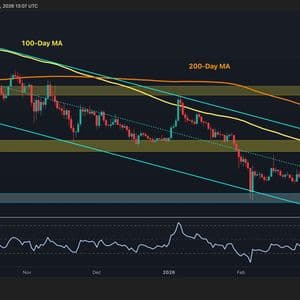
XRP has been in a sustained downtrend since its July 2025 peak, losing ground against both the dollar and Bitcoin over the past eight months. With the price still trapped below key moving averages and inside a descending channel, the broader structure remains bearish heading into the final stretch of Q1 2026. Ripple Price Analysis: The USDT Pair XRP is trading around $1.42 after bouncing from the February low near $1.20, a level that has held as key horizontal support. The recovery, however, remains shallow. The price is still well beneath the 100-day and 200-day MAs sitting near $1.80 and $2.10, which represent the next major resistance levels to watch. A sustained close above $1.80 would be the first sign of bullish momentum returning, while a breakdown below $1.20 exposes XRP to a retest of the $1.00 psychological level and even drop much deeper. The RSI has also recovered from deeply oversold territory but is hovering around the midpoint, offering no clear directional conviction just yet. The BTC Pair XRP/BTC is hovering near 2,020 sats, deep within a months-long descending channel and below both the 100-day (2,100 sats) and 200-day (~2,200 sats) moving averages. The resistance band at 2,500 sats has capped every recovery attempt since October 2025. The 2,000 sats support zone has held on a closing basis, and the RSI is recovering from its most oversold level of the correction cycle, which is a modest positive sign. But unless XRP breaks above the channel’s upper trendline and reclaims the 100-day and 200-day moving averages, the path of least resistance remains to the downside. The post Ripple Price Analysis: XRP Recoveries Stay Weak Below This Key Level appeared first on CryptoPotato .
23 Mar 2026, 14:40
Shiba Inu Sees Rapid Network Growth as Burn Rate Soars 637%

Shiba Inu kickstarts the new week with massive SHIB burn activity, seeing the token record a rapid surge in its burn rate over the past day.


