


 Invest ideas
News
3 Jun 2026, 21:46
XRP Drops to $1.188 YTD Low as Traders Absorb $14M Blow From Liquidation Wave
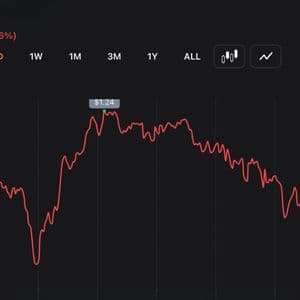
On June 3, XRP hit a new year-to-date low of $1.188 amid a broader crypto sell-off, down nearly 34% for the year, before stabilizing just under $1.22. XRP Hits New Year-to-Date Low On June 3, XRP dipped below $1.20 amid a market-wide sell-off that also saw bitcoin tap its lowest price since early February. Market
3 Jun 2026, 21:41
US Sanctions Iran’s Largest Crypto Exchange Nobitex in Major ‘Economic Fury’ Crackdown

The US Department of the Treasury’s Office of Foreign Assets Control (OFAC) has sanctioned Nobitex, Iran’s largest digital asset exchange, along with three other Iranian crypto exchanges. The move is part of the Donald Trump administration’s Economic Fury campaign aimed at increasing economic pressure on Tehran. The Treasury’s sanctions apply to Nobitex, Wallex, Bitpin, and Ramzinex. US officials allege that these exchanges helped users bypass sanctions, facilitated financial activity connected to Iran, and processed transactions linked to the Islamic Revolutionary Guard Corps (IRGC). Terror Finance and Sanctions Evasion Risks In an official statement this week, Treasury Secretary Scott Bessent claimed that Iran has increasingly used digital asset technologies to advance its “corrupt agenda,” including circumventing sanctions and transferring wealth outside the country. He added that Treasury would continue tracking financial activity through both traditional banking channels and digital assets as part of the administration’s broader effort to prevent Iran from developing a nuclear weapon. According to Treasury, Nobitex processed more than 50% of all Iranian digital asset inflows in 2025 and played a central role in the country’s crypto ecosystem. The agency alleged that the exchange facilitated payments linked to Iran’s terrorist activities, sanctions evasion efforts, and IRGC-related transactions, including activity involving IRGC-affiliated ransomware actors. Treasury also accused Nobitex of helping the Central Bank of Iran access hundreds of millions of dollars in stablecoins used to support the Iranian rial and enabling regime insiders to access international crypto exchanges across multiple jurisdictions. Treasury said Nobitex helped protect and move assets out of the country despite internet blackouts from the very start of the war. In addition to sanctioning the exchange, OFAC designated Amir Hossein Rad, Nobitex’s chairman, co-founder, and former CEO, along with several other company leaders and officials. According to their findings, Rad helped restore Nobitex’s operations after the platform suffered a $90 million hack in June 2025. The agency also sanctioned Nobitex co-founders Seyed Mohammad Ali Aghamir Mohammad Ali and Seyed Mohammad Aghamir Mohammad Ali, both members of the Kharrazi family, which Treasury described as part of Supreme Leader Mojtaba Khamenei’s inner circle. Current Nobitex CEO Seyed Ali Khoee was also designated. Wallex, Bitpin, and Ramzinex Also Targeted Meanwhile, Wallex, identified as Iran’s second-largest digital asset exchange by volume, was said to have received 12% of Iranian digital asset inflows in 2025 and allegedly facilitated transactions linked to the IRGC. Bitpin accounted for 10% of Iranian digital asset inflows in 2025 and processed millions of dollars in transactions, including transfers allegedly connected to the IRGC, while some of its investors have reportedly been linked to efforts to evade US sanctions. Ramzinex, a Tehran-based exchange founded in 2018, has processed more than $2.45 billion in transactions and allegedly facilitated transactions linked to the IRGC and an Iranian government-backed financial institution. The post US Sanctions Iran’s Largest Crypto Exchange Nobitex in Major ‘Economic Fury’ Crackdown appeared first on CryptoPotato .
3 Jun 2026, 21:34
XRP ETFs may lock up 6 percent of token supply

🚨 Up to 6 percent of all $XRP supply could be locked in ETFs. 📈 Institutional demand for XRP is rapidly rising in 2026. 📝 Morgan Stanley’s latest filings show direct positions in XRP ETFs. Continue Reading: XRP ETFs may lock up 6 percent of token supply The post XRP ETFs may lock up 6 percent of token supply appeared first on COINTURK NEWS .
3 Jun 2026, 21:20
Cardano Slumps to 5-Year Low Price as Charles Hoskinson Warns of 'Wave of Failures'

Founder Charles Hoskinson was brutally honest about the troubles the Cardano ecosystem could face as the market continues declining.
3 Jun 2026, 21:17
DNA Protocol Breaks the Chains: Zero-Knowledge Identity Arrives on XRP Ledger

DNA Protocol and XRP Ledger: The Rise of Sovereign Identity Powered by Zero-Knowledge Proofs DNA Protocol, a platform built around decentralized identity, is advancing a model of sovereign identity anchored on the XRP Ledger (XRPL), using zero-knowledge proofs to verify personal and genomic attributes without exposing the underlying data. For decades, identity has been defined and managed through centralized systems. Governments issue documentation, corporations store personal records, and digital platforms monetize behavioral data. As a result, this structure has concentrated control of identity information in a handful of institutional databases, creating both privacy risks and dependency on intermediaries. DNA Protocol reframes this architecture by shifting identity into cryptographic credentials controlled by the individual. With zero-knowledge proofs, users can validate claims such as age, qualifications, or eligibility without revealing underlying data. Instead of sharing raw information, only mathematical proofs are transmitted, reducing exposure and repeated data collection. By anchoring these proofs to the XRP Ledger, the system gains a tamper-resistant verification layer. The ledger does not store personal identity itself, but acts as a neutral infrastructure for registering attestations and confirming authenticity across platforms. This is advantageous since it enables interoperability, where identity verification can occur without reliance on a single centralized issuer or database. How the XRP Ledger Is Powering a New Era of User-Controlled Digital Identity The implications of zero-knowledge proofs extend beyond privacy. If adopted at scale, this model pushes digital systems toward data minimization, where platforms request verifiable claims rather than full identity profiles. Institutions would still issue foundational credentials, but their role shifts toward verification rather than continuous data storage, while users retain control over disclosure. Recent momentum around blockchain-based financial infrastructure, including the selection of the XRP Ledger by a major European bank for euro stablecoin issuance, signals growing institutional interest in such architectures. While still early, zero-knowledge identity on the XRPL points toward a future where identity becomes less about storage and surveillance, and more about portable, user-controlled proof.
3 Jun 2026, 21:15
Bitcoin Slips Below $65,000 as Market Faces Renewed Selling Pressure

BitcoinWorld Bitcoin Slips Below $65,000 as Market Faces Renewed Selling Pressure Bitcoin (BTC) has fallen below the $65,000 mark, continuing a period of heightened volatility in the cryptocurrency market. According to Bitcoin World market monitoring, BTC is currently trading at $64,792.6 on the Binance USDT market, reflecting a notable decline from recent highs. Current Market Snapshot The drop below $65,000 represents a significant psychological threshold for traders and investors. This level has historically acted as both support and resistance, and its breach suggests that selling pressure has intensified in the short term. The move comes amid broader market uncertainty, with altcoins also experiencing mixed performance. Factors Behind the Decline Several factors may be contributing to the current price action. Macroeconomic concerns, including interest rate expectations and regulatory developments in major economies, continue to influence risk assets like Bitcoin. Additionally, on-chain data shows increased exchange inflows, which often precede selling activity. The market is also digesting recent comments from policymakers regarding digital asset regulation. What This Means for Traders For active traders, the $65,000 level now becomes a key resistance zone to watch. A sustained move below this area could open the door to further downside toward the $62,000 support level. Conversely, a quick recovery above $65,000 may signal that the market is absorbing selling pressure. Volume and order book depth on major exchanges like Binance will be critical to monitor in the coming sessions. Conclusion Bitcoin’s dip below $65,000 underscores the ongoing volatility inherent in cryptocurrency markets. While short-term price movements can be unsettling, they are part of the normal market cycle. Investors should focus on long-term fundamentals and avoid making impulsive decisions based on daily price swings. The market remains sensitive to macroeconomic signals and regulatory news, making it essential to stay informed through reliable sources. FAQs Q1: Why did Bitcoin drop below $65,000? The decline appears driven by a combination of selling pressure, macroeconomic uncertainty, and technical factors. Exchange inflows have increased, suggesting some holders are taking profits or cutting losses. Q2: Is this a good time to buy Bitcoin? Market timing is inherently uncertain. Investors should consider their own risk tolerance and investment horizon. The current level may present an opportunity for long-term buyers, but short-term volatility remains high. Q3: What are the next key support levels for Bitcoin? If the decline continues, the next major support levels are around $62,000 and $60,000. A break below those levels could signal a deeper correction. This post Bitcoin Slips Below $65,000 as Market Faces Renewed Selling Pressure first appeared on BitcoinWorld .


