


 Invest ideas
News
3 Jun 2026, 15:28
Can't Afford FIFA World Cup 2026 Tickets? Many Fans Are Turning to Online Betting

For football supporters, attending the FIFA World Cup has always been a dream. But for many fans, FIFA World Cup 2026 may be the first tournament where that dream feels financially out of reach. The tournament will feature 48 teams, 104 matches, and 16 host cities across the United States, Canada, and Mexico. While the expanded format promises more football than ever before, it also creates a reality many supporters are already discovering: attending matches can be extremely expensive. Tickets are only part of the equation. Flights, hotels, local transportation, food, and the challenge of moving between host cities can quickly push the cost of a World Cup trip into the thousands of dollars. For fans hoping to follow their national team through multiple rounds, the final bill can become difficult to justify. There is an alternative. Instead of traveling across North America, fans can experience FIFA World Cup 2026 through streaming platforms, online communities, and Web3 sportsbooks . The Real Cost of Attending FIFA World Cup 2026 Most fans initially focus on ticket prices. The bigger expense often comes afterward. World Cup 2026 spans an enormous geographic area. Unlike previous tournaments where host cities were relatively close together, supporters may need to travel between cities separated by thousands of kilometers. Consider a fan attending several matches: Match tickets International flights Domestic flights Hotels Local transportation Food and entertainment Travel insurance The total cost can easily exceed the vacation budget. Many fans are therefore asking a practical question: Is attending in person really the best way to experience the tournament? Watching From Home Has Changed A decade ago, staying home meant watching matches on television while missing most of the atmosphere. Modern football consumption is highly interactive. Fans now experience major tournaments through: Livestreams Social media discussions Telegram communities Match prediction contests Fantasy football Live statistics Watch parties Online betting The World Cup increasingly functions as a digital event rather than a purely stadium-based experience. Millions of supporters follow every moment from their phones and laptops while engaging with other fans in real time. In some ways, the online experience offers more information and interaction than sitting in a stadium. Why Online Betting Is Growing Alongside Football Viewership The rise of online betting is closely connected to how sports audiences have changed. Fans no longer want to passively watch matches. They want to participate. Betting adds another layer of engagement to every game. Instead of simply watching Argentina play France, viewers can follow: Match winners Goalscorers Cards markets Corners markets Live score predictions Tournament futures Knockout qualification bets A group-stage match between two teams that may not directly interest a fan suddenly becomes much more engaging. The expanded World Cup format creates even more opportunities. With 104 matches scheduled, bettors will have access to thousands of individual betting markets throughout the tournament. The Rise of the Remote World Cup Experience The World Cup is becoming part of a broader trend across sports and entertainment. Large live events are becoming more expensive physically and more accessible digitally. Supporters increasingly build their own tournament experience from home. A fan can: Watch every match Join online communities Follow live statistics Participate in fantasy competitions Place live bets Track tournament predictions All without spending thousands on travel. This is especially appealing to younger audiences who are already accustomed to consuming sports through multiple screens simultaneously. Why Crypto Sportsbooks Are Benefiting Traditional sportsbooks continue to dominate many regulated markets. However, crypto sportsbooks are growing rapidly because they address several frustrations faced by international users. These platforms often provide: Faster deposits Faster withdrawals Global accessibility Stablecoin support Mobile-first interfaces Simplified onboarding For international football fans, those features become particularly attractive during major tournaments. Instead of dealing with currency conversions, banking delays, and regional restrictions, users can often fund accounts directly with cryptocurrencies such as Bitcoin or USDT. How Dexsport Fits Into This Trend Dexsport reflects many of the characteristics driving the growth of online sports betting around major football events. The platform supports more than 40 cryptocurrencies across 20 blockchain networks, including Bitcoin, Ethereum, USDT, BNB, and TRON. Users can access the sportsbook through email registration, Telegram, MetaMask, Trust Wallet, or WalletConnect. No mandatory KYC is required for standard platform access. That flexibility makes the platform accessible to football fans across multiple regions. For live betting, Dexsport includes Cash Out functionality that allows bettors to settle wagers before matches end and manage risk dynamically during gameplay. The platform also provides transparency through its public betting desk, where users can view wagers and outcomes in real time. During a tournament expected to generate enormous betting volume, transparency and trust become important differentiators. Beyond the sportsbook itself, users also gain access to more than 10,000 casino games within the same ecosystem. FIFA World Cup 2026 May Accelerate a Long-Term Shift World Cup 2026 may become a turning point in how global football fans experience major tournaments. As attendance costs continue rising, digital participation becomes increasingly attractive. That does not mean stadiums will become less important. It means the audience outside the stadium may become even more important. Millions of supporters who cannot justify spending thousands of dollars on travel are discovering that modern online experiences offer a compelling alternative. Streaming, social media, online communities, fantasy football, and betting platforms are creating a version of the World Cup that is accessible from virtually anywhere. For many fans, that version of the tournament may ultimately become the most practical way to participate. Final Thoughts The biggest barrier to attending the FIFA World Cup 2026 is cost. As ticket prices, flights, and accommodation expenses rise, more supporters are choosing to experience the tournament digitally rather than physically. Online betting has become part of that evolution. It transforms matches from passive viewing into active participation while remaining far more affordable than traveling across North America. Platforms like Dexsport are benefiting from this trend by offering global access, crypto payments, live betting tools, and flexible onboarding designed for international football audiences. Disclaimer: This article is provided for informational purposes only. It is not offered or intended to be used as legal, tax, investment, financial, or other advice.
3 Jun 2026, 15:23
Bitcoin Tests $66,900 Pivot as BlackRock Moves 6,005 BTC, Schwab Opens 24/7 Futures
Bitcoin News A new secured Visa credit card from Lava is positioning Bitcoin rewards as a mainstream consumer hook, paying 3% back in BTC for US users, 1% internationally, and 5% across a network o...
3 Jun 2026, 15:21
Bitcoin Price Analysis: What’s Next for BTC After 11% Weekly Crash?
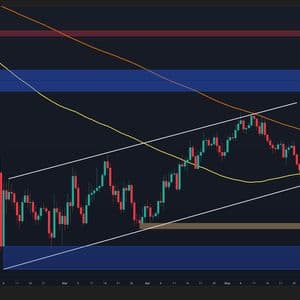
Bitcoin has suffered a decisive breakdown from its multi-month rising channel, triggering a sharp sell-off that pushed the price toward a major support cluster around $65K. The rejection from the 100-day moving average and the inability to reclaim lost support levels suggest sellers remain in control in the near term, although BTC is now approaching an area where demand previously emerged. Bitcoin Price Analysis: The Daily Chart On the daily timeframe, Bitcoin has invalidated the ascending channel structure that guided the price action for several months. After failing to hold above the channel’s lower boundary, BTC accelerated lower and lost the 100-day moving average around $73.5K, which had acted as an important dynamic support throughout the recovery phase. The breakdown below the $73K-$74K region confirms a bearish structural shift and increases the probability of a deeper correction. The asset is currently testing a key support zone around $65K-$66K, marked by a notable horizontal demand area that previously triggered strong buying interest. Any recovery attempt is likely to face significant selling pressure between $70K and $73K, while a broader relief rally could target the former channel support and the 200-day MA near $80K-$82K. If the current support fails to hold, the next major demand zone appears around $59K-$62K, which aligns with the lower blue support area visible on the chart. BTC/USDT 4-Hour Chart The 4-hour chart provides a clearer view of the breakdown. Bitcoin consolidated beneath the former support region around $73K-$74K before sellers regained control and initiated another impulsive leg lower. The recent price action resembles a textbook breakdown and retest sequence. Following the rejection from the highlighted pullback region near $71K-$74K, Bitcoin experienced an aggressive liquidation-driven decline toward the $65K support zone. The current reaction from this area suggests buyers are attempting to defend the level, but the market remains vulnerable while trading below the broken support cluster. For bulls to regain momentum, Bitcoin would need to reclaim the $71K-$74K range and establish acceptance above it. Failure to do so will likely confirm a pullback and could leave the market exposed to additional downside pressure, with the $65K support acting as the final major defense before a potential move toward the low-$60K region. Sentiment Analysis The 3-day liquidation heatmap highlights a significant concentration of short-term liquidity above the current market price. This liquidation cluster is located around $70K, with additional dense pockets extending toward the $75K region. This positioning suggests that, after such an aggressive decline, Bitcoin may eventually attempt a relief bounce to target overhead liquidity. Markets frequently gravitate toward high-liquidity zones, especially after major liquidation cascades have cleared nearby long positions. However, the heatmap also shows that most of the attractive liquidity currently sits above price rather than below it. This creates the potential for a short-squeeze recovery toward the $70K-$75K region if buyers successfully defend the $65K support area. For now, the broader trend remains bearish following the channel breakdown and the loss of the 100-day moving average. The $65K-$66K zone is the key level to monitor. Holding above it could allow Bitcoin to stage a corrective rebound toward overhead liquidity, while a decisive breakdown would likely open the door for a move toward the $60K-$62K support region. The post Bitcoin Price Analysis: What’s Next for BTC After 11% Weekly Crash? appeared first on CryptoPotato .
3 Jun 2026, 15:19
Bitcoin sale by Strategy triggers market reaction, no shift in long-term plan

🚨 Strategy sold a small portion of its $BTC holdings, sparking market debate. 💸 Citi expects no change to Strategy’s long-term plans after the move. 📉 ETF flows turned negative, impacting overall crypto sentiment. 🇺🇸 Hopes fade for new U.S. crypto regulations to boost demand this year. Continue Reading: Bitcoin sale by Strategy triggers market reaction, no shift in long-term plan The post Bitcoin sale by Strategy triggers market reaction, no shift in long-term plan appeared first on COINTURK NEWS .
3 Jun 2026, 15:12
Kalshi Crypto Volume Tops $100M for First Time On Largest Liquidation Day Since February

On June 2, Kalshi pushed past the $100 million mark for the first time when it comes to spot volume within crypto-based event contracts. Data from Artemis shows that spot volume in this category reached $107.6 million yesterday surpassing the previous high set on March 16. The timing of this record is what makes it interesting as it landed on a day wherein the crypto markets experienced its largest liquidation event since February. A Record on the Largest Liquidation Day of 2026 June 2 saw Bitcoin slide below $67k for the first time since April 2. The total crypto market cap fell by over 5%, shedding roughly $137 billion. The dip resulted in around $1.76 billion in crypto liquidations over 24 hours, making yesterday the heaviest de-leveraging day since February 5, according to CoinGlass data. The majority of liquidations came from the long side with around $1.59 billion worth of positions wiped. The selloff didn’t come out of nowhere. Institutional demand has waned over the past two weeks adding to the bleak sentiment. Bitcoin spot ETFs are on a 12 day outflow streak, making it the longest ever losing streak since its inception in January 2024. Ethereum Spot ETFs haven’t fared any better notching 16 consecutive days of outflows. Uncertainty was compounded by the news of Saylor’s Strategy BTC sale , rattling holders who counted on the firm never touching its stack. Mt. Gox Moved Coins and the Drop Picked Up Speed Mt. Gox just moved 10,306 BTC ($731M). We’ve seen similar transfers before, tied to creditor repayments and distribution preparation. Importantly, they did not lead to immediate selling pressure. pic.twitter.com/Zz58rDdbsp — CryptoQuant.com (@cryptoquant_com) June 2, 2026 On June 2, the Mt. Gox estate moved 10,306 BTC worth about $731 million, according to CryptoQuant. Blockchain data placed the transfer in the early hours, with most of it routed to a fresh address that had no prior history. CryptoQuant analysts were quick to note the coins didn’t hit an exchange and that past transfers like this haven’t led to immediate selling. Markets didn’t wait around for that nuance. Bitcoin dropped fast as the headline crossed, and leveraged positions got run over in the move. That’s the backdrop Kalshi set its crypto record against. Same session, two very different stories. Why the Carnage Is Becoming Kalshi’s Edge Here’s the part worth sitting with. The record didn’t happen despite the liquidations. It happened because of them. When leverage breaks, traders who just got flushed need somewhere to express a view without getting wrecked again. Binary price contracts do that. You buy a “BTC above X” or “below X” contract, your downside is capped at what you paid, and there’s no liquidation price to defend. So flow rotated. Some of it as hedges, some as straight directional bets on where Bitcoin lands next. This fits a pattern that’s been building for months. Kalshi’s crypto-category volume went vertical from February, and the week ending May 17 already set a $454.2 million all-time high on Artemis numbers, flipping Polymarket’s early-year lead. A single day above $100 million is the daily version of that same trend. The bigger read is about what Kalshi is turning into. Not a sportsbook with a crypto tab bolted on the side. A volatility venue. The place flow goes when leverage breaks rather than a fair-weather add-on. If that holds, the crypto category should compound on exactly the chaos that hurts everyone else in the market. The thing to watch now is whether these levels stick. Records set during a liquidation event are easy. Holding them once the tape goes quiet is the real test, and that’s the number that’ll tell you whether June 2 was a one-off or a floor. If you're reading this, you’re already ahead. Stay there with our newsletter .
3 Jun 2026, 15:11
Expert Explains Why Japan’s Monetary Policy May Not Trigger Massive XRP Rally

XRP community commentator Eri has challenged growing speculation that a major Japanese yen carry-trade unwind in July could trigger an immediate surge in XRP’s price. Key Points XRP community commentator Eri pushed back against claims that a yen carry-trade unwind could trigger an immediate XRP price surge. Visit Website


