


 Invest ideas
News
9 Jun 2026, 16:55
Ripple (XRP) Price Predictions for This Week (June 9)
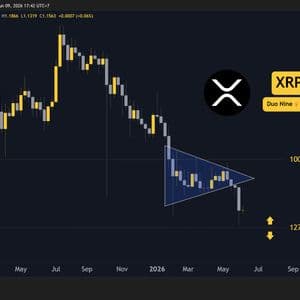
XRP is down 8% on the weekly chart as bears just tested support at $1. Ripple (XRP) Price Predictions: Analysis Key support levels: $1 Key resistance levels: $1.4, $1.6, $2 Price Hits $1 In the past week, XRP fell to $1 after sellers took over the price action. After testing this key psychological level, this cryptocurrency entered a short-term bounce that briefly rallied to $1.18. Given that XRP made a lower low and the downtrend was reconfirmed, there is a high chance the current support will come under significant pressure in the future. Any weakness there could see buyers retreat even lower, with the next target for sellers found at $0.80. Source: TradingView Sell Volume Increases With this latest move, the sell volume made a higher high not seen since early February when the price nearly hit $1 as well. This reconfirms the bearish bias because it shows sellers have conviction. The biggest question is if XRP can hold here or if it’s just a matter of time before $1 also turns into resistance as the price seeks lower levels to attract buyers. However, this could take some time since the chart looks oversold right now. Source: TradingView Daily RSI Oversold With this latest price drop, the daily RSI reached oversold territory after falling below 20. This suggests that sellers may have become greedy here and could be punished with a more sustained bounce before they regain control. The moving average on this indicator is also falling. This suggests the RSI could reach oversold levels again later. If at that point it makes a higher low, that could signal a major reversal will follow. Source: TradingView The post Ripple (XRP) Price Predictions for This Week (June 9) appeared first on CryptoPotato .
9 Jun 2026, 16:55
Whale Moves $211 Million in USDC to Coinbase: What It Signals for the Market

BitcoinWorld Whale Moves $211 Million in USDC to Coinbase: What It Signals for the Market A cryptocurrency whale has transferred over 211 million USDC — worth approximately $211 million — from an unidentified wallet to the Coinbase exchange, according to data from Whale Alert, a blockchain transaction tracking service. The transfer, recorded on February 13, 2025, is among the largest single stablecoin movements to a centralized exchange in recent weeks. Details of the Transaction Whale Alert flagged the transaction at 14:32 UTC, noting that the funds originated from a wallet with no known public association. The destination address is linked to Coinbase, one of the largest cryptocurrency exchanges by trading volume. USDC, a stablecoin pegged 1:1 to the U.S. dollar, is commonly used for large-scale transfers due to its price stability and liquidity. Blockchain data confirms the transaction was completed in a single block with minimal fees, suggesting the sender prioritized speed over cost efficiency. The wallet receiving the funds shows no immediate outflows, indicating the whale may be preparing for a large trade or institutional settlement. Market Context and Implications Large stablecoin deposits to exchanges often precede significant trading activity. While not inherently bearish or bullish, such movements can signal an intent to purchase other cryptocurrencies or to exit positions. In this case, the transfer to Coinbase — a platform widely used by both retail and institutional investors — suggests the whale may be positioning for a major market move. Analysts note that USDC inflows of this magnitude can also indicate over-the-counter (OTC) trade settlements or custodial transfers between institutional accounts. Without additional on-chain data linking the sending wallet to a known entity, the exact purpose remains speculative. Impact on Stablecoin Flows The transfer comes amid a broader trend of increased stablecoin activity. According to data from Glassnode, total USDC supply on exchanges has risen by 4.2% over the past week, reflecting growing liquidity. However, individual whale movements of this size are relatively rare and often draw attention from traders monitoring large wallet activity. Coinbase has not publicly commented on the transaction. The exchange typically does not disclose individual user activity unless required by regulatory obligations. Conclusion The $211 million USDC transfer to Coinbase represents a notable whale movement that market participants will watch closely for follow-on activity. While the intent is unknown, the scale of the transaction underscores the continued role of stablecoins in facilitating large cryptocurrency trades. Readers should monitor Coinbase wallets and exchange flow data for potential signals of market direction in the coming days. FAQs Q1: What is Whale Alert? Whale Alert is a blockchain analytics service that tracks and reports large cryptocurrency transactions in real time. It monitors major blockchains including Bitcoin, Ethereum, and various stablecoins like USDC. Q2: Why do whales move large amounts of USDC to exchanges? Large stablecoin deposits to exchanges often indicate preparation for trading activity, such as buying other cryptocurrencies, or for institutional purposes like OTC settlements or custodial transfers. The exact reason varies by case. Q3: Does this transfer affect the price of USDC? No. USDC is a stablecoin designed to maintain a 1:1 peg with the U.S. dollar. Large transfers do not affect its price, but they can signal potential volatility in other cryptocurrencies if the whale intends to trade. This post Whale Moves $211 Million in USDC to Coinbase: What It Signals for the Market first appeared on BitcoinWorld .
9 Jun 2026, 16:41
AI Coins Build Momentum as OpenAI Takes First Step Toward IPO

OpenAI’s confidential IPO filing with the Securities and Exchange Commission (SEC) is having a ripple effect on crypto assets.
9 Jun 2026, 16:35
XRP Faces Key Test: $1.40 Breakout or $0.80 Retest

XRP is sitting on what analyst EGRAG CRYPTO is calling a “macro decision zone,” with the next monthly candle close likely determining whether the token carves out a double bottom or slides toward $0.80. Although the token has bounced back after touching a 19-month low of $1.05 last week, it still hasn’t cleared the levels that would give bulls any real confidence. The Framework According to EGRAG, a monthly close above $1.40 would confirm that the $1.05 low was the bottom. However, in their opinion , reclaiming $1.61 to $1.65 would be where genuine bullish recovery begins, with a break above $1.70 adding another layer of confirmation. Still, none of those levels have been touched as of now. The analyst also made a case for the downside, saying that if XRP lost momentum, it could go back down to $0.80. Interestingly, they didn’t flag any intermediate support between the current price and that level if the structure breaks down. “Hold ground then → double bottom possible,” they wrote. “Lose momentum then → $0.80 retest likely.” Earlier, EGRAG pointed out that XRP had reached $1.1860 and was “building momentum for the second push,” placing a short-term target of $1.19 to $1.25. The analyst did warn that losing $1.14 would open the door to a retest of $1.10. Fellow market watcher CasiTrades added a complementary read of their own, noting that the Ripple token had “perfectly” hit a major .786 macro Fibonacci support at $1.09 on Coinbase. The crypto trader also identified $1.19 and $1.27 as resistance zones that, if they failed, could lead to a deeper low toward the $0.90 area. However, if XRP can push through both, it would suggest that the market is building a new trend rather than setting up for another wave lower. XRP Recovery Amid SBI’s Reward Program Launch Some traders are looking beyond daily price action, with one of them, ChartNerd, noting that XRP had closed below its 200-week simple moving average, a development that in the past came just before cycle lows. At the time of writing, the world’s sixth-largest cryptocurrency by market cap had gained just over 1% in 24 hours. The uptick followed news that Japan’s SBI Bank had launched a program that lets customers exchange their deposit interest for Bitcoin, Ethereum, or XRP. However, it was still down by more than 8% over the last seven days, underperforming the broader crypto market, which had shed about 5.4% of its value in the same period. XRP is also off over 18% across one month and nearly 49% year-on-year, while sitting 68% below its July 2025 all-time high. But that decline isn’t all bad news, as on-chain analytics platform Santiment, using its 30-day MVRV metric, said the asset was in a “fair buy” zone where long-term investors could start accumulating. Meanwhile, on the longer horizon, ChartNerd placed potential Fibonacci extension targets on XRP at $8, $13, and $27, as long as a proper cycle bottom forms before year-end. The post XRP Faces Key Test: $1.40 Breakout or $0.80 Retest appeared first on CryptoPotato .
9 Jun 2026, 16:33
What Are the Best Licensed Web3 Casinos? 8 Audited Platforms Compared

Licensed web3 casinos are crypto gambling platforms that pair a verifiable gambling license with blockchain features such as non-custodial wallets, provably fair games, and on-chain bet records. The license adds dispute resolution and fund-handling rules. The blockchain layer lets players check fairness instead of trusting a closed system. As crypto gambling grows toward $65 billion , the gap between a licensed and audited site and an unverified one is the difference between provable fairness and withheld winnings. The eight platforms below are ranked on license, audits, and transparency, not on bonus size. What Makes a Web3 Casino Licensed and Audited A license and an audit are two separate things, and a strong platform carries both. A license is a verifiable gambling permit from a jurisdiction such as Curaçao, Anjouan, or a tier-1 body like the Malta Gaming Authority. It sets baseline rules for fairness, solvency, and complaint handling. An audit is an independent verification of the platform itself. There are two kinds, and the distinction matters. A smart-contract audit, from a firm like CertiK or Pessimistic, checks the code that holds and moves funds. Provably fair casinos use cryptographic seed verification so a player can confirm a single game outcome was not manipulated. Most crypto casinos offer the second. Far fewer hold the first. One honest point: an offshore license is not the same as tier-1 oversight. Anjouan and post-reform Curaçao licenses establish a legal framework, but enforcement is lighter than in Malta or the UK. That is why audited crypto casinos with a verifiable license number and a published CertiK audited casino report sit above platforms that show neither. Verification matters more than a logo. The 8 Best Licensed Web3 Casinos Compared The table below sets out the eight side by side on the points that decide trust: license, audit or fairness model, custody, and when identity checks apply. # Platform License Audit / Fairness Custody KYC 1 Dexsport Anjouan Smart-contract (CertiK + Pessimistic) + provably fair Non-custodial None on standard play 2 Cloudbet Curaçao Provably fair, 2FA, Sumsub data security Custodial On large wins or review 3 Stake Curaçao Provably fair (SHA-256) + independent RNG audit Custodial Required at withdrawal 4 BC.Game Anjouan Provably fair Originals, on-chain seed Custodial AML-triggered 5 Wild.io Curaçao Provably fair + certified RNG, Fireblocks custody Custodial On large withdrawals 6 Vave Curaçao Provably fair Originals Custodial Risk-based 7 mBit Curaçao Provably fair, RTP shown per title Custodial Soft threshold 8 BetPanda Anjouan Provably fair, Lightning Network payments Custodial Low, soft model Figures reflect publicly available information at the time of writing. License terms and audit recency change, so confirm details on each platform before depositing. The 8 Platforms Reviewed 1. Dexsport: Best Audited Web3 Casino Overall Dexsport is the one platform here that holds independent smart-contract audits, which is what earns it the top spot on an audit-first ranking. Dual-audited by CertiK and Pessimistic, a smart-contract combination few offshore platforms can show. Fully non-custodial, so funds stay in your wallet and every wager logs on a public ledger. No mandatory KYC on standard play, with signup through a crypto wallet, Telegram, or email. $1 minimum bet and support for more than 40 cryptocurrencies across 20 networks. 2. Cloudbet: Longest-Running Licensed Operator Operating since 2013, Cloudbet pairs a verifiable Curaçao license with one of the longest clean track records in crypto gambling. Licensed under Curaçao number OGL/2024/328/0599, confirmable on the regulator's portal. Provably fair games backed by 2FA and Sumsub-secured verification data. Custodial model with KYC requested on large wins or manual review. 3. Stake: Largest by Volume Stake is the biggest crypto casino by deposit volume, with a nine-year history and no major payout dispute at scale. Curaçao licensed, with provably fair Stake Originals using SHA-256 seed reveal. Independent RNG auditing layered on top of the provably fair system. Custodial platform that requires KYC at withdrawal under AML rules. 4. BC.Game: Largest Game Library BC.Game runs more than 10,000 games on a single wallet balance, one of the deepest libraries among web3 casinos. Licensed in Anjouan under ALSI-202410011, verifiable through the regulator's tool. Provably fair BC Originals with on-chain seed verification players can check. AML-triggered KYC, applied only when activity is flagged, not at signup. 5. Wild.io: Fastest Tested Withdrawals Wild.io combines a Curaçao license with institutional-grade custody and consistently quick crypto payouts. Licensed under Curaçao OGL/2024/210/0198, with Fireblocks securing player funds. Provably fair titles alongside certified RNG from named studios. No-KYC friendly for standard amounts, with checks on large or flagged withdrawals. 6. Vave: Deepest Crypto Cashier Vave carries over 100 deposit routes and runs a casino and sportsbook on one balance, suited to multi-coin players. Confirmed Curaçao licensing with a broad multi-network USDT and USDC cashier. Provably fair Vave Originals across crash, dice, and instant games. Risk-based KYC, applied selectively when withdrawal patterns warrant review. 7. mBit: Established Slots Specialist Licensed since 2014, mBit is a long-standing crypto-only casino with a slots-heavy catalog. Curaçao licensed with more than a decade of operating history. Provably fair games, with theoretical RTP displayed on each title. Soft-threshold KYC, kept light for routine play. 8. BetPanda: Lightning-Native Newcomer BetPanda leans on Bitcoin Lightning for fast, low-cost settlement and a large game library. Anjouan licensed, operating on a low-friction, soft-KYC model. Provably fair games with independent outcome verification. Non-custodial payment flow through Lightning Network rails. How to Verify a Web3 Casino License Yourself A license claim means little until you check it, and the process takes a few minutes. Find the license number in the site footer, then look it up against the issuing regulator's records. Both the Anjouan Gaming Commission and the Curaçao Gaming Authority publish live verification tools that confirm whether a number is active for a specific domain. For audits, the crypto casino license verification habit extends to the code. Locate the audit report on the auditor's own site, such as CertiK's public registry, so you can confirm it exists and check the date. An audit from years ago may not cover features added since. For game fairness, use the platform's verifier to recompute a bet from its revealed seed and confirm the hash matches. The same licensing and custody checks are worth running before you move a larger balance onto any platform. Licensed vs Anonymous Web3 Casinos A licensed platform and an anonymous one are not opposites. Anonymous casinos and no-KYC casinos remove identity checks at signup to prioritize privacy, while licensing adds recourse and verification. Many of the platforms above do both at once, holding a license while keeping standard play document-free. The distinction worth holding onto is oversight. A non-custodial casino with a verifiable license and a published audit gives a player more protection than an anonymous site with neither, even though both skip the passport upload. Privacy and accountability can coexist, and the strongest platforms treat them as complementary. The Bottom Line On an audit-first ranking, "best" means a verifiable license, independent verification, and transparency that a player can check, not the largest bonus. The regulated giants offer scale and longer track records. Whichever you choose, verify the license and audit yourself, and keep balances session-sized. Disclaimer: The information here is provided for general purposes only and is not legal, tax, investment, or financial advice. Gambling carries risk. Please play responsibly and within your means.
9 Jun 2026, 16:32
Japan's SBI Shinsei Bank to offer crypto rewards for deposits scheme

Japan’s SBI Shinsei Bank is planning a new program geared at giving its customers vouchers redeemable for cryptocurrency after they complete deposits, turning one of Japan’s largest banks into a possible crypto on-ramp for millions of customers saving money with the bank starting June 10. The program, first reported by Nikkei, offers vouchers worth 20% of the interest earned on specific eligible accounts. Customers can then redeem those vouchers for Bitcoin (BTC), Ether (ETH) or Ripple (XRP) through SBI VC Trade, the group’s licensed cryptocurrency exchange. What is the program’s makeup? According to the program’s details from SBI Shinsei, customers will keep their principal in yen in the bank and continue to collect standard interest on these savings. In addition, the bank will issue a voucher pegged to one-fifth of the interest payment, converted at the market price of the particular cryptocurrency being disbursed on the day interest is paid, according to Yahoo Finance. The crypto exposure is small in actual terms, as SBI Shinsei’s top-tier Hyper Deposit rate sits around 0.42% annually. This means the voucher represents a fraction of a fraction, but the point of the program is primarily access rather than yield. Participation requires a linked account at SBI VC Trade, and the bank plans to run an initial three-month pilot covering both ordinary and time deposits. A total of almost 4.33 million deposit accounts are eligible and could qualify for the program, with SBI Shinsei intending to make the service permanent if demand is justified. Why has SBI Shinsei launched this program? This program seems to be part of a wider strategy directed toward digital assets across SBI Holdings. The firm’s cryptocurrency exchange, SBI VC Trade, launched a retail USDC lending product in March, structured as a fixed-term loan to the exchange rather than a traditional bank deposit. In May, SBI also said it was exploring buying some shares in trading platform Bitbank, one month after SBI VC Trade acquired rival exchange Bitpoint Japan. SBI Holdings, a longstanding investor in Ripple through their joint venture SBI Ripple Asia, also has a history of distributing XRP as shareholder dividends and promotional bonuses, according to Ledger Insights. In March, the group issued a digital bond aimed at retail investors that paid XRP tokens as a bonus through SBI VC Trade accounts. The group’s securities arm, SBI Securities, is also preparing crypto-focused investment trusts and ETFs tied to BTC and ETH. A subsidiary of SBI Shinsei Bank, Aplus, began issuing Visa cards in May that accumulate cryptocurrency rewards. SBI has also operated in the crypto mining business through SBI Crypto since 2017 and acquired institutional market maker B2C2 in 2020, offering the company infrastructure across trading and liquidity. Can U.S. banks emulate this model? Japan regulates crypto under its Payment Services Act, with the Financial Services Agency licensing exchanges directly. This structure allows a bank to connect a directly affiliated exchange to its own deposits without breaching any banking laws. This framework is markedly different from the United States’ current setup, with the GENIUS Act, signed into law in July 2025, stopping stablecoin issuers from paying yield to their holders. An assessment from the Treasury Borrowing Advisory Committee also estimated that about $6.6 trillion in U.S. transactional deposits could face pressure if crypto products offered competitive returns. The pending CLARITY Act bill, widely supported by crypto exchanges and firms but antagonized by U.S. banks and financial institutions, would further restrict yield on stablecoins from service providers and their affiliated companies. Don’t just read crypto news. Understand it. Subscribe to our newsletter. It's free .

