


 Invest ideas
News
2 Jun 2026, 07:07
Bitcoin Tumbles Below $70,000 for First Time in Two Months
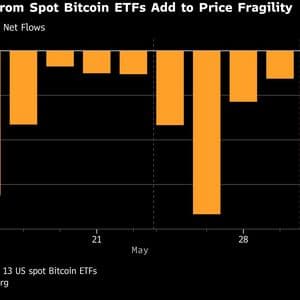
Bitcoin dipped below $70,000 for the first time in almost two months as concerns about the US-Iran war and Strategy Inc.’s rare sale of the token weighed on fragile sentiment.
2 Jun 2026, 07:05
Whale Deposits $17.86M in Ethereum to Bitfinex After 5-Year Hold, Onchain Data Shows

BitcoinWorld Whale Deposits $17.86M in Ethereum to Bitfinex After 5-Year Hold, Onchain Data Shows An anonymous cryptocurrency whale has moved 9,000 Ether (ETH), valued at approximately $17.86 million, to the Bitfinex exchange after holding the assets for five years. The transaction, flagged by blockchain tracking firm Onchain Lens, suggests the investor may be preparing to take profits following a long-term holding period. Background of the Transaction The wallet address, identified as starting with 0x2E8e9, originally purchased 10,000 ETH from the decentralized exchange Uniswap for $4.63 million five years ago. Shortly after that acquisition, the funds were withdrawn from the exchange and held in self-custody. According to onchain records, a portion of the original holding was already moved to the Kraken exchange three weeks ago, signaling a gradual distribution strategy. Potential Profit Analysis If the whale proceeds to sell the 9,000 ETH now deposited to Bitfinex, the estimated realized profit would be approximately $14.37 million. This represents a return of over 300% on the original investment, reflecting Ethereum’s significant price appreciation over the past half-decade. The move aligns with a broader pattern of long-term holders taking profits during periods of elevated market prices. Why This Matters for the Market Large deposits to centralized exchanges are often interpreted as a signal of intent to sell, which can create short-term selling pressure. However, individual whale movements do not necessarily dictate market direction. Traders and analysts monitor such onchain activity to gauge sentiment among large stakeholders, particularly those with a history of patient holding. The gradual nature of this whale’s distributions—first to Kraken, now to Bitfinex—suggests a calculated approach rather than a panic exit. Conclusion This transaction serves as a real-world example of long-term cryptocurrency investment strategies reaching a potential exit point. While the whale’s identity remains unknown, the onchain footprint provides transparency into the behavior of major market participants. For everyday investors, it underscores the importance of tracking large wallet movements as part of a broader market analysis toolkit. FAQs Q1: How was this whale transaction detected? Blockchain analytics firm Onchain Lens identified the deposit by monitoring large movements from known whale wallets to exchange addresses. Q2: Does this deposit guarantee a market sell-off? No. While a deposit to an exchange often precedes a sale, the whale could also be using the exchange for other purposes, such as collateral or transfer. The move is a strong signal but not a guarantee. Q3: What is the significance of the five-year holding period? A five-year hold in cryptocurrency is considered long-term. It demonstrates conviction in the asset’s value and often results in substantial profits during bullish cycles, as seen here with an estimated $14.37 million gain. This post Whale Deposits $17.86M in Ethereum to Bitfinex After 5-Year Hold, Onchain Data Shows first appeared on BitcoinWorld .
2 Jun 2026, 07:02
Mt. Gox Moves $731 Million in Bitcoin, Reigniting Fears of a Market Sell-Off

On Tuesday, Mt. Gox transferred 10,306 BTC, worth roughly $731 million, to a new wallet address, marking the first major movement from the defunct exchange in two months. And just like every time before, the crypto market took notice. Questions are already spreading across trading desks and social feeds: is this the beginning of creditor distributions, or simply internal housekeeping? The answer matters, because when Mt. Gox moves, markets move with it. Why Mt. Gox Still Haunts the Bitcoin Market To understand why a single wallet transfer sends shockwaves through crypto Twitter, you have to go back to 2011. At its peak, Mt. Gox was the world’s dominant Bitcoin exchange, processing over 70% of all global BTC transactions. It wasn’t just big , it was the market. Then, in 2014, hackers attacked. Overnight, 850,000 Bitcoin vanished. The exchange collapsed, and roughly 80,000 creditors lost everything. What followed was a decade-long legal odyssey through Japanese bankruptcy courts, restructuring proceedings, and repeated delays. That Bitcoin is still being returned to this day, in drips, in transfers, and in wallet movements that the entire market watches in real time. 10,306 BTC Moved for the First Time in Two Months According to blockchain intelligence firm Arkham, the latest transfer moved 10,306 BTC to a previously unseen wallet address. ALERT: MT GOX MOVED $739 MILLION bitcoin:native pic.twitter.com/HzlND2XI78 — Arkham (@arkham) June 2, 2026 The timing stands out: it is the first significant movement in approximately two months, coming at a moment when the broader market is already navigating supply-side pressure from record ETF outflow streaks, 11 consecutive days for Bitcoin ETFs and 15 for Ethereum ETFs. That context matters. At $739 million, this transfer represents a substantial potential supply overhang. Whether it signals preparation for creditor distributions, a transfer to an exchange for liquidation, or internal restructuring, the market will price in the risk of eventual sell pressure regardless of the actual intent behind the move. Signs of Internal Restructuring, Not Liquidation The latest transfer appears to be internal restructuring rather than a precursor to liquidation. The key tells: the funds did not flow into exchange-linked wallets. When Bitcoin is being readied for sale, it typically moves to exchange deposit addresses, a pattern Mt. Gox watchers have learned to identify. That signature is absent here. The absence of those exchange deposits suggests this is routine preparation rather than imminent selling. But that distinction, while technically meaningful, does surprisingly little to calm nerves. Because the fear surrounding Mt. Gox has never really been about the fund movement itself. Mt. Gox just moved 10,306 BTC worth $731 million to a new wallet for the first time in 2 months. Every time this wallet moves, crypto Twitter panics and this is why. In 2011. Mt. Gox was the world's largest Bitcoin exchange handling over 70% of all global BTC transactions.… pic.twitter.com/ISzC7AdCAo — Mutua.base.eth (@Mutuabrian_M) June 2, 2026 The Real Fear: 80,000 Creditors Sitting on Massive Gains The deeper anxiety is about what happens the moment those 80,000 creditors finally get their Bitcoin back. These are people who bought Bitcoin at under $1,000 and have spent more than a decade waiting to be repaid. When, not if, their coins land in their wallets, the market has to reckon with one of the most psychologically loaded sell decisions in crypto history. Even a fraction of those creditors choosing to liquidate their positions could represent billions in sell pressure hitting exchanges in a compressed period. That scenario has loomed over the Bitcoin market for years, and every wallet movement reignites it. Repayment Deadline Pushed Again, to October 2026 Adding to the uncertainty is the timeline. The creditor repayment deadline has been extended again, this time to October 31, 2026. Mt. Gox still holds approximately $4 billion in Bitcoin that will remain frozen for at least another year under the current schedule. The extension means the market must live with this supply overhang indefinitely, a recurring source of uncertainty that surfaces every time those wallets stir. It is a pattern the market knows well by now. The wallet moves. Crypto Twitter panics. Analysts clarify. The fear subsides, until next time. What This Means for The Bitcoin Market The timing of this latest movement is uncomfortable. Bitcoin ETFs are in the middle of their longest outflow streak in recent memory, and Ethereum ETFs are faring even worse. Stacking a $731 million Mt. Gox transfer on top of those outflows adds another variable to an already uncertain supply picture. Whether this particular move leads to anything , distributions, exchanges, or simply a different cold storage address, is almost secondary at this point. The psychological weight of Mt. Gox is its own market force. Every transfer is a reminder that billions in ancient Bitcoin remain in legal limbo, waiting to re-enter the market, held by creditors who have had more than enough time to decide exactly what they will do the moment they get the chance. The market knows that. And it prices in that fear every single time. Disclosure: This is not trading or investment advice. Always do your research before buying any cryptocurrency or investing in any services. Follow us on Twitter @nulltxnews to stay updated with the latest Crypto, NFT, AI, Cybersecurity, Distributed Computing, and Metaverse news !
2 Jun 2026, 07:02
LAB claims top gainer spot after 80% daily jump despite supply concerns

LAB has surged more than 320% over the past week, lifting its market capitalisation above $5.9 billion and making it the strongest-performing cryptocurrency in the market over the last 24 hours. According to CoinGecko data, LAB gained more than 80% in a single day and climbed as high as $19 after extending a rally that has accelerated since late May. Daily trading volume reached roughly $232 million, while the token's fully diluted valuation approached $14.9 billion. Despite the sharp rise, much of the supply remains inaccessible. CoinGecko data shows only about 312 million LAB tokens are currently circulating out of a maximum supply of one billion, leaving nearly 69% locked across team, investor, public sale, and ecosystem allocations. What is driving LAB's rally? Behind the rapid advance sits a token structure that several analysts describe as a low-float, high-valuation setup. Additional market data indicates LAB's active liquidity-to-market-cap ratio stands near 0.22%, meaning only a small amount of capital is available in order books relative to its multibillion-dollar valuation. Analysts tracking the token say that retail demand from markets including Turkey, South Korea, and Japan has contributed to the latest move higher as buyers competed for a limited number of tradeable tokens. Project supporters have pointed to the platform's activity across BNB Chain, Solana, and Ethereum as evidence of growing adoption. They have also highlighted a recently launched mobile application, token buyback programs, and revenue-sharing mechanisms as factors supporting demand for the asset. At the same time, blockchain investigator ZachXBT has questioned whether the rally is entirely organic. In a recent public statement, ZachXBT alleged that insiders and affiliated wallets control more than 95% of LAB's effective float through a combination of private allocations, OTC transactions, loans, airdrops, and team-linked holdings. He called for an investigation into what he described as opaque private loan agreements, market-maker coordination, changing vesting schedules, and uncertainty surrounding the token's actual circulating supply. Further allegations involve documents tied to The Lab Management Ltd., a British Virgin Islands entity linked to the project. According to information cited by ZachXBT, certain loan agreements carried monthly interest rates of 7.5% and contained provisions allowing repayment in LAB tokens at prevailing market prices if borrowers defaulted. Separate claims shared by ZachXBT allege that insiders were offered OTC allocations at discounts ranging from 60% to 90%, often with relatively short lock periods attached. He also alleged that some key opinion leaders were offered discounted allocations in exchange for promotional activity. Questions have also emerged around token vesting. ZachXBT claims portions of the vesting schedule were modified, pushing some unlock events further into the future. Reports circulating among traders suggest the next significant unlock period could arrive around August. Centralised exchanges have become part of the debate as well. Blockchain analytics platform Lookonchain previously identified transfers of LAB tokens from wallets linked to the project toward exchange platforms before major price advances. ZachXBT has separately criticised what he described as coordinated arrangements involving market makers and several large exchanges, including Bitget, Binance, and Gate.io. LAB price analysis Recent price action on the 4-hour chart shows how quickly buying pressure has intensified. LAB/USDT 1-day price chart. Source: TradingView. After trading near the $4.50 to $5 area for much of May, LAB broke higher around May 29 and entered a near-vertical advance that carried the token above $19. The rally briefly pushed beyond $20 before sellers appeared, producing the long upper wick visible on the latest candle. Momentum indicators continue to point higher. The 14-period Relative Strength Index currently sits near 88, placing LAB deep inside overbought territory. While elevated RSI readings often accompany strong trends, they can also signal that price has moved ahead of its historical pace. Volume expanded alongside the breakout, while On-Balance Volume climbed sharply to new highs. In technical analysis, rising OBV alongside rising prices is generally viewed as evidence that buying activity is supporting the move rather than fading underneath it. Because LAB advanced so quickly, the chart offers limited support levels between current prices and the breakout zone below. Should buying pressure continue, traders will likely focus on whether LAB can establish itself above the recent $19 to $20 region. If momentum weakens, the absence of established support areas could result in larger price swings than traders have seen during normal market conditions. Unlock concerns remain in focus For many market participants, attention remains fixed on supply rather than price alone. Large portions of LAB's supply are still locked under vesting schedules, preventing early investors, team members, and other holders from freely selling into the current rally. Several traders have claimed that attempts to hedge those locked positions have produced mixed results as volatility accelerated. Market observers have repeatedly pointed to previous low-float token cycles where strong rallies eventually gave way to sharp declines once larger amounts of supply reached the open market. As a result, many analysts and traders are watching the reported August unlock window as the next major test for LAB. Whether the token can maintain its valuation after additional supply becomes available remains one of the most closely watched questions surrounding the rally. The post LAB claims top gainer spot after 80% daily jump despite supply concerns appeared first on Invezz
2 Jun 2026, 07:01
XRP futures hit $50 million weekend volume in CME’s nonstop trading! What does this mean for institutional investors?

🚀 Weekend volume in $XRP futures on CME soared to $50 million in just one week.CME’s new 24/7 crypto trading spotlighted Ripple Prime as a clearing and financing powerhouse.📈 XRP futures smashed CME records by hitting $1 billion open interest in only three months. Continue Reading: XRP futures hit $50 million weekend volume in CME’s nonstop trading! What does this mean for institutional investors? The post XRP futures hit $50 million weekend volume in CME’s nonstop trading! What does this mean for institutional investors? appeared first on COINTURK NEWS .
2 Jun 2026, 07:00
1,003.62 ETH recovered after 9 years – How did a whitehat security researcher do it?

Recovery revealed how vulnerabilities in early Ethereum-era contracts can occasionally be used ethically.

