


 Invest ideas
News
1 Jun 2026, 20:10
Bitcoin miner IREN raises $3.65B to buy NVIDIA chips for Microsoft

IREN Limited (NASDAQ: IREN) locked down $3.65 billion in investment-grade debt on Monday. The money pays for GPU hardware under a multiyear AI cloud contract with Microsoft. This is the first deal of its kind in the U.S. private placement market, according to the release. Fitch rated the facility A, while DBRS called it A(low). Rating agencies see the arrangement as a relatively high-quality debt. Goldman Sachs and J.P. Morgan arranged the deal and helped structure and sell the financing to investors. The facility is comprised of two pieces: a $2.10 billion private placement carries a fixed rate equivalent to SOFR plus 2.13%. And a $1.55 billion delayed draw term loan floats at SOFR plus 2.25%. IREN hedged the floating piece and landed a blended borrowing cost of 6.00%. The collateral is NVIDIA GPUs and the contracted cash flows from Microsoft. IREN funds ~96% of its Microsoft GPU bill IREN’s GPU bill under the Microsoft contract runs $5.81 billion. The new facility, plus prepayments from Microsoft, covers ~96% of that, or $5.59 billion. The average financing cost across all is 3.31%. IREN Limited has a $9.7 billion AI cloud contract with Microsoft, spread over five years. The company will deliver GPU capacity to Microsoft across four data centers in Childress, Texas. It operates a 200 megawatt campus there, which is part of a larger 750 megawatt site. Dell said in November it would supply racks of NVIDIA GB300 GPUs and related equipment for the buildout based on a separate purchase agreement. IREN has closed a $3.65bn investment-grade GPU financing facility to support the delivery of its AI Cloud contract with Microsoft. This represents the highest publicly rated investment‑grade GPU financing and the first in the U.S. private placement market. @danroberts0101 ,… pic.twitter.com/QFikYOH6tM — IREN (@IREN_Ltd) June 1, 2026 Why is IREN’s GPU financing structure the “first” in this space? GPU financing at investment-grade terms hasn’t existed before in the compute infrastructure sector. Companies deploying thousands of GPUs for AI training face billions in upfront hardware costs. Tapping institutional debt markets at rates below 6.5% beats equity raises or higher rate lending. “Securing investment-grade financing on these terms reflects both the quality of our customer contracts and the fact that we own the data center infrastructure these GPUs run in,” said Daniel Roberts, IREN’s co-founder and co-CEO. “That combination broadens our access to institutional capital and lowers our cost of capital as we scale.” IREN plans to have 480 megawatts of AI cloud capacity by the end of 2026. The deal comes weeks after Bernstein gave IREN an outperform rating , grouping it with Riot Platforms, CleanSpark, and Core Scientific. All four own power and land, which positions them to capture AI data center demand. Among that group, IREN and Core Scientific have moved furthest into contracted AI hosting. The others are earlier in their pivot from pure crypto mining. IREN’s market cap stood at $23.62 billion as of Monday. The stock is exchanging hands at $64.66, up by 1.75% based on Google Finance data. Its current ratio of 3.72 suggests comfortable short-term liquidity even after adding $3.65 billion in new obligations. If you're reading this, you’re already ahead. Stay there with our newsletter .
1 Jun 2026, 20:10
Kalshi Seeks CFTC Approval for 12 Altcoin Perpetual Futures, Including Ethereum and Solana

BitcoinWorld Kalshi Seeks CFTC Approval for 12 Altcoin Perpetual Futures, Including Ethereum and Solana U.S. prediction market platform Kalshi has submitted a formal application to the Commodity Futures Trading Commission (CFTC) seeking approval to list perpetual futures contracts for 12 alternative cryptocurrencies, including Ethereum (ETH), Solana (SOL), and XRP. The filing follows the regulator’s recent greenlight for Bitcoin perpetual futures on the platform. Case-by-Case Review Process The CFTC has indicated that, unlike Bitcoin, perpetual futures for other digital assets will not receive blanket approval. Each altcoin will be evaluated individually based on its specific market characteristics, including liquidity depth, volatility patterns, and susceptibility to manipulation. The agency has publicly warned that the perpetual futures structure—which has no expiration date and uses a funding rate mechanism—may be unsuitable for certain tokens, particularly those with thin order books and extreme price swings. This case-by-case approach introduces significant uncertainty regarding the timeline for launch. Industry observers expect the review process to extend over several months, with some applications potentially facing rejection or requiring structural modifications. Regulatory Implications for Crypto Derivatives Kalshi’s mass filing represents a strategic attempt to establish a regulated on-ramp for altcoin derivatives in the United States, a market that has largely operated offshore or through unregistered platforms. If approved, these products would offer institutional and retail traders a CFTC-supervised alternative to offshore exchanges like Binance and Bybit, which dominate global perpetual futures volume. The move also signals a potential shift in U.S. regulatory posture toward digital asset derivatives. The CFTC has historically taken a cautious stance, particularly after the collapse of FTX and the subsequent scrutiny of crypto derivative structures. However, the approval of Bitcoin perpetual futures earlier this year created a precedent that Kalshi is now seeking to extend. What This Means for Traders and the Market For traders, the introduction of regulated altcoin perpetual futures could provide several advantages: transparent pricing, centralized clearing, and investor protections under U.S. law. However, the CFTC’s concerns about liquidity and volatility are not unfounded. Many altcoins experience sudden price dislocations and thin order book depth, which can lead to cascading liquidations in perpetual contracts—a dynamic observed repeatedly in crypto markets. The industry is now watching closely to see whether the CFTC’s individual review process will create a workable framework for altcoin derivatives or effectively gatekeep access to only the most liquid assets. The outcome could set a precedent for how other regulated platforms approach crypto derivatives in the U.S. Conclusion Kalshi’s application to list 12 altcoin perpetual futures marks a pivotal moment in the evolution of regulated crypto derivatives in the United States. While the CFTC’s case-by-case review introduces uncertainty, the filing itself signals growing institutional demand for compliant trading products. The coming months will reveal whether U.S. regulators are prepared to expand the derivatives ecosystem beyond Bitcoin to include a broader range of digital assets. FAQs Q1: What are perpetual futures? A: Perpetual futures are derivative contracts that have no expiration date. They allow traders to speculate on the price of an asset using leverage, with a funding rate mechanism that keeps the contract price aligned with the spot market. Q2: Why is the CFTC reviewing each altcoin individually? A: Unlike Bitcoin, which the CFTC has previously classified as a commodity with sufficient liquidity, altcoins vary widely in market depth, volatility, and susceptibility to manipulation. The agency is evaluating each asset’s specific characteristics to determine whether perpetual futures are appropriate. Q3: When might trading begin? A: There is no confirmed timeline. The CFTC’s case-by-case review process could take several months or longer. Some applications may be rejected or require structural changes before approval. This post Kalshi Seeks CFTC Approval for 12 Altcoin Perpetual Futures, Including Ethereum and Solana first appeared on BitcoinWorld .
1 Jun 2026, 20:03
Vitalik proposes liquidation-free synthetic assets amid stablecoin censorship concerns

The Ethereum co-founder argued current DeFi systems rely too heavily on liquidations and centralized stablecoin infrastructure.
1 Jun 2026, 20:02
Here’s Why XLM Pumped So Hard In May

Crypto commentator X Finance Bull (@Xfinancebull) has published a detailed thread laying out why XLM surged through May 2026. His chart showed XLM at $0.2524, up 10.27%, with $1.36 billion within 24 hours. He believes the asset’s price moved because nine verifiable, institutional-grade developments landed within 30 days. He described May 2026 as “the most loaded month in Stellar history.” However, most investors only heard about one of these institutional-grade developments. Why is $XLM pumping so hard in May? Developments this month are THE MOST INSTITUTIONAL STELLAR HAS EVER SEEN DTCC. Circle. Bermuda. 21X. Figure. Mesh. Protocol 26. I compiled every major development so you don't have to. This is why the price moved Read this thread pic.twitter.com/KhWviNYKhq — X Finance Bull (@Xfinancebull) May 31, 2026 The DTCC Partnership The headline development came on May 27. X Finance Bull noted that DTCC and the Stellar Development Foundation announced that DTCC’s Tokenization Service will connect with the Stellar public blockchain . DTC-tokenized assets, including Russell 1000 equities, major index ETFs, and U.S. Treasury securities, are expected on Stellar by the first half of 2027. Circle, Bermuda, and Protocol 26 The analyst highlighted Circle’s Cross-Chain Transfer Protocol, which went live on the Stellar mainne t on May 19. Native USDC can now move between Stellar and other CCTP-supported chains using a burn-and-mint model. No wrapped assets, and no custodial bridges. X Finance Bull also pointed to two Bermuda developments. On May 12, the Stellar Development Foundation and the Government of Bermuda announced a national strategy to move key payment and financial services on-chain using Stellar. On May 29, Bermuda announced plans for a Digital Bermuda Dollar on Stellar. Residents will use the network to receive wages, pay merchants, and settle government fees. He covered Protocol 26 “Yardstick,” which activated on the mainnet on May 6. It delivered quorum freeze capabilities, improved smart contract functionality, and reduced costs for ZK-related operations. EU Regulation and Additional Integration X Finance Bull noted that 21X went live on Stellar on May 6 as the first fully regulated DLT trading and settlement system under the EU DLT Pilot Regime. On May 7, Mesh announced its integration with Stellar, the analyst noted, establishing it as a core settlement layer for stablecoin-powered payments at a global scale. Figure launched YLDS on Stellar on May 5, the first regulated yield-bearing dollar product on the network, designed for regulated entities, fintechs, and neobanks. We are on X, follow us to connect with us :- @TimesTabloid1 — TimesTabloid (@TimesTabloid1) June 15, 2025 Credit Infrastructure and Network Metrics The analyst covered SDF’s $1 million investment in Ascend, which expands Stellar institutional credit, lending, and credit underwriting with compliance-first infrastructure. X Finance Bull followed with SDF’s Q1 2026 update: 22.5 billion total operations, $5.5 billion in quarterly payment volume, 99.99% uptime, and tokenized RWAs up 155% to $2 billion. Conclusively, he said XLM’s May rally didn’t happen because of hype. It was a result of these nine major institutional-grade developments. Disclaimer : This content is meant to inform and should not be considered financial advice. The views expressed in this article may include the author’s personal opinions and do not represent Times Tabloid’s opinion. Readers are advised to conduct thorough research before making any investment decisions. Any action taken by the reader is strictly at their own risk. Times Tabloid is not responsible for any financial losses. Follow us on X , Facebook , Telegram , and Google News The post Here’s Why XLM Pumped So Hard In May appeared first on Times Tabloid .
1 Jun 2026, 19:58
Strategy's Bitcoin Sale Timing Throws $50 Million Polymarket Bet Into Dispute

Polymarket users are waiting for a resolution on whether Strategy's Bitcoin sale took place before the end of May—with over $50 million bet so far.
1 Jun 2026, 19:33
Kalshi Eyes Perpetual Futures for XRP, Solana, Dogecoin—And These Altcoins
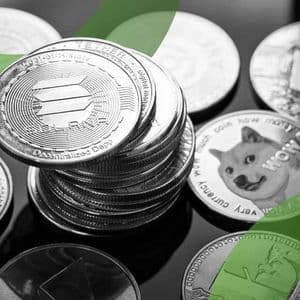
Kalshi moved swiftly to lock down an emerging market for perpetual futures in the U.S., filing to certify a slate of altcoin offerings


