


 Invest ideas
News
1 Jun 2026, 19:00
Has Bitcoin Bottomed At $60,000 To Return To $100,000, Or Is This Just The Start Of Another Crash?

Bitcoin is still trading above $60,000, but there are questions as to whether that area has already become the macro bottom for this correction or whether another crash could still drag the price back into that zone. Technical analysis using Bitcoin’s weekly RSI, prior cycle support, and the 21-week and 50-week EMA trend presents the bullish side of that trend, but bears can still argue that confirmation has not arrived until Bitcoin breaks above the weekly EMA structure. Bitcoin Might Have Bottomed Already The strongest argument that Bitcoin may have already bottomed is from the weekly RSI indicator. According to the thesis shared by Cryptoposeidon on X, Bitcoin’s weekly RSI has fallen below 30 only four times in history. The first three came around the January 2015, December 2018, and June 2022 lows, all of which later became macro bottom zones. Related Reading: XRP Analyst Flags Biggest Institutional Unlock That The Market Has Ever Seen Back in January 2015, Bitcoin’s RSI fell to about 28 when the price fell to $200. A similar pattern played out in December 2018, when RSI dipped below 30 around $3,500, followed by about three months of sideways accumulation before Bitcoin broke higher. The third instance was June 2022, in the depths of the bear market that followed the Luna collapse. The fourth reading came in early February 2026, shortly after Bitcoin’s crash into a bottom around $63,000, and this supports the proposal that Bitcoin may have already gone through its major capitulation phase. The weekly candlestick timeframe chart below also shows the RSI recovering from a low band similar to the previous bear-market bottom zones, with the projected path suggesting that momentum could spend more time rebuilding before a stronger move returns in 2027. Bitcoin Price Chart. Source: @CryptoPoseidonn On X What Confirmation And Return To $100,000 Actually Looks Like The last two bear markets both took 364 days to move from peak to trough. The current correction is now 236 days old, which leaves a 128-day window for Bitcoin to make another low if it follows the same timing pattern. Related Reading: XRP Pushing To $100: The Market Cap Conversation Will Go Out The Window If This Happens However, looking at November 2022, Bitcoin broke below the prior cycle’s $19,900 peak and collapsed to $15,500, spending a brief period under $16,000. That breakdown was forced by the FTX implosion, a black swan event that liquidated billions in assets and obliterated confidence simultaneously. Without a comparable catalytic shock, current crypto market dynamics lack the mechanism to sustain prices below $60,000 within the remaining 128-day window for a bottom. Bitcoin’s long-term support band is between $58,000 and $66,000, and the February 2026 low is inside that range. Bitcoin can still wick to $55,000 or even $50,000 in a liquidation event, but spending a long period below $60,000 would require a very strong bearish catalyst. On the other hand, a reclaim and monthly close above the weekly EMA and $80,000 in June 2026 would change the conversation from “Is $60,000 the bottom?” to “How fast can Bitcoin rebuild toward $100,000?” At the time of writing, Bitcoin is trading at $72,860, down by 1.2% in the past 24 hours. Featured image created with Dall.E, chart from Tradingview.com
1 Jun 2026, 18:50
LDP wants Japan to compete with dollar stablecoins in Asia
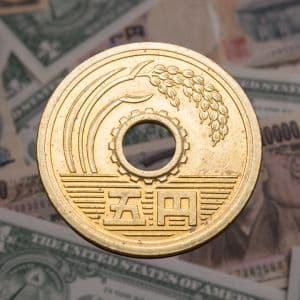
Japan’s Liberal Democratic Party handed Finance Minister Satsuki Katayama a proposal on Sunday. The LDP party asked to build a legal framework for cryptocurrency ETF trading and get yen stablecoin payments across Asia. The document was sent by the LDP’s blockchain promotion panel. It talks about crypto ETFs as a simple investment instrument, easier to deal with than holding crypto directly. LDP members believe crypto ETFs should be officially accepted in Japanese markets. Junchi Kanda, a member of the panel, told reporters that the group wants the government to promote yen stablecoins as a payment gateway in Asian markets. Japan stablecoins to reduce dollar dominance in the country USDT, USDC, and other dollar-pegged stablecoins account for most of the $315 billion stablecoin market. Policymakers outside the U.S. worry these tokens could route payments around domestic banks, cutting commercial lenders out of cross-border flows. Bank of Japan Deputy Governor Ryozo Himino said last month that designing the future global monetary system needs a “holistic approach” rather than a binary choice between CBDCs and stablecoins . Kanda floated the idea of using the Asian Development Bank’s annual meeting (Tokyo hosts in May 2027) as a stage to promote yen stablecoin policies and blockchain initiatives. Japanese domestic companies and banks work on stablecoins in the country Startup JPYC launched Japan’s first licensed yen stablecoin in October 2025 and has issued over 1 billion yen (~$6.3 million) in coins since then, Cryptopolitan previously reported . The startup set a target of issuing 1 trillion yen, or $6.6 billion, in three years. Japan’s three largest banks jumped into the stablecoin race as well. Mitsubishi UFJ Financial Group, Sumitomo Mitsui Financial Group, and Mizuho Financial Group announced a joint stablecoin experiment in late 2025. They ran a proof-of-concept in March 2026, testing both yen-pegged and dollar-pegged coins on the Progmat infrastructure. The Financial Services Agency gave the project “Payment Innovation Project” status. A fourth initiative, EJPY, got approval in May 2026 from the Japan Blockchain Foundation. That token will use a trust-based (Type III) legal structure that exempts it from the 1 million yen per-transaction cap applied to standard electronic payment instruments. Makes it more useful for corporate settlements. LDP wants Japan to recognize crypto ETFs On the ETF front, the Liberal Democratic Party’s proposal would put Japan alongside the United States and Hong Kong. Both countries already allow crypto ETFs as a way for investors to get exposure to digital assets without holding the coins directly. In April, Japan’s cabinet approved a draft amendment to reclassify cryptocurrency as a financial product. Previously, Japanese law treated crypto only as a payment tool. That reclassification helps the ETF framework in the Asian country. Katayama hasn’t publicly responded to the proposal yet. The LDP holds a parliamentary majority. However, any legislative changes still need to pass through the standard committee and floor vote process. The smartest crypto minds already read our newsletter. Want in? Join them .
1 Jun 2026, 18:50
Compass Point Stands Firm on Coinbase ‘Sell’ Rating as Derivatives Fee War Intensifies

BitcoinWorld Compass Point Stands Firm on Coinbase ‘Sell’ Rating as Derivatives Fee War Intensifies Investment bank Compass Point has reaffirmed its ‘Sell’ rating and $140 price target for Coinbase, warning that the crypto exchange faces a bleak outlook despite recent regulatory approvals. The bank points to an intensifying fee war in the derivatives market, where new entrants are threatening Coinbase’s pricing power and market share. Derivatives Fee War Heats Up Compass Point’s analysis centers on the rapidly evolving landscape for perpetual futures, a popular crypto derivative product. While Coinbase recently secured U.S. Commodity Futures Trading Commission (CFTC) approval to offer these services through its subsidiary Deribit, the bank argues that this advantage is being eroded by a wave of new competition. Both traditional finance giants and crypto-native firms, including Kalshi, CME Group, Kraken, and Robinhood, have announced plans to enter the 24-hour perpetual futures market. This influx is expected to drive down fees, compressing margins for all players. Revenue Cannibalization Concerns Further complicating the picture, Compass Point raised concerns about cannibalization within Coinbase’s own business lines. The company’s first-quarter results showed that futures revenue grew to $50 million, but this growth coincided with a decline in its more profitable retail spot trading revenue. The bank suggests that Coinbase’s push into derivatives may be drawing volume away from its higher-margin core business, rather than capturing entirely new demand. The Binance Wild Card Perhaps the most significant long-term risk flagged by Compass Point is the potential for major overseas exchanges, particularly Binance, to secure U.S. regulatory approval. In a pro-crypto political environment under a potential Trump administration, the bank sees a realistic path for Binance to enter the U.S. market. If that happens, Coinbase’s current dominance and pricing power would face a severe challenge, given Binance’s massive global user base and liquidity advantages. Why This Matters for Investors This analysis underscores a critical shift in the crypto exchange landscape. Coinbase has long been seen as the most regulated and trusted U.S. on-ramp for crypto, but the competitive moat is narrowing. The derivatives market, which accounts for the vast majority of global crypto trading volume, is becoming a battleground where fee compression and market share grabs are the new normal. For investors, the Compass Point report serves as a reminder that regulatory approvals alone do not guarantee profitability, especially when a wave of well-capitalized competitors is entering the fray. Conclusion Compass Point’s reiterated ‘Sell’ rating reflects a sobering view of Coinbase’s future, driven by a combination of fee compression, internal revenue cannibalization, and the looming threat of global competitors entering the U.S. market. While the company remains a dominant player, the path forward appears increasingly challenging in a market defined by thinning margins and aggressive expansion from both traditional finance and crypto-native firms. FAQs Q1: Why is Compass Point bearish on Coinbase despite the CFTC approval for perpetual futures? Compass Point believes the approval is not a decisive advantage because many competitors, including Kalshi, CME, Kraken, and Robinhood, are also entering the perpetual futures market, leading to a fee war that will compress margins. Q2: What is the main risk to Coinbase’s pricing power? The main risk is the potential entry of major overseas exchanges like Binance into the U.S. market. If Binance secures regulatory approval, its scale and liquidity could undercut Coinbase’s fees and market share. Q3: How does the derivatives business affect Coinbase’s core spot trading? Compass Point notes that while Coinbase’s futures revenue grew to $50 million in the first quarter, its more profitable retail spot revenue declined, suggesting that the derivatives business may be cannibalizing its core revenue stream rather than adding new growth. This post Compass Point Stands Firm on Coinbase ‘Sell’ Rating as Derivatives Fee War Intensifies first appeared on BitcoinWorld .
1 Jun 2026, 18:46
Strategy’s 32 BTC Sale Hits Bitcoin as Price Slides 5% and Liquidations Top $627M
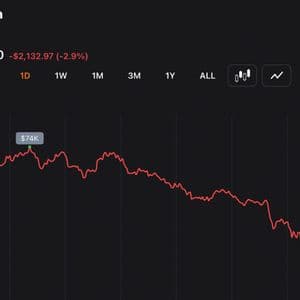
Bitcoin kicked off June by tumbling below $71,000 for the first time since April, triggering a broader market sell-off that wiped out $627 million in leveraged positions and reduced the total crypto market cap to $2.52 trillion. Bitcoin Crashes Below $71,000 to Kick Off June Bitcoin started June on the back foot, tumbling below $71,000
1 Jun 2026, 18:45
Ripple Locks 500 Million XRP in Escrow: What It Means for Supply and Markets
BitcoinWorld Ripple Locks 500 Million XRP in Escrow: What It Means for Supply and Markets Blockchain tracking service Whale Alert reported on [Date of report, e.g., May 23, 2025] that 500 million XRP tokens have been locked in an escrow contract associated with Ripple. This is a routine but significant event that underscores Ripple’s ongoing strategy to manage the circulating supply of XRP. Understanding Ripple’s Escrow Mechanism Ripple, the company behind the XRP Ledger, has been using escrow accounts since 2017 to control the release of its large XRP holdings. The company originally placed 55 billion XRP into a series of on-chain escrows, programmed to release 1 billion XRP each month. This system was designed to provide predictability and transparency to the market, preventing a sudden, uncontrolled flood of tokens that could destabilize the price. The 500 million XRP locked in this latest transaction is part of that ongoing mechanism. Typically, a portion of the monthly released XRP is re-locked into new escrow contracts, while the remainder is used for operational purposes, such as supporting Ripple’s payments network and strategic partnerships. Market Implications and Context While a 500 million XRP lockup is a large amount by absolute value—roughly $250 million at current market prices—it is a standard part of Ripple’s programmed schedule. The market generally views these predictable lockups as a neutral or slightly positive signal, as they reduce the immediate available supply and demonstrate Ripple’s commitment to a disciplined release schedule. It is important to distinguish this from a burn or a permanent removal from circulation. Escrowed XRP is not destroyed; it is simply locked for a set period (typically 12 to 54 months) and will eventually be unlocked again. The key for investors is the net effect: the amount of XRP entering the market versus the amount being re-locked. Why This Matters for XRP Holders For XRP holders, these escrow events provide a clear, on-chain record of Ripple’s supply management. The transparency of the XRP Ledger allows anyone to verify the escrow transactions, reducing uncertainty about potential large dumps. This contrasts with some other cryptocurrencies where large token holdings are less visible. The ongoing legal clarity from Ripple’s partial victory against the U.S. Securities and Exchange Commission (SEC) has also reduced regulatory overhang, allowing the market to focus more on fundamentals like supply dynamics and network adoption. Conclusion The locking of 500 million XRP by Ripple is a routine but noteworthy event that highlights the company’s systematic approach to token supply management. While not a market-moving event on its own, it reinforces the predictability that Ripple has built into its XRP distribution model. For those tracking XRP, monitoring these escrow movements remains a key part of understanding the asset’s circulating supply and long-term market structure. FAQs Q1: Does locking XRP in escrow reduce the total supply? No. Escrowed XRP is temporarily locked and cannot be traded or moved, but it is not burned or destroyed. It will be unlocked at a future date as per the escrow contract’s terms. Q2: How often does Ripple lock XRP in escrow? Ripple typically locks a portion of the 1 billion XRP released each month into new escrow contracts. The exact amount varies but often ranges from 300 million to 700 million XRP per month. Q3: Where can I verify these escrow transactions? All XRP escrow transactions are recorded on the XRP Ledger and can be viewed using block explorers like XRP Scan or Bithomp. Whale Alert is a reliable source for real-time notifications of large transactions. This post Ripple Locks 500 Million XRP in Escrow: What It Means for Supply and Markets first appeared on BitcoinWorld .
1 Jun 2026, 18:40
Circle Mints 250 Million USDC, Adding Significant Liquidity to Crypto Markets
BitcoinWorld Circle Mints 250 Million USDC, Adding Significant Liquidity to Crypto Markets The USDC Treasury has minted an additional 250 million USDC tokens, according to a report from blockchain tracking service Whale Alert. This large-scale minting event, which occurred on [Date of event – e.g., May 15, 2024], adds a substantial amount of liquidity to the cryptocurrency ecosystem. While routine for stablecoin issuers, such significant minting events often draw the attention of traders and analysts for their potential impact on market dynamics. Understanding the USDC Minting Process The minting of new USDC tokens is a standard operational procedure for Circle, the company behind the second-largest stablecoin by market capitalization. When Circle mints new USDC, it indicates that an equivalent amount of US dollars or equivalent assets has been deposited into the company’s reserve accounts. This process is the fundamental mechanism that maintains USDC’s 1:1 peg with the U.S. dollar. The newly minted tokens are then typically transferred to a partner exchange or a large institutional client, who can then deploy the capital into various DeFi protocols, trading pairs, or other crypto-native applications. Market Implications and Liquidity Analysis A minting of this size—250 million USDC—represents a notable injection of buying power into the market. Historically, large-scale stablecoin mintings have been interpreted as a bullish signal, as they suggest that institutional capital is preparing to enter the crypto space. This new supply can be used to purchase other cryptocurrencies, provide liquidity on decentralized exchanges, or be deployed in yield-generating strategies. What This Means for Traders and Investors For market participants, the primary takeaway is the potential for increased trading volume and reduced slippage on major trading pairs. The influx of stablecoin liquidity can stabilize markets during volatile periods and facilitate larger trades. However, it is important to note that minting does not guarantee immediate price appreciation. The ultimate market impact depends on how the new tokens are deployed. If they are used to buy Bitcoin or Ethereum, it could drive prices higher. Conversely, if they are held in reserve or used for arbitrage, the effect on price may be neutral. Conclusion The minting of 250 million USDC is a significant, albeit routine, event that underscores the ongoing growth and institutional adoption of the cryptocurrency market. While it provides a clear signal of incoming capital, its ultimate effect on asset prices will depend on the subsequent actions of the entities receiving the new tokens. For now, it represents a positive liquidity event for the broader crypto ecosystem. FAQs Q1: What does it mean when USDC is minted? A1: When new USDC is minted, it means Circle has received an equivalent amount of U.S. dollars or approved assets in its reserve accounts. This process creates new tokens that can be used within the crypto economy, effectively injecting fresh liquidity into the market. Q2: Is minting USDC always a bullish signal for crypto prices? A2: While often interpreted as a bullish signal because it represents incoming capital, it is not a guarantee of price increases. The actual market impact depends on how the newly minted stablecoins are deployed—whether they are used to buy other assets, provide liquidity, or remain idle. Q3: How does this affect the average crypto trader? A3: For the average trader, increased stablecoin liquidity can lead to tighter spreads and less slippage on trades, especially for large orders. It can also signal that larger players are becoming active, which may lead to increased volatility and trading opportunities. This post Circle Mints 250 Million USDC, Adding Significant Liquidity to Crypto Markets first appeared on BitcoinWorld .


