


 Invest ideas
News
27 May 2026, 21:06
Circle and Nium Partner to Fuel USDC Cross-Border Crypto Payments

Cross-border payments platform Nium and stablecoin issuer Circle Internet Group Inc. have launched a partnership to connect onchain digital dollar settlement with traditional last-mile fiat payouts. Circle Internet Group Connects USDC Settlement with Nium Cross-Border Infrastructure The collaboration integrates Nium into the Circle Payments Network, an infrastructure stack operated by Circle Technology Services LLC. Through
27 May 2026, 21:05
Undervalued Bitcoin-Holding Firms Present New Opportunity, Says 10X Research

BitcoinWorld Undervalued Bitcoin-Holding Firms Present New Opportunity, Says 10X Research Companies that strategically hold Bitcoin and Ethereum are now trading at a discount to their net asset value (NAV), according to a new analysis from 10X Research. The research firm suggests this undervaluation could present a fresh opportunity for investors, drawing a parallel to the Grayscale Bitcoin Trust (GBTC) discount seen in late 2022. Understanding the NAV Discount 10X Research compared the current situation to December 2022, when GBTC traded at a 47% discount to its NAV. At that time, investors could effectively buy Bitcoin at under $10,000 per coin through the trust, a discount that vanished after its conversion into a spot Bitcoin ETF. The firm noted that while many investors assumed such products would always trade at a premium to their underlying BTC holdings, they actually behave more like options. Their share prices rise above NAV during periods of high volatility but fall below it as volatility subsides. A Shift in Market Dynamics The research firm highlighted that it had warned in August 2025 that these companies’ stock prices could fall below the value of their actual assets. That scenario has now materialized. However, 10X Research suggested that this discount is now transforming into a potential investment opportunity, rather than a warning sign. The key question for investors is whether the current discount will close as quickly as the GBTC discount did, or if it will persist for a longer period. Implications for Investors For investors, the situation offers a chance to gain exposure to Bitcoin and Ethereum at a discount through publicly traded equities. However, it also carries risks, including the possibility that the discount could widen further if market volatility continues to decline. The analysis underscores the importance of understanding the structural differences between direct crypto holdings and equity-based exposure. Conclusion The current NAV discount on Bitcoin- and Ethereum-holding companies, as identified by 10X Research, echoes a historical pattern that previously led to significant gains for investors who recognized the opportunity early. While the situation is not identical, the core dynamic—buying assets below their intrinsic value—remains a compelling thesis for those willing to navigate the volatility. FAQs Q1: What does it mean when a company trades at a discount to NAV? A discount to NAV means the company’s stock price is lower than the total value of its assets (like Bitcoin or Ethereum) divided by the number of shares. Investors can buy the assets indirectly at a cheaper price through the stock. Q2: Why did the GBTC discount disappear in 2022? The GBTC discount closed after the trust converted into a spot Bitcoin ETF, which allowed for easier creation and redemption of shares, aligning the market price more closely with the underlying Bitcoin value. Q3: Is this a guaranteed investment opportunity? No. While the NAV discount presents a potential opportunity, it carries risks, including the possibility of the discount widening further or the underlying crypto assets declining in value. Past performance is not indicative of future results. This post Undervalued Bitcoin-Holding Firms Present New Opportunity, Says 10X Research first appeared on BitcoinWorld .
27 May 2026, 21:02
Pundit to XRP Holders: Big Things Will Come. We Are Still Early. Here’s Why

SEC Chair Paul Atkins recently sat down with Maria Bartiromo to discuss tokenization, blockchain settlement, and the future of U.S. markets. Crypto commentator Lord XRP (@Bitforcoinz) shared the video with the XRP army, telling them that “big things will come, and we are still early.” Atkins Speaks On Tokenization Atkins described tokenization as the use of smart contracts or tokens on a blockchain to represent underlying securities. He noted that putting assets on-chain creates transparency that the current system lacks. Today, companies often do not know who their shareholders are or where shares reside, and tokenization changes that. The settlement benefits are significant. Atkins pointed to the possibility of moving from T+1 settlement to T+0, meaning trades could clear on the same day they execute. He explained that the gap between trade execution and final settlement is where risk enters the system. On-chain delivery versus payment eliminates that gap. BIG THINGS WILL COME! WE ARE STILL EARLY pic.twitter.com/R7hTblDtEX — Lord XRP (@Bitforcoinz) May 26, 2026 The SEC Has Changed Direction Atkins was direct about the agency’s recent posture. He acknowledged that the SEC had actively blocked marketplace innovation as it emerged. That position is now reversed. He stated that only two countries in the world had been working to make cryptocurrencies illegal in recent years: communist China and the U.S., through the SEC. He confirmed that it has changed. The agency is now actively embracing digital asset technology to keep the U.S. competitive globally. This is a significant policy shift. The SEC under previous leadership pursued aggressive enforcement against crypto firms and projects. Atkins is steering the agency toward engagement instead. Why XRP Is Positioned for Growth XRP exists precisely for the use case Atkins described. Ripple built XRP to serve as a bridge asset for cross-border payments and institutional settlement. The token enables fast, low-cost transfers between financial institutions, settling transactions in seconds. We are on X, follow us to connect with us :- @TimesTabloid1 — TimesTabloid (@TimesTabloid1) June 15, 2025 As banks and brokers move toward tokenized systems, demand for assets that can facilitate real-time settlement grows. XRP fits that infrastructure. Ripple has spent years building partnerships with financial institutions across dozens of countries. Those relationships become more valuable as the regulatory environment clears. The Opportunity Ahead Atkins told Bartiromo that the shift toward tokenization could happen within a few years. That timeline puts XRP in focus. A regulatory framework that supports tokenization and on-chain settlement is the environment where XRP was designed to operate. The infrastructure is being built, and regulation is aligning. The SEC chair is on record saying the U.S. must lead in this space, and Lord XRP believes big things are coming for XRP. Given what Atkins outlined, that assessment holds up. Disclaimer : This content is meant to inform and should not be considered financial advice. The views expressed in this article may include the author’s personal opinions and do not represent Times Tabloid’s opinion. Readers are advised to conduct thorough research before making any investment decisions. Any action taken by the reader is strictly at their own risk. Times Tabloid is not responsible for any financial losses. Follow us on X , Facebook , Telegram , and Google News The post Pundit to XRP Holders: Big Things Will Come. We Are Still Early. Here’s Why appeared first on Times Tabloid .
27 May 2026, 21:00
XRP Pushing To $100: The Market Cap Conversation Will Go Out The Window If This Happens
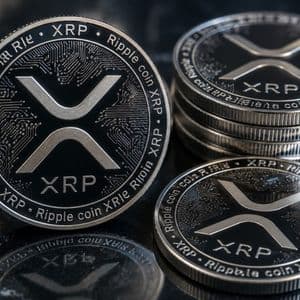
XRP is currently at the center of a growing debate as analysts discuss a potential move toward $100 and whether traditional market capitalization valuation models still apply. The expert argues that if XRP becomes widely used for payments and settlements, its role may shift toward financial infrastructure. In that case, the cryptocurrency’s value would depend more on network usage and transaction flow, rather than on market capitalization alone. XRP At $100 Could Happen Without A High Market Cap In an X post on May 24, crypto market expert Gina argued that XRP’s value should not be judged using traditional market capitalization models because the token is designed to serve as global financial infrastructure, not a passive store of value. According to her, XRP’s real strength does not come from its price action or total valuation, but from how frequently it can be used to move money across its network. Related Reading: Bitcoin Price Got Rejected At The 200-MA, Why Breaking $76,000 Could Be A Problem To illustrate her point, Gina used a hypothetical scenario in which XRP trades at $100 and has a circulating supply of 50 billion tokens. In that case, XRP would have a market capitalization of roughly $5 trillion, surpassing that of Bitcoin and Ethereum. While that figure may seem extremely large, Gina argued that market cap alone does not capture the total value the XRP Ledger (XRPL) processes daily. She also focused on XRP’s liquidity velocity. Gina suggested that if each XRP token were reused about 1,000 times daily for cross-border settlements, the network could theoretically support up to $5 quadrillion in transaction flows every day, all without needing a higher market cap. Based on this concept, XRP’s value as a payment and settlement tool could far exceed what market capitalization alone suggests. Put simply, a $5 trillion market cap reflects only the total paper value of XRP at a given price. It says nothing about how much money a network can actually process or move through repeated transactions, which, according to Gina, is how XRP’s real value can truly be measured. Comparing XRP Market Cap Argument With SWIFT In her post, Gina compared XRP to the global banking messaging network, SWIFT (Society for Worldwide Interbank Financial Telecommunication). She noted that, unlike cryptocurrencies, SWIFT does not have a market capitalization because it is not an investment asset. Despite that, trillions of dollars still move through its system daily. Related Reading: American Mega Bank Is Dumping Its Ethereum Holdings, Here’s What It’s Buying Gina suggested XRP could function in a similar way by serving as a bridge asset that helps institutions settle transactions quickly across different currencies and tokenized financial products. She stressed that XRP should not be viewed in the same category as assets like gold or Bitcoin, which are often treated as long-term stores of value. Instead, she described XRP as infrastructure for a future tokenized economy. Under this framework, Gina argued that traditional market cap calculations become even less important because utility-driven networks are measured by usage and throughput. She also claimed that if XRP were ever used to power even a small portion of the global derivatives markets or institutional settlement systems, the market cap valuation model would automatically “go out the window.” Featured image created with Dall.E, chart from Tradingview.com
27 May 2026, 21:00
Bitwise’s $19M HYPE buy strengthens bull case, but ONE risk remains

Bitwise is going all in on Hyperliquid, keeping the asset above sustained levels.
27 May 2026, 21:00
SK Hynix Joins $1 Trillion Club, Adding to Bitcoin’s Downward Pressure
BitcoinWorld SK Hynix Joins $1 Trillion Club, Adding to Bitcoin’s Downward Pressure South Korean memory chip giant SK Hynix has surpassed a $1 trillion market capitalization, a milestone that analysts say is intensifying downward pressure on Bitcoin. The development, reported by CoinDesk, highlights a growing trend where investor capital is flowing heavily into artificial intelligence-related semiconductor stocks, diverting attention and liquidity away from the cryptocurrency market. Memory Stocks Draw Capital from Crypto SK Hynix joins a select group of companies valued at over $1 trillion, following a similar surge from U.S.-based Micron Technology, whose stock jumped 21% yesterday to cross the same threshold. Both firms are key suppliers of high-bandwidth memory chips, essential components for AI data centers and large-scale computing infrastructure. According to the report, the rally in memory-related stocks is monopolizing market capital and investor attention, fostering a negative sentiment for assets like Bitcoin. The shift underscores a broader rotation within global equity markets. As AI-related hardware companies post strong earnings and growth forecasts, traditional growth assets—including cryptocurrencies—are experiencing capital outflows. This dynamic has contributed to Bitcoin’s recent price stagnation and downward momentum. Investor Sentiment at a Low Point In a related comment, James Check, former lead analyst at Glassnode who goes by the handle Checkmate, noted that investor interest in Bitcoin has bottomed out. He observed that long-dormant bearish traders are now showing renewed confidence, signaling a shift in market psychology. “No one is currently interested in Bitcoin,” Check said, reflecting a sentiment that aligns with the broader market data. The lack of fresh inflows and declining trading volumes suggest that the cryptocurrency is currently out of favor compared to high-growth tech sectors. Implications for Crypto Investors For cryptocurrency holders, the capital rotation into AI chip stocks presents a near-term headwind. Bitcoin’s price has historically been sensitive to liquidity shifts in traditional markets, and the current environment suggests that until AI-related growth stories moderate, crypto assets may struggle to attract significant new investment. However, some analysts caution that market cycles are fluid. If AI stocks become overvalued or if earnings disappoint, capital could rotate back into alternative assets like Bitcoin. For now, the memory chip sector’s dominance is a key factor to monitor. Conclusion SK Hynix’s entry into the $1 trillion club is a milestone for the semiconductor industry, but it also underscores a challenging environment for Bitcoin. As AI-driven stocks capture investor imagination and capital, the cryptocurrency market faces a period of reduced attention and downward price pressure. Understanding these cross-market dynamics is essential for investors navigating the current landscape. FAQs Q1: Why is SK Hynix’s market cap milestone affecting Bitcoin? A: SK Hynix’s $1 trillion valuation signals strong investor demand for AI-related stocks, which draws capital away from alternative assets like Bitcoin, reducing buying pressure and sentiment. Q2: How does Micron Technology’s stock surge relate to this trend? A: Micron’s 21% jump to a $1 trillion market cap shows a broader market rotation into memory chip stocks, which are essential for AI infrastructure, further diverting investment from cryptocurrencies. Q3: What does James Check’s comment about Bitcoin sentiment mean? A: Check, a former Glassnode analyst, indicates that investor interest in Bitcoin is at a low point, with bearish traders gaining confidence, which typically precedes further price weakness or a prolonged consolidation phase. This post SK Hynix Joins $1 Trillion Club, Adding to Bitcoin’s Downward Pressure first appeared on BitcoinWorld .


