


 Invest ideas
News
25 May 2026, 13:19
XRP Whale Transactions Worth $1M+ Crash 57% in 9 Days
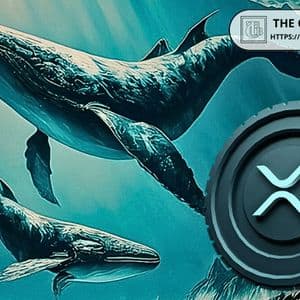
XRP whale transactions have crashed 57% in the last few days, indicating a period of compression that could lead to large price swings. Amid the XRP price drop from $1.54 on May 14 to the current value of $1.35, market analyst Ali Martinez has called attention to a steady fall in large XRP transactions worth at least $1 million. Visit Website
25 May 2026, 13:17
Bitcoin News Today: Saylor Moves to MicroStrategy 2.0 with Treasury Bonds as the Company Stops Buying BTC

In Bitcoin News today, Strategy has paused its BTC purchases this week to repurchase $1.5 billion in face value of its 0% convertible senior notes due 2029 for approximately $1.38 billion in cash. Michael Saylor confirmed it himself on X with a single line: “This week we bought bonds, not bitcoin. The ₿itVac is charging.” This week we bought bonds, not bitcoin. The ₿itVac is charging. pic.twitter.com/yUpVNiNTPT — Michael Saylor (@saylor) May 24, 2026 This is no longer a one-way accumulation machine. Strategy is now actively managing its capital structure, retiring debt at a discount, recycling capacity, and integrating US Treasury instruments as a yield-generating funding leg. The company that pioneered corporate Bitcoin accumulation is evolving into something closer to a macro carry trade vehicle. Discover: The Best Crypto to Diversify Your Portfolio Treasury Yield Leg Could Work The mechanics are straightforward, with Strategy raising capital through equity sales, convertible notes, and perpetual preferred shares like STRC. A portion of the capital gets parked in short-duration US Treasuries and money-market instruments, generating yield while BTC accumulation conditions are evaluated. That yield becomes the “safe leg” of a macro barbell as Treasuries generate cash flow that can service dividends on STRC, fund opportunistic buybacks of discounted convertibles, and eventually recycle into BTC purchases when the entry is right. Buying bonds opens up @MicroStrategy to more cashflow, but there appears to be a shift in the weekly buys from the company. In the last month or so the narrative has shifted from never sell bitcoin:native, to sometimes sell bitcoin:native, to buying bonds. Is this bullish?… https://t.co/1mQcoULkuT — BSCN (@BSCNews) May 24, 2026 The Carry Trade logic here is that Strategy borrows or issues at ultra-low cost (0% coupon on the 2029 notes, fixed dividends on STRC) and earns spread against Treasury returns and BTC appreciation. The $1.38 billion bond repurchase this week is a direct expression of that logic. Strategy is retiring debt at a discount to face value ($1.38B cash for $1.5B face), which immediately improves its balance sheet, reduces future share dilution (fewer notes means fewer potential conversion events into MSTR equity), and increases Bitcoin per share for existing holders. Strategy currently holds 843,738 BTC, worth $65.25 billion, against an acquisition cost of $63.88 billion, for approximately $1.50 billion in unrealized profit. No Bitcoin was sold to fund this bond repurchase. The BitVac, as Saylor frames it, is recharging. It is not liquidating. Bitcoin News Today: What the Carry Trade Structure Does to MSTR’s Risk Profile MSTR is no longer a clean Bitcoin proxy. It is a layered instrument: BTC price exposure stacked on top of rate sensitivity stacked on top of equity volatility. Institutional desks now need to model three variables simultaneously, and that changes how the stock behaves in different macro regimes. Bitcoin (BTC) 24h 7d 30d 1y All time The clearest structural risk is the 2028 liquidity window. Strategy carries around $3 billion in convertible notes with put rights that allow holders to demand cash repayment beginning June 2028. If capital markets are closed, or MSTR is trading poorly relative to conversion prices, those obligations could force Bitcoin sales at the worst possible time. That is precisely why Strategy is front-loading debt retirement now, while it trades at a discount and before the put window opens. Discover: The Best Token Presales The post Bitcoin News Today: Saylor Moves to MicroStrategy 2.0 with Treasury Bonds as the Company Stops Buying BTC appeared first on Cryptonews .
25 May 2026, 13:15
Satoshi-era Bitcoin miner transfers $203M in BTC to OTC desks

A Satoshi-era Bitcoin miner moved 2,650 BTC worth about $203 million to FalconX and Cumberland, while retaining 6,000 BTC.
25 May 2026, 13:15
Expert Analysis on How Bitcoin Price Will Behave This Week and In June

Bitcoin recorded a critical close above $74,400 last week, paving the way for continued recovery in the coming weeks. Notably, expert analysis from Sykodelic highlights that this level sits at the center of the broader market structure. Visit Website
25 May 2026, 13:10
Squid Protocol Says $3.2M Exploit Targeted Third-Party Module, Not Core System

BitcoinWorld Squid Protocol Says $3.2M Exploit Targeted Third-Party Module, Not Core System Cross-chain protocol Squid has moved to clarify the details surrounding a recent security incident that resulted in the loss of approximately $3.2 million in digital assets. In a statement released to the community, the project emphasized that the exploited contract, identified as the ‘SquidRouterModule,’ was not developed, deployed, or operated by Squid itself. Understanding the Attack Vector The compromised contract, according to Squid, is a third-party module built on top of Gnosis Safe. The protocol explained that this module is structurally distinct from its own router contract. The attacker reportedly exploited a vulnerability in the module’s public fixed-string verification function, allowing them to execute arbitrary call data and drain funds from affected wallets. Squid clarified that the affected Gnosis Safes had previously registered the module as a trusted module. This registration status enabled the attacker to initiate asset transfers without requiring additional signatures from the wallet owners, effectively bypassing standard security checks. Impact Assessment and User Safety The company was explicit in its assessment: its core router contracts, user funds, approvals, and integrated services were not compromised. This distinction is critical for users who may have been concerned about the safety of their assets held directly through Squid’s platform. The incident highlights a growing complexity in the DeFi ecosystem, where the use of third-party modules and smart contract integrations can introduce unforeseen risks. While Squid’s core protocol remains secure, the event serves as a reminder that the broader infrastructure users rely on—such as wallet-level modules—can become attack vectors. What This Means for DeFi Users For users of Gnosis Safe and similar multi-signature wallets, this incident underscores the importance of auditing and understanding every module or app connected to their wallet. Registering a module as trusted grants it significant permissions, and any vulnerability in that module can have severe consequences. Squid has not indicated any plans for a user reimbursement program, as the protocol itself was not directly responsible for the exploit. The affected funds were lost from wallets that had voluntarily integrated the third-party module. Conclusion The $3.2 million exploit is a cautionary tale about the layered security risks present in decentralized finance. While Squid’s core infrastructure remains intact, the incident demonstrates that security in DeFi is only as strong as the weakest link in a user’s personal stack of integrated tools and modules. Users are advised to regularly review and revoke permissions for any modules or contracts that are no longer actively used. FAQs Q1: Were Squid’s own contracts or user funds affected by the exploit? No. Squid has confirmed that its core router contracts, user funds, and approvals were not impacted. The exploit occurred in a third-party module built on Gnosis Safe. Q2: How did the attacker manage to drain the funds? The attacker exploited a vulnerability in the module’s public fixed-string verification function to execute arbitrary call data. Because the module was registered as trusted on the affected Gnosis Safes, asset transfers could be made without additional signatures. Q3: Should users stop using Squid or Gnosis Safe after this incident? Not necessarily. Squid’s protocol remains secure. However, users should review all modules and apps connected to their wallets, revoke permissions for unused or unverified modules, and stay informed about the security practices of third-party integrations. This post Squid Protocol Says $3.2M Exploit Targeted Third-Party Module, Not Core System first appeared on BitcoinWorld .
25 May 2026, 13:06
Buterin says Ethereum Foundation controls just 0.16 percent of ETH

🚨 Buterin reveals the Ethereum Foundation holds just 0.16 percent of all $ETH. The Foundation focuses on research and decentralization, not ETH price jumps. Continue Reading: Buterin says Ethereum Foundation controls just 0.16 percent of ETH The post Buterin says Ethereum Foundation controls just 0.16 percent of ETH appeared first on COINTURK NEWS .


