


 Invest ideas
News
23 May 2026, 12:57
Bitcoin drops below $86,000 2-year average as price holds at $75,318

🚨 $BTC slips under $86,000 2-year average, now trading at $75,318. Many see this drop as a new long-term buying zone in $BTC. Continue Reading: Bitcoin drops below $86,000 2-year average as price holds at $75,318 The post Bitcoin drops below $86,000 2-year average as price holds at $75,318 appeared first on COINTURK NEWS .
23 May 2026, 12:53
How to Choose a TRC-20 Wallet: Top 5 Criteria for 2026

Understanding how to choose TRC-20 wallet options matters more in 2026 than ever. Tron now carries roughly half of all USDT circulating supply, with daily transfers regularly exceeding $20 billion across the network. Users holding TRC-20 USDT face a TRC-20 USDT wallet choice that determines whether they need TRX for gas, how their network fees behave, and whether they can interact with broader stablecoin ecosystems across multiple chains. Five criteria separate a strong TRC-20 wallet 2026 option from a generic wallet that happens to support Tron. Sections ahead cover gasless transfers, non-custodial architecture, energy and bandwidth handling, multi-chain coverage outside Tron, and customer support as best TRC-20 wallet criteria. 1. Gasless USDT Transfer Capability A single critical criterion for a TRC-20 wallet in 2026 is whether it supports gasless USDT transfers. Standard TRC-20 transfers require TRX for energy and bandwidth, paid either by staking or burning at transaction time. A user holding USDT but no TRX faces friction every send: buy TRX from an exchange, wait for it to arrive, hold a dust balance, and manage two assets when they only wanted one. Gasless transfer capability removes that friction. The network fee gets deducted directly from the USDT being sent, with no separate TRX requirement. IronWallet is a non-custodial multi-chain wallet with no KYC, 10,000+ supported assets, gasless stablecoin transfers, and WalletConnect Pay integration. The wallet handles gasless USDT wallet workflows on Tron natively: a user can send TRC-20 USDT with the fee deducted from the USDT balance itself, with no TRX required at any point. Stablecoin-first users who hold crypto primarily as USDT face this single criterion as the decision point. Holding TRX just to pay for USDT transfers is the friction most stablecoin users want to eliminate. 2. Non-Custodial Architecture and Self-Custody Keys A non-custodial TRC-20 wallet generates and stores private keys locally on the user's device. No company, exchange, or service holds the keys. No central authority can freeze user funds or block transactions. This matters for TRC-20 USDT specifically because Tron is widely used for stablecoin remittances, peer-to-peer payments, and cross-border transfers. Users in regions with banking restrictions or capital controls rely on self-custody to maintain access to their funds. Strong key management includes a few practical elements: locally generated private keys, a 12-word or 24-word recovery phrase, optional additional encryption layers, and clear backup workflows. A 12-word seed phrase standard is widely adopted across non-custodial wallets, which means users can typically import existing wallets between providers without recreating accounts or paying network fees to migrate funds. This portability matters during Tron wallet selection, since users aren't locked into a single provider. Some wallets add encryption layers on top of the standard seed phrase model for additional protection. Custodial alternatives exist (exchanges like Binance or Bybit can hold TRC-20 USDT in user accounts), but those aren't wallets in the self-custody sense and don't meet this criterion. 3. How the Wallet Handles Tron Energy and Bandwidth Tron's resource model uses two specific resources for transactions: energy (for smart contract operations like TRC-20 transfers) and bandwidth (for basic transaction throughput). Each USDT transfer consumes roughly 65,000 energy units plus 345 bandwidth points. Users acquire these resources in three ways: staking TRX to generate them, burning TRX directly at transaction time, or having a wallet handle resource acquisition automatically. A TRC-20 wallet that handles energy and bandwidth well will either stake TRX on the user's behalf, integrate with energy rental services, or abstract the resource layer entirely through gasless transfers. Users shouldn't need to learn the underlying mechanics to send USDT. Wallets that fail this criterion are the ones that show users energy/bandwidth balances, require manual TRX staking, or fail transactions when the user has insufficient resources without explaining why. Strong TRC-20 wallet UX hides the energy/bandwidth complexity. The user sees a USDT balance, sends USDT, and pays the fee in USDT. What happens at the resource layer is the wallet's problem to solve. 4. Support for Stablecoin Networks Outside Tron Stablecoin holders in 2026 rarely sit on a single network. USDT exists on Tron (TRC-20), Ethereum (ERC-20), BNB Chain (BEP-20), and Solana (SPL) . USDC spans Ethereum, Solana, Base, Polygon, and other networks. A multi-chain TRC-20 wallet that supports broader stablecoin holdings across chains serves users better than a Tron-only wallet. The user can hold TRC-20 USDT for cheap peer-to-peer transfers, ERC-20 USDC for DeFi participation on Ethereum, and Base USDC for retail payments, all from one application. IronWallet covers Bitcoin, Ethereum, Solana, BNB Chain, Tron, Polygon, and Base from a single mobile wallet. Stablecoin holders working across networks don't need to switch apps or manage separate seed phrases for each chain. An honest counterpoint: a Tron-only wallet can be a legitimate choice for users with exclusively TRC-20 USDT holdings and no plans to expand. But most stablecoin users either already operate across chains or will eventually, and multi-chain support future-proofs the wallet choice. 5. Customer Support Availability Genuine customer support is rare in non-custodial crypto wallets. Most major wallets handle user questions through help centers, FAQ pages, and Discord communities. Live human responses are the exception. TRC-20 USDT users specifically need responsive support because the most common stumbling blocks (wrong address format, insufficient energy, network confusion) need real-time human help to resolve. A wallet with responsive customer support typically offers some combination of in-app live chat staffed by humans, email support with reasonable response times, 24/7 availability without paid tier gates, and clear escalation paths for transaction issues. IronWallet provides 24/7 live customer support directly through the app, with human agents handling user questions in real time. The support model is free, with no VIP tier requirement, and distinct from the help-center-only approach most non-custodial wallets use. Beginners specifically tend to weigh this criterion above technical considerations. A user who can't get help when something goes wrong will eventually lose funds or abandon the wallet entirely. Conclusion Five criteria, in order of practical impact for stablecoin holders: gasless transfer capability, non-custodial architecture, energy and bandwidth handling, multi-chain coverage outside Tron, and customer support availability. A TRC-20 wallet that meets all five criteria represents a genuine option for users holding USDT on Tron in 2026. Wallets that meet only some of these criteria can still work for specific use cases, but the gaps will surface as friction during regular use. FAQ What is the most important criterion when choosing a TRC-20 wallet? Users holding TRC-20 USDT as a primary asset benefit most from gasless transfer capability. Standard TRC-20 transfers require TRX for gas, which creates friction for users who only hold USDT. A wallet that pays fees directly from the USDT balance removes the most common stumbling block in everyday Tron stablecoin use. Do I need TRX to use a TRC-20 wallet? In most wallets, yes. Standard TRC-20 transfers require energy and bandwidth, acquired by staking TRX or burning TRX at transaction time. Some wallets handle this automatically through gasless transfer features, so users can send TRC-20 USDT without holding any TRX. Check the wallet's documentation before sending. What is the difference between custodial and non-custodial TRC-20 wallets? A custodial wallet (typically an exchange account) holds the user's private keys on their behalf. A non-custodial TRC-20 wallet generates and stores keys locally on the user's device. With non-custodial wallets, only the user can authorize transactions or recover funds. The trade-off is responsibility: non-custodial users manage their own backups and recovery phrases. Can a TRC-20 wallet also support other networks? Yes. Multi-chain wallets like IronWallet support TRC-20 USDT on Tron alongside other major stablecoin networks (Ethereum, BNB Chain, Solana, Polygon, Base). Users holding stablecoins across multiple networks benefit from a single wallet that handles all of them, instead of managing separate apps per chain. Why does customer support matter for a TRC-20 wallet? TRC-20 USDT users frequently encounter network-specific issues: insufficient energy, wrong address format, failed activations, or stuck transactions. These need real-time human help to resolve. A wallet with 24/7 live customer support reduces the risk of lost funds or abandoned transactions, especially for beginners new to Tron's resource model. Disclaimer: This article is provided for informational purposes only. It is not offered or intended to be used as legal, tax, investment, financial, or other advice.
23 May 2026, 12:46
Chainlink (LINK) And Pendle (PENDLE): As Tokenized Treasuries And Yield‑Trading Integrations Increase, Do LINK And PENDLE Anchor A “RWA + Rates” DeFi Stack Or S...
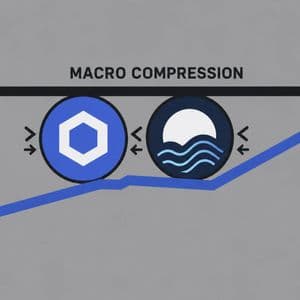
The narrative surrounding Real-World Assets (RWAs) is officially shifting from pilot programs to standardized, institutional-grade products. Driven by a thirst for stable yield in a volatile market, tokenized U.S. Treasuries, credit, and gold are rapidly converging with decentralized finance. At the structural core of this convergence are two protocols: Chainlink (LINK) , the indispensable data and interoperability layer, and Pendle (PENDLE) , the premier venue for on-chain yield tokenization and forward rate trading. With major recent integrations—such as Chainlink CCIP expanding to Solana via Kamino and Pendle introducing massive limit order incentives—the fundamental adoption of both protocols is accelerating. But does their price action reflect an emerging, dominant "RWA + Rates" stack, or are they still trading as niche, specialist infrastructure plays? Chainlink (LINK): Compressed Under Moving Averages Source: tradingview Chainlink 's fundamental utility remains unmatched. It is the designated data layer for the DTCC's upcoming tokenized collateral platform and is powering Fidelity International's first tokenized USD liquidity fund. Despite this, its spot price is struggling to capture the momentum of its own enterprise wins. The Current Structural Reality ($9.50 – $10.25): Over the past 30 days, LINK has experienced a grinding compression. It is currently trading near $9.77, trapped in a tight, frustrating range. Support and Resistance Map: Immediate Support ($9.50): This is the local floor that LINK has defended over the past month. A breakdown below this level opens the door to deeper mid-$8 macro supports. Immediate Resistance ($10.25): The recent one-week high. For LINK to signal that the market is willing to pay a premium for the Oracle/RWA narrative, it must crack this ceiling and hold above the $10 psychological barrier. The Read: LINK is exhibiting severe price compression. While the institutional tokenization narrative is stronger than ever, the market is not yet rewarding it with a re-rating. Until LINK breaks out of this narrow band, it remains a critically important, but fundamentally range-bound, infrastructure asset. Pendle (PENDLE): Yield‑Trading Beta in Deep Repair Source: tradingview Pendle is executing a massive fundamental pivot. The protocol is transitioning to the new sPENDLE tokenomics model—which directs up to 80% of protocol revenue into structural buybacks—while integrating heavily with Paxos RWA stablecoins and securing a core collateral spot on Aave V4. However, the token price has suffered a severe drawdown, falling from a historical high of $7.50 down to the $1.85 region. The Current Structural Reality ($1.17 – $2.88): PENDLE recently experienced a brutal shakeout, wicking down near $1.17 before attempting to establish a new accumulation base. Support and Resistance Map: Immediate Support ($1.52): This zone served as a recent reclamation point with actual volume behind it. Defending this higher low is critical to prove the bottom is in. Immediate Resistance ($2.80 – $2.88): This is the next major structural resistance zone. PENDLE must nearly double from current levels just to contest this area and prove that it is escaping the "beaten-up beta" category. The Read: PENDLE is operating deep in repair mode. While its $34M annualized revenue and new deflationary mechanics are incredibly bullish long-term, the chart requires patience. It is leaning on shallow support, waiting for the "rates desk" narrative to reignite broader market interest. Do They Anchor “RWA + Rates” Or Stay Specialist? The technical setups reveal that while the fundamental building blocks of an "RWA + Rates" stack are fully operational, the market is currently pricing both assets as specialist infrastructure plays caught in a broader risk-off environment. They Emerge as the Core RWA Stack If: LINK vigorously defends the $9.50 floor and successfully reclaims the $10.25+ territory, turning that resistance into a springboard. PENDLE holds its recent higher lows (above $1.52) and begins a sustained, high-volume grind back toward the $2.80 structural resistance, indicating that smart money is accumulating the sPENDLE yield narrative. Total Value Locked (TVL) in tokenized treasuries (like Ondo's USDY and BlackRock's BUIDL) continues to migrate directly into Pendle yield markets via Chainlink CCIP routing. They Remain Specialist Infra Plays If: LINK continues to chop aimlessly between $9.50 and $10.00, eventually leaking downward as liquidity rotates into L2 narratives or AI tokens. PENDLE fails to hold its current support and revisits the $1.17 washout lows, signaling that yield-traders are treating the token merely as temporary "points farm" exit liquidity rather than a core portfolio hold. Final Verdict: Fundamentally, LINK and PENDLE are constructing the financial plumbing of the next decade. Technically, they are deeply compressed and severely beaten up, respectively. For patient allocators, this divergence between soaring fundamental utility and depressed spot pricing is exactly what an accumulation zone looks like—but they must prove they can break overhead resistance before declaring a new trend. Disclaimer: This article is provided for informational purposes only. It is not offered or intended to be used as legal, tax, investment, financial, or other advice.
23 May 2026, 12:45
XRP whale transfers fall 57% in 9 days to 67

🧊 Whale transfers in $XRP fell 57% in just nine days. The number of large transactions dropped from 157 to 67. Continue Reading: XRP whale transfers fall 57% in 9 days to 67 The post XRP whale transfers fall 57% in 9 days to 67 appeared first on COINTURK NEWS .
23 May 2026, 12:41
Ethereum Tanks to 2-Month Low: Whales Return but Sub-$2K Fears Mount

Ethereum’s native token has taken the most recent crypto market correction hard, with the asset diving to just over $2,000 earlier today, which became its lowest price point in almost two months. Moreover, it has dropped by 17% since its monthly high at $2,425, and the overall landscape seems quite bearish. Although Santiment Intelligence believes this could be the necessary factor for a major trend reversal, the current environment is nothing short of underwhelming, to say the least. More Trouble Ahead? After it was stopped at $2,400, $2,300, $2,200, and $2,100 earlier this week, the latest crucial support to give in was the $2,050 level during today’s decline. According to popular analyst Ted Pillows, this opens the door for more profound corrections. Moreover, he warned that if ETH loses the psychological $2,000 support as well, new lows “will just be a matter of time.” Fellow analyst CW noted that a large amount of ETH longs were liquidated on the way down. More specifically, data from CoinGlass shows that the total value of liquidated ETH longs is over $250 million on a daily scale, second only to bitcoin’s $380 million. CW added that as short positions closed, the Open Interest declined significantly and the Net Position Delta increased. They concluded that high-leverage longs are getting wrecked, while bearish bets are closing, which could lead to some market calmness. During the decline, $ETH long positions were liquidated in large amount. Subsequently, as short positions closed, the Open Interest (OI) decreased and the Net Position Delta increased. High-leverage long positions are being liquidated, and bearish bets are closing. pic.twitter.com/bTYuT7tjnG — CW (@CW8900) May 23, 2026 OG Whale Returns The silver lining for the Ethereum ecosystem at the moment is the return of an OG whale, as reported by Lookonchain. The analytics company’s data shows that this market participant, who is known for pocketing a 376x return on their initial ETH investment from 10 years ago, has started accumulating again. On-chain data reveals that this whale has acquired over $8 million worth of ETH at prices of around $2,050. Previously, they sold when the altcoin stood above $2,850. As the market drops, another #EthereumOG who made $34.2M(376x return) is buying the dip on $ETH ! 10 years ago, this OG received 12,001 $ETH from ShapeShift at just $7.58 each. Over a year ago, he sold them for 34.3M $USDC at $2,856, making $34.2M in profit – a 376x return.… pic.twitter.com/vSfrYyo2Bl — Lookonchain (@lookonchain) May 23, 2026 The post Ethereum Tanks to 2-Month Low: Whales Return but Sub-$2K Fears Mount appeared first on CryptoPotato .
23 May 2026, 12:41
Bitcoin (BTC) And Ethereum (ETH): As BTC Hashrate Makes New Highs And ETH Restaking TVL Grows, Do BTC And ETH Quietly Reclaim Leadership Or Stay Capped By Macro...
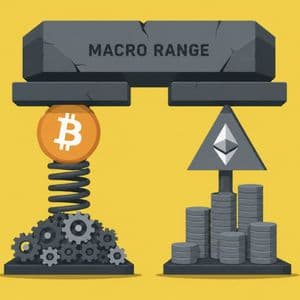
The global digital asset market is currently exhibiting a profound divergence between underlying network health and surface-level price action. On-chain fundamentals for the two majors are screaming structural strength: Bitcoin mining difficulty and hashrate are hovering near all-time highs as institutions deploy next-generation ASIC fleets, while Ethereum’s decentralized finance ecosystem is experiencing a renaissance driven by massive total value locked (TVL) in restaking protocols like EigenLayer. Yet, for traders operating in fast-paced Web3 hubs from Sathorn to Singapore, the daily price charts tell a much more frustrating story. Both Bitcoin (BTC) and Ethereum (ETH) are trapped inside massive, multi-month macro boxes. The core question for portfolio allocators heading into the summer of 2026 is whether these structural milestones are quietly setting the stage for a new wave of market leadership, or if the majors are destined to remain heavily capped by macroeconomic headwinds. Bitcoin (BTC): Strong Fundamentals, Range‑Bound Tape Source: tradingview Bitcoin ’s on-chain data paints a picture of a network in prime condition. However, the technical tape reveals a heavy, range-bound structure with a slight upward bias, rather than a confirmed cyclical breakout. The Fibonacci Map ($60,000 to $75,000): 23.6% Retracement: ~$63,500 38.2% Retracement: ~$65,700 50.0% Retracement: ~$67,500 61.8% Retracement: ~$69,300 Immediate Support: $63,500 to $65,700: This band houses the 23.6% and 38.2% retracements. This is the definitive "buy-the-dip inside an uptrend" zone. If BTC can hold this floor on broader market red days, the structure remains constructive. $60,000: The 30-day swing low. A clean daily close below this psychological and structural floor would turn the entire recent 30-day move into a broader down-swing, confirming that macro ranges still heavily cap the cycle. Immediate Resistance: $69,300 to $72,000: The 61.8% retracement sits near $69,300. Daily closes that stick above the $70,000 mark would signal that the 30-day dip has concluded and the market is preparing to test the top of the macro band again. $75,000+: The cycle resistance. BTC will only have "quietly reclaimed leadership" if it can break, hold above $75,000, and aggressively reject any sharp failures back into the mid-60s. The Read: Hashrate pushing new highs supports the thesis of long-term structural health. However, as long as BTC remains pinned between $63.5k and $75k—with the price stubbornly orbiting the $67k moving average—it is simply coiling inside a macro range. It has not yet asserted a new trend leg. Ethereum (ETH): Restaking TVL Up, Price Still Under Big Levels Source: tradingview Ethereum is suffering from a narrative lag. Restaking TVL is absorbing massive amounts of circulating supply, and Layer-2 (L2) activity is expanding rapidly. Yet, ETH’s spot price is still fighting to catch up to its own fundamental story. The Fibonacci Map ($2,300 to $3,000): 23.6% Retracement: ~$2,470 38.2% Retracement: ~$2,580 50.0% Retracement: ~$2,650 61.8% Retracement: ~$2,720 Immediate Support: $2,470 to $2,580: The 23.6% and 38.2% Fibonacci levels. This is exactly where you want to see ETH stabilize on pullbacks if the market is actually respecting restaking and L2 economics. $2,300 to $2,350: The swing low region, sitting dangerously close to the 200-day SMA. Losing this band on a daily close signals that macro rates are still firmly in control and ETH remains trapped in a massive sideways regime. Immediate Resistance: $2,720 to $2,800: The 61.8% mean-reversion test. A sustained close above $2,750 suggests that the restaking and L2 narratives are finally bleeding into spot price demand. $3,000+: The cycle cap. Ethereum quietly reclaiming leadership requires ETH closing well above $3k, accompanied by the ETH/BTC ratio flattening or improving rather than continuing to bleed out. The Read: ETH’s fundamentals strongly support a bull case, but the chart reflects a $2.3k–$3k box where price continually reverts to the midline. Until the $2,720–$3,000 band is broken and successfully reused as support, ETH is "fundamentally strong, but technically range-bound." Do BTC And ETH Quietly Reclaim Leadership Or Stay Capped? The distinction between a coiled spring and a permanent range trap lies in how these assets interact with their upper Fibonacci boundaries over the coming weeks. They Quietly Reclaim Leadership If: BTC closes and sustains above $75,000, effectively turning the $69k–$72k resistance block into a massive support floor. ETH breaks and sustains above $3,000, with subsequent dips aggressively bought at $2,700 rather than sliding back to $2,400. Market rotation shifts. You begin to see L2, AI, and RWA narratives following BTC and ETH up, rather than completely draining liquidity away from the majors. They Stay Capped By Macro Ranges If: BTC continues to coil between $63k and $75k, with every push toward the $75k ceiling heavily sold into by institutions harvesting yield. ETH keeps fluctuating inside its $2.3k–$3k box without registering sustained time above $2,800. Top-performing assets remain highly-rotational sector tokens (memes, alt-VMs), with BTC and ETH reduced to providing mere directional bias and downside protection rather than capturing the main upside. Final Verdict: The structural metrics heavily favor BTC and ETH in the long term. However, the current level structure remains consistent with a market that is deeply respectful of macro caps. Until BTC decisively clears $75k and ETH clears $3k, they are coiling core assets, not yet confirmed trend leaders. Disclaimer: This article is provided for informational purposes only. It is not offered or intended to be used as legal, tax, investment, financial, or other advice.


