


 Invest ideas
News
23 May 2026, 11:15
Ronin’s Comeback: Coinbase Listing, Ethereum L2 Migration, and RON Supply Shock

Ronin, the gaming-focused EVM chain behind Axie Infinity, has been staging a quiet revival. Fresh exchange attention, talk of an Ethereum Layer-2 (L2) trajectory, and tightening liquid supply of RON have put the network back on watchlists. If you’re weighing whether to engage with RON—by trading it, staking, or building on Ronin—this guide breaks down how a Coinbase listing could alter liquidity, what an L2 migration would practically change, and how supply dynamics can create bullish or bearish pressure. AspectWhat to Know Coinbase Listing ImpactListings on major U.S. exchanges often expand fiat on-ramps and liquidity, but can trigger short-term volatility and listing-day whipsaws. Ethereum L2 NarrativeA shift toward L2 mechanics would affect fees, security trade-offs, and how assets bridge—good for UX, but introduces new risks to study. RON Supply DriversValidator staking, exchange custody, dApp sinks, and vesting unlocks influence the liquid float and price discovery. For BuildersEVM compatibility and gaming tooling are strengths; an L2 stack could add easier liquidity access and shared security at the cost of new constraints. Key RisksSmart-contract risk, bridge exploits, regulatory shifts, token unlocks, and rumor-driven narratives can all move markets abruptly. Due DiligenceVerify listings, check circulating supply on aggregators, and watch official announcements before acting on headlines. Core Concepts: Ronin, RON, and the Narratives Ronin launched as an EVM-compatible appchain built by Sky Mavis to support blockchain games, most notably Axie Infinity. It prioritizes low fees and fast confirmations for game loops and on-chain assets such as NFTs and in-game currencies. The ecosystem includes the Katana DEX, Ronin Wallet, and an expanding lineup of game studios. RON is the network’s native token used for gas, staking/delegation, and governance. Its market dynamics depend on how much RON is locked by validators and delegators, held in exchange custody, used in dApps, or freed by unlock schedules. Liquidity conditions shift when new exchanges add spot/derivatives markets or when on-chain incentives change. Three storylines shape the current debate: the impact of a Coinbase listing on liquidity and user access; the strategic question of whether Ronin embraces an Ethereum L2 architecture (or integrates more deeply with it); and the possibility of a “supply shock,” where reduced liquid float meets rising demand. Key terms, in plain English RON: Ronin’s native token used for gas, staking, and network governance. Validator/Delegator: Validators produce blocks and secure the chain; delegators stake RON with validators for a share of rewards. Appchain: A dedicated blockchain tailored to a specific use case, like gaming, often with custom economics and tooling. Ethereum L2: A scaling layer that batches transactions and posts data to Ethereum, inheriting aspects of its security while offering lower fees. Bridging: Moving assets between chains or layers via smart contracts or custodial methods; a prime area for security diligence. Step-by-Step Playbook Confirm the listing status: Check official Coinbase channels and Ronin announcements to verify if/when RON is listed, supported regions, and trading pairs. Map your custody plan: Decide whether you’ll hold RON on a centralized exchange, self-custody via Ronin Wallet, or a hardware wallet that supports EVM assets. Evaluate liquidity venues: Compare spreads and depth on major exchanges with on-chain liquidity on Katana and other DEXs; slippage matters during volatile windows. Understand staking mechanics: If delegating RON to validators, learn lock-ups, reward variability, and validator reliability before committing. Assess the L2 path: If Ronin signals an L2 transition or deeper L2 integration, review how bridging, fees, and contract deployment will change for your use case. Track the supply map: Use reputable trackers (e.g., CoinGecko/CoinMarketCap for circulating supply; token unlock dashboards) to anticipate emissions and cliffs. Risk-budget your exposure: Size positions for volatility, set stop-loss or alert levels, and avoid leverage until liquidity stabilizes after any listing news. Document taxes and fees: Record cost basis for RON purchases, staking rewards, and gas to avoid end-of-year headaches (rules vary by jurisdiction). How a Coinbase Listing Rewires Liquidity Listings on large U.S.-facing exchanges tend to broaden access, add fiat on-ramps, and improve price discovery. If RON is listed on Coinbase, expect a larger retail funnel, institutional-grade custody pathways, and potentially new market pairs. Liquidity often improves, but the path is rarely smooth on day one. Short-term, order books can gap on headlines, creating wicks that punish market orders. Over the medium term, more venues and market-makers typically compress spreads and reduce slippage. For builders, a listing can make in-game token economies easier to onboard, as players can fund wallets more simply. For holders, enhanced off-ramps can reduce custody risk concentration on smaller exchanges. Always confirm the precise listing details: supported jurisdictions, whether deposits/withdrawals are open at the same time as trading, and any transfer memos. Mismatches between trading go-live and deposit readiness can cause unexpected delays or premiums. What an Ethereum L2 Shift Would Actually Change The L2 thesis is straightforward: inherit more of Ethereum’s security and liquidity gravity while keeping fees low via rollup compression. For a gaming chain, that could mean cheaper asset portability to the broader Ethereum ecosystem and smoother integrations with DeFi liquidity hubs. In practice, moving from an appchain model to an L2 (or adding an L2 component) comes with trade-offs. Data availability fees, sequencer design, and bridging UX must be re-architected. Contracts may need redeployment, indexers adjusted, and dev tooling updated. Users would likely interact with new bridges or canonical rollup gateways; on the plus side, asset composability could improve markedly. As of writing, any L2 migration talk around Ronin should be validated via official channels before you act on it. The broader takeaway: if Ronin moves toward L2 rails, expect a transition phase where liquidity, fees, and tooling evolve—opportunities for agile builders, but also a window for misconfigurations and impostor bridges to appear. DimensionRonin Appchain (Today)Potential Ethereum L2 Path Security ModelValidator set and chain-specific consensusRollup security anchored to Ethereum, sequencer design matters FeesLow, predictable for gaming loopsLow at user level; costs depend on data availability and batching Liquidity AccessPrimarily native DEXs and bridgesCloser to Ethereum liquidity, easier routing to DeFi hubs Dev ExperienceEVM-compatible, custom gaming stackEVM-compatible; must align with rollup infra and canonical bridges User OnboardingRonin Wallet + exchange listingsL2 wallet flows; potentially simpler interop with ETH mainnet Risk ProfileChain-level and bridge-specific risksRollup-specific risks (sequencer, bridges, DA), plus Ethereum dependencies Pro tip: If an L2 transition is announced, treat the bridge like a new product launch—start with small transfers, verify contract addresses from official sources, and wait for post-launch audits where possible. Decoding the RON “Supply Shock” Narrative “Supply shock” describes a scenario where available tokens for trading shrink while demand rises. For RON, four levers influence the liquid float: Staking & validator lock-ups: Delegation removes RON from active circulation. If staking yields look competitive relative to perceived risk, more holders may lock up tokens. Exchange custody: New listings can temporarily concentrate coins on centralized exchanges (CEXs). Depending on incentives, coins might flow off-exchange into staking or remain parked as dry powder for trading. dApp sinks and utility: If more games and marketplaces require RON for fees or features, day-to-day usage can absorb circulating supply. Vesting and unlocks: Team, investor, or ecosystem allocations unlocking add supply. Cliff events can overwhelm buy pressure if they coincide with risk-off markets. No single factor guarantees a supply squeeze. Instead, watch how these forces overlap. A listing that broadens access while staking and dApp demand grow, timed during a lull in unlocks, can create upward pressure. Conversely, a large unlock during broad crypto weakness can negate other tailwinds. For monitoring, compare circulating supply on reputable aggregators and cross-check token unlock trackers for schedules and any changes announced by the project. Be cautious with dashboards that estimate emissions; validate against official documentation and communications. Who Benefits: Players, Builders, or Token Holders? In gaming ecosystems, value often accrues to fun, sticky experiences first. Players benefit when gas is low and assets move easily. Builders benefit from reliable tooling, liquidity access for their in-game economies, and clear platform support. Token holders benefit when utility expands faster than supply. A Coinbase listing can help all three groups by simplifying on-ramps and improving liquidity. An L2 tilt could reduce frictions to interact with Ethereum-native tooling, creating more opportunities for game assets to find markets. But each benefit line has a trade-off: compliance and listing rules may restrict access in some regions, L2 fees can fluctuate with Ethereum data costs, and token velocity may increase if assets are easier to move across venues. Pitfalls & Red Flags Announcement vs. rumor: Verify listings and migration plans from official Ronin and exchange channels. Impostor accounts routinely front-run hype cycles. Impersonation and fake tokens: New ticker attention invites scam contracts and phishing sites. Always confirm contract addresses from official documentation. Bridge risk: Whether appchain or L2, bridges are high-value targets. Use canonical bridges, start small, and avoid unverified third-party relays. Liquidity traps: Listing-day spreads and thin books can trigger slippage and liquidations. Prefer limit orders and avoid excessive leverage. Unlock overhang: Token cliffs can overwhelm buy pressure. Map out schedules and avoid overexposure near major unlock events. Validator concentration: Staking with a small set of validators can amplify slashing or downtime risk. Diversify delegates where possible. For ongoing coverage and level-headed analysis on crypto markets, you can always visit Crypto Daily . Frequently Asked Questions Has Coinbase listed RON and what should I check before trading? Always confirm on Coinbase’s official channels and Ronin’s announcements for the current status, supported regions, trading pairs, and whether deposits/withdrawals are live. Listing timelines can differ by jurisdiction and product (e.g., retail vs. institutional). How would an Ethereum L2 approach affect fees and speed for games? Users would likely see low fees and fast confirmations, similar to today, but the fee composition changes due to rollup mechanics and data availability costs. Net impact depends on sequencer design, batching efficiency, and Ethereum base-layer congestion. What does a RON “supply shock” look like in data? Rising staking ratios, increasing on-chain activity that consumes RON, and declining exchange balances alongside steady or rising demand. Cross-check circulating supply, staking dashboards, and exchange reserves for a complete picture. Is staking RON risk-free? No. Smart-contract risk, validator performance, potential slashing, and lock-up terms all matter. Review validator history, fees, and any independent audits before delegating. How should builders prepare for a possible L2 transition? Audit contract dependencies, plan for redeployments if needed, test bridges on testnets, and coordinate with indexers, wallets, and marketplaces. Communicate migration steps early to users to minimize disruption. What’s the safest way to bridge assets if architecture changes? Use official, well-documented bridges only. Verify URLs and contract addresses from primary docs, start with small test transfers, and avoid interacting with contracts without verified source code and audits. Where can I track RON’s circulating supply and unlock schedules? Use reputable market aggregators for circulating supply and recognized token unlock trackers for schedules. Validate any figures against official Ronin communications for the most accurate view. Disclaimer: This article is provided for informational purposes only. It is not offered or intended to be used as legal, tax, investment, financial, or other advice.
23 May 2026, 11:14
NEAR’s AI Breakout: Why Dynamic Resharding and Quantum-Safe Signing Matter
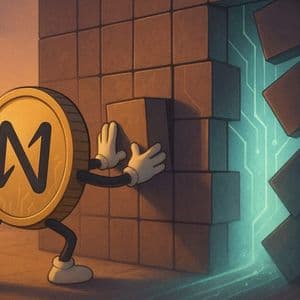
AI agents are moving on-chain, and the platforms that serve them must scale elastically while staying secure for decades. NEAR’s sharded design and account model put it in a unique spot as builders rethink infrastructure for autonomous apps and data-heavy workloads. This article unpacks why two ideas—dynamic resharding and quantum-safe signing—are central to NEAR’s AI moment. You’ll learn how they work, what they change for developers, the risks to weigh, and pragmatic steps to prepare. Quick Answer NEAR’s dynamic resharding is about automatically splitting and merging state shards to match demand, which can smooth fees and throughput for spiky AI workloads. Quantum-safe signing refers to adopting post-quantum cryptography (PQC) or hybrid keys so accounts remain secure if powerful quantum computers emerge. Together, they point to an elastic and future-resilient stack: scale when agents surge; rotate keys as cryptography evolves. Elastic capacity: shards adapt to load instead of forcing apps to migrate manually. Better UX: steadier fees and lower congestion during AI-driven bursts. Crypto agility: account-level key rotation enables gradual PQC adoption. Risk-aware: resharding adds cross-shard design complexity; PQC adds overhead. How does NEAR’s dynamic resharding actually work? NEAR’s core architecture, Nightshade, partitions state across multiple parallel shards, with validators producing “chunks” for each shard and assembling them into blocks. Dynamic resharding is the capability to automatically split a hot shard into multiple shards or merge underused shards, based on network conditions. The intent is to keep capacity responsive without manual coordination by app teams. In practice, this kind of elasticity aims to reduce hotspots. When an AI-driven app spikes (think inference payments or agent-to-agent bidding), the shard hosting its state can be split to distribute load, while quieter periods allow merging to reduce overhead. This helps smooth fees and confirms transactions faster under pressure. NEAR has iterated sharding in stages (e.g., Simple Nightshade, incremental rollout of more shards). Automatic split/merge has been on the roadmap and has seen testing and progressive deployment. Because production details evolve, builders should consult NEAR’s official documentation for current status and parameters before relying on specific behaviors. Key developer implications include avoiding reliance on static shard IDs, designing contracts for cross-shard calls, and planning for the possibility that your contract’s state may be migrated as the network optimizes layout. Why do AI agents and data-heavy apps benefit from elastic sharding? AI agents behave unpredictably. A model update, a viral prompt market, or a batch of on-chain inference tasks can produce sudden surges. Elastic sharding is well-suited to bursty demand: it adds capacity where needed, then rightsizes when traffic normalizes, avoiding “build for peak” costs. Many AI-on-chain patterns—pay-per-call inference, streaming data attestations, and marketplace-style auctions—generate short, intense periods of activity centered on a few contracts. Dynamic resharding can keep these hotspots from degrading network-wide UX, preserving low-latency confirmations for users and bots. Crucially, elasticity improves predictability. If fees and blockspace availability are steadier during spikes, it’s easier to price an inference marketplace or guarantee a service-level objective (SLO) for agent transactions. Stable fee envelopes also simplify budgeting for teams that pre-fund agent wallets. Checklist for AI builders on NEAR Avoid assuming a fixed shard layout; expect state to move. Design idempotent cross-contract calls to tolerate retries. Instrument end-to-end latency and cross-shard hop counts. Use queues or batching for bursts; backoff on congestion signals. Pre-fund agent wallets with margins for transient fee variance. What is “quantum-safe signing,” and why care now? Quantum-safe (post-quantum) signing refers to digital signature schemes designed to resist attacks from quantum computers. Today’s common signatures (like ed25519 and secp256k1) could be vulnerable to sufficiently powerful quantum adversaries running Shor’s algorithm. While timelines are uncertain, the “harvest-now, attack-later” risk is real: adversaries can record traffic today and attempt to break keys in the future. Standards bodies have been selecting PQC algorithms suitable for general use. The U.S. National Institute of Standards and Technology (NIST) has announced candidates for standardization, including CRYSTALS-Dilithium, Falcon, and SPHINCS+. These schemes vary in signature size, verification speed, and implementation complexity. Production blockchains will likely adopt “hybrid” approaches first—combining classical and PQ signatures—so that either can validate an action, enabling staged migration. For Web3 teams, this is not just theoretical. Long-lived treasuries, identity systems, and cross-chain bridges require crypto agility now because migration takes time: wallets, SDKs, hardware modules, and smart contracts must agree on formats and recovery paths. Warning: PQC adoption is a multi-year journey. Start with crypto agility—policies and tooling that let you rotate or add keys—before committing to a specific algorithm. Verify current guidance in official standards and NEAR documentation. Can NEAR’s account model simplify PQC migration? NEAR’s account model differs from many chains: accounts are human-readable, and each account can hold multiple access keys with distinct permissions. Full-access keys sign any transaction; function-call keys authorize specific contract calls with spending limits. This native key granularity supports safer experimentation with new signature schemes and staged rollouts. In a PQC context, teams could add a new access key that uses a PQ or hybrid signature scheme once supported by the runtime or via a contract-based wallet approach. During the transition, actions might require both a classical and a PQ signature (multi-algorithm multisig), or a threshold of keys including a PQ key, reducing single-algorithm failure risk. NEAR’s support for multisig and account-level key rotation can help large treasuries and infrastructure providers pilot crypto-agile policies: rotate keys on a schedule, test on canary accounts, and fall back if issues arise. While native PQC is an ecosystem decision and may be introduced incrementally via standards and contracts, NEAR’s flexible accounts provide a realistic path to adopt it without disrupting users. As always, consult NEAR’s official docs for current capabilities and proposals, and consider third-party audits for any custom wallet or multisig logic. How does NEAR compare for AI-era scaling? Different L1s and L2 stacks are tackling AI-era workloads with varied philosophies. Elastic sharding is one path; monolithic high-throughput designs and rollup-centric models are others. Below is a high-level comparison focused on developer experience for AI agents and crypto agility. Verify specifics in each ecosystem’s documentation, as implementations evolve. PlatformScaling approachElasticityAccount modelPQC readiness (qualitative)NEARSharded L1 (Nightshade)Designed for dynamic resharding (split/merge)Named accounts, multiple access keys, native multisigFavorable via key rotation and hybrid policies; native PQC subject to ecosystem rolloutEthereum (+ rollups)Base L1 + L2 rollups (modular DA/execution)Elasticity via L2s scaling independentlyExternally owned accounts + contract wallets (ERC-4337)Likely hybrid via smart wallets first; standards guided by NIST and communitySolanaMonolithic high-throughput with parallel runtimeElasticity via hardware scaling and scheduler optimizationsKeypairs per account; program-derived addressesResearch ongoing; migration paths require wallet/runtime upgradesOther sharded L1sVarious (state or execution sharding)Some support resharding conceptsVaries (account abstraction maturity differs)Mixed; many exploring hybrid signatures For AI agent builders, the trade-off is clear: NEAR’s elasticity aims to reduce operational surprises during bursty workloads while its account model can ease crypto-agile upgrades. Rollup ecosystems offer modularity and choice, but add cross-rollup fragmentation. Monolithic chains simplify composability but rely more on hardware and scheduler headroom during spikes. What are the risks and trade-offs to weigh? No scaling or security path is free. Dynamic resharding and PQC introduce their own complexities that architects must confront early, especially for AI systems where downtime or mispriced fees break product promises. First, resharding adds cross-shard coordination. Contracts that synchronously depend on other contracts may experience extra hops and latency variance if they land on different shards. Tooling and design patterns (asynchronous messaging, retries, timeouts) become essential. State migration also raises observability needs: you’ll want alerts when shard layouts change. Second, PQC brings performance and UX considerations. Many PQ signatures are larger than today’s, affecting transaction sizes, storage, and bandwidth. Verification costs can be higher. Hardware wallets and secure enclaves need firmware updates, and backup formats must be rethought. Hybrid schemes—using both classical and PQ signatures—mitigate risk but compound complexity. Finally, both features require governance and standards. You need clear policies for key rotation, incident response if a PQ scheme is deprecated, and a way to communicate changes to users. On the resharding side, published parameters, dashboards, and testnets are critical so teams can rehearse migrations safely. What should builders do next? Preparation beats prediction. You don’t need to wait for a specific algorithm or shard layout to start reducing risk. Treat this as an engineering program with milestones you control. Start with crypto agility. Inventory all keys, define rotation cadences, and implement multisig or threshold policies that you can later extend with hybrid PQ keys. Maintain an allowlist of supported algorithms per environment and make it upgradable via audited governance. Then, harden for resharding. Avoid shard-coupled assumptions, use asynchronous patterns, and load test with synthetic bursts that mimic AI traffic. Observe P50/P95/P99 latencies across shard boundaries and profile gas/fee sensitivity. Action plan for the next quarter Read NEAR’s sharding and account docs and verify current resharding status: NEAR Documentation . Implement account-level key rotation on staging; add an auxiliary key and exercise recovery paths. Pilot a contract wallet that can accept multiple signature schemes (classical today; PQ-ready interface). Add cross-shard observability: shard layout alerts, hop counters, and fee/latency dashboards. Run chaos drills: simulate shard splits/merges and key compromise; document operator playbooks. Track PQC standards at NIST: NIST PQC . Common Mistakes Hardcoding shard assumptions: Designing contracts that rely on static shard IDs or synchronous calls to a specific shard. Fix by using asynchronous patterns and avoiding storage layouts that assume immobility. Skipping key rotation drills: Waiting for a PQC “final answer” before practicing rotations. Fix by instituting regular rotations and canary accounts so you can swap algorithms later without user pain. Underestimating PQC overhead: Assuming signature sizes and verification costs are negligible. Fix by benchmarking larger payloads, adjusting fee buffers, and planning storage impacts. Neglecting wallet UX: Rolling out new key types without clear recovery flows. Fix by updating backup formats, educating users, and ensuring hardware/software wallet support. One-shot migrations: Flipping all keys to a new scheme at once. Fix by adopting hybrid signatures and phased rollouts with rollback plans. Thin observability: Lacking metrics on cross-shard latency, failure rates, and layout changes. Fix by instrumenting hop counts, queue depths, and alerting on shard reconfigurations. For more editorial insights and hands-on explainers as this space evolves, visit Crypto Daily . Frequently Asked Questions Does dynamic resharding break composability across contracts? Composability remains, but it becomes more asynchronous. Cross-shard calls introduce latency variance and potential retries. Good patterns include message queues, timeouts, and designing contracts to tolerate eventual consistency. Testing with simulated shard splits helps catch brittle assumptions. Will dynamic resharding lower my fees automatically? It can help by distributing load, which reduces hotspots that drive fees up. But fees still respond to demand and network parameters. Design with buffers and surge policies rather than assuming a fixed fee floor. How soon do I need quantum-safe signatures? No one can guarantee a timeline for practical quantum attacks. However, long-lived assets and identities should prioritize crypto agility now—multi-key accounts, rotation playbooks, and support for hybrid schemes—so they can adopt PQC without disruption when the ecosystem is ready. Which PQC algorithms are most likely for blockchains? NIST’s selections—such as CRYSTALS-Dilithium, Falcon, and SPHINCS+—are leading candidates. Each has trade-offs in key/signature size and verification speed. Many chains will likely start with hybrids that pair a classical signature with a PQ signature to ease migration and de-risk early adoption. Can I implement PQC on NEAR today? Teams can prepare via contract wallets, multisig, and rotation policies that are PQ-ready in interface and storage. Native support for specific PQ schemes depends on ecosystem standards and runtime upgrades. Check NEAR’s docs and community proposals before implementing custom cryptography. How do I avoid vendor lock-in with PQC? Favor standards-based algorithms, use upgradable wallets with auditable governance, and store metadata that indicates the signing scheme. Keep migration paths to add or retire algorithms without changing addresses where possible. What’s the best way to communicate these changes to users? Provide clear timelines, staged rollouts, and recovery guides. Offer test environments for users to try new wallets or keys. For treasuries, publish rotation calendars and sign-off procedures. Transparency reduces confusion during resharding events or cryptographic upgrades. Disclaimer: This article is provided for informational purposes only. It is not offered or intended to be used as legal, tax, investment, financial, or other advice.
23 May 2026, 11:12
French-Moroccan man sentenced to 25 years in prison for France crypto kidnaps

A French-Moroccan man convicted of organizing some of the recent daring kidnappings of crypto figures in France has been sentenced to 25 years in prison. The news comes amid a growing debate in French society over the massive number of data leaks in the country that are compromising personal security. Moroccan court sends crypto kidnapper to prison The Court of Appeal in the Moroccan city of Tangier gave Mohamed Hamid Bajou the harsh sentence on Thursday, May 21, local and French media reported. The 25-year-old man is the alleged mastermind of a gang that committed a series of brazen abductions of wealthy individuals in France, including prominent people from the crypto space. Bajou was facing serious charges, the French crypto information portal Journal du Coin noted in an article on Saturday, quoting a post by the Moroccan news website Tanja7 from Friday. These included establishing a criminal group, kidnapping, unlawful detention and torture for ransom, attempted premeditated murder, illegal possession of firearms, and drug trafficking. One of Bajou’s victims was David Balland, a co-founder of Ledger , the French company known for its popular hardware cryptocurrency wallets. The crypto entrepreneur was abducted in January 2025 along with his female partner at their home in Central France. The attackers demanded a 10-million-euro ransom, and Balland had a finger cut off before the couple was rescued by the French police. This was not the only such case. Another crypto executive, kidnapped in May 2025, also lost a finger before his release. The Moroccan court ordered Bajou to pay 1 million dirhams (nearly $110,000) to each of the individuals known to have been targeted by his gang. Convicted kidnapper denies all charges Mohamed Bajou was arrested in Tangier in June last year. He was wanted under a Red Notice issued by Interpol on the request of French authorities. At the time, media reports identified him as “Badiss Mohamed Amide Bajjou.” During a search at his home, Moroccan law enforcement found a whole arsenal of bladed weapons, hidden in the apartment’s ventilation ducts. At the time, the Moroccan prosecutor leading the probe stated that the suspect posed a serious threat, noting that he was evidently planning his next move. Investigators added that seized messages and other analyzed correspondence indicated he was indeed the mastermind of the kidnapping operation. However, Bajou denied all charges during the subsequent trial. He maintained he left France and settled in Morocco , where he worked on his grandfather’s farm. He insisted that the accusations against him were based on false statements made by a cousin, who was allegedly motivated by a family conflict. Mohamed Bajou also disputed the authorities’ claims that the victims had formally identified him before he was implicated. Data leaks blamed for string of kidnappings France has been hit by a wave of kidnappings of crypto figures and their family members since last year. The attacks are continuing despite multiple arrests . The public debate over what’s causing the phenomenon has been growing, with Telegram founder Pavel Durov recently warning that leaks of personal data may be putting crypto holders at risk. Bajou will certainly be succeeded by someone else until more than 6,000 leaks a year continue to fuel black markets for such information, Journal du Coin remarked in its piece, adding: “A stolen file containing an address, estimated net worth, and lifestyle habits is enough to transform a Bitcoin holder into an operational target.” All the attackers need is one such file, an address, and a weapon, the French crypto website noted, calling to condemn the “digital negligence” that made this possible. In his post in late April, Durov, who holds a French passport, alleged that tax officials in France are “selling crypto owners’ data to criminals,” on top of “massive tax database leaks.” The smartest crypto minds already read our newsletter. Want in? Join them .
23 May 2026, 11:10
Dogecoin Price Prediction: DOGE Targets Higher Move Above Resistance

Dogecoin is pressing against a key resistance zone after forming another rounded base on the weekly chart. Traders are watching whether DOGE can break its descending trendline and hold above the $0.10 to $0.11 area Dogecoin Price Setup Points to Meme Coin Breakout Dogecoin is holding near a long term horizontal support area after months of sideways price action. The chart shared by TraderSZ on X compares the current DOGE structure with an earlier breakout pattern that led to a sharp rally. The main level is the yellow support line near the lower range. DOGE has returned to that zone several times, but sellers have not pushed price far below it. That shows the market is still defending the base. DOGE Similar Pattern Chart. Source: TraderSZ on X The chart also shows a descending resistance line above the current structure. DOGE needs to break that line before the setup can confirm a stronger move. Until then, the chart remains in consolidation. TraderSZ’s point is that DOGE may be repeating a similar pattern from the previous cycle. The earlier setup showed a long base, a breakout, and then a larger move higher. The current chart now shows another base with price sitting under trendline resistance. If DOGE breaks above the descending line, the first major area to watch would be the previous local high zone. A stronger breakout could then open the way toward the blue target area shown on the chart. However, the support line still matters first. If Dogecoin loses that base, the bullish meme coin setup weakens. For now, DOGE needs a clean breakout before the larger meme coin run case becomes stronger. Dogecoin Price Tests 3 Month Resistance as DOGE Setup Points Higher Dogecoin is testing a key 3 month resistance zone after forming another rounded bottom on the weekly chart. The chart shared by Moe on X shows DOGE holding above its recent base while price pushes back into the same resistance area that mattered before the late 2024 rally. The setup compares the current DOGE structure with the earlier bottom formed in 2024. Back then, Dogecoin built a base, reclaimed resistance, and moved sharply higher afterward. Moe suggests the current structure could follow a similar path if DOGE keeps holding above the breakout area. DOGE 3 Month Resistance Chart. Source: Moe on X The green resistance band sits around the $0.10 to $0.11 area. DOGE has already moved into that zone, but the chart shows price still needs stronger follow through to confirm a clean breakout. The “no upper wick” note points to a weekly candle structure where sellers did not strongly reject the move from the top. That can show stronger buyer control, especially if the next candles continue to hold above the same zone. The lower support area now matters because DOGE recently broke above it and retested it. If price holds that level, the chart keeps the bullish structure active. A loss of that support would weaken the setup and put the recent bottom back in focus. For now, DOGE sits at an important decision point. A clean weekly hold above the 3 month resistance could strengthen the case for a larger move higher, while rejection from the same zone would keep Dogecoin inside its broader range.
23 May 2026, 11:05
Trump’s Latest Fintech Push Could Open an Unseen Door for Ripple & XRP at the Federal Reserve
Trump’s Fintech Order Reopens the Fed Access Debate, Putting Ripple Back in Focus President Donald Trump’s recent fintech executive has reopened a long-standing policy debate: who should have direct access to America’s core financial infrastructure? As highlighted by RippleXity, the heart of the order is a review of the rules governing access to Federal Reserve payment systems such as Fedwire and FedNow. Today, those rails are largely limited to federally insured banks, meaning fintech and crypto firms must rely on partner banks to move money through the system indirectly. The order does not remove those restrictions. Instead, it instructs regulators, including the Federal Reserve, to reassess whether frameworks built for a traditional banking era still make sense in a financial system now defined by real-time payments, digital assets, and cross-border settlement demands. More importantly, this shift in tone is particularly relevant for companies like Ripple. Delving Deeper into Ripple’s Fed Ambitions Ripple has long focused on blockchain-based infrastructure for cross-border payments and settlement. In 2025, one of its regulated entities applied for a Federal Reserve Master Account, which if approved would allow direct access to central bank payment rails without relying on intermediary banks. The application remains under review, with no indication of approval. Furthermore, Ripple has continued to feature in broader policy discussions around whether U.S. payment infrastructure is ready for modern financial technologies, including during congressional scrutiny of the Federal Reserve’s operational readiness. Why does the current development matter? Well, there is more than meets the eye since Trump’s order does not single out any company, but it does force regulators to formally revisit long-standing boundaries between banks and non-bank financial innovators, boundaries that have remained largely unchanged for decades. In this context, Ripple is often discussed as part of a wider infrastructure conversation. Direct access to Federal Reserve systems could, in theory, reduce settlement friction and improve efficiency in cross-border payments with XRP consequently serving as a potential liquidity bridge asset. Moreover, growing momentum around broader crypto legislation, including how the proposed CLARITY Act could be an ideal XRP stepping stone has added to industry expectations that regulatory definitions are gradually evolving. Ultimately, the significance of the current moment is not that the system is changing, but that it is being re-examined. Whether this leads to expanded access for non-bank players like Ripple and its native token XRP, or simply reinforces existing boundaries, will depend on how regulators balance innovation with financial stability in the years ahead.
23 May 2026, 11:05
Solana Price Prediction: SOL Faces $125 Test After Breakout
Solana is trading between two clear chart signals, with one setup showing weak corrective rallies and another pointing to a possible breakout retest. SOL needs to hold the $84 to $85 area and clear nearby resistance before the $125 target becomes stronger. Solana Price Struggles as SOL Rejects Corrective Rallies Solana traded near $84.68 on the 4 hour chart after another rejection from a short term recovery move. The chart shared by More Crypto Online on X shows SOL failing to hold above the nearby resistance zone around $87. The main issue is clear. SOL keeps bouncing, but each rally loses strength before price reaches the larger resistance near $95 to $96. That area acted as a major rejection zone earlier in May. As long as SOL stays below it, the recovery structure remains weak. SOL Corrective Rally Rejection Chart. Source: More Crypto Online on X The nearest support sits around $82, marked by the red horizontal line. If Solana loses that level, the chart points back toward the main range support area between $77.96, $75.41, and $71.92. These levels match the 50%, 61.8%, and 78.6% Fibonacci retracement marks shown on the chart. The orange support zone matters because it has held previous downside moves. A deeper move into that area would not fully break the larger range, but it would show that buyers still lack control. For the upside case, SOL needs a clean move above $87 first. Then, the more important level remains $95 to $96. A break above that zone would weaken the bearish setup and open room for a stronger move toward the higher Fibonacci extension area near $110, $120, and $128. For now, the chart supports More Crypto Online’s point. SOL has not shown enough strength after corrective rallies. The price remains stuck between short term resistance and the main support range, with $82 as the first level to watch. Solana Price Breakout Keeps $125 Target in View Solana traded near $87.60 on the 4 hour chart after breaking out from a large triangle structure. The chart shared by ray on X shows SOL moving above the long descending resistance line that capped price action since February. The breakout is the main point here. SOL spent months moving inside the triangle, with lower highs and higher lows tightening the range. After the breakout in May, price rallied toward $98, then pulled back into the former breakout area. SOL Triangle Breakout Chart. Source: ray on X That pullback looks like a retest. SOL held near the $84 to $85 zone and started moving higher again. This keeps the bullish structure alive as long as price does not lose that support. The first resistance now sits around $90 to $92. If SOL clears that area, the next major level is the previous local high near $98. A clean move above $98 would strengthen the case for a larger rally. The chart’s upside target is $125. That level sits above the previous breakdown zone and marks the main target shown on the chart. However, SOL still needs confirmation. If price falls below $84, the breakout retest weakens. A deeper drop could send SOL back toward $80 or even the lower range near $76. For now, the chart shows a stronger setup than the previous one. SOL has broken the triangle, retested support, and started to recover. The $125 target stays active while price holds above the breakout zone.


