


 Invest ideas
News
21 Jan 2026, 18:32
Bitcoin Reclaims $90K After Trump’s Davos Speech, but Gains Quickly Evaporate

Bitcoin briefly surged back above $90,000 on Jan. 21 after President Donald Trump eased tensions over Greenland. The rally, however, was short-lived; bitcoin retreated to $87,200, triggering $210 million in liquidations in four hours. Greenland De-escalation Fuels a Sharp Recovery Bitcoin ( BTC) staged a high-stakes recovery on the afternoon of Jan. 21, briefly reclaiming
21 Jan 2026, 17:23
Winklevoss Twins Donate $1.2M to Zcash’s Shielded Labs Amid ECC Exodus

Tyler and Cameron Winklevoss donated 3,221 ZEC (approximately $1.2 million) to Shielded Labs on Tuesday, the Swiss-based nonprofit confirmed , marking their second contribution to the independent Zcash development organization. https://t.co/iRx986OwCr — Shielded Labs (@ShieldedLabs) January 20, 2026 Zcash (ZEC) is currently trading around $368.85 and is up about 3.01% over the past 24 hours. The funds will support three protocol-level initiatives: the Network Sustainability Mechanism (economic health upgrades), Crosslink (a hybrid PoW/PoS layer), and Dynamic Fees. Shielded Labs operates entirely outside Zcash’s Dev Fund structure, relying solely on donations from ZEC holders. “A healthy Zcash ecosystem depends on multiple independent organisations contributing at the protocol level. Shielded Labs plays an important role in that effort, and we’re glad to support their work,” Cameron Winklevoss said. Cameron Winklevoss also added that the twins have backed Zcash for years, calling privacy “the point at which government and corporate overreach end and your freedom and self-sovereignty begin.” Timing and Context The donation lands two weeks after the entire Electric Coin Company development team (roughly 25 members, including CEO Josh Swihart and Chief Scientist Chelsea Komlo) resigned on January 7, citing what Swihart described as “constructive discharge” following a governance dispute with Bootstrap, ECC’s nonprofit overseer. Over the past few weeks, it's become clear that the majority of Bootstrap board members (a 501(c)(3) nonprofit created to support Zcash by governing the Electric Coin Company), specifically Zaki Manian, Christina Garman, Alan Fairless, and Michelle Lai (ZCAM), have moved into… — Josh Swihart (@jswihart) January 7, 2026 The departing developers immediately formed a new startup , cashZ, and announced plans for a wallet built on the existing Zashi codebase. ZEC dropped 20% following the announcement, briefly touching $385. Shielded Labs, led by Zcash founder Zooko Wilcox as Head of Product, now represents a parallel development path. The organization received its first Winklevoss donation in 2023 to seed the Crosslink team. Winklevoss-Backed Accumulation The brothers’ support extends beyond donations. Winklevoss Capital led a $58.88 million private placement in October 2025 for Cypherpunk Technologies (NASDAQ: CYPH), a company that shifted to a Zcash treasury strategy. Cypherpunk purchased 56,418 ZEC last month and now holds nearly 2% of the circulating supply. Zooko Wilcox joined Cypherpunk as Strategic Advisor in December 2025. Regulatory Tailwind The SEC closed its two-year investigation into the Zcash Foundation on January 14, 2026, without enforcement action. The probe, initiated via subpoena in August 2023, examined whether ZEC constituted a securities offering. The closure aligns with broader SEC pullback on crypto enforcement under Chair Paul Atkins. ZEC surged 14% on the SEC news but has since retraced as governance uncertainty persists. What This Means for Desks The Winklevoss donation shows institutional confidence in Shielded Labs as the de facto development anchor for Zcash. With ECC’s team now operating independently under cashZ and regulatory clarity secured, ZEC’s path forward hinges on execution of the Crosslink hybrid PoS upgrade. Liquidity providers watching the privacy coin sector should note the twins’ coordinated accumulation via Cypherpunk and direct protocol funding. The governance fracture introduces development risk, but also decentralizes the previously ECC-centric structure. The post Winklevoss Twins Donate $1.2M to Zcash’s Shielded Labs Amid ECC Exodus appeared first on Cryptonews .
21 Jan 2026, 17:13
Senate Ag Committee To Release Latest Crypto Market Structure Bill Draft Today

The Senate Banking Committee delayed the anticipated markup of its crypto market structure bill draft, prompting the Agriculture Committee to take action. The Agriculture Committee is set to release its own version of the bill’s draft today, just ahead of a crucial vote scheduled for next week. Coinbase Faces Pressure To Negotiate Yield Deal Eleanor Terret, a reporter with Crypto In America who has been closely monitoring congressional developments regarding cryptocurrency, reported that staffers from the Banking Committee hope a successful bipartisan agreement spearheaded by their counterparts in the Ag Committee could facilitate a smoother markup process. The responsibility now largely falls on Coinbase—whose sudden withdrawal of support for the bill contributed to the halt in the markup process—to negotiate a deal with banking leaders on yield. At the same time, Binance and Ripple’s leadership have expressed support for the bill’s latest version during their appearance in Davos. Coinbase CEO Brian Armstrong expressed his apprehensions regarding the implications of the bill last week. He raised concerns that the legislation could prohibit tokenized equities, impose restrictions on decentralized finance (DeFi), and expand government access to financial data, potentially sacrificing individual privacy. The executive also cautioned that the bill could shift regulatory power from the Commodity Futures Trading Commission (CFTC) to the Securities and Exchange Commission (SEC), which may eliminate stablecoin rewards and hinder competition within the crypto sector. President Trump Optimistic About Crypto Market Bill Adding to the tension, Patrick Witt, Executive Director of the White House Crypto Council, took to social media late Tuesday to criticize Coinbase, warning that the delay in the market structure bill could invite stricter regulations under an administration less favorable to digital assets. Witt’s remarks seemed to corroborate reports from Crypto In America indicating that the White House is frustrated with Coinbase’s withdrawal, which has contributed to the legislative stall. In a related note, President Donald Trump acknowledged the ongoing efforts surrounding the market structure legislation during his speech in Davos on Wednesday. He expressed hope that Congress would finalize the bill soon, stating, “Congress is working very hard on crypto market structure legislation, which I hope to sign very soon, unlocking new pathways for Americans to reach financial freedom.” Featured image from OpenArt, chart from TradingView.com
21 Jan 2026, 16:58
Bitcoin turns negative for 2026 as Trump's calming Greenland remarks fail to reverse slide

There was a modest bounce after the president said the U.S. had no intention of taking Greenland by force, but prices quickly resumed their decline.
21 Jan 2026, 16:20
OpenAI unveils Stargate plan to stop AI data centers from raising power bills

OpenAI has introduced a new Stargate Community plan to stop its AI data centers from pushing up power prices in local neighborhoods. The company says it wants to “pay its way on energy” and avoid dumping new costs on residents living near its sites. The plan is part of Stargate, a $500 billion long-term effort to build next-gen data centers for both AI training and inference. These massive facilities are backed by Oracle and other major investors. President Donald Trump supported the project when it was first announced in January 2025. OpenAI promises to pay for local energy infrastructure at each site Every Stargate location will now get its own community energy plan, which OpenAI says will be built based on what locals actually want. The company said the setup will be different in each area depending on the needs and stress on the grid. “Depending on the site, this can range from bringing new dedicated power and storage that the project fully funds, to adding and paying for new energy generation and transmission resources,” OpenAI said . This means OpenAI could either build brand new energy lines for its own needs or expand existing grids, as long as it pays the full cost. The company is clearly trying to get ahead of criticism that it’s eating up local power supplies and pushing up utility bills. The move follows something similar from Microsoft, which announced a plan last week to cut water usage at its U.S. data centers. Microsoft also said it will pay power rates high enough to cover its share of demand, and will work with utility companies to expand the grid where needed. These announcements show that as more and more AI models require huge power to train and run, the companies behind them are being forced to deal with the real-world impact of their expansion. Energy access is now one of the biggest challenges AI companies face. But OpenAI is also dealing with something else: a huge lawsuit. Elon Musk is asking a California court to force OpenAI and Microsoft to pay him between $79 billion and $134 billion in damages. He claims they defrauded him by dumping OpenAI’s original nonprofit structure and partnering up for profit. Elon helped start OpenAI back in 2015 and donated $38 million in early funding. His lawyer now says that, based on OpenAI’s $500 billion valuation, Elon should be owed a chunk of the company’s worth, since that early money helped get it off the ground. “Just as an early investor in a startup company may realize gains many orders of magnitude greater than the investor’s initial investment, the wrongful gains that OpenAI and Microsoft have earned – and which Mr. Musk is now entitled to disgorge – are much larger than Mr. Musk’s initial contributions,” wrote his lawyer, Steven Molo, in the filing. If you're reading this, you’re already ahead. Stay there with our newsletter .
21 Jan 2026, 16:06
Bitcoin Price Reclaims $90K After Trump Rules Out Using Force Over Greenland
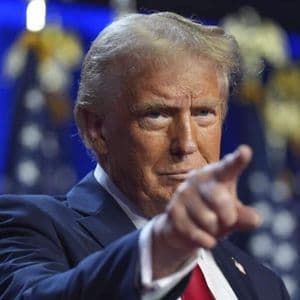
In a highly anticipated speech at the World Economic Forum in Davos, Switzerland, US President Donald Trump addressed numerous hot topics, including the escalating situation with Greenland and some cryptocurrency news. BTC’s price, alongside most financial markets, rallied during and after the event, surpassing $90,000 after the recent meltdown. BREAKING: US markets surge as President Trump rules out military action in Greenland. We are now on step #7 of our tariff playbook with timing EXACTLY as outlined. https://t.co/O0OxJZlXyT pic.twitter.com/56Ayjb32uB — The Kobeissi Letter (@KobeissiLetter) January 21, 2026 The analyst at the Kobeissi Letter explained that Trump’s tariff threats typically follow a 12-step process. According to their estimations, the current situation between the US and the EU is on step seven, which means that dip buyers “step in and spark a relief rally, but this move often fades and leads to another push lower.” This could explain the latest gains charted by BTC, in which the asset went past $90,000 after dipping beneath $88,000 earlier this morning. Nevertheless, the analysts said smart money typically begins buying between the 7th and 8th step. During his speech, Trump also doubled down on his belief that the US should have the lowest interest rates, urging Fed Chair Powell to cut them next week. On the matter of cryptocurrency regulations, the POTUS said the US must remain the digital asset capital of the world, and added that he hopes the legislation bill, which caused a lot of controversy last week, will be signed soon. Despite his assurances that the US won’t use force in taking over Greenland, the EU appears to be standing strong this time. New reports indicate that the bloc has stopped working on a trade deal with the US following Trump’s latest comments. BTCUSD Jan 21. Source: TradingView The post Bitcoin Price Reclaims $90K After Trump Rules Out Using Force Over Greenland appeared first on CryptoPotato .


