


 Invest ideas
News
25 Mar 2026, 13:50
Gold Price Recovery Gains Momentum as Softer Dollar Provides Crucial Support – ING Analysis

BitcoinWorld Gold Price Recovery Gains Momentum as Softer Dollar Provides Crucial Support – ING Analysis Gold markets are demonstrating notable resilience in early 2025, with a sustained recovery gaining momentum as a softer US dollar provides crucial support, according to fresh analysis from ING Bank. This development marks a significant shift from previous trading patterns and reflects broader macroeconomic currents influencing global commodity markets. Consequently, investors and analysts are closely monitoring these dynamics for their portfolio implications. Gold Price Recovery Finds Footing Amid Dollar Weakness The recent gold price recovery represents a pivotal moment for precious metals investors. Historically, gold exhibits an inverse relationship with the US dollar’s strength. Therefore, a softer dollar typically reduces the cost of gold for holders of other currencies, boosting demand. This fundamental relationship is currently driving market sentiment. Moreover, central bank policies and inflation expectations are contributing to this environment. ING’s commodity strategists point to several key factors supporting this trend. First, shifting expectations around the Federal Reserve’s interest rate trajectory have pressured the dollar. Second, geopolitical tensions continue to underpin safe-haven demand. Third, physical gold buying by central banks remains robust, providing a structural floor for prices. These elements combine to create a supportive backdrop for the metal’s recovery. Analyzing the US Dollar’s Impact on Precious Metals The US dollar index (DXY) serves as a critical barometer for gold’s performance. A weaker dollar makes dollar-denominated commodities like gold more affordable for international buyers. This dynamic directly increases purchasing activity. Furthermore, currency fluctuations can trigger algorithmic trading and institutional rebalancing, amplifying price movements. Expert Insights from ING’s Market Team ING’s analysis incorporates real-time trading data and macroeconomic models. The bank’s team emphasizes that the current dollar softness is not merely a short-term fluctuation. Instead, it reflects deeper shifts in global capital flows and relative economic growth expectations. For instance, comparative economic performance between the US, Europe, and Asia influences currency valuations. These valuations, in turn, directly affect commodity pricing structures. The following table outlines the primary drivers identified by analysts: Driver Impact on Gold Current Trend (2025) US Dollar Index (DXY) Negative Correlation Moderately Weakening Real Interest Rates Inverse Relationship Stabilizing Central Bank Purchases Direct Support Consistently Strong Geopolitical Risk Safe-Haven Demand Elevated Broader Market Context and Historical Precedents Understanding this gold price recovery requires historical context. Previous periods of dollar weakness, such as in 2017 and 2020, often coincided with strong gold rallies. However, each cycle possesses unique characteristics. The current environment features distinct elements like higher baseline inflation and evolving digital asset competition. These factors complicate traditional analysis. Market participants should consider several critical points: Duration Matters: Sustained dollar trends matter more than daily volatility. Real Yields are Key: Inflation-adjusted Treasury yields heavily influence gold’s opportunity cost. Physical Demand Provides a Floor: ETF flows can be fickle, but bar and coin demand is sticky. Central Banks are Consistent Buyers: Their long-term diversification strategy supports the market. Future Trajectory and Risk Factors for Gold Prices The sustainability of the gold price recovery remains a central question. While the softer dollar provides immediate support, other variables could alter the path. A sudden resurgence in dollar strength, perhaps from unexpected Fed hawkishness, would present a headwind. Conversely, a rapid escalation in global risk aversion could amplify gold’s gains, potentially decoupling it briefly from currency moves. ING’s outlook suggests a cautiously optimistic path for gold in 2025. The bank anticipates that moderate dollar weakness, coupled with steady physical demand, will maintain a supportive environment. However, they caution that prices will likely experience volatility as markets digest new economic data. Therefore, investors should maintain a balanced perspective. Conclusion The ongoing gold price recovery, bolstered by a softer US dollar, highlights the enduring interplay between currencies and commodities. ING’s analysis provides a clear framework for understanding this dynamic. While challenges persist, the current macroeconomic landscape offers constructive support for precious metals. Ultimately, monitoring dollar trends and central bank policies will be essential for gauging the next phase of this gold market movement. FAQs Q1: Why does a weaker US dollar help gold prices? A weaker US dollar makes gold cheaper for buyers using other currencies. This increased affordability typically boosts international demand, supporting higher prices. Q2: What are the main factors ING cites for the gold price recovery? ING highlights a softer US dollar, shifting Federal Reserve policy expectations, sustained central bank purchases, and ongoing geopolitical tensions as key supportive factors. Q3: Is the relationship between gold and the dollar always inverse? While the inverse relationship is a strong historical tendency, it can break down during extreme risk-off events when both the dollar and gold act as safe havens and rise together. Q4: How do real interest rates affect gold’s appeal? Gold pays no interest. When real (inflation-adjusted) interest rates are low or negative, the opportunity cost of holding gold decreases, making it more attractive compared to yield-bearing assets. Q5: What could reverse the current gold price recovery trend? A sharp, sustained strengthening of the US dollar, a significant and unexpected rise in real interest rates, or a major reduction in physical and central bank demand could pressure gold prices and challenge the recovery. This post Gold Price Recovery Gains Momentum as Softer Dollar Provides Crucial Support – ING Analysis first appeared on BitcoinWorld .
25 Mar 2026, 13:40
Bitcoin Security Program: Strategy Launches Groundbreaking Initiative to Fortify Network Stability
BitcoinWorld Bitcoin Security Program: Strategy Launches Groundbreaking Initiative to Fortify Network Stability In a significant move to bolster the foundational security of the world’s largest cryptocurrency, Strategy has announced the launch of a dedicated Bitcoin security program. This initiative, reported by Bitcoin News, represents a comprehensive effort to enhance network stability and reliability through unprecedented collaboration with global cybersecurity and cryptocurrency experts. The program emerges at a critical juncture as Bitcoin continues to attract institutional investment, making robust security protocols more essential than ever. Bitcoin Security Program: A Multi-Faceted Approach Strategy’s Bitcoin security program will encompass several critical areas of focus, each designed to address specific vulnerabilities and strengthen the network’s overall resilience. The company is currently recruiting for a leadership position to oversee this ambitious initiative, signaling a long-term commitment to the project. According to industry analysts, this structured approach marks a shift from reactive security measures to proactive, institutional-grade protection frameworks. The program’s core components include: Advanced Threat Analysis: Continuous monitoring and assessment of emerging threats to the Bitcoin network Key Management Solutions: Development of secure protocols for private key storage and recovery Multisig Design Optimization: Enhancement of multi-signature transaction security standards Wallet Security Standards: Establishment of best practices for wallet development and implementation Furthermore, the initiative specifically targets institutional-grade stability and recovery capabilities. This focus addresses growing concerns among corporate and financial entities about operational security in cryptocurrency operations. The timing coincides with increasing regulatory scrutiny worldwide, particularly regarding custody solutions and security standards for digital assets. Global Collaboration and Expert Integration The program’s success will depend heavily on collaboration with cybersecurity specialists and cryptocurrency experts from around the world. This global approach recognizes that Bitcoin’s decentralized nature requires diverse perspectives and specialized knowledge. Industry observers note that previous security initiatives often suffered from limited scope or regional focus, whereas Strategy’s program appears designed to incorporate international best practices from inception. Institutional Adoption Driving Security Demands The push for enhanced Bitcoin security comes as institutional adoption reaches new milestones. Major financial institutions, publicly traded companies, and sovereign wealth funds have increasingly allocated portions of their portfolios to Bitcoin. Consequently, these entities demand security standards comparable to traditional financial systems. The table below illustrates key security concerns driving institutional adoption: Security Concern Traditional Finance Solution Bitcoin Adaptation Needed Private Key Management Secure vaults with multiple authorization Distributed key management systems Transaction Authorization Multi-party approval processes Advanced multisig implementations Disaster Recovery Redundant systems and backups Key recovery protocols without central points Regulatory Compliance Audit trails and reporting systems Privacy-preserving compliance tools Strategy’s program directly addresses these adaptation needs through its comprehensive security framework. The company’s recruitment of specialized leadership indicates recognition that successful implementation requires both technical expertise and strategic vision. Industry veterans have emphasized that effective Bitcoin security must balance cryptographic principles with practical usability, especially for institutional participants. Technical Implementation and Network Impact From a technical perspective, the program’s components interact with different layers of the Bitcoin ecosystem. Threat analysis will monitor network activity, node behavior, and protocol-level vulnerabilities. Meanwhile, key management improvements will focus on user-facing security, particularly for large holders and institutional custodians. This dual approach acknowledges that Bitcoin security encompasses both network integrity and individual asset protection. The multisig design component represents particularly important work, as multi-signature transactions have become standard for institutional custody. However, implementation variations and complexity have created security gaps in some cases. Standardization efforts through this program could significantly reduce risks associated with improper multisig configuration. Similarly, wallet security standards would establish baseline requirements for developers, potentially reducing vulnerabilities introduced through software implementation. Historical Context and Evolution of Bitcoin Security Bitcoin’s security model has evolved substantially since its 2009 launch. Initially, security focused primarily on the cryptographic proof-of-work consensus mechanism. As the network grew and value increased, attention shifted to exchange security, wallet protection, and user education. Major security incidents, including exchange hacks and wallet vulnerabilities, highlighted areas needing improvement beyond the core protocol. Strategy’s program represents the next evolutionary phase: systematic, professional-grade security infrastructure supporting institutional participation. This development follows increasing academic research into Bitcoin security, numerous white papers on improved protocols, and growing professionalization of cryptocurrency security practices. The program builds upon years of community-driven security improvements while introducing structured, professionally managed enhancements. Industry Response and Future Implications Initial reactions from the cryptocurrency community have been cautiously optimistic. Security experts have welcomed the dedicated focus on Bitcoin’s protection, particularly the emphasis on institutional-grade capabilities. However, some community members have emphasized that any security program must respect Bitcoin’s decentralized principles and avoid creating centralized points of failure or control. The program’s success could have several important implications: Increased institutional confidence in Bitcoin as a store of value Standardization of security practices across the industry Potential regulatory recognition of improved security frameworks Enhanced network resilience against sophisticated attacks Development of reusable security tools and protocols Moreover, the initiative arrives alongside other industry developments, including improved hardware wallet technology, regulated custody solutions, and insurance products for digital assets. Together, these advancements create a more robust security ecosystem for Bitcoin and other cryptocurrencies. The program’s collaborative nature suggests it may complement rather than compete with existing security efforts. Conclusion Strategy’s dedicated Bitcoin security program represents a significant step toward professionalizing cryptocurrency protection at scale. By addressing threat analysis, key management, multisig design, and wallet security through global collaboration, the initiative aims to achieve institutional-grade stability and recovery capabilities. As Bitcoin continues its transition from experimental technology to mainstream financial asset, such comprehensive security frameworks become increasingly essential. The program’s success will depend on technical execution, community engagement, and maintaining alignment with Bitcoin’s decentralized ethos while enhancing practical security for all participants. FAQs Q1: What specific areas will Strategy’s Bitcoin security program address? The program will focus on four primary areas: advanced threat analysis for network monitoring, improved key management solutions, optimized multi-signature transaction designs, and enhanced wallet security standards. These components work together to create comprehensive protection. Q2: How does this program differ from existing Bitcoin security efforts? Unlike many community-driven or single-focus initiatives, Strategy’s program takes a structured, multi-faceted approach with dedicated leadership and institutional-grade objectives. It emphasizes systematic implementation and global expert collaboration rather than addressing isolated security concerns. Q3: Why is institutional-grade security important for Bitcoin? As more financial institutions, corporations, and large investors adopt Bitcoin, they require security standards comparable to traditional financial systems. Institutional-grade security enables broader adoption while protecting significant capital investments in cryptocurrency. Q4: Will this program affect individual Bitcoin users? Yes, indirectly. Improved security standards, better wallet designs, and enhanced threat analysis benefit all network participants. Individual users may access more secure tools and benefit from reduced network vulnerabilities, though the program primarily targets institutional requirements. Q5: How will the program maintain Bitcoin’s decentralized principles? The program focuses on developing standards, tools, and best practices rather than centralized control mechanisms. By working with global experts and emphasizing open collaboration, the initiative aims to enhance security while respecting Bitcoin’s decentralized architecture. This post Bitcoin Security Program: Strategy Launches Groundbreaking Initiative to Fortify Network Stability first appeared on BitcoinWorld .
25 Mar 2026, 13:35
Gold Extends Stunning Recovery as Oil Prices Retreat on US-Iran Ceasefire Optimism
BitcoinWorld Gold Extends Stunning Recovery as Oil Prices Retreat on US-Iran Ceasefire Optimism Global commodity markets witnessed a dramatic divergence on Tuesday as gold extended its recovery while oil prices pulled back significantly, driven primarily by growing optimism about potential US-Iran ceasefire negotiations. This development represents a notable shift in market sentiment following weeks of geopolitical tension. Gold Price Recovery Accelerates Amid Market Uncertainty Gold prices climbed for the third consecutive session, reaching $2,350 per ounce in early trading. This recovery marks a significant reversal from last month’s correction. Market analysts attribute this movement to several interconnected factors. Firstly, renewed safe-haven demand emerged as investors reassessed geopolitical risks. Secondly, dollar weakness provided additional support for dollar-denominated commodities. The Federal Reserve’s recent commentary about potential rate cuts later this year further bolstered gold’s appeal. Historical data shows gold typically performs well during periods of diplomatic uncertainty. The current situation follows this established pattern. Trading volumes in gold futures increased by 18% compared to the previous week. This surge indicates substantial institutional interest. Major investment banks have revised their gold price forecasts upward accordingly. Physical gold holdings in exchange-traded funds also saw modest inflows after weeks of outflows. Oil Market Retreats on Diplomatic Developments Conversely, Brent crude oil prices declined by 2.8% to $83.50 per barrel. West Texas Intermediate followed similar patterns, dropping to $79.20. This pullback represents the most substantial single-day decline in three weeks. The primary catalyst appears to be diplomatic progress between Washington and Tehran. Both governments have reportedly engaged in backchannel communications through intermediaries in Oman. These negotiations aim to de-escalate regional tensions that have threatened global oil supplies. A potential ceasefire agreement could significantly alter Middle Eastern dynamics. Specifically, it might reduce the risk premium currently embedded in oil prices. Market participants estimate this premium at approximately $8-12 per barrel. The following table illustrates recent price movements: Commodity Price Change Current Price 30-Day Trend Gold (Spot) +1.4% $2,350/oz Recovering Brent Crude -2.8% $83.50/bbl Volatile WTI Crude -3.1% $79.20/bbl Declining Several technical indicators suggest further potential downside for oil prices. The 50-day moving average recently crossed below the 100-day average. This crossover often signals weakening momentum. Additionally, open interest in oil futures contracts decreased by 7%. This reduction suggests some traders are exiting positions ahead of potential volatility. Expert Analysis on Market Divergence Financial institutions have published extensive research on this developing situation. According to commodity strategists at major banks, the gold-oil correlation has broken down temporarily. Normally, these assets move somewhat in tandem during inflationary periods. However, geopolitical developments have created unusual divergence. One senior analyst noted that “gold is responding to uncertainty while oil is responding to potential resolution.” This analysis aligns with historical precedents. During previous diplomatic breakthroughs in conflict zones, similar patterns emerged. For instance, during the 2015 Iran nuclear negotiations, oil prices declined 15% over six weeks. Meanwhile, gold prices remained relatively stable during that period. The current situation appears to be following a comparable trajectory. Market participants should monitor several key indicators: Diplomatic statements from US and Iranian officials Inventory data from the American Petroleum Institute Dollar index movements affecting commodity pricing Technical support levels for both gold and oil Furthermore, central bank gold purchases continue at a steady pace. Emerging market institutions added approximately 25 tons to reserves last month. This consistent demand provides underlying support for gold prices. It also demonstrates continued diversification away from traditional reserve assets. Geopolitical Context and Historical Parallels The current diplomatic efforts follow months of escalating tensions in the Strait of Hormuz. Approximately 20% of global oil shipments pass through this critical waterway. Any disruption there immediately affects global energy markets. Recent naval incidents had raised concerns about potential supply constraints. However, diplomatic channels have apparently remained open throughout this period. Historical analysis reveals interesting patterns. During the 2020 US-Iran tensions, oil prices spiked briefly before declining. Gold, however, maintained gains for several months afterward. This suggests gold may have longer-lasting reactions to geopolitical developments. The precious metal often serves as a barometer for systemic risk. Its current recovery indicates that investors remain cautious despite diplomatic progress. Regional dynamics also play a crucial role. Other Middle Eastern producers have increased output slightly in recent weeks. Saudi Arabia and the United Arab Emirates have additional capacity available. This spare capacity provides a buffer against potential supply disruptions. Consequently, the market impact of regional tensions has diminished compared to previous decades. The global energy landscape has evolved significantly with increased US shale production and alternative energy sources. Market Mechanics and Trader Positioning Commitments of Traders reports reveal interesting positioning changes. Hedge funds reduced net-long positions in oil futures by 12% last week. Simultaneously, they increased gold exposure by 8%. This reallocation suggests professional traders anticipate continued divergence. Options market activity supports this view. Implied volatility for oil options has decreased while gold volatility has increased slightly. The physical markets tell a different story. Gold refiners report strong demand from Asian markets. Indian imports typically increase during this season. Chinese retail investment demand also remains robust. These fundamental factors provide additional support beyond speculative positioning. For oil, physical differentials have weakened in several key regions. This indicates adequate supply despite geopolitical concerns. Several technical levels warrant attention. Gold faces resistance around $2,380, its recent high. Support exists near $2,300. Oil support levels cluster around $82 for Brent and $78 for WTI. Breaking these levels could trigger additional momentum moves. Market participants will closely monitor these technical thresholds alongside diplomatic developments. Conclusion Gold extends its recovery while oil prices pull back as US-Iran ceasefire hopes reshape commodity market dynamics. This divergence highlights how different assets respond to geopolitical developments. Gold maintains its safe-haven appeal despite diplomatic progress, suggesting underlying market caution. Meanwhile, oil markets quickly price in reduced risk premiums. The situation remains fluid with negotiations ongoing. Market participants should monitor diplomatic channels and technical levels closely. The gold price recovery and oil price pullback demonstrate the complex interplay between geopolitics and commodity markets. FAQs Q1: Why is gold rising while oil is falling? Gold and oil are responding to different aspects of the same geopolitical development. Gold maintains safe-haven appeal due to residual uncertainty, while oil prices reflect reduced supply disruption risks from potential diplomatic progress. Q2: How reliable are ceasefire hopes in affecting markets? Market reactions to diplomatic developments are often anticipatory. Even unconfirmed reports can trigger significant moves as traders position for potential outcomes, though prices may reverse if negotiations stall. Q3: What technical levels are important for gold now? Gold faces resistance around $2,380 per ounce, with support near $2,300. Breaking either level could determine the next directional move for the precious metal. Q4: Could oil prices rebound if ceasefire talks fail? Yes, oil prices would likely rebound quickly if diplomatic efforts collapse, as the current decline partially reflects anticipated resolution rather than actual changed fundamentals. Q5: How long might this gold-oil divergence last? Historical patterns suggest such divergences can persist for several weeks during diplomatic processes, typically converging once outcomes become clearer and markets fully price in new realities. This post Gold Extends Stunning Recovery as Oil Prices Retreat on US-Iran Ceasefire Optimism first appeared on BitcoinWorld .
25 Mar 2026, 13:33
Ripple Price Analysis: XRP Struggles Against USD, Even Weaker vs BTC
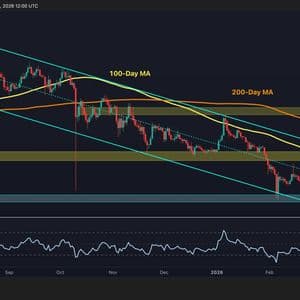
XRP is trading around $1.43, still deep in a correction that has erased the majority of its bull market gains. With both moving averages trending downward and the price trapped inside a descending channel, the altcoin continues to underperform against broader market expectations as Q1 2026 draws to a close. Ripple Price Analysis: The USDT Pair Despite bouncing from the February low near $1.20, XRP has struggled to build any meaningful momentum on the USDT pair. The recovery has been gradual and unconvincing, with the price failing to clear even the first layer of resistance at $1.80. This level is the higher boundary of the channel and a key supply zone that has been reinforced multiple times over the last couple of months. Both the 100-day MA (~$1.60) and 200-day MA (~$2.10) remain well above the current price and are still declining, leaving XRP with a stack of overhead resistance before any bullish case can be made. The RSI has also recovered from oversold territory and is hovering around 50, which reflects neutral momentum at best. A sustained close above the $1.80 level is the minimum requirement to shift the short-term outlook, while a breakdown below the $1.20 zone reopens the path toward the key psychological level at $1.00. The BTC Pair The picture against Bitcoin is arguably worse. XRP/BTC has slipped to 1,994 sats, now testing below the 2,000 sats support level that had held on a closing basis through most of the correction. That subtle but significant breach suggests XRP is continuing to lose ground relative to Bitcoin, with the 100-day (2,200 sats) and 200-day (2,100 sats) moving averages both overhead and converging downward. The broader descending channel structure has been in place since the July 2025 peak near 3,000 sats, and there is no technical sign of a reversal on this pair yet. The RSI has also dropped back below 50, pointing to a potential bearish shift in the short-term, following the rejection from the 100-day moving average. As a result, unless XRP/BTC reclaims the 2,000 sats level convincingly and breaks above the channel’s upper boundary, the ratio looks more likely to drift toward the lower boundary of the channel near 1,600 sats, or even lower in the coming months. The post Ripple Price Analysis: XRP Struggles Against USD, Even Weaker vs BTC appeared first on CryptoPotato .
25 Mar 2026, 13:31
Expert Says XRP Is About to Explode into Life-Changing Generational Wealth

Crypto commentator Archie (@Archie_XRPL) highlighted significant XRP activity this week, noting that recent market behavior could indicate either a full reversal or confirmation of a bottoming structure. His analysis, accompanied by a weekly chart, signals that XRP is approaching a critical point that could bring generational wealth. Technical Signals on the Weekly Chart The weekly chart shows three notable zones of strong price acceleration. The first occurred in late 2020 and early 2021, when XRP surged from under $0.3 to a peak of $1.96 in April of that year. The second climb occurred in 2024, when XRP rose 500% from around $0.5 to over $3.3. Currently, the chart highlights a third zone at $1.30 to $1.40, suggesting a potential breakout area. This level has repeatedly acted as support, reinforcing its significance in determining the next major price rally. Price consolidation at this level indicates accumulation and a potential for increased volatility once momentum resumes. This upcoming rally is the third highlighted zone on the chart. Archie observed, “Either we start to fully reverse here, or confirm a textbook bottoming structure.” This statement suggests that XRP is positioned at a critical juncture where both bullish and stable accumulation outcomes favor long-term holders. XRP ARMY: PREDICTION FOR THIS WEEK MONSTROUS REVERSAL LOADING Let’s end march with a bang! 1⃣Clarity Act advances: Senate Banking markup push? House vote momentum if fast-tracked this week the floodgates open! 2⃣SEC ETF rule deadline this Friday: Clarity on new XRP… pic.twitter.com/PJgruCQPAs — Archie (@Archie_XRPL) March 23, 2026 Market Developments Supporting Momentum Several market catalysts are contributing to the potential for a strong move. The CLARITY Act’s progression could accelerate adoption by offering clearer regulatory guidelines. Archie pointed to the Senate Banking markup and potential House vote as triggers for renewed institutional participation. Additionally, the SEC ETF rule deadline this Friday may allow new XRP products to enter the market, providing further liquidity and momentum. The rule requires the SEC to approve or deny pending cryptocurrency ETF applications, and meeting this deadline could bring regulatory clarity, attract institutional investors, and strengthen XRP adoption and price potential. Geopolitical conditions also play a role. The market uncertainty recently triggered by the war in Iran pushed XRP’s price down . However, Archie mentioned that tensions in the Middle East are beginning to stabilize, which can reduce macroeconomic uncertainty and allow investors to focus on market opportunities. These combined factors suggest an environment conducive to a sustained price movement for XRP. We are on X, follow us to connect with us :- @TimesTabloid1 — TimesTabloid (@TimesTabloid1) June 15, 2025 What’s Next for XRP? XRP is entering a decisive week. Regulatory progress, ETF developments, and stabilizing geopolitical factors all support potential upward movement. According to Archie, “When this chart goes, it’s going to EXPLODE into life-changing generational wealth territory.” He sees the current price level as a rare opportunity, with the cryptocurrency demonstrating conditions similar to previous explosive phases. Disclaimer : This content is meant to inform and should not be considered financial advice. The views expressed in this article may include the author’s personal opinions and do not represent Times Tabloid’s opinion. Readers are advised to conduct thorough research before making any investment decisions. Any action taken by the reader is strictly at their own risk. Times Tabloid is not responsible for any financial losses. Follow us on X , Facebook , Telegram , and Google News The post Expert Says XRP Is About to Explode into Life-Changing Generational Wealth appeared first on Times Tabloid .
25 Mar 2026, 13:27
Binance’s Grip on Crypto Loosens as Market Crash Rattles Faith
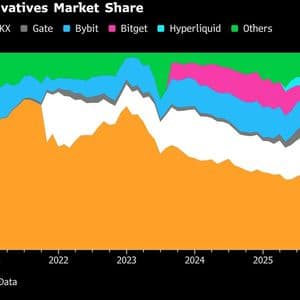
Binance Holdings Ltd. once controlled crypto trading to a degree that would be unthinkable in traditional markets.


