


 Invest ideas
News
18 Mar 2026, 10:45
GBP/USD Forecast: Recovery Extends But Faces Crucial Resistance – UOB Analysis

BitcoinWorld GBP/USD Forecast: Recovery Extends But Faces Crucial Resistance – UOB Analysis The GBP/USD currency pair continues its recovery trajectory, yet analysts at United Overseas Bank (UOB) warn of significant upside limitations. Technical charts reveal critical resistance zones that could determine the pair’s next major move. Market participants closely monitor these developments as the British Pound navigates complex macroeconomic crosscurrents. GBP/USD Technical Analysis and Current Position United Overseas Bank’s research team provides detailed technical analysis of the GBP/USD pair. Their examination reveals the recovery has extended beyond initial expectations. However, multiple technical indicators now suggest approaching resistance levels. The 1.2800 psychological level represents the immediate barrier. Furthermore, the 200-day moving average creates additional overhead pressure. Recent price action shows the pair testing these critical technical zones. Consequently, traders exercise caution amid conflicting signals. The Relative Strength Index (RSI) currently approaches overbought territory. Meanwhile, trading volume patterns show divergence from price momentum. These factors collectively suggest limited upside potential in the near term. Key Resistance Levels and Market Dynamics Several technical factors constrain the GBP/USD recovery according to UOB’s assessment. First, Fibonacci retracement levels from recent declines create natural resistance points. Second, previous support-turned-resistance zones add selling pressure. Third, broader market sentiment toward risk assets influences currency flows. The following table illustrates key resistance levels identified in UOB’s analysis: Resistance Level Technical Significance Previous Role 1.2800 Psychological round number Previous support zone 1.2850 200-day moving average Long-term trend indicator 1.2920 61.8% Fibonacci retracement Key technical reversal point Market dynamics also play a crucial role in limiting upside potential. Specifically, dollar strength remains a persistent theme across currency markets. Additionally, Bank of England policy expectations continue evolving. Moreover, global risk sentiment affects capital flows into sterling assets. Fundamental Factors Influencing Sterling’s Trajectory Multiple fundamental factors support UOB’s assessment of limited GBP/USD upside. The UK economic outlook shows mixed signals according to recent data releases. Inflation metrics demonstrate gradual moderation while growth indicators remain subdued. Furthermore, labor market conditions show signs of softening pressure. Monetary policy divergence represents another critical consideration. The Federal Reserve maintains a relatively hawkish stance compared to other major central banks. Conversely, the Bank of England faces balancing growth concerns against inflation persistence. This policy differential creates natural headwinds for sterling appreciation against the dollar. Political developments also warrant careful monitoring. Upcoming elections and policy announcements create uncertainty for currency markets. Trade relationship developments between the UK and major partners affect long-term sterling valuation. Additionally, fiscal policy decisions influence investor confidence in UK assets. Historical Context and Comparative Analysis The current GBP/USD recovery pattern shows similarities to previous market cycles. Historical data reveals sterling often faces resistance during technical recoveries. Previous instances demonstrate the importance of fundamental catalysts for sustained breaks above key levels. Comparative analysis with other major currency pairs provides additional context. Several historical patterns emerge from examining past GBP/USD movements: Technical recoveries typically face resistance at Fibonacci levels Fundamental catalysts often required for sustained breakthroughs Seasonal patterns show specific quarterly tendencies Correlation patterns with risk assets demonstrate changing relationships Market participants reference these historical patterns when assessing current price action. The 2023-2024 period shows particular relevance for understanding current dynamics. During that period, similar technical patterns preceded significant trend changes. Consequently, traders approach current resistance levels with heightened caution. Risk Management Considerations for Traders Professional traders implement specific risk management strategies around key resistance levels. Position sizing becomes particularly important during potential reversal zones. Stop-loss placement requires careful consideration of technical support levels. Additionally, profit-taking strategies adjust based on approaching resistance. Market volatility expectations influence trading approach decisions. Options market pricing provides insights into expected price ranges. Implied volatility metrics help assess potential breakout probabilities. Furthermore, liquidity conditions affect execution quality near technical levels. Conclusion The GBP/USD recovery extends according to UOB analysis, but faces significant upside limitations. Technical resistance levels around 1.2800-1.2920 create substantial barriers for further appreciation. Fundamental factors including monetary policy divergence and economic data support this assessment. Traders should monitor these resistance zones carefully for potential reversal signals. The pair’s trajectory will likely depend on fundamental catalysts breaking through technical constraints. FAQs Q1: What are the key resistance levels for GBP/USD according to UOB? The primary resistance levels identified by UOB include the psychological 1.2800 level, the 200-day moving average around 1.2850, and the 61.8% Fibonacci retracement at approximately 1.2920. Q2: Why does UOB believe the GBP/USD recovery has limited upside? UOB cites multiple technical factors including overbought conditions, volume divergence, and strong historical resistance at current levels. Fundamental factors like monetary policy divergence and mixed UK economic data also contribute to this assessment. Q3: How do Fibonacci retracement levels affect GBP/USD price action? Fibonacci retracement levels, particularly the 61.8% level, often act as significant technical barriers. These levels represent natural profit-taking zones and frequently coincide with trend reversals or consolidation periods. Q4: What fundamental factors could help GBP/USD break through resistance? Sustained breaks above resistance would likely require fundamental catalysts such as unexpectedly strong UK economic data, more hawkish Bank of England policy signals, or significant dollar weakness driven by Federal Reserve policy shifts. Q5: How should traders approach GBP/USD near these resistance levels? Traders should exercise caution, implement tighter risk management, consider reducing position sizes, and watch for reversal patterns. Monitoring both technical signals and fundamental developments becomes particularly important near these key levels. This post GBP/USD Forecast: Recovery Extends But Faces Crucial Resistance – UOB Analysis first appeared on BitcoinWorld .
18 Mar 2026, 10:40
Silver Price Today Holds Steady: Bitcoin World Data Reveals Surprising Market Calm
BitcoinWorld Silver Price Today Holds Steady: Bitcoin World Data Reveals Surprising Market Calm Global silver markets demonstrated remarkable stability this week, with the silver price today showing minimal movement according to the latest data from Bitcoin World. As of March 2025, the precious metal continues to trade within a narrow band, defying typical volatility expectations. This price steadiness occurs against a complex backdrop of shifting monetary policy and evolving industrial demand. Market analysts closely monitor these developments for signals about broader economic health and investment trends. Consequently, understanding the factors behind this stability provides crucial insights for investors and industry observers alike. Silver Price Today: Analyzing the Current Market Data Bitcoin World’s comprehensive market data reveals that silver prices have remained broadly unchanged across major trading platforms. This price stability represents a significant departure from the metal’s historical volatility patterns. Several key factors contribute to this current equilibrium. First, balanced supply and demand dynamics have created a temporary market floor. Second, macroeconomic indicators show conflicting signals that neutralize price pressure. Finally, investor sentiment appears cautiously neutral, preventing large speculative moves in either direction. Market participants note several important technical levels that have contained recent price action. The $28.50 per ounce level has served as a consistent support zone, while resistance has formed around $29.25. Trading volume has remained average, suggesting neither accumulation nor distribution is dominating market activity. This technical picture suggests a market in consolidation, awaiting a fundamental catalyst for its next directional move. Historical data indicates such consolidation phases often precede significant breakouts. Industrial Demand and Supply Chain Factors Industrial consumption continues to play a crucial role in silver’s market fundamentals. The photovoltaic sector, responsible for approximately 20% of annual silver demand, maintains steady procurement patterns. Automotive manufacturers also contribute consistent demand through electrical components and emerging battery technologies. However, mining production has shown modest increases from primary silver mines and by-product sources. This balanced equation between industrial uptake and mine output helps explain the current price stability. Analysts project this equilibrium may persist through the second quarter of 2025. Comparative Analysis with Other Precious Metals Silver’s price behavior contrasts notably with other precious metals in the current market environment. While gold has experienced modest fluctuations amid currency movements, silver has demonstrated exceptional stability. Platinum and palladium, more heavily tied to automotive cycles, show greater volatility. This divergence highlights silver’s unique position as both a monetary and industrial asset. The following table illustrates recent performance differences: Metal Weekly Change Primary Market Driver Silver +0.2% Industrial/Monetary Balance Gold -0.8% Currency & Interest Rates Platinum +1.5% Automotive Demand Palladium -2.1% Supply Concerns This comparative stability makes silver particularly interesting for portfolio managers seeking diversification. Furthermore, the gold-to-silver ratio remains elevated historically, suggesting potential relative value in silver. Many analysts watch this ratio for clues about future precious metals rotations. Consequently, institutional interest in silver exposure has increased despite the quiet price action. Macroeconomic Context and Monetary Policy Impacts Central bank policies continue to influence precious metals markets significantly. The current period of relative policy stability among major central banks has reduced one source of market volatility. Inflation metrics, while above historical averages, show signs of moderating toward target levels. This moderation reduces the urgency for aggressive monetary tightening that typically pressures non-yielding assets like silver. However, real interest rates remain positive in many jurisdictions, creating a headwind for substantial price appreciation. Currency markets, particularly the US dollar index, have traded within defined ranges. This currency stability removes a major variable from precious metals pricing. Geopolitical tensions, while present, have not escalated to levels that typically trigger safe-haven flows into silver. Market participants describe the current environment as characterized by cautious optimism tempered by awareness of persistent risks. This balanced sentiment contributes directly to the observed price steadiness in silver markets. Expert Perspectives on Market Dynamics Financial analysts offer several interpretations of the current silver market conditions. Dr. Elena Rodriguez, Commodity Strategist at Global Markets Research, notes, “The silver market appears to be in a state of equilibrium where opposing forces perfectly balance. Industrial demand provides consistent support, while monetary policy creates a ceiling.” Similarly, Michael Chen, Portfolio Manager at Precious Metals Fund, observes, “We’re seeing institutional investors building strategic positions during this period of calm, anticipating future catalysts.” These expert views suggest the current stability may represent accumulation rather than stagnation. Historical analysis provides additional context for the present situation. Periods of extended price consolidation in silver have typically resolved with significant moves. The 2015-2016 consolidation preceded a 35% rally, while the 2019 period led to the 2020 pandemic-driven surge. While past performance doesn’t guarantee future results, this pattern suggests market participants should monitor for breakout signals carefully. Technical analysts particularly watch volume patterns for early indications of changing momentum. Investment Implications and Market Outlook The current silver price stability presents both opportunities and considerations for different investor profiles. For long-term strategic investors, this environment may offer favorable entry points without timing pressure. Tactical traders, however, face challenges in a low-volatility regime that limits short-term profit potential. Physical silver products, including bars and coins, continue to see steady retail demand as wealth preservation tools. Meanwhile, silver mining equities have shown slightly greater volatility than the metal itself, reflecting operational leverage. Looking forward, several potential catalysts could disrupt the current equilibrium. These include: Monetary Policy Shifts: Unexpected changes in interest rate trajectories Industrial Acceleration: Faster-than-expected adoption of silver-intensive technologies Supply Disruptions: Labor issues or geopolitical impacts on major producing regions Currency Movements: Significant dollar weakness or strength Investment Flows: Large-scale allocations from institutional portfolios Market participants generally expect the second half of 2025 to bring increased volatility. Seasonal patterns often show stronger precious metals performance during this period. Additionally, clarity on economic growth trajectories may emerge, providing fundamental direction. Until such catalysts materialize, however, the silver price today likely maintains its current steady pattern. Conclusion The silver price today reflects a market in careful balance, with Bitcoin World data confirming minimal movement across trading venues. This stability stems from offsetting fundamental forces rather than market inactivity. Industrial demand provides consistent support while monetary policy creates resistance, resulting in the observed equilibrium. Investors and analysts should monitor this situation for signs of changing dynamics that could precede significant price movements. The current silver price environment, while quiet, offers valuable insights into broader economic conditions and market psychology. Consequently, this period of calm deserves as much attention as more volatile market phases. FAQs Q1: Why is the silver price not moving significantly according to current data? The silver price shows minimal movement due to balanced market forces. Industrial demand provides steady support while monetary policy creates resistance, resulting in equilibrium. Q2: How does silver’s current stability compare to gold and other precious metals? Silver demonstrates greater stability than gold, platinum, or palladium currently. This difference highlights silver’s dual role as both industrial commodity and monetary asset. Q3: What factors could cause the silver price to break out of its current range? Potential catalysts include monetary policy shifts, industrial demand acceleration, supply disruptions, currency movements, or significant investment fund allocations. Q4: Is the current silver price stability unusual historically? While silver is typically more volatile, periods of consolidation are normal. Historical patterns show such phases often precede significant price movements in either direction. Q5: What should investors consider during this period of silver price stability? Long-term investors might view this as an accumulation opportunity, while traders may find limited short-term potential. All investors should monitor for changing volume and sentiment indicators. This post Silver Price Today Holds Steady: Bitcoin World Data Reveals Surprising Market Calm first appeared on BitcoinWorld .
18 Mar 2026, 10:40
Bitcoin’s rally runs into 'sell the news' risk ahead of Fed decision
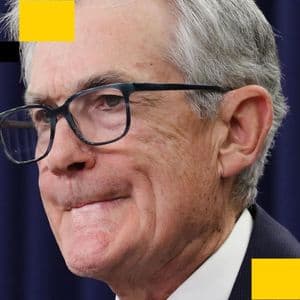
Two Prime data shows post-meeting weakness dominates, even as markets price a Fed hold and limited rate cuts ahead.
18 Mar 2026, 10:35
EUR/USD Options Signal Critical Pre-War Volatility Regime – Commerzbank Analysis Reveals
BitcoinWorld EUR/USD Options Signal Critical Pre-War Volatility Regime – Commerzbank Analysis Reveals Financial markets in Frankfurt and New York are closely monitoring unusual EUR/USD options activity that signals a return to pre-conflict volatility patterns, according to comprehensive analysis from Commerzbank. This development emerges as currency traders globally assess geopolitical risks and their impact on the world’s most liquid currency pair. EUR/USD Options Analysis Reveals Historical Patterns Commerzbank’s foreign exchange strategists have identified distinctive patterns in EUR/USD options pricing. These patterns remarkably resemble volatility structures observed before major geopolitical conflicts. The bank’s research team analyzed options data spanning multiple decades. They discovered specific volatility skew characteristics that typically precede periods of heightened geopolitical tension. Options markets serve as forward-looking indicators of market sentiment. Currently, they suggest traders are pricing in increased uncertainty. The volatility term structure shows particular concern about medium-term horizons. This pattern historically correlates with geopolitical risk escalation periods. Understanding Pre-War Volatility Regimes Financial markets exhibit predictable behavioral patterns before conflicts. Commerzbank’s analysis identifies several key characteristics of pre-war volatility regimes. First, options implied volatility increases disproportionately for out-of-the-money puts. Second, the volatility smile becomes significantly skewed. Third, term structure inversion often occurs. These technical indicators reflect fundamental market concerns. Currency markets particularly react to potential disruptions in trade flows. They also respond to central bank policy uncertainty during crises. Furthermore, safe-haven currency flows become more pronounced. Historical Context and Comparative Analysis Commerzbank’s research compares current EUR/USD options pricing to historical precedents. The analysis references several significant geopolitical events. These include the 2014 Ukraine crisis onset. They also cover the 2003 Iraq war buildup. Additionally, the 1999 Kosovo conflict provides relevant data points. The current options pricing structure shows remarkable similarity to these historical periods. However, modern markets feature greater liquidity and more sophisticated participants. This complexity makes current signals particularly noteworthy for analysts. Technical Indicators and Market Implications Several specific technical indicators currently signal concern. The 25-delta risk reversal for EUR/USD has moved significantly. This movement indicates increased demand for euro puts versus calls. Meanwhile, one-month implied volatility has risen above three-month levels. This inversion suggests near-term concerns outweigh longer-term uncertainty. The options market also shows unusual activity in specific strike prices. Certain barrier options have seen concentrated trading volume. These instruments often serve as hedging tools for institutional investors. Their increased activity typically precedes major market moves. EUR/USD Options Volatility Comparison Time Period 1-Month IV 3-Month IV Skew (25-delta) Current 8.5% 7.8% -1.2% 1 Month Ago 6.2% 6.5% -0.4% Pre-2014 Crisis 9.1% 8.3% -1.5% Expert Analysis and Risk Assessment Commerzbank’s foreign exchange strategists emphasize several critical observations. First, options markets often anticipate events before spot markets react significantly. Second, current signals suggest institutional investors are positioning defensively. Third, the European Central Bank’s policy response capability may face constraints during crises. The analysis considers multiple geopolitical scenarios. Each scenario carries different implications for EUR/USD directionality. However, increased volatility appears likely across most potential outcomes. This volatility expectation drives current options pricing dynamics. Market Structure Considerations Modern foreign exchange markets feature structural differences from historical periods. Electronic trading dominates current market activity. Algorithmic trading systems respond to volatility signals differently than human traders. These structural factors may amplify or dampen traditional patterns. Commerzbank’s analysis accounts for these modern market features. The research incorporates high-frequency trading data. It also considers electronic communication network (ECN) liquidity patterns. These factors provide a more complete picture of current market dynamics. Risk Management Implications for Traders Current options signals carry important implications for various market participants. Corporate treasurers face increased hedging costs. Portfolio managers must adjust currency exposure strategies. Retail traders encounter greater uncertainty in directional positions. Several risk management approaches become particularly relevant in this environment: Staggered option positions across multiple expiries Dynamic delta hedging strategies for large exposures Cross-currency correlation analysis for portfolio diversification Scenario-based stress testing of currency positions Central Bank Policy Considerations Currency volatility signals intersect with monetary policy considerations. The European Central Bank monitors EUR/USD movements carefully. Significant euro weakness could complicate inflation management. Conversely, excessive strength might hurt export competitiveness. The Federal Reserve similarly watches dollar strength implications. Both central banks possess tools to manage excessive currency moves. However, geopolitical crises often limit policy flexibility. This constraint contributes to options market pricing of increased volatility. Conclusion Commerzbank’s analysis of EUR/USD options reveals significant signals resembling pre-conflict volatility regimes. These patterns warrant close monitoring by all currency market participants. While options markets provide forward-looking signals, they don’t predict specific events with certainty. The current pricing structure suggests institutional investors anticipate increased geopolitical uncertainty. This expectation manifests in specific options volatility characteristics. Market participants should incorporate these signals into comprehensive risk management frameworks. The EUR/USD pair’s behavior will likely remain sensitive to geopolitical developments in coming months. FAQs Q1: What exactly are EUR/USD options signaling according to Commerzbank? Commerzbank’s analysis indicates EUR/USD options are pricing in volatility patterns historically associated with pre-conflict periods, showing specific skew characteristics and term structure anomalies that suggest institutional investors anticipate increased geopolitical uncertainty. Q2: How reliable are options markets as predictors of future events? Options markets reflect probability-weighted expectations rather than precise predictions. They indicate how market participants are pricing various potential outcomes, with current signals suggesting increased concern about geopolitical stability affecting currency markets. Q3: What should retail forex traders do in response to these signals? Retail traders should consider reducing position sizes, increasing stop-loss distances, and potentially using options for hedging rather than purely directional speculation. Consulting with financial advisors about appropriate risk management strategies is advisable. Q4: How do pre-war volatility regimes differ from normal market volatility? Pre-war regimes typically feature disproportionate pricing of tail risks, inverted volatility term structures, and specific skew patterns in options pricing. These differ from normal volatility spikes which are usually more symmetrical and shorter-duration. Q5: What historical periods show similar options patterns to current EUR/USD signals? Commerzbank’s analysis references options patterns before the 2014 Ukraine crisis, 2003 Iraq war buildup, and 1999 Kosovo conflict as showing similar characteristics to current EUR/USD options pricing. This post EUR/USD Options Signal Critical Pre-War Volatility Regime – Commerzbank Analysis Reveals first appeared on BitcoinWorld .
18 Mar 2026, 10:30
XRP Collateral Breakthrough: Ripple Prime CEO Unveils Pivotal Institutional Use Case
BitcoinWorld XRP Collateral Breakthrough: Ripple Prime CEO Unveils Pivotal Institutional Use Case In a significant development for digital asset utility, Ripple Prime CEO Mike Higgins has confirmed that XRP can now function as collateral for institutional trading, directly addressing recent community concerns and potentially unlocking new liquidity pathways. This announcement, reported by The Crypto Basic, marks a strategic clarification of Ripple’s post-acquisition roadmap and underscores a growing trend of crypto integration into traditional finance frameworks. XRP Collateral Model Explained by Ripple Prime Leadership Mike Higgins, leading the entity formerly known as Hidden Road, provided crucial details about the firm’s operational model. He stated that Ripple Prime accepts XRP not merely as a payment method but formally as collateral. This dual utility combines crypto market flexibility with established financial mechanisms. Consequently, institutions can leverage their XRP holdings to secure trading positions without needing to liquidate them. This approach aims to significantly improve capital efficiency for professional market participants. Furthermore, this model represents a direct response to speculation within the XRP community. Critics had suggested Ripple might sideline XRP in favor of its upcoming native stablecoin, RLUSD, following the Hidden Road acquisition. Higgins’s statements serve to counter this narrative, reaffirming XRP’s core role within Ripple’s expanding financial ecosystem. The clarification provides much-needed context for investors and analysts tracking the company’s strategic direction. The Institutional Context for Crypto Collateral The use of digital assets as collateral remains a critical frontier for institutional adoption. Traditional finance relies heavily on collateralized lending and trading. However, integrating volatile cryptocurrencies presents unique challenges. Ripple Prime’s model attempts to bridge this gap by applying risk management frameworks familiar to institutions. This development follows a broader industry movement where major financial entities are cautiously exploring crypto-backed finance. For instance, several regulated platforms now accept Bitcoin and Ethereum as collateral for dollar loans. XRP’s inclusion by a prime brokerage arm like Ripple Prime signals its maturation as an institutional-grade asset. The key advantage lies in capital efficiency. Traders can theoretically use the same asset pool for both speculative positions and as security, reducing the need for external capital injections. This efficiency could lower operational costs and increase market liquidity. Expert Analysis on Market Impact and Precedent Financial technology analysts highlight the importance of this announcement for XRP’s market perception. By enabling its use as collateral, Ripple Prime directly enhances XRP’s utility beyond simple transfers. This utility is a fundamental driver of long-term value in the crypto asset class. The move also aligns with regulatory trends seeking clearer definitions and use cases for digital assets. Historically, a lack of clear institutional use cases has been a point of criticism for some cryptocurrencies. Ripple Prime’s explicit endorsement provides a tangible answer. It demonstrates a working model where XRP functions within a regulated financial workflow. This precedent could encourage other prime brokers and trading firms to evaluate similar frameworks. The timeline of this development is also notable, coming as global financial authorities increase scrutiny on stablecoin operations, potentially making native crypto collateral more attractive. Addressing Community Concerns and Strategic Vision The community reaction prior to Higgins’s clarification was rooted in observable corporate actions. Ripple’s acquisition of Hidden Road and the development of RLUSD led to legitimate questions about XRP’s future role. Higgins addressed these points directly, separating the utility of a stablecoin for settlement from the utility of XRP for collateral. This distinction is vital for understanding Ripple’s multi-product strategy. A stablecoin like RLUSD offers price stability for final settlement, minimizing volatility risk for merchants and payment corridors. Conversely, XRP as collateral leverages its liquidity and market depth for credit and trading functions. The two uses are complementary rather than competitive. This strategic clarity helps align community expectations with the company’s business development goals. The evidence presented by Higgins suggests a more integrated financial ecosystem is being built, not a shift away from XRP. Operational Mechanics and Risk Considerations While the announcement is positive, institutional adoption hinges on practical details. The operational mechanics involve haircuts, which are percentage reductions applied to an asset’s market value when calculating its collateral worth. These haircuts manage the risk posed by XRP’s price volatility. Ripple Prime likely employs sophisticated risk engines to determine appropriate loan-to-value ratios in real-time. Additionally, the infrastructure requires secure custody solutions, real-time price oracles, and automated liquidation protocols. These systems ensure the collateral remains sufficient to cover the credit exposure. The successful implementation of this model by Ripple Prime could serve as a blueprint, providing verifiable facts and data on performance that other institutions may later adopt. The focus remains on creating a system that is both flexible and secure, meeting the high standards of institutional clients. Conclusion The confirmation from Ripple Prime CEO Mike Higgins that XRP can serve as institutional collateral marks a pivotal step in the asset’s evolution. This development directly addresses community concerns, clarifies Ripple’s strategic direction, and enhances XRP’s fundamental utility within modern finance. By blending crypto flexibility with traditional capital mechanisms, the model promises improved efficiency for institutional traders. As the digital asset landscape matures, such integrative use cases will likely become critical benchmarks for success and adoption. FAQs Q1: What did the Ripple Prime CEO announce regarding XRP? Mike Higgins announced that Ripple Prime accepts XRP not only for payments but formally as collateral for institutional trading, improving capital efficiency. Q2: Why was this announcement important for the XRP community? It addressed direct concerns that Ripple was sidelining XRP after acquiring Hidden Road and launching its RLUSD stablecoin, reaffirming XRP’s core utility. Q3: How does using XRP as collateral improve capital efficiency? Institutions can use their existing XRP holdings to secure trading positions without selling them, allowing the same capital to serve multiple purposes simultaneously. Q4: What is the difference between using XRP and a stablecoin like RLUSD? XRP as collateral leverages its liquidity for credit functions, while a stablecoin is optimized for price-stable settlement. They serve different, complementary roles. Q5: What are the main challenges for using crypto like XRP as collateral? The primary challenges involve managing price volatility through risk measures like haircuts and maintaining secure, automated systems for custody and liquidation. This post XRP Collateral Breakthrough: Ripple Prime CEO Unveils Pivotal Institutional Use Case first appeared on BitcoinWorld .
18 Mar 2026, 10:29
Cardano Price Pinned Below $0.30 for 45 Days Straight — Is a Violent Breakout Finally Coming?

Cardano price has been stuck in a 45-day range, pinned below $0.30. That level is the whole story right now. A daily close above it triggers a 17% rally toward $0.34 according to technical analysis. RSI is sitting at 45.26, neutral and cooling. That points to seller exhaustion rather than active distribution. Bulls have room to move if volume shows up. FACT: 85.5% of all Cardano $ADA is already in circulation. The total supply is hard-capped at 45B $ADA . Fixed monetary policy ensures no endless inflation, same as Bitcoin. pic.twitter.com/acdEh6ZR1Z — Cardanians (CRDN) (@Cardanians_io) March 13, 2026 Bitcoin trading above its 50-day average gives altcoins a favorable backdrop. But ADA needs to break $0.30 first before institutional capital starts paying attention. Cardano Price Prediction: Can Bulls Clear the $0.30 Hurdle? ADA is pinched between $0.27 support and the 20-day EMA at $0.2790. This kind of compression usually ends violently. Bull case: break above $0.30 with conviction and the zone flips from resistance to support. Path opens to $0.34, a 17% move from the breakout point. Six weeks of that ceiling holding makes the eventual break even more significant. Source: ADAUSD / TradingView Bear case: fail to reclaim the 20-day EMA and the bearish structure stays intact. Lose $0.27 and February lows at $0.24 come into view. Below that, $0.2297 is the capitulation target analysts are watching. Lose that and $0.1784 enters the conversation. Volume is the key tell on any move toward $0.30. Low volume breakout attempt is a trap. High volume surge confirms the targets. Grind sideways below $0.28 and the flush to $0.24 becomes increasingly likely. The post Cardano Price Pinned Below $0.30 for 45 Days Straight — Is a Violent Breakout Finally Coming? appeared first on Cryptonews .

