News
24 Feb 2026, 00:25
Crypto Fear & Greed Index Plummets to 8: Navigating the Chilling Waters of Extreme Market Fear

BitcoinWorld Crypto Fear & Greed Index Plummets to 8: Navigating the Chilling Waters of Extreme Market Fear Global cryptocurrency markets remain gripped by a profound sense of apprehension as the widely monitored Crypto Fear & Greed Index registers a reading of 8, firmly entrenched in the zone of ‘Extreme Fear.’ This critical sentiment gauge, a composite of volatility, social data, and market metrics, provides a stark numerical snapshot of investor psychology. Consequently, understanding its current position and historical context becomes essential for navigating the complex landscape of digital assets. This analysis delves into the mechanics of the index, explores the factors driving this pervasive fear, and examines potential implications for the broader blockchain ecosystem. Decoding the Crypto Fear & Greed Index: A Sentiment Barometer The Crypto Fear & Greed Index, developed by data provider Alternative.me, serves as a quantitative measure of market emotion. It operates on a scale from 0 to 100, where 0 signifies ‘Extreme Fear’ and 100 represents ‘Extreme Greed.’ The index’s calculation relies on a multifaceted methodology designed to capture the market’s psychological temperature from several angles. Specifically, it analyzes price volatility, trading volume momentum, social media sentiment, survey data, Bitcoin’s dominance over the total cryptocurrency market cap, and trends in Google search queries. This composite approach aims to filter out noise and present a clearer picture of underlying sentiment. Historically, readings below 20 have often coincided with market bottoms or periods of significant consolidation, while readings above 80 have signaled potential market tops. The current reading of 8, though up three points from a previous 5, remains deeply within the extreme fear territory. This persistence suggests that, despite minor fluctuations, the overarching market mood has not fundamentally shifted. For context, during the bull market peaks of late 2021, the index frequently hovered above 75, indicating widespread greed and ‘FOMO’ (Fear Of Missing Out). The dramatic swing to single digits underscores the volatile and cyclical nature of cryptocurrency investor sentiment. The Anatomy of Extreme Fear: Contributing Factors and Market Mechanics Several interconnected factors typically converge to push the Crypto Fear & Greed Index into such depressed levels. Firstly, heightened volatility , which constitutes 25% of the index’s score, often reflects large, rapid price swings that erode investor confidence. Secondly, shifts in market volume (another 25%) can indicate whether selling pressure is overwhelming buying interest. Furthermore, a decline in positive social media buzz and an increase in fearful or uncertain commentary directly impact the 15% weighting assigned to that metric. Another critical component is Bitcoin’s market cap dominance , weighted at 10%. When fear grips the market, investors frequently flee from higher-risk altcoins into Bitcoin, perceived as a relatively safer haven within the crypto space. This ‘flight to quality’ can increase Bitcoin’s dominance, further depressing the index score. The table below illustrates a simplified view of how these components might interact during a fear phase: Index Component Weight Typical Signal in Fear Phase Volatility 25% High and unpredictable price movements Market Volume 25% Elevated volume, often driven by selling Social Media 15% Increased negative or fearful sentiment Surveys 15% Pessimistic outlook from polled investors BTC Dominance 10% Rising as capital flows from altcoins to Bitcoin Google Trends 10% Searches for ‘crypto crash’ or ‘Bitcoin drop’ may spike Historical Parallels and Contrarian Perspectives Market analysts often view extreme fear readings through a contrarian lens. Periods of maximum pessimism have frequently preceded significant market recoveries, as weak hands capitulate and selling pressure exhausts itself. For instance, during the crypto winter of 2018-2019 and the March 2020 COVID-induced crash, the Fear & Greed Index also touched single-digit levels. Those periods, while painful, eventually gave way to new accumulation phases and subsequent bull markets. However, experts caution that the index is a sentiment indicator, not a timing tool. A low reading does not guarantee an immediate rebound; it simply reflects the current, overwhelming emotional state of the market participants. The duration of this fear phase will depend on macroeconomic factors, regulatory developments, and broader adoption trends. Broader Market Impact and Investor Considerations The pervasive fear indicated by the Crypto Fear & Greed Index has tangible effects across the ecosystem. Retail investors may delay entry or exit positions, while institutional players might slow the pace of new product launches or investments. Project funding can become more scarce, potentially slowing innovation in the short term. Conversely, this environment can separate robust projects with strong fundamentals from those reliant solely on market hype. For long-term investors, such periods are often framed as opportunities for disciplined dollar-cost averaging, acquiring assets at prices significantly lower than during euphoric peaks. It is crucial to remember that the index measures sentiment, not value. A fearful market can still overcorrect, just as a greedy market can become overextended. Therefore, savvy market participants use this tool as one data point among many, combining it with fundamental analysis, on-chain metrics, and macroeconomic assessment. The index’s real utility lies in its ability to quantify the often-irrational human emotions of fear and greed, providing a structured way to observe the market’s psychological cycles. Conclusion The Crypto Fear & Greed Index reading of 8 stands as a powerful testament to the extreme fear currently permeating digital asset markets. This sentiment, derived from volatility, volume, social data, and dominance metrics, paints a clear picture of prevailing investor psychology. While historically such depths of fear have sometimes marked transitional points, they primarily serve as a reminder of the market’s cyclical and emotionally driven nature. Navigating this landscape requires a blend of measured analysis, historical context, and disciplined risk management. Ultimately, the index provides a valuable, quantified glimpse into the market’s mood, but its interpretation must always be balanced with a comprehensive view of the underlying technology and its long-term trajectory. FAQs Q1: What does a Crypto Fear & Greed Index score of 8 mean? A score of 8 indicates ‘Extreme Fear’ in the market. It suggests that investor sentiment is overwhelmingly negative, often driven by high volatility, selling pressure, and pessimistic social media discourse. The index scale ranges from 0 (Extreme Fear) to 100 (Extreme Greed). Q2: How is the Crypto Fear & Greed Index calculated? The index is a composite score based on six factors: volatility (25%), market momentum/volume (25%), social media sentiment (15%), surveys (15%), Bitcoin’s market cap dominance (10%), and Google Trends data for cryptocurrency-related searches (10%). Q3: Is a low Fear & Greed Index reading a good time to buy cryptocurrency? From a contrarian investment perspective, extreme fear can signal a potential buying opportunity, as assets may be undervalued. However, the index is not a precise timing tool. A low reading does not guarantee an immediate price bottom, and investors should combine this data with fundamental research and sound risk management strategies. Q4: Has the index been this low before? Yes. The Crypto Fear & Greed Index has reached single-digit ‘Extreme Fear’ levels during previous major market downturns, including the prolonged crypto winter of 2018-2019 and the sharp, pandemic-induced crash in March 2020. Q5: What typically causes the index to rise from extreme fear? The index usually improves with a sustained period of price stability or recovery, an increase in positive news flow or adoption milestones, a resurgence in positive social media engagement, and a shift in trading volume from selling to accumulation. A change in broader macroeconomic conditions can also be a significant catalyst. This post Crypto Fear & Greed Index Plummets to 8: Navigating the Chilling Waters of Extreme Market Fear first appeared on BitcoinWorld .
24 Feb 2026, 00:21
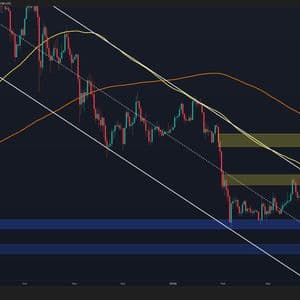
QNT Technical Analysis 24 February 2026: Volume and Accumulation

While QNT volume trades at low levels, the downtrend remains weak; selling pressure is limited and accumulation signals are becoming prominent. The decrease in market participation does not confirm...
24 Feb 2026, 00:20
NZD/USD Plummets from 0.6000 as Dovish RBNZ Hopes Evaporate Amid Deepening Tariff Turmoil

BitcoinWorld NZD/USD Plummets from 0.6000 as Dovish RBNZ Hopes Evaporate Amid Deepening Tariff Turmoil WELLINGTON, April 2025 – The New Zealand dollar staged a sharp retreat from the psychologically significant 0.6000 level against the US dollar this week, as shifting expectations for the Reserve Bank of New Zealand (RBNZ) collided with escalating global trade tensions. Consequently, the NZD/USD pair erased its recent gains, highlighting the fragile equilibrium in currency markets. This move reflects a complex interplay between domestic monetary policy signals and international geopolitical friction. Market participants are now reassessing their positions amid this renewed volatility. NZD/USD Retreats from Key Technical Threshold The NZD/USD pair’s failure to sustain momentum above 0.6000 marks a pivotal moment for forex traders. This level had acted as a formidable resistance barrier throughout the first quarter of 2025. Technical analysts note that the rejection signals a potential resumption of the broader bearish trend observed in late 2024. Furthermore, the pair’s decline accelerated following the release of softer-than-expected domestic inflation data. This data directly undermined arguments for a more aggressive RBNZ policy stance. Trading volumes spiked significantly during the sell-off, indicating broad-based market participation. Several key technical levels now come into focus for the currency pair. Immediate support is seen near the 0.5920 zone, which corresponds to the 50-day moving average. A breach below this level could open the path toward 0.5850. On the other hand, any recovery attempt will likely face stiff resistance at the 0.5980-0.6000 range. The Relative Strength Index (RSI) has dipped from overbought territory, suggesting the selling pressure may have room to run in the short term. Dovish RBNZ Expectations Fade Rapidly The market’s perception of the Reserve Bank of New Zealand has undergone a notable shift. Previously, analysts anticipated a more cautious, or dovish, approach due to concerns about economic growth. However, recent communications and data have tempered those expectations. The RBNZ’s latest Monetary Policy Statement, while acknowledging global risks, emphasized persistent domestic core inflation pressures. This nuanced tone led investors to scale back bets on imminent interest rate cuts. Central bank Governor Adrian Orr recently highlighted the committee’s data-dependent approach. “Our policy track remains contingent on the evolving inflation outlook,” Orr stated in a parliamentary testimony. This statement contrasted with more explicit dovish guidance from other central banks. Consequently, the interest rate differential between New Zealand and the United States, a key driver for NZD/USD, has shown signs of stabilization. The following table summarizes recent RBNZ policy signals: Date Event Key Signal Market Reaction Mar 2025 Official Cash Rate (OCR) Decision Hold at 5.50%; hawkish hold commentary NZD initially rallied 0.8% Apr 2025 Quarterly Inflation Expectations Survey 2-year expectations eased to 2.3% NZD gave up gains, falling 1.2% Apr 2025 Governor Orr’s Speech Emphasized data dependency, global risks Increased volatility, directional uncertainty Expert Analysis on Monetary Policy Impact Dr. Eleanor Vance, Chief Economist at Pacific Basin Financial Research, provides critical context. “The market mispriced the RBNZ’s reaction function,” Vance explains. “While global headwinds are real, the bank’s primary mandate remains price stability. The recent inflation print, though softer, does not yet constitute a trend warranting a policy pivot.” This expert perspective underscores the complexity of central bank forecasting. Vance’s analysis, grounded in decades of observing Antipodean monetary policy, adds authoritative weight to the interpretation of recent events. Her firm’s models now suggest a higher probability of rates remaining on hold through Q3 2025. Deepening Global Tariff Turmoil Exerts Pressure Simultaneously, the global trade environment has deteriorated markedly. New tariff announcements between major economies have reignited fears of a protectionist spiral. Specifically, these measures threaten global supply chains and commodity demand, both critical to New Zealand’s export-oriented economy. As a risk-sensitive currency, the New Zealand dollar often suffers during periods of geopolitical and trade uncertainty. Investors typically flock to the safe-haven US dollar in such environments, exacerbating the NZD/USD decline. The latest round of tariffs primarily targets industrial goods and agricultural products. Key impacts for New Zealand include: Dairy Export Concerns: Potential disruptions in key Asian markets could affect Fonterra’s export receipts. Logistics Cost Inflation: Rising shipping and insurance costs squeeze exporter margins. Commodity Price Volatility: Global demand uncertainty pressures prices for key exports like logs and meat. This tariff turmoil creates a double burden for the NZD. First, it directly threatens the country’s terms of trade. Second, it fuels broader risk aversion in financial markets. Historical data shows a strong correlation between the Global Economic Policy Uncertainty Index and NZD/USD weakness. The current index reading is at its highest level since late 2023. The Historical Context of Trade Shocks Examining past episodes, such as the 2018-2019 US-China trade war, provides valuable insight. During that period, the NZD/USD pair depreciated approximately 12% over nine months. The current macroeconomic setup shares similarities, including a strong US dollar and fragile global growth. However, differences exist, notably New Zealand’s diversified trade partnerships today compared to five years ago. This diversification may offer some buffer, but it cannot fully insulate the currency from systemic global risk-off events. The speed of the recent decline suggests markets are pricing in a prolonged period of trade friction. Conclusion The NZD/USD pair’s reversal from the 0.6000 handle underscores the powerful confluence of shifting domestic policy expectations and intensifying global trade risks. The fading prospect of a dovish RBNZ pivot removed a key support for the currency, while deepening tariff turmoil amplified the downward pressure. Moving forward, traders will closely monitor incoming domestic data for clues on the RBNZ’s path and any developments in international trade negotiations. The trajectory of the NZD/USD will likely remain highly sensitive to this dual narrative, with volatility expected to persist in the coming months. Understanding these interconnected drivers is essential for navigating the current forex landscape. FAQs Q1: What caused the NZD/USD to fall from 0.6000? The decline was driven by two main factors: a market reassessment of the RBNZ’s monetary policy stance, which is now seen as less dovish than previously hoped, and a significant escalation in global trade tensions and tariff announcements, which spurred risk aversion and boosted the US dollar. Q2: What is the RBNZ’s current policy stance? As of April 2025, the RBNZ has maintained its Official Cash Rate at 5.50%. While acknowledging global economic risks, the bank has emphasized its commitment to ensuring domestic inflation returns to its target band, adopting a data-dependent and cautiously hawkish hold position. Q3: Why are trade tariffs important for the New Zealand dollar? New Zealand runs a small, open economy heavily reliant on agricultural and commodity exports. Tariffs and trade turmoil disrupt global supply chains, threaten export demand, and increase costs, which can worsen the country’s terms of trade and negatively impact the NZD, a risk-sensitive currency. Q4: What are the key technical levels to watch for NZD/USD now? Following the rejection at 0.6000, immediate support is near 0.5920 (the 50-day moving average). A break below could target 0.5850. On the upside, any recovery will likely face resistance in the 0.5980 to 0.6000 range. Q5: How does the US dollar strength affect this currency pair? The US dollar (USD) often acts as a global safe-haven asset during periods of geopolitical or economic uncertainty, like tariff wars. As investors buy USD for safety, it appreciates against most other currencies, including the NZD, thereby exerting downward pressure on the NZD/USD exchange rate. This post NZD/USD Plummets from 0.6000 as Dovish RBNZ Hopes Evaporate Amid Deepening Tariff Turmoil first appeared on BitcoinWorld .
24 Feb 2026, 00:10
Terraform Labs Lawsuit: Explosive Legal Battle Targets Jane Street Over TerraUSD Catastrophe

BitcoinWorld Terraform Labs Lawsuit: Explosive Legal Battle Targets Jane Street Over TerraUSD Catastrophe In a stunning legal development shaking the cryptocurrency industry, bankrupt Terraform Labs has launched an explosive lawsuit against prominent U.S. market maker Jane Street Group. This legal action directly connects to the catastrophic collapse of TerraUSD (UST) and Luna (LUNA) in May 2022. The lawsuit, filed in Delaware bankruptcy court, represents a significant escalation in the ongoing fallout from one of crypto’s most devastating failures. Terraform Labs Lawsuit Details and Core Allegations Terraform Labs filed its complaint against Jane Street on April 15, 2025, according to court documents. The company alleges the market maker engaged in activities that contributed to the destabilization of the TerraUSD algorithmic stablecoin. Specifically, the lawsuit claims Jane Street executed trading strategies that exploited vulnerabilities in Terra’s ecosystem. Market makers provide liquidity by continuously buying and selling assets. They profit from the spread between bid and ask prices. Jane Street, founded in 2000, operates as one of the world’s largest quantitative trading firms. The company manages approximately $50 billion in assets across global markets. The legal filing contains several key allegations against Jane Street: Manipulative Trading Practices: Alleged coordinated selling pressure on UST and LUNA Algorithm Exploitation: Claims of targeting Terra’s mint-and-burn mechanisms Market Impact: Accusations of amplifying the downward spiral during May 2022 Breach of Duty: Allegations of violating market integrity principles Historical Context: The Terra Ecosystem Collapse The Terra blockchain ecosystem experienced a complete meltdown in May 2022. This event triggered approximately $40 billion in market value destruction. TerraUSD (UST) operated as an algorithmic stablecoin theoretically pegged to $1. It maintained this peg through a complex mint-and-burn mechanism with its sister token Luna. When UST lost its dollar peg on May 7, 2022, a death spiral ensued. The algorithmic mechanism required massive Luna minting to restore the peg. This minting created hyperinflationary pressure on Luna’s supply. Consequently, Luna’s price collapsed from over $80 to fractions of a cent within days. Terra Collapse Timeline and Impact Date Event Market Impact May 7, 2022 UST loses dollar peg Initial 10% devaluation May 9-10, 2022 Death spiral acceleration Luna drops 99.9% May 12, 2022 Terra blockchain halted Complete ecosystem freeze July 2022 Terraform Labs files bankruptcy $40B total losses Expert Analysis of Market Maker Roles Financial regulation experts provide crucial context about market maker responsibilities. “Market makers operate under specific regulatory frameworks,” explains Dr. Elena Rodriguez, financial law professor at Stanford University. “They must balance profit motives with market stability obligations.” Jane Street reportedly executed substantial UST and Luna trades during the critical collapse period. The lawsuit suggests these trades exceeded normal market-making activities. Instead, they allegedly contributed to the peg-breaking pressure. Legal Precedents and Regulatory Implications This lawsuit establishes important legal territory for cryptocurrency litigation. Previous crypto cases typically targeted exchanges or token issuers. Now, market participants like Jane Street face direct legal action for alleged market impact. The case raises fundamental questions about liability in decentralized finance. Algorithmic stablecoins operate without traditional reserve backing. Their stability depends entirely on market mechanisms and participant behavior. This creates complex legal questions about responsibility during failures. Regulatory bodies worldwide monitor this case closely. The Securities and Exchange Commission (SEC) already charged Terraform Labs and founder Do Kwon with fraud in 2023. This new lawsuit adds another dimension to the regulatory landscape. Broader Impact on Cryptocurrency Markets The Terraform Labs lawsuit against Jane Street carries significant implications for crypto market structure. Market makers provide essential liquidity across cryptocurrency exchanges. Legal actions against them could alter how these firms operate in digital asset markets. Several potential outcomes could reshape the industry: Increased Compliance Costs: Market makers may implement stricter controls Reduced Liquidity: Firms might limit crypto market participation Regulatory Clarification: Case could establish clearer legal standards Investor Protection: Potential precedents for future investor claims Market data shows Jane Street remains active in cryptocurrency trading despite the lawsuit. The firm continues providing liquidity across major exchanges. However, industry sources indicate increased caution around algorithmic stablecoins. Bankruptcy Proceedings and Creditor Recovery Terraform Labs filed for Chapter 11 bankruptcy protection in July 2022. The company listed assets between $100-$500 million against liabilities of $100-$500 million. This lawsuit represents part of bankruptcy estate recovery efforts. Bankruptcy trustees pursue legal actions to maximize creditor recoveries. Successful litigation against deep-pocketed defendants like Jane Street could provide meaningful recoveries. However, legal experts caution about proving causation in complex market events. Comparative Analysis: Similar Financial Litigation Historical financial litigation provides context for this case. The 2010 “Flash Crash” involved similar allegations against high-frequency traders. Regulators ultimately brought cases against several firms for market manipulation. More recently, cryptocurrency exchange FTX’s collapse generated numerous lawsuits. These cases target various market participants including market makers, lenders, and promoters. The Jane Street lawsuit continues this trend of expanding liability in crypto failures. Key differences exist between traditional and crypto market cases. Cryptocurrency markets operate 24/7 with global participation. They lack centralized price discovery mechanisms present in traditional markets. These differences complicate legal analysis of market impact. Conclusion The Terraform Labs lawsuit against Jane Street represents a pivotal moment in cryptocurrency litigation. This legal battle connects traditional finance participants with algorithmic stablecoin failures. The case’s outcome will influence market maker behavior, regulatory approaches, and investor protection standards. As bankruptcy proceedings continue, this lawsuit highlights the complex web of responsibility in decentralized finance. Market participants now face increased scrutiny for their roles during market crises. The Terraform Labs lawsuit against Jane Street will undoubtedly shape cryptocurrency market structure for years to come. FAQs Q1: What specific allegations does Terraform Labs make against Jane Street? The lawsuit alleges Jane Street engaged in manipulative trading practices that exploited Terra’s algorithmic mechanisms, contributing to UST’s depegging and the subsequent ecosystem collapse. Q2: How might this lawsuit affect other cryptocurrency market makers? Other market makers may implement stricter compliance measures and trading limits, potentially reducing liquidity in certain cryptocurrency markets while increasing operational costs. Q3: What legal precedents could this case establish? The case could establish important precedents regarding market maker liability in decentralized finance, algorithmic stablecoin regulation, and causation standards in complex market events. Q4: How does this relate to previous regulatory actions against Terraform Labs? The SEC already charged Terraform Labs and founder Do Kwon with fraud in 2023. This lawsuit represents a separate civil action seeking financial recovery for the bankruptcy estate. Q5: What are the potential outcomes for investors affected by the Terra collapse? Successful litigation could provide some recovery for creditors and investors through the bankruptcy process, though complete recovery remains unlikely given the scale of losses. This post Terraform Labs Lawsuit: Explosive Legal Battle Targets Jane Street Over TerraUSD Catastrophe first appeared on BitcoinWorld .
24 Feb 2026, 00:05
WTI Crude Oil Gripped at $67.00 as Iran Tensions Defy Tariff Pressure

BitcoinWorld WTI Crude Oil Gripped at $67.00 as Iran Tensions Defy Tariff Pressure Global energy markets witnessed a tense equilibrium on Thursday, March 13, 2025, as West Texas Intermediate (WTI) Crude Oil futures struggled to break decisively from the $67.00 per barrel level. This hesitation reflects a direct clash between two powerful market forces: escalating geopolitical risks in the Middle East and the implementation of new, broad-based import tariffs. Consequently, traders and analysts are parsing a complex web of supply concerns and demand anxieties to forecast the commodity’s next major move. WTI Crude Oil Faces a Critical Price Junction The $67.00 mark represents a significant technical and psychological barrier for WTI. Market data from the New York Mercantile Exchange shows repeated tests of this level throughout the trading session, with neither bulls nor bears establishing clear dominance. This stalemate stems from competing narratives. On one hand, renewed friction involving Iran and regional actors injects a traditional geopolitical risk premium into prices. Conversely, the confirmed rollout of additional tariffs by major economies threatens to dampen global industrial activity and, by extension, oil demand. The resulting price action is a textbook example of market indecision, where opposing fundamentals create a narrow trading range. The Geopolitical Counterweight: Iran and Regional Stability Recent developments in the Strait of Hormuz, a chokepoint for roughly 20% of global oil shipments, have reintroduced supply fears. Verified reports from maritime security firms indicate increased naval patrols and diplomatic posturing. “Any incident that threatens the free flow of traffic through the Strait immediately translates into upward pressure on crude benchmarks,” explains Dr. Anya Sharma, a senior fellow at the Global Energy Security Institute. “The market is pricing in a low-probability, high-impact event scenario.” Historical data supports this; similar tensions have previously added $3 to $8 per barrel to oil prices, depending on the severity of the rhetoric and military movements. The Tariff Drag on Global Demand Prospects Offsetting the geopolitical lift is the concrete economic impact of new tariffs. A comparative analysis of the current policy landscape reveals a shift towards protectionism. Recent Tariff Impacts on Oil Demand Forecasts Region Tariff Focus Estimated Demand Impact (2025) North America Manufactured Goods, Steel -150,000 barrels per day European Union Renewable Tech, Batteries -75,000 barrels per day Asia-Pacific Electronics, Semiconductors -200,000 barrels per day These measures, according to the International Energy Agency’s latest monthly report, could shave 0.2% off global GDP growth projections. Slower economic growth directly correlates with reduced fuel consumption for transportation and manufacturing. “The tariff environment creates a palpable headwind,” notes commodity strategist Marcus Chen. “It introduces uncertainty into corporate investment and supply chains, which cools energy consumption. This fundamental pressure is why rallies are being sold at resistance levels like $67.” Inventory Data and the Underlying Market Balance Beyond headlines, physical market indicators provide crucial context. The U.S. Energy Information Administration’s weekly report showed a smaller-than-expected draw in crude stocks, suggesting supply remains adequate. However, refined product inventories, particularly gasoline, tightened. This mixed signal adds another layer to the price stalemate. Key factors currently monitored by traders include: OPEC+ Production Discipline: Compliance levels with agreed output cuts. U.S. Shale Rig Count: A leading indicator of future domestic production. Global Freight Rates: Costs for shipping oil, which spike during disruptions. U.S. Strategic Petroleum Reserve: Government sales or purchases can influence supply. Expert Analysis on the Path Forward for Energy Markets The current impasse is unlikely to last indefinitely. Market technicians point to a narrowing price channel on daily charts, suggesting a volatility contraction that often precedes a significant breakout. The direction of that breakout hinges on which narrative gains supremacy. “If diplomatic channels succeed in de-escalating Middle Eastern tensions, the market’s focus will swiftly return to the deteriorating demand outlook from tariffs,” predicts Sharma. “Conversely, a single tangible disruption to supply would overwhelm the tariff concerns and likely propel WTI toward the $70-$72 range.” Historical precedent shows that supply shocks typically have a more immediate and violent impact on oil prices than gradual demand erosion. Conclusion The hesitation of WTI Crude Oil at the $67.00 threshold perfectly encapsulates the dual forces shaping the 2025 energy landscape. Geopolitical instability in Iran provides a floor for prices, while the broad application of global tariffs creates a formidable ceiling. For investors and policymakers, this moment underscores the fragile balance between physical supply security and economic demand health. The resolution of this standoff will depend on whether the next major headline originates from a diplomatic office or a shipping lane. Until then, the market for WTI Crude Oil remains in a state of anxious equilibrium, with every price tick scrutinized for clues to the future. FAQs Q1: Why is the $67.00 level specifically important for WTI Crude Oil? The $67.00 price represents a key technical resistance level based on recent trading history. It also aligns with the breakeven cost for many U.S. shale producers, making it a zone where increased selling or production can emerge. Q2: How do tariffs specifically lower oil demand? Tariffs increase the cost of traded goods, which can slow down manufacturing and economic growth. Reduced industrial activity and lower consumer spending on goods that require shipping lead to decreased consumption of diesel, jet fuel, and other petroleum products. Q3: What is a ‘geopolitical risk premium’ in oil pricing? This is an additional amount factored into the oil price due to the potential for supply disruptions from political unrest, conflict, or sanctions in major oil-producing regions. It reflects the market’s collective anxiety about future supply. Q4: Could rising oil prices themselves worsen inflation and justify more tariffs? Yes, this is a risk known as a feedback loop. Higher oil prices raise transportation and production costs broadly, fueling inflation. Central banks may respond with tighter policy, which can slow the economy, while governments might consider tariffs to protect domestic industries, further complicating the demand picture. Q5: What other factors, besides Iran and tariffs, could influence WTI prices next? Key factors include decisions by the OPEC+ alliance on production quotas, the rate of adoption of electric vehicles, the severity of the Atlantic hurricane season (which affects Gulf of Mexico production), and changes in the value of the U.S. dollar, as oil is globally priced in dollars. This post WTI Crude Oil Gripped at $67.00 as Iran Tensions Defy Tariff Pressure first appeared on BitcoinWorld .
24 Feb 2026, 00:02
ALGO Technical Analysis February 23, 2026: Volume and Accumulation

ALGO's volume remains below average, failing to confirm the decline and instead signaling accumulation. Low participation indicates weak selling pressure and base formation.