News
7 Apr 2026, 21:00
USD/SGD Analysis: Critical Bearish Momentum Intensifies Before MAS Policy Decision

BitcoinWorld USD/SGD Analysis: Critical Bearish Momentum Intensifies Before MAS Policy Decision SINGAPORE, March 2025 – The USD/SGD currency pair exhibits mounting bearish pressure as financial markets anticipate the Monetary Authority of Singapore’s upcoming policy review. OCBC analysts highlight strengthening Singapore dollar fundamentals against a backdrop of shifting global monetary conditions. This developing trend carries significant implications for regional trade, inflation management, and investment flows throughout Southeast Asia. USD/SGD Technical Analysis Reveals Bearish Momentum Recent trading patterns demonstrate consistent downward pressure on the USD/SGD pair. Market data shows the Singapore dollar appreciating approximately 2.3% against the US dollar over the past quarter. Furthermore, technical indicators including moving averages and momentum oscillators align with this bearish outlook. The currency pair recently breached key support levels around 1.3450, signaling potential further declines. Market participants closely monitor these developments as they position for the MAS decision. Historical correlation analysis reveals interesting patterns. Typically, the USD/SGD exhibits heightened volatility during MAS policy review periods. For instance, during the April 2024 review, the pair moved 1.8% within 48 hours of the announcement. Current positioning data from the CFTC shows speculative accounts increasing short positions on USD/SGD. This positioning suggests market consensus aligns with OCBC’s bearish assessment. Monetary Authority of Singapore Policy Framework The MAS operates Singapore’s unique monetary policy system. Unlike most central banks using interest rates, the MAS manages the Singapore dollar’s exchange rate against a basket of currencies. This trade-weighted policy band allows precise control over imported inflation and export competitiveness. The authority reviews this policy band semi-annually, with the upcoming April decision particularly significant given current economic conditions. Expert Analysis from OCBC Treasury Research OCBC’s research team identifies three primary factors driving USD/SGD weakness. First, Singapore’s robust economic fundamentals support currency strength. Second, divergent monetary policies between the Federal Reserve and MAS create favorable conditions for SGD appreciation. Third, regional capital flows increasingly favor Singapore’s financial markets. The bank’s analysts project potential USD/SGD movement toward 1.3300 if current trends persist. OCBC economists reference several key economic indicators supporting their analysis. Singapore’s core inflation remains within the MAS target range at 2.1%. Meanwhile, GDP growth projections for 2025 exceed regional averages at 3.2%. These fundamentals provide the MAS with policy flexibility that many regional counterparts lack. Consequently, market expectations increasingly favor a hawkish policy stance. Global Context and Comparative Analysis The USD/SGD movement occurs within broader global currency dynamics. The US dollar index (DXY) has retreated 4.7% from recent highs amid shifting Federal Reserve expectations. Meanwhile, Asian currencies demonstrate varied performance against the greenback. The following table illustrates recent currency movements against the USD: Currency Pair 3-Month Change Year-to-Date Performance USD/SGD -2.3% -1.8% USD/MYR -1.2% -0.9% USD/IDR +1.5% +2.1% USD/THB -0.8% -0.5% This comparative analysis reveals Singapore dollar outperformance within the region. Several factors contribute to this relative strength: Political stability attracting safe-haven flows Fiscal discipline maintaining investor confidence Diversified economy reducing external vulnerability Strategic reserves providing policy credibility Economic Impacts and Market Implications A stronger Singapore dollar affects multiple economic sectors differently. Export-oriented industries face competitiveness challenges, particularly electronics and precision engineering. Conversely, import-dependent sectors benefit from reduced input costs. The tourism industry experiences mixed effects as Singapore becomes more expensive for foreign visitors but residents enjoy greater purchasing power abroad. Financial market implications extend across asset classes. Equity investors monitor currency impacts on multinational corporate earnings. Bond markets adjust to changing inflation expectations and capital flows. Real estate markets consider effects on foreign investment and construction costs. These interconnected impacts demonstrate the Singapore dollar’s central role in the national economy. Historical Precedents and Policy Responses Historical analysis provides context for current developments. During the 2015-2017 period, the MAS maintained a neutral policy stance despite similar currency appreciation pressures. However, the 2021-2022 cycle saw proactive tightening to combat inflation. Current conditions most closely resemble the 2018 scenario when gradual appreciation aligned with economic fundamentals. Policy continuity remains a hallmark of MAS decision-making. Market participants recall the October 2021 policy shift when the MAS steepened the SGD NEER slope. This preemptive move addressed rising inflation risks before they materialized fully. The authority’s forward-looking approach distinguishes Singapore’s monetary policy framework. Consequently, analysts scrutinize economic data releases for clues about potential policy adjustments. Regional Monetary Policy Coordination Southeast Asian central banks increasingly coordinate policy responses. While each maintains independence, regional spillover effects necessitate communication and consultation. The ASEAN+3 Macroeconomic Research Office facilitates this dialogue through regular meetings and research sharing. This cooperation helps mitigate competitive devaluation risks and promotes financial stability. Recent regional developments influence MAS decision-making. Bank Indonesia maintained interest rates despite currency pressure. Bank Negara Malaysia balanced growth support with inflation control. The Bank of Thailand implemented measured tightening. These varied approaches reflect differing economic conditions but share common inflation management objectives. Singapore’s exchange-rate-based system provides unique flexibility within this regional context. Conclusion The USD/SGD pair faces sustained bearish momentum as Singapore’s economic fundamentals support currency strength. OCBC analysis highlights multiple factors converging before the MAS policy decision. Technical indicators, economic data, and market positioning all suggest continued Singapore dollar appreciation. The upcoming MAS review will provide crucial guidance for currency markets and economic stakeholders. Market participants should prepare for potential volatility while recognizing Singapore’s strong policy framework fundamentals. FAQs Q1: What does bearish momentum mean for USD/SGD? A bearish momentum indicates the Singapore dollar is strengthening against the US dollar, meaning it takes fewer SGD to purchase one USD. Q2: How often does the MAS review monetary policy? The Monetary Authority of Singapore conducts semi-annual policy reviews, typically in April and October, with occasional off-cycle adjustments if necessary. Q3: Why does Singapore use exchange rates instead of interest rates? Singapore’s small, open economy makes exchange rates more effective for controlling imported inflation and maintaining export competitiveness than domestic interest rates. Q4: How does a stronger SGD affect Singaporean consumers? Consumers benefit from lower prices on imported goods and services, including overseas travel, but may face higher costs for locally produced exports. Q5: What factors could reverse the USD/SGD bearish trend? Potential reversal factors include unexpected MAS policy easing, stronger-than-expected US economic data, regional financial instability, or significant changes in global risk sentiment. This post USD/SGD Analysis: Critical Bearish Momentum Intensifies Before MAS Policy Decision first appeared on BitcoinWorld .
7 Apr 2026, 21:00
Bitcoin Transactions Hit Highest Since 2024—But Fees Remain Low

On-chain data shows the Bitcoin network activity has seen a sudden rebound after months of staying down, with transactions hitting 615,000. Bitcoin Transaction Count Has Reached The Highest Level Since November 2024 In a new thread on X, on-chain analytics firm CryptoQuant has discussed the revival that the Bitcoin network activity has witnessed recently. CryptoQuant has cited its “ Network Activity Index ” to showcase the rebound. This index combines the data related to different metrics like active addresses and transactions to provide an overview of the blockchain. From the above chart, it’s visible that the Bitcoin Network Activity Index plunged below its 365-day moving average (MA) back in late 2024 and remained in a downtrend during 2025. The trajectory continued into the first quarter of 2026, but since the onset of the second quarter, fates appear to have flipped for the indicator. Not only has the Network Activity Index managed to break past its 365-day MA, it has done so in a sharp manner, with its value shooting up. The reversal in the indicator has come alongside a sharp surge in the total number of transactions occurring on the Bitcoin network. As displayed in the graph, the 7-day simple moving average (SMA) of the Bitcoin transaction count was muted earlier, but a recent sharp revival has meant that its value has reached a high of 615,000. This is the most amount of transfers on the BTC blockchain since November 2024, when the activity decline began. Interestingly, while transactions have shot up, the total fees that Bitcoin miners are earning on the network have stayed at low levels. The transaction fees can correlate with the demand for using the network that exists among users. The BTC blockchain only has a limited capacity to handle transfers, so in periods of network congestion, the average fees can blow up as senders compete against each other to get transfers through first. In contrast, when there isn’t much demand for getting moves through quickly, the fees can stay at low levels. The Network Activity Index suggests that the Bitcoin network has observed a spike in usage, but the fees staying low could imply that the source may not entirely be organic demand, but rather a result of exchanges, custodians, and large holders taking advantage of the current low fee competition environment to make operational moves like UTXO management and wallet reshuffling. BTC Price Bitcoin recovered above $70,000 on Monday, but the coin has since retraced back to $69,000.
7 Apr 2026, 21:00
XRP Spot Buying Hits $520M While Futures Stay Negative. Here Is the Signal To Watch For A Real Move

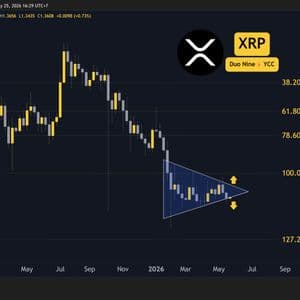
XRP is holding current levels. The market is volatile. And on Binance, two separate groups of participants have reached two completely opposite conclusions about where it goes next. Related Reading: $82 Million In Ethereum Just Left FalconX: Discover Who Is Behind It A CryptoQuant analysis tracking XRP’s market structure has identified a divergence that cuts directly beneath the surface of the current price action. Spot CVD on Binance has climbed to approximately $520.2 million — real capital, committed by real buyers, accumulating in the spot market while the broader environment remains uncertain. That number reflects sustained conviction from participants who are putting actual money behind XRP at current prices. Simultaneously, the Perpetual CVD on Binance sits at approximately -$261 million. The derivatives market is not neutral. It is actively defensive — leveraged traders positioned against the move, maintaining short exposure while the spot side builds beneath them. The result is a market held in place by opposing forces. Spot buyers are absorbing the sell pressure that derivatives traders are generating. The price is holding not because both sides agree on the direction, but because one side is strong enough to keep the other from winning — for now. That balance is not a permanent condition. It is a setup. One side is accumulating. The other is hedging against it. When the standoff resolves — and it will — the direction it breaks will be determined by which force exhausts first. Spot Is Doing the Work. Futures Is Watching. The analysis draws a distinction that changes how the current XRP support should be read. When a market holds because futures traders are aggressively long — leveraged, directional, conviction-driven — the support is loud and visible but fragile. A single adverse move triggers cascading liquidations, and the floor disappears as fast as it formed. Current data reveals a more durable structure—actual spot demand supports XRP as real buyers step in. This support carries weight because committed capital, not borrowed conviction, builds it. Related Reading: Ethereum Trading on Binance Has Gone Quiet, Discover What Happens When That Changes The limitation of that structure is equally honest. Spot demand without futures confirmation is support without amplification. The buyers are present. The force multiplier that converts support into a sustained directional move — leveraged positioning shifting from defensive to directional — has not arrived. The derivatives market is watching the spot buyers work without joining them. That gap defines the range of near-term outcomes precisely. If spot demand holds and derivatives positioning begins shifting toward neutral or positive, the setup graduates from supported to trending. If futures traders remain defensive while spot demand exhausts itself, the support loses its foundation without ever becoming a rally. The spot buyers have made their position clear. The next move belongs to the derivatives market. XRP Compression Signals Imminent Expansion Within a Bearish Structure XRP continues to trade in a compressed range near $1.32, but the broader structure remains decisively bearish. The daily chart shows price firmly below the 50, 100, and 200-day moving averages, all trending downward and stacked above current levels. This configuration reflects sustained selling pressure across all key timeframes. The February breakdown remains the defining event. XRP lost the $1.70–$1.80 region with expansion in volume, triggering a sharp move toward $1.20. That zone now acts as the lower boundary of the current range, while repeated attempts to push above $1.50 have failed, reinforcing it as near-term resistance. Related Reading: XRP Has Never Been This Quiet On Binance. Discover If The Silence Is A Warning or a Setup What is developing now is not recovery, but consolidation within a downtrend. Price action has become increasingly tight, with lower volatility and declining volume compared to the sell-off phase. That contraction typically precedes expansion, but direction remains unresolved. There is also a structural concern: each bounce is producing lower highs, indicating that buyers lack follow-through. The inability to reclaim even the 50-day moving average underscores weak demand. If XRP loses the $1.20 level, downside acceleration becomes likely due to limited support below. On the upside, reclaiming $1.50 is the first requirement, but a true structural shift would require acceptance above $1.70, where trend dynamics begin to change. Featured image from ChatGPT, chart from TradingView.com
7 Apr 2026, 20:56
Michael Saylor's Strategy Reports 2026 BTC Yield of 3.7% Amid $14.46B Loss

Michael Saylor’s Strategy has reported a 2026 BTC Yield of 3.7% despite recording a $14.46 billion unrealized loss in the first quarter. The update came as Bitcoin remained under pressure from broader market uncertainty, including rising geopolitical tension linked to the U.S.-Iran conflict. In its latest post, Strategy said it acquired 94,470 BTC year to date in 2026 and generated a BTC gain of 24,675 BTC, equal to about $1.7 billion. The company also said its purchases amount to 2.2 times Bitcoin’s natural supply, keeping attention on its Bitcoin-focused treasury strategy. The reported loss was tied to Bitcoin’s market price at the end of March, which remained below Strategy’s average purchase price of $75,644 per coin. Even with that paper loss, the company continued adding to its holdings, buying another 4,871 BTC between April 1 and April 5 and bringing its total reserves to 766,970 BTC. Strategy Keeps Focus on Bitcoin Treasury Growth Strategy has increasingly used Bitcoin-specific measures to explain its treasury performance. In its latest update, the company placed emphasis on BTC Yield and BTC Gain rather than only traditional income statement figures. That approach continues to shape how the company presents its balance sheet strategy to the market. The company’s message remains centered on long-term Bitcoin accumulation. By pointing to its year-to-date purchases and Bitcoin gain, Strategy signaled that it still views treasury expansion as its main operating goal. That framing has become a core part of its public reporting and investor communication. This approach also comes as the Bitcoin price remains volatile. The company’s filings and public posts suggest that short-term price moves have not changed its broader treasury direction. Instead, Strategy continues to present its Bitcoin reserve growth as the key measure of progress. Unrealized Loss Reflects Quarter-End Bitcoin Price The $14.46 billion unrealized loss came from the difference between Strategy’s average Bitcoin purchase cost and Bitcoin’s market value at quarter's end. Reports said the company’s average cost basis stood at $75,644 per coin. Since Bitcoin closed in March below that level, the company recorded a large paper loss. Reports also said the accounting loss allowed Strategy to recognize a $2.42 billion tax benefit. That reduced part of the financial pressure tied to the quarter-end valuation gap. The tax effect became one of the reasons investors looked beyond the headline loss figure. Concurrent with the announcement, the MSTR stock has sunk and is trading at $123.77, down 3.07% today Saylor Highlights STRC as a Funding Tool Following the report, Saylor described Strategy’s model with the phrase, “Not perfect, just better.” He also pointed to STRC, or Stretch preferred stock, as a key part of the company’s financing structure. According to the cited report, STRC offers an annual yield of 11.5%. Saylor has described STRC as a safe-haven style product within Strategy’s broader model. The instrument gives the company a way to raise liquidity for more Bitcoin purchases without immediate dilution of common shares. That makes STRC an important funding tool as Strategy continues expanding its holdings. He also used the post to link Bitcoin to broader technological change. Saylor referred to transportation, autonomous machines, and robots, while describing Bitcoin as a digital vault that preserves value over time. That message matched his earlier view that Bitcoin has become digital capital. Schiff Criticism Keeps Debate Around Strategy Active Peter Schiff also weighed in after the latest update. In a recent post, he said that if Bitcoin ends 2026 at $10,000, it would still be the best-performing asset over ten years. At the same time, he argued that such a decline would still leave many holders with large losses. That comment added to the wider debate around Strategy’s Bitcoin-first model. Saylor continues to frame Bitcoin as a long-term reserve asset and a source of capital preservation. Schiff continues to question both Bitcoin’s volatility and Strategy’s reliance on market funding to buy more of it.
7 Apr 2026, 20:50
US Dollar Stands Firm as Oil Prices Surge: Critical Iran Deadline Rattles Global Markets

BitcoinWorld US Dollar Stands Firm as Oil Prices Surge: Critical Iran Deadline Rattles Global Markets Global financial markets entered a period of heightened tension this week as the US Dollar maintained its defensive posture while crude oil prices experienced significant volatility. A critical deadline in ongoing diplomatic negotiations with Iran has injected substantial uncertainty into energy markets, consequently creating ripple effects across currency pairs and broader financial instruments. Market participants globally are closely monitoring developments, with trading volumes spiking across both forex and commodities exchanges. US Dollar Holds Firm Amid Global Uncertainty The US Dollar Index (DXY), which measures the greenback against a basket of six major currencies, demonstrated remarkable resilience throughout recent trading sessions. Despite facing pressure from multiple geopolitical fronts, the dollar maintained its position above key technical support levels. Several factors contributed to this stability, including ongoing concerns about global economic growth and the dollar’s traditional role as a safe-haven asset during periods of international tension. Forex analysts observed particular strength in dollar pairs involving commodity-linked currencies. The USD/CAD pair, for instance, showed notable movement as traders balanced dollar strength against Canadian dollar sensitivity to oil price fluctuations. Similarly, the dollar maintained ground against the euro and British pound, though trading ranges narrowed significantly as market participants adopted a cautious stance ahead of the Iran deadline. Technical and Fundamental Support Factors Multiple technical indicators currently support the dollar’s firm positioning. The currency remains above its 50-day and 200-day moving averages against several major counterparts, suggesting underlying strength in the current market structure. Fundamentally, recent economic data from the United States has provided mixed but generally supportive signals for dollar bulls. Employment figures showed continued resilience in the labor market Inflation metrics remained within expected ranges, though slightly elevated Manufacturing data indicated moderate expansion in key sectors Federal Reserve communications maintained a balanced tone regarding future policy Oil Markets Surge on Iran Deadline Concerns Crude oil prices experienced their most significant single-day surge in three months as the diplomatic deadline with Iran approached. Brent crude futures, the global benchmark, jumped approximately 4.2% during the Asian and European trading sessions, while West Texas Intermediate (WTI) followed with a 3.8% gain. This dramatic movement reflected genuine market concern about potential supply disruptions in an already tight global oil market. The specific deadline relates to ongoing negotiations regarding Iran’s nuclear program and corresponding sanctions relief. Market participants fear that a breakdown in talks could lead to renewed tensions in the Strait of Hormuz, through which approximately 20% of global oil shipments pass daily. Energy analysts note that even the threat of disruption can cause significant price spikes, as seen during previous geopolitical crises in the region. Recent Oil Price Movements and Key Levels Benchmark Current Price Daily Change Key Resistance Key Support Brent Crude $86.42 +4.2% $88.00 $84.50 WTI Crude $82.15 +3.8% $84.00 $80.75 Oman Crude $86.80 +4.5% $88.50 $85.00 Supply Chain Implications and Market Reactions The oil price surge immediately affected related markets and industries. Energy company stocks rallied across major exchanges, with particular strength in exploration and production firms. Conversely, transportation and airline stocks faced pressure as investors anticipated higher fuel costs impacting profitability. The broader implications extend to inflation expectations, as energy prices significantly influence consumer price indices in most developed economies. Geopolitical Context and Historical Precedents The current situation with Iran represents the latest chapter in a complex geopolitical relationship spanning decades. Previous deadlines and negotiation periods have produced similar market volatility, though the current context includes additional factors. Global oil inventories remain relatively low compared to historical averages, making markets more sensitive to supply concerns. Additionally, the strategic importance of the Persian Gulf region to global energy flows cannot be overstated. Historical analysis shows that oil markets typically price in geopolitical risk premiums during such periods. However, the magnitude and duration of these premiums vary significantly based on the perceived probability of actual supply disruption versus diplomatic posturing. Current options market pricing suggests traders are preparing for continued volatility in the coming weeks, regardless of the immediate deadline outcome. Expert Perspectives on Market Dynamics Senior energy analysts from major financial institutions have provided consistent commentary regarding the situation. Most experts emphasize the interconnected nature of energy markets and currency movements during geopolitical events. The dollar’s strength, while partially offsetting oil price gains for some countries, creates additional complexity for emerging markets facing both currency depreciation and rising energy import costs. Market strategists also note the potential for secondary effects across other asset classes. Sovereign bond markets have shown increased demand for safe-haven government debt, while equity markets exhibit sector rotation away from energy-sensitive industries. These movements demonstrate how a single geopolitical event can cascade through global financial systems. Broader Market Impacts and Sector Analysis The combined effect of dollar strength and oil volatility has created distinct winners and losers across global markets. Currency traders have adjusted positions accordingly, with many reducing exposure to emerging market currencies that face dual pressures from dollar appreciation and rising commodity import costs. Commodity trading advisors have reportedly increased hedging activities across energy derivatives, anticipating continued price swings. Energy Sector: Clear beneficiary with increased revenues and profit margins Transportation: Facing cost pressures from higher fuel expenses Consumer Discretionary: Potential demand destruction from energy-led inflation Financials: Mixed impacts depending on regional exposure and client base Central banks worldwide now face additional complexity in their policy decisions. The Federal Reserve must consider how energy-led inflation might interact with existing monetary policy settings. Similarly, the European Central Bank and Bank of England must weigh imported inflation against domestic economic conditions. These policy considerations will likely influence currency valuations in the medium term. Conclusion The US Dollar’s firm positioning alongside surging oil prices highlights the complex interplay between currency markets and geopolitical events. The critical Iran deadline has served as a catalyst for renewed market volatility, with implications extending far beyond immediate price movements. Market participants must now navigate an environment where traditional correlations may break down, and risk management becomes paramount. As the situation develops, traders will closely monitor both diplomatic communications and actual supply chain data for indications of market direction. The coming weeks will likely determine whether current volatility represents a temporary spike or the beginning of a more sustained period of market repricing. FAQs Q1: Why is the Iran deadline affecting oil prices specifically? The deadline relates to nuclear negotiations and sanctions. Markets fear failed talks could disrupt oil shipments through the Strait of Hormuz, a critical global chokepoint for crude exports. Q2: How does a strong US Dollar typically affect oil markets? Since oil trades globally in US Dollars, dollar strength makes oil more expensive for countries using other currencies, potentially reducing demand. However, during geopolitical crises, supply concerns often outweigh currency effects. Q3: What technical levels are traders watching for the US Dollar Index? Analysts monitor the 104.50 support level and 105.80 resistance on the DXY. A break above 106.00 would signal renewed dollar strength, while falling below 104.00 could indicate broader weakness. Q4: How are energy companies responding to the price surge? Many producers are increasing hedging activities to lock in current prices, while exploration firms may accelerate drilling plans if they believe higher prices will persist. Q5: What historical precedents exist for similar market reactions? Previous Iran-related tensions in 2012 and 2019 produced similar volatility patterns, though current market conditions differ due to lower global inventories and changed production dynamics. This post US Dollar Stands Firm as Oil Prices Surge: Critical Iran Deadline Rattles Global Markets first appeared on BitcoinWorld .
7 Apr 2026, 20:45
Polymarket Reveals Critical 46% Odds for U.S.-Iran Ceasefire by April 2025

BitcoinWorld Polymarket Reveals Critical 46% Odds for U.S.-Iran Ceasefire by April 2025 Prediction market platform Polymarket currently indicates a 46% probability that the United States and Iran will reach a ceasefire agreement before April 30, 2025, according to real-time trading data analyzed this week. This significant figure emerges amidst ongoing regional tensions and provides a quantitative, crowd-sourced gauge of diplomatic expectations. Consequently, analysts and policymakers now scrutinize this market signal alongside traditional intelligence reports. The data reflects billions of dollars in trader commitments, offering a unique financial perspective on geopolitical risk. Moreover, this probability has fluctuated throughout recent months, responding to public statements and military developments. Therefore, this article examines the market’s context, its mechanics, and the real-world diplomatic landscape it attempts to forecast. Polymarket Data and the U.S.-Iran Ceasefire Market Polymarket operates as a decentralized information markets platform. Traders use cryptocurrency to buy and sell shares in the outcome of real-world events. Specifically, the “U.S.-Iran Ceasefire by April 30, 2025” contract trades actively. A “Yes” share price of $0.46 directly translates to a 46% perceived probability. This price updates continuously based on global trading activity. Essentially, the market aggregates the collective wisdom and capital of its participants. The platform requires users to stake real funds, incentivizing accurate predictions. Historically, prediction markets have demonstrated notable forecasting accuracy for political events. For comparison, other major prediction markets like PredictIt often show correlated movements. However, Polymarket’s crypto-native, global user base provides a distinct dataset. The current 46% odds represent a notable shift from previous months. For instance, odds stood near 30% following a major incident in January 2025. Subsequently, diplomatic overtures in February pushed probabilities above 50% briefly. This volatility underscores the market’s sensitivity to news flow. The total value locked in this specific contract exceeds $2 million, indicating substantial trader conviction. Market structure relies on binary outcomes: either a ceasefire is formally announced by the deadline, or it is not. Polymarket uses designated reporting agencies to resolve contracts objectively. This process ensures outcomes tie directly to verifiable public statements or official documents. Geopolitical Context of U.S.-Iran Relations The Polymarket odds exist within a complex and protracted geopolitical standoff. U.S.-Iran relations have remained strained for decades, centering on Iran’s nuclear program and regional influence. Recent years have seen cycles of confrontation and indirect negotiation. Key sticking points consistently include uranium enrichment levels, sanctions relief, and support for proxy groups. The Joint Comprehensive Plan of Action (JCPOA), established in 2015, effectively collapsed in 2018. Since then, diplomatic efforts have occurred through intermediaries in Oman and elsewhere. Furthermore, regional conflicts in Yemen and Syria often serve as proxy battlegrounds. A ceasefire would likely involve a mutual de-escalation agreement, not a comprehensive treaty. Several recent developments directly influence the market’s calculus. First, back-channel communications reportedly intensified in early 2025. Second, economic pressure from sustained sanctions continues to impact Iran’s economy significantly. Third, regional actors like Saudi Arabia have recently pursued détente with Iran, altering the strategic landscape. Fourth, the U.S. presidential election cycle creates a potential deadline for diplomatic action. These factors collectively inform the traders betting on Polymarket. The market essentially weighs the probability that these pressures will culminate in a public agreement within the next two months. Expert Analysis and Market Interpretation Financial and geopolitical analysts interpret prediction market data cautiously. “Prediction markets offer a valuable, if imperfect, pulse on sentiment,” notes Dr. Elena Vance, a senior fellow at the Center for Geoeconomic Studies. “The 46% figure suggests the market sees the situation as nearly a coin toss, but with a slight tilt against a near-term deal. This aligns with many institutional assessments that highlight significant remaining obstacles.” Experts emphasize that markets can be swayed by headlines and may overreact to short-term news. However, the sustained volume on Polymarket suggests informed participation. Comparing this data to intelligence community assessments is challenging due to classification. Nevertheless, public statements from officials often reveal alignment or divergence with market expectations. Other forecasting tools provide context. The Good Judgment Project, an elite forecasting platform, currently shows a 40% probability for a similar outcome. Additionally, betting odds from European sportsbooks place the chance at approximately 42%. This convergence around the low-40s percentile across different platforms adds credibility to the Polymarket number. It indicates a consensus among informed forecasters, rather than an outlier view. The table below summarizes these comparative probabilities: Source Ceasefire Probability (by April 30, 2025) Methodology Polymarket 46% Decentralized crypto prediction market Good Judgment Project 40% Aggregated forecasts from vetted superforecasters European Sportsbooks ~42% Traditional betting odds The Mechanics and Rise of Prediction Markets Prediction markets like Polymarket function as collective intelligence engines. They operate on the principle that financial incentives drive participants to research and bet accurately. Key characteristics define their operation: Real-Money Stakes: Traders risk personal capital, aligning their financial interest with finding the correct answer. Liquidity: High trading volume ensures prices reflect diverse information quickly. Binary Contracts: Outcomes are clearly defined as “Yes” or “No,” resolved based on objective criteria. Global Access: Being blockchain-based, they attract a worldwide pool of informed traders. These markets have gained prominence for forecasting elections, economic indicators, and now geopolitical events. Their track record in U.S. elections, for example, has often rivaled or surpassed traditional polls. The U.S. Commodity Futures Trading Commission (CFTC) has granted limited regulatory permissions to certain markets. This regulatory acknowledgment lends further legitimacy to the sector. However, critics highlight potential vulnerabilities, including manipulation by well-funded actors or the influence of misinformation. Polymarket employs various mechanisms to mitigate these risks, including trader limits and anti-sybil measures. Potential Impacts and Ramifications A verified ceasefire would have immediate and far-reaching consequences. First, it would likely reduce the risk of a direct military confrontation in the Persian Gulf. Second, global oil markets would react positively to decreased geopolitical risk premium. Third, it could create an opening for broader negotiations on regional security. Conversely, a failure to reach a deal by April would reinforce the status quo of managed hostility. The Polymarket odds essentially price these two divergent futures. The market also influences perceptions itself; a rising probability might encourage diplomatic efforts, while a falling one could signal pessimism. This reflexive relationship between forecasts and reality is a key area of study. The 46% odds also hold significance for financial markets. Institutional investors monitor such metrics to hedge geopolitical risk in their portfolios. For instance, energy sector funds might adjust their exposure based on shifting ceasefire probabilities. Additionally, defense and aerospace stocks often show inverse correlation to diplomatic progress. Therefore, the Polymarket data point feeds directly into quantitative trading models. It provides a hard number where previously only qualitative analysis existed. This democratization of geopolitical forecasting represents a major shift in how information is aggregated and valued. Conclusion Polymarket’s 46% odds for a U.S.-Iran ceasefire by the end of April 2025 provide a crucial, data-driven snapshot of diplomatic expectations. This figure synthesizes global trader sentiment, reflecting a nuanced assessment of complex geopolitical dynamics. While not a prophecy, it represents a significant aggregation of informed capital on a critical international issue. The convergence of this data with other forecasting methods strengthens its relevance. Observers should track this probability alongside official diplomatic channels, as sharp movements may precede or confirm major developments. Ultimately, the Polymarket data underscores the fragile, yet active, state of U.S.-Iran relations as the April deadline approaches. FAQs Q1: What is Polymarket? Polymarket is a decentralized prediction market platform where users trade cryptocurrency-based contracts on the outcome of real-world events. Prices reflect the crowd-sourced probability of an event occurring. Q2: How does a 46% odds translate on Polymarket? A “Yes” share trading at $0.46 means the market believes there is a 46% chance the event happens. If you buy a share for $0.46 and the event occurs, you receive $1.00, profiting $0.54. Q3: Are prediction markets like Polymarket accurate? Academic research and historical track records show prediction markets often perform well, especially when they have high liquidity and informed traders. They aggregate diverse information efficiently but are not infallible. Q4: What would constitute a “ceasefire” for this market to resolve? The contract specifies a formal, public ceasefire agreement announced by the U.S. and Iranian governments (or their authorized representatives) before 11:59 PM UTC on April 30, 2025. It relies on verifiable official statements. Q5: Why do the odds change? Odds fluctuate based on new information. Traders react to news headlines, diplomatic statements, military movements, and other relevant events, continuously buying and selling shares to reflect their updated expectations. This post Polymarket Reveals Critical 46% Odds for U.S.-Iran Ceasefire by April 2025 first appeared on BitcoinWorld .