


 Invest ideas
News
22 May 2026, 20:29
Bitcoin Slides Below $77K as Hamilton Files Leveraged BTC ETF, Coinbase Premium Sinks
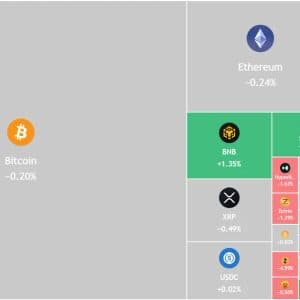
Bitcoin News Bitcoin slid beneath the $77,000 threshold on Thursday, with sellers wresting control after a multi-week rally cooled. The drop pierced the closely watched true market mean at $78,300,...
22 May 2026, 20:20
Dollar Stays Flat as Rate Hike Bets and U.S.-Iran Peace Hopes Create a Standoff

BitcoinWorld Dollar Stays Flat as Rate Hike Bets and U.S.-Iran Peace Hopes Create a Standoff The U.S. dollar ended the week virtually unchanged, caught between two powerful but opposing market forces: escalating bets on a Federal Reserve rate hike and cautious optimism surrounding potential peace negotiations between the United States and Iran. The currency’s inability to break out of its narrow trading range reflects a market that is deeply uncertain about the next major catalyst. Rate Hike Expectations Provide a Floor for the Dollar Throughout the week, a series of stronger-than-expected economic data releases, particularly in the manufacturing and services sectors, fueled speculation that the Federal Reserve may need to raise interest rates again to contain persistent inflation. The CME FedWatch Tool showed a notable increase in the probability of a 25-basis-point hike at the next meeting, providing a solid floor under the dollar. Higher interest rates typically attract foreign capital, boosting the currency’s value. This narrative gave the greenback support against a basket of major currencies, preventing a significant decline. Geopolitical Optimism Caps the Dollar’s Upside Simultaneously, reports of progress in back-channel talks between U.S. and Iranian officials regarding a new nuclear framework injected a dose of risk appetite into global markets. A potential detente could lead to the easing of sanctions on Iranian oil exports, increasing global supply and lowering energy prices. This geopolitical shift tends to weaken the dollar as a safe-haven asset, as investors move toward higher-yielding and risk-sensitive currencies like the euro, British pound, and emerging market currencies. The peace hopes effectively capped any significant dollar rally, creating a stalemate. Why This Standoff Matters for Traders For forex traders, this dual narrative creates a challenging environment. The dollar’s inability to trend strongly in either direction suggests that the market is pricing in a binary outcome: either the Fed hikes and the dollar strengthens, or peace talks succeed and the dollar weakens. Until one of these narratives gains a clear upper hand, range-bound trading is likely to persist. Investors should watch for Fed commentary and any official confirmation regarding the U.S.-Iran talks as the next potential triggers for a breakout. Conclusion The dollar’s flat performance this week is a textbook example of a market in equilibrium, where bullish and bearish forces are perfectly balanced. The tug-of-war between tightening monetary policy and easing geopolitical tensions is unlikely to resolve quickly. For now, the greenback remains a currency without a clear direction, waiting for a decisive signal from either the Federal Reserve or the diplomatic track with Iran. FAQs Q1: Why did the dollar stay flat this week despite rate hike bets? The dollar was supported by increased expectations of a Federal Reserve rate hike, but its upside was capped by growing optimism over potential U.S.-Iran peace talks, which reduced demand for safe-haven currencies. Q2: How do U.S.-Iran peace talks affect the dollar? Successful peace talks could lead to the lifting of sanctions on Iranian oil, increasing global supply and lowering energy prices. This reduces geopolitical risk and diminishes demand for the dollar as a safe-haven asset, weakening the currency. Q3: What should forex traders watch for next? Traders should monitor Federal Reserve officials’ public statements for hints on future rate policy, and any official announcements or credible leaks regarding the status of U.S.-Iran negotiations. A clear development in either area is likely to break the current stalemate. This post Dollar Stays Flat as Rate Hike Bets and U.S.-Iran Peace Hopes Create a Standoff first appeared on BitcoinWorld .
22 May 2026, 20:15
Polymarket Odds for Bitcoin Hitting $75K in May Surge 21 Points in One Hour
BitcoinWorld Polymarket Odds for Bitcoin Hitting $75K in May Surge 21 Points in One Hour The odds of Bitcoin reaching $75,000 in May have jumped sharply on the prediction market Polymarket, reflecting a sudden shift in trader sentiment. In a sub-market of the broader betting event, “What price will Bitcoin reach in May?,” the probability of the “Yes” option for the $75,000 threshold rose from 58.5% to 79.5% over the past hour. This represents a 21 percentage point increase in a single hour, a notable move for a prediction market that typically sees gradual price adjustments. Understanding the Polymarket Shift Polymarket, a decentralized prediction market platform, allows users to trade on the outcome of real-world events, including cryptocurrency price targets. The rapid shift in odds for Bitcoin reaching $75,000 by the end of May suggests a significant influx of capital or a change in sentiment among active traders on the platform. While the exact catalyst for this move is not immediately clear, such sharp movements often correlate with major news events, large trades, or shifts in broader market conditions. The $75,000 target is a key psychological and technical level for Bitcoin. Having recently traded near its all-time highs, the asset has seen increased volatility. The Polymarket data indicates that a substantial portion of market participants now view a move to $75,000 as more likely than not within the month. Context and Implications Prediction markets like Polymarket are increasingly used as real-time sentiment indicators, often reacting faster than traditional financial markets. The 21-point jump in one hour is significant and may signal that traders are pricing in a specific upcoming event or data point. Potential catalysts could include positive regulatory developments, institutional adoption news, or technical breakout patterns. However, it is important to note that prediction markets are not always accurate and can be influenced by large individual bets or coordinated trading strategies. The odds reflect the probability assigned by the market at a given moment, not a guaranteed outcome. What This Means for Traders and Investors For cryptocurrency traders and investors, the Polymarket data provides an additional data point for gauging short-term sentiment. A rapid increase in odds can sometimes precede a price move, but it can also represent a contrarian signal if the move is overextended. The key takeaway is the heightened level of conviction among a subset of market participants regarding Bitcoin’s near-term upside potential. The broader market context remains important. Bitcoin’s price action in the coming days, along with macroeconomic factors and regulatory news, will ultimately determine whether the Polymarket odds prove prescient or are adjusted back down. Conclusion The sudden surge in Polymarket odds for Bitcoin reaching $75,000 in May highlights the dynamic and sentiment-driven nature of cryptocurrency markets. While the move is notable, it should be interpreted as one signal among many. Traders and observers should monitor the underlying reasons for the shift and remain aware of the inherent volatility and uncertainty in prediction markets. The coming weeks will reveal whether this surge in confidence translates into actual price action. FAQs Q1: What is Polymarket? Polymarket is a decentralized prediction market platform where users can trade on the outcomes of future events, including cryptocurrency price targets, using cryptocurrency. The odds reflect the collective probability assigned by traders. Q2: Why did the odds for Bitcoin hitting $75K jump so quickly? The exact cause is not confirmed, but rapid odds shifts on prediction markets are often driven by large trades, breaking news, or a sudden change in broader market sentiment. It could also be a technical reaction to price movements in the underlying asset. Q3: Are Polymarket odds a reliable predictor of Bitcoin’s price? Prediction markets can be useful sentiment indicators, but they are not infallible. Odds can be influenced by large individual bets, market manipulation, or crowd psychology. They should be considered alongside other data points and not as a definitive forecast. This post Polymarket Odds for Bitcoin Hitting $75K in May Surge 21 Points in One Hour first appeared on BitcoinWorld .
22 May 2026, 20:04
Why Did Harvard Dump Its Entire $87M Ethereum ETF After 3 Months?

Harvard Management Company has sold its entire $87 million position in BlackRock’s iShares Ethereum ETF during the first quarter of 2026, according to its latest 13F filing with the U.S. Securities and Exchange Commission. The move ended a short-lived exposure to Ethereum through an exchange-traded product that had been opened in the fourth quarter of 2025. The filing shows that Harvard exited the Ethereum ETF position during a weak period for the broader crypto market. Ethereum fell sharply in early 2026, reaching the $1,800 area in February as investors reduced exposure to risk assets. ETH has also remained under pressure in recent weeks, declining over the past month as sentiment toward the asset weakened. Harvard did not provide a public explanation for the sale in the filing. The move may reflect portfolio rebalancing, risk management, or a decision to reduce exposure after Ethereum’s price decline. The transaction involved ETF shares rather than Ethereum held directly onchain, meaning the sale did not represent a direct transfer of ETH from Harvard-controlled crypto wallets. Harvard Cuts Ethereum ETF Exposure Harvard Management Company manages Harvard University’s endowment fund and regularly reports certain public holdings through quarterly 13F filings. The latest filing showed a full exit from the Ethereum ETF position only one quarter after it appeared in the portfolio. The sale came as Ethereum ETF demand weakened across the market. Spot Ethereum ETFs recorded total net outflows of $32.57 million in the latest data cited, extending their outflow streak to nine days. A strong inflow day above $50 million, once more common for the category, has not been recorded for several weeks. The Ethereum ETF exit was not Harvard’s only portfolio change. The endowment also reduced exposure to gold, Nvidia, TSMC and Broadcom. It also cut part of its Bitcoin ETF position, selling 2.3 million shares of BlackRock’s iShares Bitcoin Trust. Despite that reduction, Harvard still held about $117 million in Bitcoin ETF exposure. Harvard’s Bitcoin ETF position had previously reached about $442 million in the third quarter of 2025. The remaining position shows the endowment did not fully exit crypto-linked ETF exposure, even as it sold all of its Ethereum ETF shares. Ethereum Sentiment Weakens in May Ethereum’s market performance has weighed on investor sentiment. ETH has declined over several time frames, including the past week, the past two weeks, and the past month. According to data, ETH is down about 10% over the previous month. Social data has also reflected a weaker mood among traders. Ethereum discussion has risen while the price has fallen, suggesting that attention has shifted toward frustration and concern rather than price strength. A decline in the ratio of bullish to bearish comments has shown that optimism around ETH has narrowed. The ETF outflow trend has added to that pressure. Traders often use fund flows as a signal of institutional demand, even though ETF flows can lag price action. Persistent outflows may reinforce negative market views when prices are already falling. Source: Santiment Ethereum has also faced other sources of concern, including weaker onchain activity compared with prior cycle highs. Daily active addresses and network growth have cooled from the stronger levels seen in 2024 and 2025. Lower participation can affect how traders assess demand for ETH. Bitcoin ETFs Still Attract Large Buyers Harvard’s Ethereum ETF sale occurred while other large investors continued adding Bitcoin exposure. Abu Dhabi’s Mubadala reportedly raised its Bitcoin holdings to $566 million after six straight quarters of buying. JPMorgan also increased its IBIT position by 174%, according to the data cited. This contrast has drawn attention because some institutions appear to favor Bitcoin ETFs over Ethereum ETFs during the current market phase. Bitcoin has retained stronger institutional demand, while Ethereum has faced more pressure from ETF outflows and weaker relative performance. Ethereum remains one of the largest developer ecosystems in crypto. Network development activity continues across infrastructure, scaling, and applications. However, retail and institutional attention has shifted more toward price performance, fund flows, and competing ecosystems such as Solana and BNB Chain. Harvard’s exit does not confirm a permanent view on Ethereum. The filing only shows that the endowment no longer held the ETHA position at the end of the first quarter. It remains unclear whether Harvard plans to re-enter Ethereum ETF exposure later.
22 May 2026, 20:02
XRP 4HR Liquidity Hitmap. Here’s What It Means to Price Rally

Crypto analyst Cryptoinsightuk (@Cryptoinsightuk) has shared a new 4-hour liquidity chart for XRP as price action tightens near a major support cluster. The chart shows XRP trading around $1.36 while liquidity bands stack heavily above current levels. The setup points to growing pressure as traders watch for a decisive breakout. The chart mapped liquidity concentrations across several price zones. It also highlights where large orders may sit in the market. $XRP 4HR liquidity pic.twitter.com/EJp0AeEwMu — Cryptoinsightuk (@Cryptoinsightuk) May 21, 2026 Liquidity Clusters Show Major Resistance Levels The chart displays thick liquidity zones between $1.60 and $1.90. Another dense area appears between $2.40 and $2.80. These regions stand out in yellow and red bands, which often signal heavy resting liquidity or strong trader positioning. XRP repeatedly moved toward those zones earlier in the year before pulling back. XRP surged near the start of 2026 , then corrected sharply into February. Since then, the asset has traded in a compressed range while building support above the $1.20 area. The liquidity map suggests market makers may still target higher zones if momentum strengthens. Large liquidity pockets often draw the price because they contain stop orders, leveraged positions, and concentrated trading activity. The current structure also shows liquidity thinning around the immediate trading range. That can increase volatility once XRP breaks out of consolidation. XRP Builds Support Above Key Area The lower section of the chart reveals strong support forming near $1.20. XRP tested this region multiple times during the consolidation phase . Buyers consistently stepped in after each dip. That behavior matters because it creates a stable base while higher liquidity remains untouched above the current price. The chart also shows XRP gradually printing higher lows since February despite several pullbacks. We are on X, follow us to connect with us :- @TimesTabloid1 — TimesTabloid (@TimesTabloid1) June 15, 2025 Trading activity remains concentrated near the current price zone, showing that XRP continues to build support while traders position for a breakout. The largest concentration sits near mid-$1 region, which may act as an equilibrium level before the next expansion phase . What Traders Should Watch Next If XRP pushes above the $1.60 liquidity cluster, the chart suggests the price could move quickly toward the heavier zones near $1.80 and $2.40. Liquidity gaps between these regions may allow faster movement once the resistance is broken . The chart also shows historical reactions near those levels. XRP was previously rejected from the upper bands during earlier rallies. Traders will likely monitor whether buyers absorb sell pressure differently this time. Disclaimer : This content is meant to inform and should not be considered financial advice. The views expressed in this article may include the author’s personal opinions and do not represent Times Tabloid’s opinion. Readers are advised to conduct thorough research before making any investment decisions. Any action taken by the reader is strictly at their own risk. Times Tabloid is not responsible for any financial losses. Follow us on X , Facebook , Telegram , and Google News The post XRP 4HR Liquidity Hitmap. Here’s What It Means to Price Rally appeared first on Times Tabloid .
22 May 2026, 20:02
Ethereum Layer 2 Zero Network Pulls the Plug After Just 1.5 Years

After operating for around 1.5 years, the Ethereum Layer 2 project Zero Network announced that it is shutting down its standalone chain and pivoting toward expanding the Zerion API and wallet products. The team said the network was originally launched with the belief that gas fees remained one of the biggest barriers to mainstream crypto adoption, according to a statement shared on X. Full Shutdown Timeline Zero Network described itself as the first fully gasless, EVM-compatible rollup, which offered zero gas fees for Zerion wallet users through an open paymaster system. However, after running the network, the team said it concluded that maintaining a separate chain was no longer the best way to pursue that goal. It plans to direct its resources toward products already being used daily by its customers. As part of the wind-down process, the project urged all users holding ETH, tokens, or NFTs on Zero Network to bridge their assets out before July 31, 2026. The team asserted that all funds remain safe and fully accessible, and instructed users to move assets either to the Ethereum mainnet or another preferred chain before the deadline. According to the announcement, bridging into Zero Network has already been disabled, while bridging out will remain available until July 31. After that date, the network will be completely shut down, and block production will stop. The team also thanked early users, builders, and partner projects that supported the ecosystem from its launch, including Matter Labs, Caldera, Relay Protocol, and Highlight. Zero Network added, “The vision we set out to build hasn’t changed. How we deliver it is evolving. The team, the talent, and everything we learned from ZERϴ is being channeled into building the best wallet and data API experience in crypto, across every chain.” Crypto Closures A number of crypto companies announced shutdowns this week. Syndicate Labs, an Ethereum infrastructure startup backed by Andreessen Horowitz, said it was closing down after operating for five years. The company explained that it had focused on building tools to help developers create and scale on-chain applications, but added that the rollup sector had changed significantly over time. The firm stated that EVM rollups are no longer widely treated as the default industry approach. Syndicate Labs said it spent years trying to support the expansion of on-chain apps and wished the results had turned out differently. Meanwhile, crypto trading card platform Fantasy.top said it would shut down in June after two years because trading activity was not large enough to support long-term operations. The company reportedly experimented with other products, including prediction markets, but failed to find market demand. Pantera-backed cross-chain infrastructure firm Everclear also announced it was pulling the plug on Everclear Foundation and Everclear Labs, after the business failed to generate sustainable revenue or sufficient commercial traction. The post Ethereum Layer 2 Zero Network Pulls the Plug After Just 1.5 Years appeared first on CryptoPotato .


