


 Invest ideas
News
22 May 2026, 13:15
Nasdaq-Listed Baiya International Group Acquires $1M in BNB, Unveils ‘Binance Plan’ Strategy

BitcoinWorld Nasdaq-Listed Baiya International Group Acquires $1M in BNB, Unveils ‘Binance Plan’ Strategy Nasdaq-listed Baiya International Group (BIYA) has entered the cryptocurrency market with a $1 million purchase of BNB, the native token of the Binance ecosystem. The company also announced a formal rebranding of its digital asset investment approach, now called the ‘Binance Plan.’ Community-Driven Decision The move follows a public poll conducted on Baiya International’s official X account, where BNB received 89.2% of the vote among several cryptocurrency options. The company cited the outcome as a key factor in its decision, reflecting a growing trend of publicly traded firms incorporating community sentiment into corporate treasury strategies. Algorithmic Trading and Share Buyback Mechanism Baiya has activated an algorithmic trading system designed to automatically execute buy and sell orders based on BNB’s price volatility. The company stated that 50% of any realized profits from this strategy will be allocated to share buybacks, pending market conditions and approval from the board of directors. This structure ties the company’s crypto investment performance directly to shareholder returns. Implications for Corporate Crypto Adoption Baiya International’s entry into cryptocurrency as a Nasdaq-listed entity adds to a small but growing list of publicly traded companies allocating treasury funds to digital assets. The decision to tie profit-sharing to share buybacks is a relatively novel approach, potentially offering a direct benefit to shareholders if the strategy proves profitable. However, the reliance on an algorithmic strategy tied to a volatile asset class introduces significant risk, which the company has acknowledged by conditioning buybacks on market conditions and board approval. The announcement also highlights the increasing influence of social media polls in corporate decision-making, particularly in the cryptocurrency space where community engagement is often a priority. Conclusion Baiya International Group’s $1 million BNB purchase and the launch of the ‘Binance Plan’ represent a notable step in corporate cryptocurrency adoption, blending algorithmic trading with a shareholder-focused profit-sharing model. The success of this strategy will depend on BNB’s market performance and the effectiveness of the automated trading system. FAQs Q1: What is Baiya International Group’s ‘Binance Plan’? The ‘Binance Plan’ is the company’s formal cryptocurrency investment strategy, centered on its $1 million BNB purchase and an algorithmic trading system that automatically executes trades based on price volatility. Q2: How will profits from the BNB investment be used? Baiya International plans to allocate 50% of any realized profits from the algorithmic trading strategy to share buybacks, subject to market conditions and board approval. Q3: Why did Baiya International choose BNB over other cryptocurrencies? The decision was influenced by a poll on the company’s official X account, where BNB received 89.2% of the vote, indicating strong community preference for the token. This post Nasdaq-Listed Baiya International Group Acquires $1M in BNB, Unveils ‘Binance Plan’ Strategy first appeared on BitcoinWorld .
22 May 2026, 13:12
Dogecoin eyes 0.15 dollar breakout after weeks of flat trading

🚀 Dogecoin traders are watching for a breakout at 0.15 dollars. Current price action holds above 0.088 dollars as key support. Continue Reading: Dogecoin eyes 0.15 dollar breakout after weeks of flat trading The post Dogecoin eyes 0.15 dollar breakout after weeks of flat trading appeared first on COINTURK NEWS .
22 May 2026, 13:02
Pundit: What’s Coming for XRP Will Make Grown Men Cry. History Is About to be Made

Crypto pundit RemiReliefX recently shared a highly optimistic outlook for XRP, claiming that the coming months could be an important period for digital asset investors. The commentator pointed specifically to July and August as the months where major price action and profit-taking could occur, while describing May and June as only the beginning of the anticipated move. RemiReliefX stated that “history is ABOUT to be made” for XRP and suggested that significant developments are approaching. Although the commentator did not provide details behind the prediction, the post emphasized that investors should prepare for what could happen over the next five months. According to the post, July and August may become “explosive” periods for the crypto market, while price crashes may abound in September and October. The commentator also argued that the current period could “change the trajectory” of investors’ futures. One of the strongest claims in the post involved the suggestion that holding 1,000 XRP could eventually make an investor a millionaire. The statement reflected the commentator’s belief that XRP remains significantly undervalued compared to where it could trade in the future. What’s coming for XRP will make grown men cry. History is ABOUT to be made I wish I can say more but I can’t for now. Just be ready…especially for July and August. Probably the peak of profit taking. May and June will be the warm up July and August will be explosive… — The Real Remi Relief (@RemiReliefX) May 20, 2026 XRP and Institutional Adoption Remain Central to the Prediction RemiReliefX also shared views on which digital assets could see strong institutional involvement. According to the post, Bitcoin, Ethereum, XRP, and Solana are among the cryptocurrencies expected to see major institutional use. However, the commentator clarified that despite acknowledging Bitcoin, Ethereum, and Solana, the preferred investment choice remains XRP alongside XLM due to what was described as stronger return-on-investment potential. The post additionally labeled DOGE and OXT as “big gambles” that could still produce significant profits. At the same time, RemiReliefX disclosed he does not own Bitcoin, Ethereum, or Solana, emphasizing a stronger conviction in XRP and XLM instead. The comments gained massive traction. An X user, Nateo J, questioned whether XRP could remain stable if it eventually reached extremely high valuations, such as $1,000 . He said if XRP achieved widespread utility and adoption, it would maintain the top prices without sharp declines afterward. RemiReliefX Warns About Potential Market Manipulation Responding to the question, RemiReliefX suggested that XRP could eventually maintain higher price levels but warned that major price swings and manipulation may happen before that stage is reached. The commentator stated that large market participants could potentially force prices downward repeatedly in an attempt to shake retail investors out of their holdings. We are on X, follow us to connect with us :- @TimesTabloid1 — TimesTabloid (@TimesTabloid1) June 15, 2025 According to the response, XRP could rise sharply, experience aggressive pullbacks, and later recover again. RemiReliefX described this cycle as a possible strategy that may continue until institutional players accumulate enough XRP from retail holders. The commentator also connected XRP’s long-term value to economic instability. In response, RemiReliefX argued that the XRP price may remain elevated once economic conditions worsen significantly. The commentator further claimed that in such an environment, XRP could become more useful, as everyday investors may no longer have enough disposable income available to continue accumulating the asset. While the prediction remains speculative and reflects personal opinion rather than confirmed market analysis, the post demonstrates the optimism of some XRP supporters about the asset’s long-term future and possible institutional role in the financial sector. Disclaimer : This content is meant to inform and should not be considered financial advice. The views expressed in this article may include the author’s personal opinions and do not represent Times Tabloid’s opinion. Readers are advised to conduct thorough research before making any investment decisions. Any action taken by the reader is strictly at their own risk. Times Tabloid is not responsible for any financial losses. Follow us on X , Facebook , Telegram , and Google News The post Pundit: What’s Coming for XRP Will Make Grown Men Cry. History Is About to be Made appeared first on Times Tabloid .
22 May 2026, 13:00
Understanding BEAT’s 2-day rally, driven by whales and an AI narrative

Despite a 13% jump, BEAT’s future depends on whether bulls can turn hype into a lasting trend.
22 May 2026, 13:00
ICE, parent of NYSE, partners with OKX to launch crude oil perpetual futures
BitcoinWorld ICE, parent of NYSE, partners with OKX to launch crude oil perpetual futures Intercontinental Exchange (ICE), the parent company of the New York Stock Exchange (NYSE), is joining forces with crypto exchange OKX to introduce perpetual crude oil futures. The move, first reported by Bloomberg, marks a significant step in blending traditional commodity markets with digital asset infrastructure. What the partnership entails The new financial products will be perpetual futures contracts tied to the prices of ICE’s benchmark Brent and West Texas Intermediate (WTI) crude oil futures. Unlike standard futures, perpetual contracts have no expiration date, allowing traders to hold positions indefinitely while paying or receiving funding fees to keep the contract price aligned with the underlying asset. OKX will offer these products in jurisdictions where it holds regulatory licenses for perpetual futures trading. The exchange has not yet specified which regions will be eligible at launch, but the selection will likely focus on markets with clear crypto derivatives regulations. Background: ICE’s growing crypto footprint ICE’s involvement with OKX is not new. In March, the exchange operator made a strategic investment in OKX and signed a blockchain-based technology cooperation agreement. This latest product launch appears to be the first major outcome of that partnership, signaling ICE’s intent to expand its presence in digital asset markets without fully abandoning its traditional exchange roots. ICE already operates Bakkt, a digital asset platform focused on Bitcoin futures and custody services. The OKX collaboration extends that reach into perpetual swaps, a product category that has seen explosive growth in crypto markets but remains largely untapped by traditional exchange giants. Why this matters for traders and markets For commodity traders, the introduction of perpetual crude oil futures through a regulated platform like OKX offers a new way to gain leveraged exposure to oil prices without the rollover costs associated with monthly futures contracts. For the crypto industry, it represents another bridge between decentralized finance and established financial infrastructure, potentially attracting institutional capital that has been hesitant to engage with purely crypto-native products. The partnership also highlights a broader trend: traditional exchanges are increasingly looking to integrate blockchain technology and digital asset trading into their offerings. ICE’s investment and cooperation agreement with OKX suggest a long-term strategy rather than a short-term experiment. Conclusion The ICE-OKX crude oil perpetual futures launch is a notable development at the intersection of traditional commodities and crypto derivatives. By leveraging ICE’s benchmark oil indices and OKX’s trading technology, the product could appeal to a wide range of traders. The success of this initiative will depend on regulatory clarity, market demand, and the ability of both firms to execute a seamless integration. As the launch date approaches, market participants will be watching closely for further details on available regions and contract specifications. FAQs Q1: What are perpetual futures? Perpetual futures are derivative contracts that allow traders to speculate on the price of an asset without an expiration date. They use a funding rate mechanism to keep the contract price close to the spot price of the underlying asset. Q2: Will these products be available in the United States? It is unclear at this stage. OKX holds licenses in several jurisdictions but does not currently serve U.S. customers. The availability of these products will depend on regulatory approvals in each market. Q3: How does this differ from Bakkt’s offerings? Bakkt, also owned by ICE, focuses on physically delivered Bitcoin futures and custody services. The OKX partnership targets perpetual swaps tied to commodity indices, a different product category that appeals to active traders and hedgers. This post ICE, parent of NYSE, partners with OKX to launch crude oil perpetual futures first appeared on BitcoinWorld .
22 May 2026, 12:55
China's securities regulator seizes illegal gains in disruption of U.S. stock trading platforms
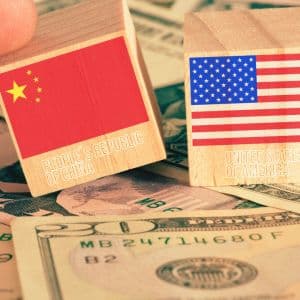
China’s Securities Regulatory Commission (CSRC) is cracking down on U.S. stock trading platforms, and it has reportedly seized illegal gains. The platforms have been placed on a two-year rectification period, during which they are to stop fund inflows and halt buy transaction offers. The CSRC is working alongside eight other government departments to implement the “Implementation Plan for the Comprehensive Rectification of Illegal Cross-border Securities, Futures, and Fund Business Activities.” Investors have been limited to liquidating their assets (one-way sell trades) and withdrawing funds. The CSRC is also targeting brokerages, including Futu Securities, Tiger Brokers, and Longbridge Securities. These platforms have facilitated account openings, trade executions, and margin trading for mainland Chinese citizens without the required domestic licenses. Authorities plan to seize all illegal gains derived from mainland clients and impose harsh penalties. The regulatory action has shaken investor confidence and has caused the U.S.-listed and Hong Kong shares of the targeted firms to drop drastically. The pre-market share prices of companies like Tiger Brokers (UP Fintech) and Futu have dropped by 30% to 40% on major U.S. exchanges. CSRC says ‘Rectification Plan’ proposes keen monitoring and inspection A CSRC official stated that the “Rectification Plan” calls for comprehensive monitoring and inspection. It will intensify the scrutiny of internet platforms and related information and expand regulatory oversight of overseas institutions. The plan is also expected to toughen investigations and penalties in significant cases, decisively address illegal cross-border business activities, and tighten oversight of cross-border securities, futures, and fund investments. Additional measures include strengthening cross-border regulatory cooperation, safeguarding investors’ legitimate rights, improving policy communication and guidance, upgrading regulatory frameworks, and promoting compliant overseas investment channels. The CSRC will lead the implementation of this plan. Meanwhile, the National Financial Regulatory Administration will be responsible for financial consumer protection and supervision of domestic banking institutions. The People’s Bank of China will deploy its anti-money laundering systems to support the effort. The State Administration of Foreign Exchange will oversee foreign exchange management. At the same time, the State Administration for Market Regulation will strengthen registration supervision of relevant domestic business entities in accordance with the law. These agencies, alongside other relevant departments, will also tighten oversight of related advertising activities. Notably, an estimated $1.04 trillion of “hot money” flowed out of China in 2025. CSRC officials have emphasized that the measures are designed to clean up the capital market environment and steer investors toward regulated channels for overseas investment. CSRC-led initiative represents China’s tough stance on capital outflows The CSRC-led initiative marks a major escalation in China’s efforts to control capital outflows. It comes nearly three years after local retail traders were first blocked from accessing the apps of popular offshore brokerages. Under the new initiative, overseas institutions will be banned from running marketing campaigns for securities, futures, and fund products in China. These institutions will also not be allowed to offer account-opening services, execute trades, or facilitate fund transfers for domestic clients. Additionally, the crackdown extends beyond foreign firms. Chinese entities that assist such operations, including intermediaries that solicit investors or firms that provide websites, trading software, or customer support, will also be subject to enforcement action. The crackdown includes internet platforms and social media accounts publishing illegal promotional content. Banks will also be closely scrutinized. Banking institutions providing accounts for cross-border investment will be required to tighten compliance checks on foreign exchange transactions flowing out of China. Regulators are also expected to curb illicit capital outflows, including those routed through underground banking networks. Meanwhile, the Ministry of Public Security will investigate and prosecute illegal business operations and other economic crimes. Local Chinese governments will also assume territorial responsibility for preventing and combating illegal cross-border activities in securities, futures, and funds. However, A CSRC official has noted that not all disputes or losses arising from overseas investments conducted through illegal channels will receive full legal protection under domestic law. The primary goal of this rectification campaign is to ensure that it will not affect the safety of investors’ assets. Don’t just read crypto news. Understand it. Subscribe to our newsletter. It's free .


