


 Invest ideas
News
21 May 2026, 08:50
Filecoin (FIL) And Kaspa (KAS): As On‑Chain Storage And Faster POW Rails Both Get Attention, Do FIL And KAS Form A “Data + Settlement” Pair For Infrastructure T...
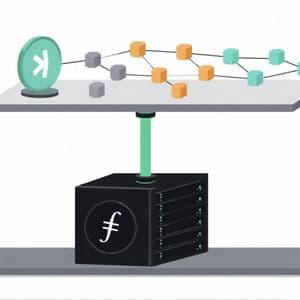
The digital asset market in Bangkok and beyond is aggressively repricing foundational infrastructure. As artificial intelligence models demand vast, verifiable datasets and retail users seek scalable, non-EVM settlement networks, two distinct protocols have emerged as critical counter-weights to the dominant narratives: Filecoin (FIL) and Kaspa (KAS) . These two assets represent opposite ends of the infrastructure spectrum. FIL provides the heavy, decentralized storage required for massive Web3 archives and AI training data. KAS offers an ultra-fast, Proof-of-Work (PoW) settlement layer optimized for high-frequency micro-payments and its growing KRC-20 token ecosystem. However, a close examination of their 30-day technical structures reveals that both assets are currently trapped in mid-cycle consolidation ranges. The question for infrastructure traders is simple: Is this the quiet accumulation phase for the ultimate "Data + Settlement" pair, or just a temporary pause in a broader market cooldown? Filecoin (FIL): The Data Rail in a Wide Range Source: tradingview Filecoin has successfully transitioned from a simple storage network to a fully programmable layer via the Filecoin Virtual Machine (FVM). Yet, despite this fundamental upgrade and its vital role in storing AI data, its price chart reflects a market still struggling to find a definitive trend. The 30-Day Structure: Over the last month, FIL pushed roughly 30% off its lows near $0.92, tagging a local high of $1.20. It has since retraced heavily, settling back down into the $0.94 to $1.00 band. The Resistance Ceiling: The short-term Simple Moving Average (SMA) proxy sits near $1.00, acting as immediate overhead resistance. For FIL to prove that its recent run to $1.20 was the start of an uptrend rather than a failed breakout, it must reclaim and hold the $1.10 level on heavy volume. The Support Floor: The $0.92 level is the line in the sand. A daily close below this mark would completely unwind the entire 30-day leg, signaling that buyers have stepped away. The Read: FIL is exhibiting classic range consolidation. The market absorbed the initial fundamental upgrades, but there is not yet enough sustained demand to push it through the $1.00 resistance. Kaspa (KAS): Fast PoW Settlement in a Gentle Pullback Source: tradingview Kaspa has captured significant attention as a scalable, fair-launch PoW alternative, especially following the rollout of its KRC-20 token standard which enables smart-contract-like functionality on its blockDAG architecture. The 30-Day Structure: KAS has experienced a much more modest, controlled channel compared to FIL. It climbed roughly 14.5% from a low of $0.0325 to a high of $0.0380, before settling into a gentle pullback near $0.0336. The Resistance Ceiling: The previous local high band between $0.036 and $0.037 is the first major hurdle. KAS needs to clear this zone to make a legitimate run at breaking the $0.038 highs. The Support Floor: Current price action is hovering dangerously close to short-term support in the $0.033–$0.034 zone. However, the true structural floor is the 30-day swing low at $0.0325. Losing this level would signal a shift from a "gentle pullback" to a deeper correction. Do FIL and KAS Form a “Data + Settlement” Pair? From a narrative standpoint, combining the world's premier decentralized storage rail (FIL) with the fastest PoW settlement layer (KAS) creates a compelling, non-EVM infrastructure portfolio. However, the charts indicate that the market is currently in a "wait-and-see" mode for both. They Form a Clear Infra Pair If: FIL successfully defends the $0.92 floor, reclaims the $1.00 SMA, and pushes back toward $1.10 alongside visible growth in enterprise data onboarding via FVM. KAS holds above $0.0325, grinds through the $0.036 resistance, and breaks its local highs, driven by increased transaction velocity from KRC-20 token deployments. They Remain Side Bets If: Both tokens continue to drift aimlessly within their current mid-range bands while trading volume fades. FIL loses $0.092 and KAS loses $0.0325, indicating that capital is rotating entirely away from alternative infrastructure and back toward established L2 ecosystems. Final Verdict: The numbers suggest that while FIL and KAS are structurally sound, the "data + settlement" trade is currently in a consolidation phase. They are credible infra bets, but until they break their respective resistance ceilings, they are being traded as narrative-sensitive side positions rather than the primary backbone for the broader market. Disclaimer: This article is provided for informational purposes only. It is not offered or intended to be used as legal, tax, investment, financial, or other advice.
21 May 2026, 08:50
IOTrader Raises $3.8M in Strategic Funding Round Led by Animoca Brands

BitcoinWorld IOTrader Raises $3.8M in Strategic Funding Round Led by Animoca Brands IOTrader, a decentralized finance protocol built on the BNB Chain, has secured $3.8 million in a strategic investment round, marking a significant vote of confidence in its trading infrastructure. The round was led by Animoca Brands, with participation from ViaBTC Capital, Everwood Capital, CANDAQ, WAGMI Ventures, and Web3 Labs. Strategic Backing for DeFi Expansion The funding arrives at a time when the DeFi sector is navigating both regulatory scrutiny and renewed interest in automated trading solutions. IOTrader’s protocol focuses on providing on-chain trading tools, including limit orders and dollar-cost averaging strategies, which are often absent from standard decentralized exchange interfaces. The involvement of Animoca Brands, a major player in blockchain gaming and venture capital, signals a broader interest in infrastructure that bridges DeFi with mainstream crypto applications. IOTrader has not disclosed whether the funding was structured as an equity sale or token-based investment, but the company has indicated that the capital will be used to accelerate product development, expand its team, and deepen integrations within the BNB Chain ecosystem. The protocol aims to make advanced trading strategies more accessible to retail users without requiring deep technical knowledge. Market Context and Implications The strategic round comes amid a broader recovery in crypto venture funding. After a prolonged downturn in 2022 and early 2023, investment activity in DeFi and infrastructure projects has shown signs of a measured rebound. IOTrader’s ability to attract capital from both established crypto-native funds and a major gaming-focused investor suggests that its value proposition resonates beyond pure DeFi circles. For BNB Chain, the investment reinforces its position as a competitive layer-1 ecosystem for DeFi innovation. The chain has been actively courting developers and protocols with grant programs and technical support, and IOTrader’s funding success may encourage further ecosystem growth. What This Means for Traders For retail traders, IOTrader’s expansion could mean more sophisticated order types and automation tools on a platform that prioritizes low fees and fast execution. The protocol’s focus on user experience and non-custodial design may also appeal to those wary of centralized exchange risks. However, as with any DeFi protocol, users should conduct their own research and understand the associated smart contract and market risks before committing capital. Conclusion IOTrader’s $3.8 million strategic raise, anchored by Animoca Brands and a roster of notable crypto investors, positions the protocol for accelerated growth within the BNB Chain DeFi landscape. The funding reflects ongoing institutional and venture interest in practical DeFi tools that enhance trading functionality for a broad user base. As the protocol moves toward its next development phase, its ability to execute on its roadmap will determine whether this capital translates into sustained user adoption and market relevance. FAQs Q1: What is IOTrader? IOTrader is a decentralized finance protocol on the BNB Chain that offers automated trading tools such as limit orders and dollar-cost averaging, designed to give users more control over their crypto trading strategies. Q2: Who led the $3.8 million funding round? The round was led by Animoca Brands, with participation from ViaBTC Capital, Everwood Capital, CANDAQ, WAGMI Ventures, and Web3 Labs. Q3: How will IOTrader use the new capital? IOTrader plans to use the funds to accelerate product development, expand its team, and strengthen integrations within the BNB Chain ecosystem to make advanced trading tools more accessible. This post IOTrader Raises $3.8M in Strategic Funding Round Led by Animoca Brands first appeared on BitcoinWorld .
21 May 2026, 08:46
Cardano investors buy 250 million ADA as price nears $0.25

🚨 Nearly 250 million ADA were bought by big investors as $ADA traded just under $0.25. Market data shows institutional wallets added large Cardano positions since May 11. 📊 Critical data: Technical signals still point to weakness, but holding above $0.246 is key support for a rebound. Continue Reading: Cardano investors buy 250 million ADA as price nears $0.25 The post Cardano investors buy 250 million ADA as price nears $0.25 appeared first on COINTURK NEWS .
21 May 2026, 08:38
HYPE Hits $56 as Hyperliquid Flips Solana in FDV Race

Hyperliquid overtook Solana in fully diluted valuation (FDV) today, May 21, 2026. There has been a strong demand for the newly launched US spot HYPE ETFs. Institutions such as Galaxy Digital and Grayscale Investment are accumulating $HYPE. Hyperliquid (HYPE) has overtaken Solana in fully diluted valuation (FDV), marking a major milestone for the token. Hyperliquid’s FDV now stands at approximately $54.57 billion, edging out Solana’s FDV of about $54.21 billion. The token’s market strength is reflected in its price, which has jumped roughly 16% and is hovering around the $56 mark after breaking past $50. This move where the price of the token has surpassed $50 is getting a lot of attention, be it from traders or institutional investors. The price has risen and it also shows how interest in Hyperliquid has accelerated since its US ETF debut. ETF Launches and Heavy Trading Explain the Surge The main reason behind Hyperliquid’s sudden rise is the launch and early performance of spot Hyperliquid ETFs in the US. The two organizations that are leading these funds are 21Shares’ THYP and Bitwise’s BHYP. Both the products have shown rapid inflows and trading volume since their listing. Data shows that 21Shares Hyperliquid ETF ($THYP) has seen daily trading volumes multiply roughly around eightfold since the product debuted on the market and is currently processing tens of millions in dollars of daily volume. This surge in liquidity followed the ETF’s listing and has coincided with a strong run in the underlying $HYPE token. ETF inflows have been meaningful in dollar terms. Combined net inflows into the first US spot Hyperliquid ETFs reached about $40 million in their first week of trading, according to Bloomberg analyst Eric Balchunas . Early demand of this size signals that traditional finance participants are quickly moving to gain Hyperliquid exposure through regulated ETF wrappers, which in turn increases buying pressure on the spot market for $HYPE. The community is comparing this ETF inflow to those of early Bitcoin and Ethereum spot ETFs. According to crypto analytics shared by market commentators, the Hyperliquid ETFs’ market cap, adjusted inflows during their first three trading days outpaced Bitcoin spot ETF inflows on five of the first six trading days. Solana ETFs outperformed Hyperliquid ETFs on four of the six days, but on the sixth day Hyperliquid ETF inflows were substantially higher than peers, as per SoSoValue . Those comparisons show that Hyperliquid attracted unusually strong early demand relative to its market size. One additional metric investors are watching: the ETFs’ purchases of $HYPE tokens appear to be larger than the amount being removed from circulation by Hyperliquid’s assistance fund buy-and-burn activity. In the first days after the ETFs launched, the amount acquired by the ETFs was about 2.5 times the amount bought and burned by the fund. This suggests ETFs are a net source of buying pressure, adding to price momentum. Institutional and Whale Activity Amplifies Buying Pressure Beyond ETFs, on-chain data and exchange movements show significant token accumulation by large wallets and institutions. Multiple wallet addresses linked to well-known organizations have been active in the past week. Galaxy Digital-linked activity, a wallet associated with Galaxy Digital (0xBED9) purchased 158,100 HYPE, roughly $8.8 million, in a short-two-hour window. Such coordinated buys from institutional trading desks can move markets and signal confidence to other traders. Moreover, a newly created wallet (0x4CBB) withdrew 536,247 HYPE (about $29.87 million) from Coinbase over the past two days. Large withdrawals from exchanges usually indicate accumulation by private holders or institutions preparing to stake, cold-storage, or otherwise hold tokens long term rather than trading them. Grayscale-Linked Staking Grayscale, the crypto investment manager that has previously filed for multiple spot crypto products, filed an S-1 registration for potential HYPE ETF earlier this year. On-chain records show two wallets tied to Grayscale bought 510,387 HYPE (roughly $24.95 million) over the last week and then staked those tokens. Grayscale’s active purchasing and staking add another institutional layer to demand and reduce circulating liquidity. Why These Moves Matter for Price and FDV When big investors, ETF money, and crypto whales start buying at the same time, it usually creates a strong chain reaction in the market. ETF providers usually need to buy the actual token to support investor demand, while institutions and whales remove large amounts of supply from exchanges. This can push prices higher quickly. At the same time, ETF listings bring more trading activity, liquidity and public attention, making it easier for the other investors to enter the market. As media coverage and on-chain data show growing institutional interest, more retail traders and momentum buyers join in, adding further buying pressure. Together, these factors can rapidly increase a token’s market value and fully diluted valuation (FDV). In HYPE’s case, the sharp price rise pushed its FDV above Solana, showing how fast institutional demand can reshape the crypto market rankings. At press time, the price of the token stands at $57.35 with a surge of 16.4% in the last 24-hours as per CoinGecko . $HYPE 24-hours chart Institutional Demand Drives HYPE Rally, but Volatility Risks Remain Hyperliquid’s recent rally above the $50 level and its brief FDV flip over Solana highlight how quickly institutional demand can change crypto market rankings. Strong ETF inflows, rising trading volumes, and large whale purchases have fueled the move, while activity linked to firms like Galaxy Digital and Grayscale Investments added to bullish sentiment. Still, investors should keep an eye on the risks. Heavy buying from ETFs and large institutions can create sharp price swings once momentum slows or traders begin taking profits. Market concentration is another concern, since a few large funds controlling most inflows could trigger major volatility if they rebalance or reduce exposure. Regulation also remains important, as future ETF approvals and investor demand depend a lot on the evolving US crypto policy environment. In addition, crypto markets are highly sentiment-driven, meaning negative news around ETFs or institutional participation could quickly reverse momentum. Several indicators may help figure out if the rally can continue or not. ETF inflows have been consistent and growing daily trading volumes also signal ongoing institutional interest. Exchange data is also important, as large withdrawals usually indicate selling pressure ahead. On-chain activity such as staking or transfers to cold wallets can show whether whales and institutions plan to hold long-term. Traders are also watching whether HYPE can remain above $50 and continue outperforming Solana in FDV terms over the coming weeks. Also Read: Hyperliquid Taps Coinbase for Major USDC Liquidity Role
21 May 2026, 08:35
Indian Rupee Rebounds as Oil Price Slide and RBI Action Stem Losses
BitcoinWorld Indian Rupee Rebounds as Oil Price Slide and RBI Action Stem Losses The Indian rupee staged a notable recovery on Tuesday, clawing back from its recent all-time low against the US dollar, as a sharp correction in global crude oil prices and timely intervention by the Reserve Bank of India (RBI) provided much-needed support to the beleaguered currency. Oil Price Correction Eases Import Cost Pressure The primary catalyst for the rupee’s rebound was a significant drop in international oil prices. Brent crude, the global benchmark, fell by over 3% in early Asian trade, slipping below the $80 per barrel mark. This decline offers immediate relief for India, the world’s third-largest oil importer, as lower crude prices directly reduce the country’s import bill and ease pressure on the current account deficit. A sustained period of high oil prices had been a major headwind for the rupee in recent weeks, forcing importers to buy more dollars and pushing the currency lower. RBI Intervention Provides a Floor Market participants confirmed that the RBI stepped in through state-run banks, selling US dollars in both the spot and forward markets. This intervention is a standard tool used by the central bank to curb excessive volatility and prevent a disorderly depreciation of the rupee. By ensuring adequate dollar liquidity, the RBI effectively placed a floor under the currency, preventing a panic-driven sell-off. The central bank’s actions signal its commitment to maintaining orderly market conditions, which is crucial for attracting foreign portfolio investments. Impact on Importers and Exporters The rupee’s recovery provides a mixed bag for different sectors. Import-dependent industries, such as oil refiners, chemical manufacturers, and electronics companies, stand to benefit from a stronger rupee as it lowers their input costs. Conversely, export-oriented sectors like IT services, textiles, and pharmaceuticals, which had been enjoying a competitive edge from a weaker rupee, may see some margin compression. However, most analysts view the current recovery as a healthy correction that reduces uncertainty for businesses planning their forex hedging strategies. Outlook and Key Levels to Watch While the immediate pressure has eased, the rupee’s trajectory remains tied to global factors. The key drivers to monitor include the path of US interest rates, the strength of the US dollar index (DXY), and further movements in crude oil prices. The RBI’s ability to manage the currency without depleting its forex reserves will also be closely watched. The 83.50 level against the dollar is seen as a near-term resistance, while support has been established near the 83.00 mark following the central bank’s intervention. Conclusion The Indian rupee’s recovery underscores the delicate balance between global commodity prices and domestic monetary policy. The sharp correction in oil prices, combined with proactive RBI intervention, has provided a crucial lifeline for the currency. However, the broader environment remains challenging, and sustained stability will depend on a combination of favorable global cues and continued central bank vigilance. FAQs Q1: Why did the Indian rupee recover so sharply? The recovery was driven by two main factors: a steep decline in global crude oil prices, which reduces India’s import costs, and direct intervention by the Reserve Bank of India (RBI) in the forex market to support the currency. Q2: How does the RBI intervene in the currency market? The RBI typically intervenes by instructing state-run banks to sell US dollars in the spot or forward market. This increases the supply of dollars, which helps stabilize or strengthen the rupee against the dollar. Q3: Is the rupee’s recovery sustainable? Sustainability depends on multiple factors, including the future direction of oil prices, the US Federal Reserve’s interest rate decisions, and the overall strength of the US dollar. While the RBI’s intervention provides short-term support, a lasting recovery requires a more favorable global macroeconomic environment. This post Indian Rupee Rebounds as Oil Price Slide and RBI Action Stem Losses first appeared on BitcoinWorld .
21 May 2026, 08:34
BLOX: Blended Portfolio Reduces Crypto Risks

Summary The Nicholas Crypto Income ETF delivers high income with a 36% estimated annualized distribution rate, paid monthly. BLOX's total return, including dividends, has outpaced the S&P 500 over the recent period despite share price volatility. The ETF focuses on Bitcoin and Ethereum, supplemented by common equities and an active option-writing strategy to generate income. Active management allows BLOX to adjust option exposure based on market conditions, balancing upside potential and risk. Overview When I previously covered the Nicholas Crypto Income ETF ( BLOX ), I issued a buy rating due to the high-income potential and underlying structure. Since then, the fund's share price has risen alongside the rest of the market and is now up nearly 14%. When including all dividends paid, BLOX's total return has outpaced the returns of the S&P 500 Index ( SPX ) over the same time frame. After observing many different high-yield crypto-focused assets over the last few months, I wanted to revisit BLOX to highlight the reasons why this ETF stands out amongst the crowd. Crypto is slowly becoming more widely accepted across markets, but there are still plenty of investors scared to get exposure to the sector. However, I think that BLOX is a great way to get some introductory exposure to crypto, especially since the fund avoids the smaller-cap cryptos. BLOX focuses on Bitcoin and Ethereum, which have tons of institutional backing that is likely to increase over the next decade. Looking at the performance over the last twelve months, we can see that BLOX's share price has declined by approximately 13.6%. However, the total return jumps up to 14.8% when including all distributions that were paid out to shareholders over the same time frame. The main appeal of BLOX is the fact that it now offers investors an estimated annualized distribution rate of 36%, while issuing those payouts on a weekly basis. Data by YCharts As you already know, the crypto sector can be extremely volatile and reactive to macroeconomic influences. Furthermore, the value of Bitcoin and Ethereum can be difficult to estimate over time since there is no way to immediately measure its outlook. The forecasts for these cryptos are typically rooted in speculation, which tends to scare many investors away. However, this is offset by BLOX's inclusion of common equities that are much less speculative in nature. This blend creates a dynamic that makes BLOX a more straightforward buy-and-hold position for investors that want a reduced risk profile in the sector. Fund Strategy and Tradeoffs According to the latest fund overview , BLOX has total net assets of $298 million that are spread across approximately 87 holdings at this time. There aren't any equities that can possibly support a high dividend yield of 36%, so in order to generate amplified income levels, the fund utilizes an option writing strategy against its own holdings in order to generate option premiums. The premiums are then used to support the generous distributions being paid out. Therefore, investors need to understand that the inclusion of an option strategy has some clear tradeoffs, consisting of the following: Capital appreciation is limited to the selected strike price. Higher operating cost for BLOX: expense ratio is 0.99%. Potential NAV erosion during downturns. Instead of using a traditional covered call strategy, BLOX sells call spreads. This means they buy a call option while also simultaneously selling another at a higher price. This layered approach basically allows BLOX to capture option premiums, while still seeing some upside growth of its holdings. This is an advantage over funds that implement a straightforward, single-layered covered call strategy. When looking at the holdings of the fund, we can see that BLOX is most heavily allocated to the Nicholas Bitcoin and Treasuries AfterDark ETF ( NGHT ) at 8.9% of assets. This allocation to treasuries is how BLOX maintains its liquidity to ensure that it has collateral to support the option strategies. BLOX also gets direct exposure to Bitcoin and Ethereum through ETFs, including: VanEck Bitcoin ETF ( HODL ) iShares Ethereum Trust ETF ( ETHA ) NicholasX Furthermore, BLOX provides direct exposure to some notable names that have operations based around the crypto sector. For instance, this includes exposure to companies like HUT 8 Corp. ( HUT ), Riot Platforms, Inc. ( RIOT ), Galaxy Digital Inc. ( GLXY ), and IREN Limited ( IREN ), just to name a few. Another standout feature of BLOX is the fact the fund is actively managed. This allows management to tweak how frequently it writes options based on market conditions. So during strong bull markets, the fund may write fewer options or set wider spreads. Conversely, the fund may write more options with tighter spreads during choppy markets or declines. This process is to strike a balance between limiting captured upside gains while maximizing the premiums collected. Since BLOX is still relatively new, the operating history is short and this may be skewing the performance of the fund. Measuring BLOX's total return since inception, it has outperformed the underlying movement of Bitcoin ( BTC-USD ) over the same time frame. However, this can only be attributed to the recent downturn in the crypto market. Data by YCharts Once conditions shift and we see renewed buying activity across the crypto markets, we may see the dynamic shift. In a rapidly increasing environment, BLOX is likely to underperform over time due to the capped nature of its upside growth. So if you are a Bitcoin bull, it would actually make more sense to directly own Bitcoin with your portfolio. BLOX is more fitting for you if you're generally bullish on the outlook of technology surrounding crypto markets. Semiconductors Offset Crypto Concentration One of the challenges of these sorts of high-yield assets is the threat of NAV erosion. The reality is that the fund may not always generate premiums that can support the large payouts. During these periods, the fund will have to dip into its own NAV to fund those payouts. When you combine this vulnerability with the capped upside nature of the option writing strategy, it is very unusual for these sorts of high-yield funds to recover from rapid downturns. However, BLOX's strategy stands out amongst the pack because of the greater diversity. For instance, we can see how BLOX's share price has held up better compared to alternatives like: YieldMax Crypto Industry & Tech Port Opt Inc ETF ( LFGY ) Roundhill Bitcoin Covered Call Strategy ETF ( YBTC ) Roundhill Ether Covered Call Strategy ETF ( YETH ) Data by YCharts I believe that this can be attributed to BLOX's inclusion of high-quality semiconductor companies. The fund is essentially exposing investors to the blockchain infrastructure by establishing a large portion of its assets in the global semiconductor companies with strong revenue sources. While a lot of its holdings are admittedly reliant on a favorable rise in Bitcoin, there are also many positions whose earnings growth is not correlated to the crypto market. With the growing demand for AI, the market size of the semiconductor industry is likely to continue expanding. For instance, Grand View Research estimates that the size of the semiconductor manufacturing equipment market can grow to $224.9 billion by 2033. From the current market value of around $128.1 billion, this represents a potential CAGR (compound annual growth rate) of 8.4%. After reviewing BLOX's full list of holdings, I was able to locate several positions that are already capitalizing on the rising demands across the AI market: Taiwan Semiconductor Manufacturing Company Limited ( TSM ): Management raised the 2026 outlook following surging AI demand. Revenue is expected to land between $39 and $40.2 billion for the second quarter. NVIDIA Corporation ( NVDA ): Working with Dell Technologies Inc. ( DELL ) to expand AI factories to provide enterprises with production-ready AI agents that can eventually scale. Cipher Digital Inc. ( CIFR ): seeing increased revenues and scaled operations to 907 megawatts of operating and contracted capacity. This is supported by 3 signed data center campus leases. Grand View Research So even if the crypto market experiences a downturn, BLOX is supported by real businesses with great upside potential that is uncorrelated to crypto. BLOX's strategy means that the fund can efficiently harness the volatility and future growth of the AI market, which can be great for investors that are optimistic about the outlook of the sector. While the technology exposure offsets crypto, the fund is still quite concentrated. So if we ever experience a downturn in either of these markets, BLOX can rapidly erode an investor's capital. Outlook Looking forward, I believe that BLOX remains a buy today because of its ability to provide a unique blended exposure to the crypto market. We still have uncertainty around AI, existing geopolitical tensions, rising inflation, and a shifting labor market. With that being said, the near-term cycle of the crypto market is uncertain. If the crypto and technology markets remain rangebound, BLOX is a great way to print cash flow and act as a hedge. BLOX's ability to generate income from its positions makes it my preferred choice to get exposure to crypto at this time. Option premiums are likely to remain high due to the rising threat of AI. The irony is that even though AI can rapidly increase earnings, it has also created a volatile environment where the earnings growth of companies is in question, which is what drove the SaaS-apocalypse through the first quarter of the year. An environment of elevated volatility can lead to higher option premiums collected, which can actually serve as a slight buffer to downside risks. Conversely, a turnaround in the crypto market can also be a good thing for BLOX. The fund's decision to directly hold equities means that BLOX can partially participate in this upside. Rising momentum across crypto and the technology markets can also translate to capital appreciation and higher payouts for BLOX investors as well. Dividend Wheel Strategy One of the most attractive aspects of BLOX is the weekly payout frequency. However, investors need to be aware that the payouts are likely to stay variable week over week. This is because payouts are directly influenced by the success of BLOX's option writing strategy, the overall momentum of the market and BLOX's holdings, and the volatility levels of the market. Therefore, it isn't realistic for payouts to remain within a tight range over time. Furthermore, there's a big risk that payouts will substantially decline over time if the NAV fails to grow. So if market indices or the crypto market declines, BLOX's NAV will also decline. This dynamic means that management has to actively reduce its payouts to protect the underlying NAV, which is why we can see that payouts have trended downward during the pullback experienced at the height of the Iran conflict. As the markets recovered over the last week, payouts have also recovered a bit higher. So when times are good, BLOX may reward you with higher payouts. Conversely, BLOX will have to reduce payouts when times are bad. Seeking Alpha With a dividend yield as high as 36%, the fund offers some creative utility for investors. I personally implement a dividend wheel strategy from my weekly paying funds and I think this strategy works well with BLOX. Since BLOX is frequently issuing distributions, this means that investors always have capital that can be reinvested into other areas of their portfolio. Since high yield funds like this are prone to NAV erosion, it makes sense to manually reinvest those distributions into more traditional growth ETFs or positions. I personally choose to reinvest distributions into hand-picked stocks that I determine to be undervalued. However, it would be efficient to reinvest distributions into ETFs that simply track the indices. This way, you are actively fueling growth positions without using your own capital over time. The growth positions can also offset any NAV erosion that is experienced by holding BLOX over time. The good thing about using the dividend wheel strategy with BLOX is that some distributions have favorable tax treatment. For instance, the latest available Section 19(a) notice indicates that 65.76% of distributions paid YTD were classified as return of capital distributions. Return of capital distributions aren't classified as income and therefore aren't taxed as such. Instead, these distributions will reduce an investor's cost basis and allow taxes to be deferred until the time of sale. BLOX Section 19 (a) Notice However, this doesn't necessarily mean that all distributions will be tax free. Roughly 34.24% of distributions paid YTD were classified as net investment income, which is still taxed as ordinary income for investors. So although investors won't be paying taxes on all distributions collected, there should still be some expectation of taxes over time. The payout methods can also shift under different market conditions. There's always the risk that by the end of the year BLOX's percentage of net investment income can substantially increase. Takeaway In conclusion, I maintain my buy rating on BLOX at this time. The fund's performance holds up strong relative to the overall crypto market and the price of Bitcoin. I know that some investors have a low-risk tolerance when it comes to the crypto market, so I think that BLOX is a great introductory fund for investors that want some exposure without the full concentration. BLOX's decision to provide exposure to businesses with strong earnings growth in addition to the speculative crypto bets, has aligned the fund's success to be less correlated to the price of Bitcoin. The weekly distributions allow investors to implement a dividend wheel strategy as well.


