


 Invest ideas
News
20 May 2026, 20:35
Could Bitcoin price surge to $95K as analyst points to a bullish MVRV setup?

20 May 2026, 20:35
Will Ethereum price fall under $2,000 as whales exit and bullish channel support breaks?
20 May 2026, 20:35
Sterling Holds Ground as UK Inflation Cools, Reducing Pressure for Further Rate Hikes

BitcoinWorld Sterling Holds Ground as UK Inflation Cools, Reducing Pressure for Further Rate Hikes The British pound steadied against major currencies on Wednesday, as fresh data showing a modest cooling in UK inflation tempered market expectations for further aggressive interest rate hikes from the Bank of England. Sterling traded near $1.27 against the US dollar and held above €0.86 against the euro, as investors reassessed the pace of monetary tightening in the months ahead. UK Inflation Data Shows Signs of Easing According to the Office for National Statistics, the Consumer Prices Index rose by 3.4% in the 12 months to February, down from 4.0% in January and slightly below the 3.5% forecast by economists. Core inflation, which excludes volatile energy and food prices, also eased to 4.5% from 5.1%. The decline was driven primarily by lower food and non-alcoholic beverage prices, alongside a slowdown in housing and household services costs. The data marks the first significant step toward the Bank of England’s 2% target after a prolonged period of elevated price pressures. While inflation remains above the central bank’s comfort zone, the downward trajectory provides some relief for policymakers and households alike. Market Reaction and Rate Hike Expectations Following the release, money markets trimmed bets on another rate increase at the Bank of England’s next meeting in May. The probability of a quarter-point hike fell from roughly 70% to around 50%, according to swaps pricing. The central bank has raised interest rates 14 times since December 2021, taking the benchmark rate to 5.25%, its highest level in 16 years. The pound initially dipped on the news but quickly recovered, reflecting a broader reassessment of the rate outlook. Traders now see a roughly 60% chance that the next move will be a cut, potentially as early as August, should inflation continue to ease as expected. What This Means for Sterling and the Economy A slower pace of rate hikes typically weighs on a currency, as lower yields reduce its appeal to foreign investors. However, the pound’s resilience suggests that markets are also factoring in improved economic growth prospects and a potential soft landing for the UK economy. The IMF recently upgraded its UK growth forecast for 2024, projecting 0.6% expansion, up from an earlier estimate of 0.4%. For consumers and businesses, the cooling inflation data offers some respite. Mortgage rates, which had risen sharply in response to previous rate hikes, may begin to stabilize. Lower inflation also supports real wages, which have been rising in recent months after a prolonged period of decline. Broader Context and Expert Views Economists at major investment banks remain cautious. While the trend is encouraging, services inflation—a key measure of domestic price pressures—remains sticky at 5.3%. The Bank of England has emphasized that it needs to see sustained evidence of inflation returning to target before considering rate cuts. Samuel Tombs, chief UK economist at Pantheon Macroeconomics, noted: “The February CPI data is a welcome step in the right direction, but the Bank will want to see more progress on services inflation before it signals a pivot. We expect the first rate cut in August.” Geopolitical risks, including tensions in the Middle East and potential supply chain disruptions, could also reignite inflationary pressures. The pound’s near-term trajectory will depend heavily on upcoming data releases, including GDP figures and labor market reports. Conclusion The pound’s stability in the face of cooling inflation reflects a market that is cautiously optimistic about the UK’s economic outlook. While the immediate pressure for further rate hikes has eased, the Bank of England remains vigilant. For now, sterling appears to be in a holding pattern, with investors awaiting clearer signals on the timing and pace of monetary easing later this year. FAQs Q1: Why did the pound stay stable after inflation cooled? Investors had already priced in some slowing of inflation, and the data reinforced expectations that the Bank of England may not need to raise rates further. This stability also reflects improved economic growth forecasts and reduced recession fears. Q2: Will the Bank of England cut interest rates soon? Markets currently see a roughly 60% chance of a rate cut by August, but the Bank has signaled it needs more evidence that inflation is sustainably returning to its 2% target before making a move. Q3: How does UK inflation affect the pound? Higher inflation typically leads to expectations of tighter monetary policy, which can boost a currency by attracting foreign capital. Conversely, cooling inflation reduces the likelihood of rate hikes, which can weigh on the currency—unless accompanied by stronger economic growth prospects. This post Sterling Holds Ground as UK Inflation Cools, Reducing Pressure for Further Rate Hikes first appeared on BitcoinWorld .
20 May 2026, 20:06
Bitcoin Slides Near $77K as Hawkish Fed, 2022 Bear Echo and Nakamoto Split Hit
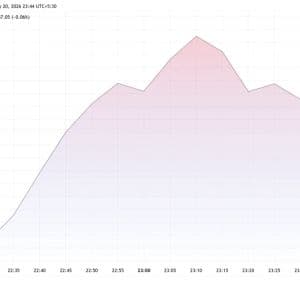
Bitcoin News The Federal Reserve's April 28-29 meeting minutes landed with a sharper hawkish tone than markets had braced for, with policymakers debating whether to scrap the easing bias entirely a...
20 May 2026, 20:05
Why Strategy’s record accumulation isn’t saving BTC’s price?

Strategy Inc. now holds more Bitcoin than any other institution, but Bitcoin prices have still fallen to a three-week low. The company bought 171,238 BTC this year, far more than the roughly 62,000 BTC mined globally during the same period. Strategy is buying Bitcoin nearly three times faster than miners can produce it, yet prices remain under pressure due to money flowing out of Wall Street crypto funds and ongoing inflation concerns. Strategy overtakes BlackRock as largest holder According to Cryptopolitan, Strategy recently made another significant acquisition, spending $2.01 billion to acquire 24,869 BTC at an average price of $80,985 per coin. Just seven days after Strategy broke from its regular purchasing schedule, that was the company’s largest weekly purchase since April 20. An SEC filing confirmed Strategy Inc. added another 24,869 Bitcoin (in the latest reported week), pushing its total stash to 843,738 BTC. It now formally surpasses BlackRock’s IBIT, which has between 811,000 and 817,000 BTC. Although other tracking systems have the actual total at 843,738 BTC, Strategy is currently the greatest Bitcoin holder in the world. Strategy Inc. is quickly reducing the supply of Bitcoin through large purchases funded by its STRC preferred equity offering. The company bought more than ten times as much Bitcoin in a single week as miners produced, demonstrating how demand is exceeding supply. While macroeconomic issues continue to put pressure on the overall market, Mark Palmer of StoneX Group pointed out that strategy seems to be driving the majority of the corporate and ETF-related Bitcoin accumulation this year. Price falls amid inflation fears and ETF outflows Bitcoin had a difficult week, dropping back under $80,000 and reaching its lowest valuation in nearly three weeks, while Strategy continued to buy. On Wednesday, May 20, despite the aggressive buying, the price of Bitcoin fell 4-6% over the course of a day, bringing it down to about $76,593 and falling below $77,000 once more. The primary cause of the price decline could be the difficult economic climate in which U.S. inflation remains unabated. With the Federal Reserve maintaining its higher-for-longer interest rate strategy and the core PCE hovering around 2.9%, concerns about increased inflation have made investors more cautious across markets. The 30-year Treasury yield reached its highest level since 2007 at 5.18% due to a significant selloff in U.S. government bonds brought on by persistent inflation, while the 10-year yield remained close to 4.6%. 30 Year Treasury Rate Source: Ycharts By decreasing demand for riskier assets and increasing the appeal of safer products like Treasuries, higher yields typically weaken Bitcoin. The dollar is strengthened by stronger U.S. rates, which frequently puts more pressure on Bitcoin prices. A severe lack of demand from institutional investors exacerbates inflation issues. Major cryptocurrency exchange-traded funds continued to lose money as investors quickly withdrew their capital from Bitcoin products. After six weeks of inflows, Bitcoin ETFs saw $1 billion in net outflows for the week ending May 17. Spot Bitcoin ETFs lost an additional $331 million in a single day as the selling persisted. During this moment of market caution, investors have taken out almost $2 billion from Bitcoin ETFs. Min Jung, a researcher at Presto Research, said the ETF withdrawals suggest institutional investors are cutting back on near-term risk as hopes for Federal Reserve rate cuts fade, prompting many to shift funds into cash and safer assets. Bitcoin is showing some signs of stabilizing and recovering today, trading just above $77,000 even though there is still downward pressure on the market. BTC recovers slightly, staying above $77.3K Source: TradingView For Bitcoin’s outlook to improve, the 10-year Treasury yield would likely need to settle in the 3.75% to 4.0% range. That would reduce pressure on the U.S. dollar and help bring money back into riskier assets. Analysts say the recent drop has shaken retail investor confidence, but they also believe Bitcoin’s underlying network fundamentals remain solid. Traders are watching the $74,000 level closely as a key support point while they look for signs of a broader economic recovery. For Bitcoin to move out of its current sideways , news-driven trading pattern, the market would likely need clear U.S. inflation data or a noticeable slowdown in Treasury yield movements to counter ongoing ETF selling from Wall Street. Don’t just read crypto news. Understand it. Subscribe to our newsletter. It's free .
20 May 2026, 20:02
ChatGPT Predicts XRP Price for June 1, 2026

Investors are increasingly turning to artificial intelligence for market analysis. Large language models do not replace professional financial advice, but they offer a data-informed perspective that many find useful. That is why we’ve asked ChatGPT to predict XRP’s price for June 1, 2026, and the AI model gave some intriguing predictions. ChatGPT responded with a structured breakdown covering three scenarios. Before diving into each, the model signaled its general expectation, with a target between $1.6 and $2.1. The Base Case XRP currently trades at $1.36, down over 1% from yesterday. ChatGPT’s base-case prediction for XRP by the start of June is $1.85, sitting just above the $1.8 target another analyst recently predicted. The model describes consolidation through late May, with XRP trading in a range of roughly $1.4 to $1.7 before attempting a breakout. Among the factors cited as constructive for the long-term structure were the resolution of much of the prior regulatory overhang, such as passing the CLARITY Act, the impact of ETF products tied to the asset, and stronger institutional interest relative to previous market cycles. The Price Targets ChatGPT outlined three distinct scenarios. The bearish case places XRP between $1.2 and $1.35, reflecting a scenario in which downside pressures dominate. The most likely range sits between $1.6 and $2.1. The bullish breakout case projects a move to $2.5 or higher, contingent on a sharp acceleration in ETF inflows and sustained strength in Bitcoin. We are on X, follow us to connect with us :- @TimesTabloid1 — TimesTabloid (@TimesTabloid1) June 15, 2025 Why Not Higher? The model was explicit in explaining why it did not project a more aggressive price target. ChatGPT noted that “XRP still has heavy resistance from prior distribution zones after the 2025 correction, and momentum has not fully shifted into a strong expansion phase yet.” It described the current technical environment as consistent with “the early stages of a breakout attempt rather than a confirmed parabolic move,” which informed its decision to anchor the base case near $1.85. The End-of-Year Outlook Looking further ahead, ChatGPT extended its analysis to the end of 2026, stating that it would “lean toward $3-$4.50 if the crypto market remains in a broader bull cycle.” This longer-range projection carries considerably more uncertainty, as it depends on macro conditions that remain fluid. Disclaimer : This content is meant to inform and should not be considered financial advice. The views expressed in this article may include the author’s personal opinions and do not represent Times Tabloid’s opinion. Readers are advised to conduct thorough research before making any investment decisions. Any action taken by the reader is strictly at their own risk. Times Tabloid is not responsible for any financial losses. Follow us on X , Facebook , Telegram , and Google News The post ChatGPT Predicts XRP Price for June 1, 2026 appeared first on Times Tabloid .


