


 Invest ideas
News
19 May 2026, 12:20
Cardano News: Cardano’s Quantum-Safe Roadmap vs. Muted Market Response: Why ADA Is Stagnant

Cardano News: ADA is trading near $0.25, stuck in a $0.25–$0.28 intraday band with neutral funding rates and whale accumulation at a 30-day low. However, Cardano is executing one of the most aggressive post-quantum cryptography pushes of any major blockchain, complete with a live governance vote, a formal research proposal expected imminently, and a roadmap that places it ahead of Ethereum on quantum readiness. The contradiction is stark and the market is not resolving it. Technical milestones are piling up. Price is not moving. The question the market is sitting with is whether crypto security infrastructure has any near-term pricing power at all, or whether ADA is simply trapped in a broader altcoin liquidity drought that no governance vote can fix. Cardano (ADA) 24h 7d 30d 1y All time Discover: The best crypto to diversify your portfolio with Cardano’s Post-Quantum Push: What the Roadmap Actually Says Charles Hoskinson has framed Cardano’s quantum resistance strategy as an existential preparation play, not an emergency response. Speaking publicly this week, Hoskinson described the quantum threat as “like an asteroid coming towards Earth”, a slow-moving but terminal risk that decentralized networks need to coordinate around before it becomes a market shock. A formal IOHK research proposal is expected next week, building on a governance vote already in motion. The technical architecture under discussion centers on a phased migration model. Hoskinson pointed to Cardano’s established hard fork cadence as a structural advantage, the network has executed regular protocol upgrades without fragmentation, which makes a future quantum-resistant migration more tractable than on chains with rigid upgrade cultures. UPDATE: #Cardano $ADA Founder Charles Hoskinson says "quantum is here to stay. We had all this theoretical physics, and now, we're able to realize those physics. Retrocausality is interesting—IBM noticed strange anomalies with their quantum computers—photons going back in time." pic.twitter.com/0bh4zdy5GN — Angry Crypto Show (@angrycryptoshow) May 14, 2026 The planned approach would layer post-quantum cryptographic signatures alongside existing ones, preserving compatibility while adding quantum-safe security primitives. Google Quantum AI reportedly ranked Cardano second among major blockchains for post-quantum security posture, behind only Bitcoin and ahead of Ethereum and Solana, a ranking that contributed to ADA’s inclusion in the Hashdex Nasdaq Crypto Index ETF despite persistent price underperformance. Cardano also logs roughly 680 GitHub commits per week across ~80 repositories, placing it among the most active chains by development output. The work is real. The market premium for it is not. Cardano is not alone in this race. Ripple has outlined a four-phase roadmap for the XRP Ledger targeting quantum resistance by 2028. REMINDER: Cardano is still building. Over the last 3 years, Cardano ranks 3rd among all blockchains in code commits. pic.twitter.com/NYpXIYXQQm — TapTools (@TapTools) May 18, 2026 Bitcoin developers have circulated BIP-360 and BIP-361 as migration frameworks, with BIP-361 proposing a staged move away from vulnerable addresses that could freeze older coins after a deadline. Cardano’s governance-first approach to this migration distinguishes it from those proposals, but the market has not assigned that distinction a valuation premium. Can Cardano (ADA) Price Break Out of Its $0.28 Range? ADA is sitting approximately 80% below its $3.10 all-time high and roughly 49% down year-to-date. The $0.25–$0.28 range has acted as a soft floor through much of Q1–Q2 2026, but the 200-day moving average sits near $0.46 – a level the token has not challenged in months. Resistance at $0.28 capped the intraday high this week; support near $0.258 held the low. Source: ADAUSD / Tradingview Funding rates have since normalized to neutral. Traders are using ADA as a volatility vehicle, not a conviction hold, and that dynamic suppresses the impact of any fundamental catalyst, including a quantum security roadmap. If ADA breaks $0.28 on volume following the release of the formal IOHK quantum research proposal and Protocol 11 hard fork confirmation, targeting a retest of $0.34–$0.36. Catalyst is institutional re-rating of crypto security infrastructure as a premium. However, a break below $0.258 support on sustained risk-off conditions opens a retest of $0.22–$0.24. Invalidation of the current range would erase the modest recovery from Q1 lows and delay any narrative re-rating. Discover: The best pre-launch token sales The post Cardano News: Cardano’s Quantum-Safe Roadmap vs. Muted Market Response: Why ADA Is Stagnant appeared first on Cryptonews .
19 May 2026, 12:19
Ripple Price Analysis: Is XRP Heading Toward $1 as Sellers Resume Control?
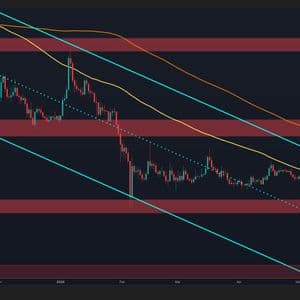
Ripple’s XRP remains trapped in a prolonged consolidation phase after months of persistent bearish pressure, with recent price action reflecting indecision and a lack of strong directional momentum. The asset is now hovering near critical support levels, where the next breakout could define the medium-term trend. Ripple Price Analysis: The Daily Chart On the daily timeframe, XRP continues to trade inside a broad descending channel while remaining below both the 100-day and 200-day moving averages, confirming that the larger bearish structure remains intact. Recent price action shows another rejection near the channel’s upper threshold around the $1.4 region, reinforcing sellers’ dominance whenever the market attempts recovery. Despite several rebounds since February, the bulls have failed to generate enough momentum to reclaim higher resistance zones. The asset is currently hovering around the mid-range support near $1.35, with the broader consolidation structure tightening. If selling pressure intensifies and XRP loses the key $1.3 support area, the next major downside target would emerge around the $1.1 region. Conversely, reclaiming the 100-day MA and breaking above the descending channel’s upper boundary would be the first signal suggesting weakening bearish momentum. Until then, the path of least resistance remains sideways to bearish. XRP/USDT 4-Hour Chart The lower timeframe highlights XRP’s prolonged consolidation between the $1.3 support zone and the $1.55 resistance region. The asset has repeatedly oscillated within this range over recent months, failing to establish a decisive trend. The most recent update shows increasing weakness near the upper boundary, followed by a rejection and gradual decline toward the middle of the range. This suggests buyers are becoming less aggressive while sellers continue defending higher levels. As long as XRP remains inside this structure, continued choppy movement between support and resistance is the most probable scenario. A confirmed breakdown below the $1.3 floor could trigger an accelerated decline toward lower demand zones near $1.1. On the other hand, a breakout above the $1.55 resistance would likely initiate a stronger recovery phase toward the broader resistance cluster around $1.8. For now, the token appears to be compressing within a neutral range, with market participants awaiting a catalyst capable of producing a meaningful breakout. The post Ripple Price Analysis: Is XRP Heading Toward $1 as Sellers Resume Control? appeared first on CryptoPotato .
19 May 2026, 12:16
XRP Enters a Volatility Vacuum — What will Still Waters Yield?

XRP Enters Volatility Vacuum as Market Compression Signals an Imminent Expansion Move Market analyst Xaif Crypto suggests XRP may be entering a so-called volatility vacuum, a phase where market activity tightens, participation slows , and price action becomes unusually compressed. On-chain and derivatives signals point in the same direction that transaction volumes are down roughly 20%, funding rates have turned negative, and liquidations have dropped by about 99%, painting a picture not of fear or hype, but of a market that has quietly reset after a heavy leverage unwind. The decline in transaction activity points to a slowdown in short-term network engagement, but not necessarily weakness. It often signals hesitation in the market, fewer active participants mean less aggressive price discovery, allowing price action to compress and drift within a tighter range rather than trend decisively. More notable is the shift in funding rates, with perpetual futures now turning negative, meaning traders are effectively paying to stay short. This kind of flip usually signals a defensive market posture following a deleveraging phase. But when positioning gets this one-sided, it doesn’t take much to disrupt it; even modest positive catalysts can trigger fast, aggressive repositioning as the market rebalances. Volatility Vacuum Deepens as Liquidations Collapse 99%, Signaling a Coiled Market in Compression The most striking signal is the 99% collapse in liquidations, clear evidence that excessive leverage has already been flushed from the system on both sides. With forced closures largely gone, the market’s natural volatility engine has stalled. Not because conditions are calm, but because there’s little left to trigger sharp cascades. In this kind of environment, price action often tightens, drifting in compression rather than erupting in spikes or crashes. This is what traders call a volatility vacuum, a phase of contraction marked by low volatility, fading participation, and tight price compression. It’s not true stability, but stored tension. The market hasn’t chosen a direction yet since it’s simply coiling, waiting for the catalyst that forces movement. XRP Tightens Into a Volatility Squeeze as Key $1.29–$1.50 Breakout Zone Comes Into Focus Market analyst Ali Martinez highlights an unusually tight Bollinger Band squeeze on XRP’s 3-day chart, one of the most compressed in over a year. Historically, conditions this tight rarely last; volatility tends to snap back, but only after a clear breakout sets direction. He points to the $1.29–$1.50 range as the key battleground, where a decisive 3-day close outside it could define the next major move. A push above $1.50 would tilt momentum toward a bullish expansion into higher resistance zones, while a drop below $1.29 risks unlocking a deeper retracement phase. Until one of those levels breaks, the structure stays neutral, compressed and tightly coiled. Well, XRP is hovering at $1.37 , right in the heart of this squeeze. Market participants are also eyeing a developing symmetrical triangle, with price steadily tightening toward the apex, a setup that often precedes a sharp volatility breakout. On the longer-term chart, bullish analysts still highlight a multi-year cup-and-handle structure that remains intact, with some eyeing extended upside potential if liquidity cycles and macro conditions line up. In more aggressive scenarios, projections stretch toward the $27 region, though this outcome is highly speculative and far removed from the current compression realities.
19 May 2026, 12:15
Russian Rouble Strengthens to Highest Level Against Yuan Since Early 2023

BitcoinWorld Russian Rouble Strengthens to Highest Level Against Yuan Since Early 2023 The Russian rouble has climbed to its strongest level against the Chinese yuan since early 2023, reflecting shifting dynamics in the currency market amid evolving geopolitical and trade conditions. The move underscores a broader realignment in Russia’s foreign exchange landscape as bilateral trade between Moscow and Beijing deepens. Rouble-Yuan Exchange Rate Reaches New Milestone Data from Moscow Exchange shows the rouble trading at its highest point against the yuan in over a year, a development that analysts attribute to a combination of factors including changes in trade flows, capital controls, and relative demand for the two currencies. The yuan has weakened broadly against the dollar in recent months, while the rouble has found support from Russia’s current account surplus and reduced import demand. The rouble-yuan pair has become increasingly significant as Russia pivots its trade away from Western currencies following sanctions. China has emerged as Russia’s largest trading partner, with bilateral trade volumes reaching record levels in 2023 and continuing to grow in 2024. This has boosted demand for yuan on the Russian market, while also creating new dynamics for the rouble. Why the Rouble Is Gaining Against the Yuan Several factors explain the rouble’s recent strength against the Chinese currency: Trade imbalances: Russia’s exports to China, particularly energy and commodities, have remained robust, while its imports from China have moderated. This has created a surplus of yuan in Russia, supporting the rouble. Capital controls: Russia has maintained strict capital controls that limit outflows, keeping rouble demand relatively high within the domestic market. Yuan weakness: The Chinese yuan has faced pressure from a slowing domestic economy and capital outflows, making it cheaper relative to the rouble. Policy divergence: The Russian central bank has kept interest rates high to combat inflation, attracting foreign capital and supporting the rouble. In contrast, the People’s Bank of China has eased policy to stimulate growth, weighing on the yuan. Implications for Trade and Markets The strengthening rouble against the yuan has mixed implications. For Russian exporters, a stronger rouble makes their goods more expensive in yuan terms, potentially reducing competitiveness in the Chinese market. For Russian importers, it lowers the cost of Chinese goods, which could help ease domestic inflation pressures. For Chinese firms trading with Russia, the exchange rate shift affects profit margins and may prompt adjustments in pricing strategies. The move also highlights the growing interdependence between the two economies, even as both face headwinds from Western sanctions and global economic uncertainty. Broader Context: De-Dollarization and Currency Shifts The rouble-yuan movement is part of a larger trend of de-dollarization in global trade, particularly among BRICS nations. Russia and China have increasingly settled trade in their own currencies, reducing reliance on the US dollar. This shift has made the rouble-yuan exchange rate a key barometer of bilateral economic relations. However, the rouble’s strength against the yuan does not necessarily reflect overall rouble stability. The Russian currency remains volatile against the dollar and euro, and its long-term trajectory depends on oil prices, sanctions developments, and domestic economic policy. Conclusion The rouble’s rise to its strongest level against the yuan since early 2023 marks a notable development in currency markets, driven by trade flows, capital controls, and diverging monetary policies. While the move benefits Russian importers and supports the rouble’s short-term stability, it also underscores the complex and evolving nature of Russia-China economic ties. Investors and businesses engaged in bilateral trade should monitor these exchange rate dynamics closely as they continue to shape trade competitiveness and financial planning. FAQs Q1: What is the current rouble-yuan exchange rate? The rouble has reached its strongest level against the yuan since early 2023, trading at approximately [specific rate if available, otherwise note: check current market data]. The exact rate fluctuates daily based on market conditions. Q2: Why is the rouble strengthening against the yuan? The rouble’s strength is driven by Russia’s trade surplus with China, strict capital controls, high domestic interest rates, and relative weakness in the Chinese yuan due to China’s economic slowdown and monetary easing. Q3: How does this affect trade between Russia and China? A stronger rouble makes Russian exports more expensive for Chinese buyers, potentially reducing competitiveness. Conversely, it lowers the cost of Chinese imports for Russia, which could help ease inflation. Businesses on both sides may need to adjust pricing and hedging strategies. This post Russian Rouble Strengthens to Highest Level Against Yuan Since Early 2023 first appeared on BitcoinWorld .
19 May 2026, 12:05
Bitcoin Price Action Stalls Near $76K Support as Volatility Compresses
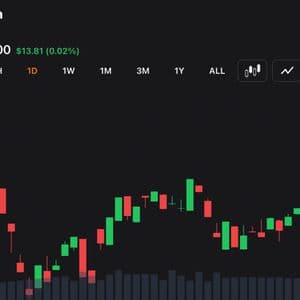
Bitcoin hovered near $76,738 early Tuesday as traders watched a tightening consolidation range follow a strong multiweek advance. Technical indicators across the one-hour, four-hour, and daily charts remained mixed, pointing to cautious momentum. Support around $76,000 held as the critical level shaping near-term price direction. Bitcoin Chart Outlook On the one-hour bitcoin chart, intraday price
19 May 2026, 12:02
What Quietly Shifted In Goldman’s Crypto Book That Shocked XRP Army

Crypto analyst BankXRP (@BankXRP) recently flagged a striking shift in Goldman Sachs’ crypto ETF holdings. The bank’s Q1 2026 13F filing, sourced from the SEC, showed Goldman Sachs had fully exited its XRP and SOL ETF positions. The filing covered assets across 13,000+ holdings and confirmed the moves as of the Q1 reporting period. Goldman Sachs’ Current Position Goldman Sachs held $153.8 million in XRP ETF products as recently as Q4 2025, making it the largest spot XRP ETF holder on Wall Street. Its SOL position stood at $108 million across six ETF products. Both positions now read $0. The bank also cut its ETH exposure by 70%, dropping from around $380 million to $114 million. Bitcoin (BTC) was trimmed by approximately 10%, from $715 million to $690 million. The XRP holdings spanned four ETF products: BITW, FXRP, GXRP, and TOXR. The SOL position covered BITW, FSOLW, GSOL, and three additional products. The filing also showed new inflows into Circle, Coinbase, and Galaxy Digital. Goldman Sachs moved capital into crypto infrastructure equities rather than direct token-linked products. A Closer Look at the Numbers The 13F filing generated significant attention across crypto circles. Some read the exits as a vote of no confidence in XRP and SOL. Goldman’s status as the largest spot XRP ETF holder gave the move added weight. Dom Kwok, co-founder of EasyA, offered a more technical reading. He pointed out that Goldman’s holdings were active on its trading desk, not directional investment positions. “Their initial holdings of XRP and SOL were meant to facilitate client needs,” Kwok wrote, citing “ETF creation/redemptions, market-making, prime brokerage activity.” Kwok noted that these were not investments driven by bullish expectations for SOL or XRP. He described the Q1 changes as “nothing more than a routine rebalancing.” We are on X, follow us to connect with us :- @TimesTabloid1 — TimesTabloid (@TimesTabloid1) June 15, 2025 Context for the Filing 13F filings report institutional holdings at a point in time. They show what firms held at quarter-end, not the reasoning behind those positions. Goldman Sachs’ trading desk operates differently from its investment portfolios. Positions tied to client facilitation turnover regularly. The rotation into Circle, Coinbase, and Galaxy Digital shows Goldman Sachs maintains crypto exposure . The shift moves capital toward companies operating within the crypto ecosystem rather than ETFs tracking token prices directly. Kwok’s point stands on mechanics. Goldman Sachs’ XRP and SOL positions served operational functions. The Q1 filing reflects the end of those functions for that quarter, not a strategic exit from the asset class . Disclaimer : This content is meant to inform and should not be considered financial advice. The views expressed in this article may include the author’s personal opinions and do not represent Times Tabloid’s opinion. Readers are advised to conduct thorough research before making any investment decisions. Any action taken by the reader is strictly at their own risk. Times Tabloid is not responsible for any financial losses. Follow us on X , Facebook , Telegram , and Google News The post What Quietly Shifted In Goldman’s Crypto Book That Shocked XRP Army appeared first on Times Tabloid .


