


 Invest ideas
News
18 May 2026, 19:02
XRP to $589? Expert Says Exchanges Will Run out of XRP and This Will Happen

The XRP community is no stranger to bold price targets. The $589 figure has circulated for years, rooted in supply-and-demand logic that some analysts say is becoming harder to dismiss. Now, a specific mechanism is gaining attention that attempts to explain exactly how that number could materialize. Crypto pundit DelCrxpto (@DelCrxpto) posted a prediction on X, laying out a chain of events on exchange liquidity. The argument starts with a straightforward premise that exchanges will run out of XRP supply as demand accelerates. That shortage puts the entire market at risk of seizing up. Prediction: Exchanges will run out of $XRP supply, $XRP demand will explode & the entire market will be at risk of freezing. To relieve this, @Ripple will use portions of the $XRP Reserve as a liquidity pool & issue $XRP coin derivative contracts to exchanges who will in-turn… — DelCrxpto (@DelCrxpto) May 17, 2026 The Mechanism for Rapid Growth According to DelCrxpto, Ripple will respond to that crisis by deploying portions of its XRP Reserve as a liquidity pool. From there, Ripple can issue XRP derivative contracts to exchanges. The exchanges will sell those contracts at market price, and Ripple will earn yield on the arrangement. The structure mirrors established financial mechanisms used in traditional markets during liquidity crunches. The derivative contracts serve a dual purpose in this scenario. They relieve immediate supply pressure on exchanges while simultaneously driving price appreciation as real demand continues to exceed available spot supply. DelCrxpto argues that liquidity flowing in through derivatives pushes XRP’s price sharply higher. That is how he believes XRP will rise to $589 . Why This Target Is Getting Attention Again The $589 price target is not new to the XRP community. It has persisted through multiple market cycles, tied consistently to supply-and-demand arguments about XRP’s potential role in global liquidity. What has renewed interest recently is something entirely unrelated to market data. Ripple CEO Brad Garlinghouse follows exactly 589 accounts on X . That detail has circulated widely and intensified discussion around the $589 target. Whether intentional or coincidental, the number has given existing believers a fresh reason to revisit the thesis. What the Prediction Rests On DelCrxpto’s scenario depends on several conditions aligning. Demand for XRP must outpace available exchange supply enough to create a systemic liquidity problem. Ripple must then choose to activate its reserve holdings as a liquidity mechanism. Exchanges must participate in a derivative contract structure. Each step builds on the one before it. The $589 sits far above current market prices. DelCrxpto’s post argues that the mechanism that closes that gap already exists in traditional finance. The only remaining variable, in his view, is time. Disclaimer : This content is meant to inform and should not be considered financial advice. The views expressed in this article may include the author’s personal opinions and do not represent Times Tabloid’s opinion. Readers are advised to conduct thorough research before making any investment decisions. Any action taken by the reader is strictly at their own risk. Times Tabloid is not responsible for any financial losses. Follow us on X , Facebook , Telegram , and Google News The post XRP to $589? Expert Says Exchanges Will Run out of XRP and This Will Happen appeared first on Times Tabloid .
18 May 2026, 19:01
XRP Price Could Rally Soon: Institutional Funds Keep Flowing In as Citadel Joins the Race

XRP price has dropped by 2% to below its $1.40 support, yet institutional money flow beneath is anything but quiet. Citadel’s name is now attached to XRP exposure across multiple products, and a confirmed $500 million Ripple funding round adds hard infrastructure to what could otherwise read as speculative positioning. RIPPLE SECURES $500 MILLION IN STRATEGIC FUNDING, VALUED AT $40 BILLION Ripple’s latest investment round underscores strong institutional confidence in its blockchain payment infrastructure. The $40B valuation cements Ripple as one of the largest players in crypto finance, even… pic.twitter.com/B73bUBd1vY — Crypto Town Hall (@Crypto_TownHall) November 5, 2025 Reports circulating across research desks indicate Citadel Advisors has built $1.7 million in XRP ETF and trust exposure spanning Bitwise, Canary, Franklin, and Grayscale XRP Trust calls. However, primary 13F filings have not yet confirmed the exact positions. JUST IN: Wall Street Giant Citadel Advisors Goes Big on ripple:native ETFs With a $1,700,000 Stake. — RippleXity (@RippleXity) May 17, 2026 What is confirmed, though, is that Citadel Securities and Fortress Investment Group co-led a $500 million strategic round in Ripple on November 5, 2025, valuing the company at $40 billion. That capital targets custody, stablecoins, and prime brokerage infrastructure. If the ETF filing is confirmed, Citadel has two very different bets that point in the same direction. Meanwhile, XRP investment products pulled in approximately $81.59 million in net inflows during April, with spot ETFs logging consecutive heavy-flow days of $25.80 million and $18.52 million in mid-May. The SEC’s active review of NYSE Arca’s crypto ETF proposals, which bundle XRP alongside Bitcoin, Ethereum, and Solana, also adds a regulatory catalyst. Discover: The best crypto to diversify your portfolio with Can XRP Price Break Toward $1.55 This Week? XRP is consolidating in the $1.37–$1.41 range, a zone that has absorbed multiple test runs without a decisive breakdown. Support sits near the $1.35 area, and that floor appears increasingly well-defended as net inflows remain positive week-over-week. Derivatives and technical analysis desks have flagged a potential 12% upside breakout setup, with short-term targets clustering around the low-double-digit percentage move from current levels, implying a path toward $1.55. Institutional desks cited in ETF-flow coverage argue that sustained net inflows above tens of millions per week would materially strengthen the breakout case. Xrp (XRP) 24h 7d 30d 1y All time Three scenarios worth tracking: Bull case: ETF inflows remain elevated, SEC review delivers positive signals, XRP clears local resistance and tests $1.55+ within days. Base case: Consolidation continues in the $1.37–$1.45 band for another one to two weeks as the market digests institutional positioning data. Bear/invalidation: A confirmed break below mid-$1 support on elevated volume resets the structure and delays any breakout thesis considerably. Momentum is leaning constructively, but XRP has delivered false breakouts before. The Citadel disclosure, confirmed or not, is less important than the ETF inflow cadence. Discover: The best pre-launch token sales LiquidChain Eyes Early Positioning as XRP Consolidates at Key Levels XRP price consolidation is a familiar story: strong institutional narrative, legitimate inflow data, but near-term upside capped by a market cap already north of $85 billion. That math limits the multiple. For traders who’ve already made the XRP trade and are scanning for asymmetric early-stage exposure, the infrastructure layer feeding the next cycle of cross-chain activity is drawing attention. LiquidChain ($LIQUID) is a Layer 3 execution environment that fuses Bitcoin, Ethereum, and Solana liquidity into a single unified layer. It’s a direct infrastructure play on the fragmentation problem that plagues multi-chain DeFi. POV: Someone asks you the benefits of the LiquidChain L3. ⟁ https://t.co/vqvBcdSQYC pic.twitter.com/F1fTrbYPax — LiquidChain (@getliquidchain) May 16, 2026 The project’s Unified Liquidity Layer enables single-step execution and verifiable settlement across all three ecosystems; developers deploy once and access all. The presale is currently priced at $0.0146 , with $770K raised to date and a huge 1400% APY staking bonus for early buyers. Research LiquidChain and assess whether the infrastructure thesis fits your risk profile. The post XRP Price Could Rally Soon: Institutional Funds Keep Flowing In as Citadel Joins the Race appeared first on Cryptonews .
18 May 2026, 18:55
Gold Steadies as Dollar Retreats, but Fed Rate Hike Expectations Cap Gains

BitcoinWorld Gold Steadies as Dollar Retreats, but Fed Rate Hike Expectations Cap Gains Gold prices stabilized on Tuesday, finding some support from a weaker US dollar, though gains remained limited by persistent expectations of further interest rate hikes from the Federal Reserve. The precious metal has been trading in a narrow range as investors weigh conflicting signals from currency markets and monetary policy outlook. Dollar Weakness Provides a Floor The US dollar index slipped against a basket of major currencies, providing a modest tailwind for gold, which is priced in dollars. A softer dollar makes the metal cheaper for holders of other currencies, often boosting demand. The greenback’s retreat followed mixed economic data that suggested the US economy may be cooling, but not enough to alter the Fed’s tightening path. Fed Rate Expectations Weigh on Sentiment Despite the dollar’s pullback, gold’s upside remains capped by hawkish signals from the Federal Reserve. Recent comments from Fed officials have reinforced the view that interest rates will need to stay higher for longer to bring inflation back to the 2% target. Higher interest rates increase the opportunity cost of holding non-yielding assets like gold, which does not pay interest or dividends. Market Implications for Investors For investors, the current environment presents a classic tug-of-war between currency dynamics and monetary policy. Gold is often seen as a hedge against inflation and currency debasement, but its appeal diminishes when real yields rise. The metal has been consolidating in a range between $1,930 and $1,980 per ounce in recent weeks, with a break in either direction likely to depend on the next major data point, such as the US jobs report or consumer price index. Technical Levels to Watch From a technical perspective, gold is holding above key support near the $1,930 level. A sustained move above $1,970 could open the door to test the $2,000 psychological barrier. On the downside, a break below $1,920 would signal further weakness, potentially targeting the $1,900 area. Volume has been moderate, suggesting that traders are waiting for a clearer catalyst. Conclusion Gold’s price action reflects a market caught between a softening dollar and a hawkish Fed. While short-term currency movements may provide some support, the broader interest rate environment remains the dominant force. Investors should watch for upcoming Fed speeches and key economic releases for direction. For now, the metal appears to be in a wait-and-see mode, with neither bulls nor bears able to gain decisive control. FAQs Q1: Why does a weaker US dollar support gold prices? Gold is priced in US dollars. When the dollar weakens, it takes fewer units of other currencies to buy the same amount of gold, increasing demand from international buyers and pushing prices higher. Q2: How do Federal Reserve interest rate hikes affect gold? Higher interest rates increase the opportunity cost of holding gold, which does not yield interest or dividends. They also tend to strengthen the dollar, both of which are negative for gold prices. Q3: What is the current key support and resistance level for gold? Key support is around $1,930 per ounce, while resistance is near $1,970. A break above $1,970 could target $2,000, while a drop below $1,920 might lead to a test of $1,900. This post Gold Steadies as Dollar Retreats, but Fed Rate Hike Expectations Cap Gains first appeared on BitcoinWorld .
18 May 2026, 18:53
Btc slumps to $76,000 as whales scoop up 24,869 coins

🚨 $BTC dropped to $76,000 as big investors bought 24,869 coins. Market saw $1 billion in outflows from spot Bitcoin ETFs in one week. 😮 Key point: Rising geopolitical tension and technical breakdowns push investors into a cautious mode. Continue Reading: Btc slumps to $76,000 as whales scoop up 24,869 coins The post Btc slumps to $76,000 as whales scoop up 24,869 coins appeared first on COINTURK NEWS .
18 May 2026, 18:37
Bitcoin Drops to $76K as Middle East War Fears Spark $722M in Liquidations
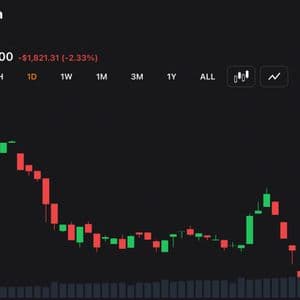
Bitcoin fell to $76,000 on the morning of May 18, reversing a brief relief rally and causing its total market cap to drop to $1.53 trillion. The nearly 2% decline triggered $722 million in total long liquidations across the crypto economy. Bitcoin Slams into Geopolitical Headwinds Bitcoin slid to $76,000 Monday morning, continuing a trend
18 May 2026, 18:35
Monero (XMR) Price Outlook 2026-2030: Can Privacy Coins Navigate Regulation and Lead a Market Shift?
BitcoinWorld Monero (XMR) Price Outlook 2026-2030: Can Privacy Coins Navigate Regulation and Lead a Market Shift? Monero (XMR), the leading privacy-focused cryptocurrency, has maintained a distinct position in the digital asset market by prioritizing transaction anonymity. As the broader crypto market anticipates a potential bull run, the question of whether privacy coins like Monero can lead the next cycle remains a subject of intense debate among analysts and investors. This editorial analysis examines the fundamental factors, regulatory headwinds, and market dynamics that could shape Monero’s price trajectory from 2026 through 2030. Understanding Monero’s Core Value Proposition Unlike Bitcoin or Ethereum, Monero uses ring signatures, stealth addresses, and RingCT (Ring Confidential Transactions) to obfuscate sender, receiver, and transaction amounts. This technical architecture provides a level of fungibility that is unique among major cryptocurrencies. For users in jurisdictions with unstable financial systems or those requiring transactional privacy for legitimate business reasons, Monero offers a practical solution that few other digital assets can match. This fundamental utility has sustained a dedicated user base and developer community, even during prolonged bear markets. Regulatory Landscape and Its Impact on XMR The primary challenge facing Monero and other privacy coins is increasing regulatory scrutiny. In 2024 and 2025, several exchanges delisted XMR in response to guidance from financial regulators in jurisdictions like the European Union and Japan, which view privacy-enhancing features as potential tools for money laundering and illicit finance. The Financial Action Task Force (FATF) has consistently recommended that virtual asset service providers apply enhanced due diligence to privacy coins. This regulatory pressure has reduced liquidity and accessibility for Monero on centralized platforms, potentially capping its price appreciation in the short to medium term. Market Dynamics and Adoption Trends Despite regulatory challenges, Monero’s on-chain metrics indicate steady network usage. Transaction volumes and the number of active wallets have remained resilient, suggesting a committed user base that values privacy over convenience. Furthermore, the rise of decentralized exchanges (DEXs) and atomic swaps provides alternative avenues for trading XMR without relying on centralized gatekeepers. If the broader crypto market enters a new bull phase, driven by factors such as Bitcoin’s halving cycle and potential institutional adoption, Monero could benefit from a rising tide, though its performance may lag behind assets with clearer regulatory pathways. Price Prediction Analysis for 2026-2030 Any price prediction for Monero must be viewed through a lens of high uncertainty, given the volatile nature of cryptocurrency markets and the evolving regulatory environment. For 2026, a reasonable range, based on technical analysis and market cycle patterns, could see XMR trading between $120 and $250, assuming no major regulatory crackdowns. Looking toward 2030, the outlook depends heavily on two key variables: the resolution of privacy coin regulation and the overall adoption of cryptocurrency as an asset class. If a balanced regulatory framework emerges that allows privacy coins to operate under clear compliance standards, Monero could see significant price appreciation, potentially reaching $400 to $600. Conversely, if major economies move to ban or severely restrict privacy coins, the price could remain suppressed or decline further. The most likely scenario is a middle path, where Monero maintains a niche but valuable role in the crypto ecosystem, with its price reflecting its utility rather than speculative hype. Conclusion Monero’s future price performance is inextricably linked to its ability to navigate a complex regulatory landscape while retaining its core technical advantages. While it is unlikely to lead a broad market rally in the same manner as Bitcoin or a major smart contract platform, its unique value proposition ensures it remains a relevant and important asset for a specific segment of the market. Investors should weigh the potential for outsized returns against the significant regulatory risks and the reduced liquidity on mainstream exchanges. The story of Monero in the coming years will be a test of whether privacy can be preserved within the evolving framework of digital finance. FAQs Q1: Why is Monero often delisted from major exchanges? Major exchanges delist Monero primarily due to regulatory pressure from bodies like the FATF, which classifies privacy coins as high-risk for money laundering and terrorist financing. Exchanges must comply with Know Your Customer (KYC) and Anti-Money Laundering (AML) regulations, and assets that obscure transaction history make compliance more difficult. Q2: Can Monero still be bought and sold if it is delisted? Yes. While delisting from centralized exchanges reduces liquidity, Monero can still be traded on decentralized exchanges (DEXs), peer-to-peer platforms, and through atomic swaps. These methods require more technical knowledge but preserve the ability to buy and sell XMR. Q3: Is Monero only used for illegal activities? No. While its privacy features can be exploited for illicit purposes, Monero is also used by individuals and businesses for legitimate reasons, including protecting financial privacy from surveillance, operating in jurisdictions with unstable currencies, and conducting confidential business transactions. The majority of Monero transactions are believed to be for lawful purposes, similar to cash. This post Monero (XMR) Price Outlook 2026-2030: Can Privacy Coins Navigate Regulation and Lead a Market Shift? first appeared on BitcoinWorld .

